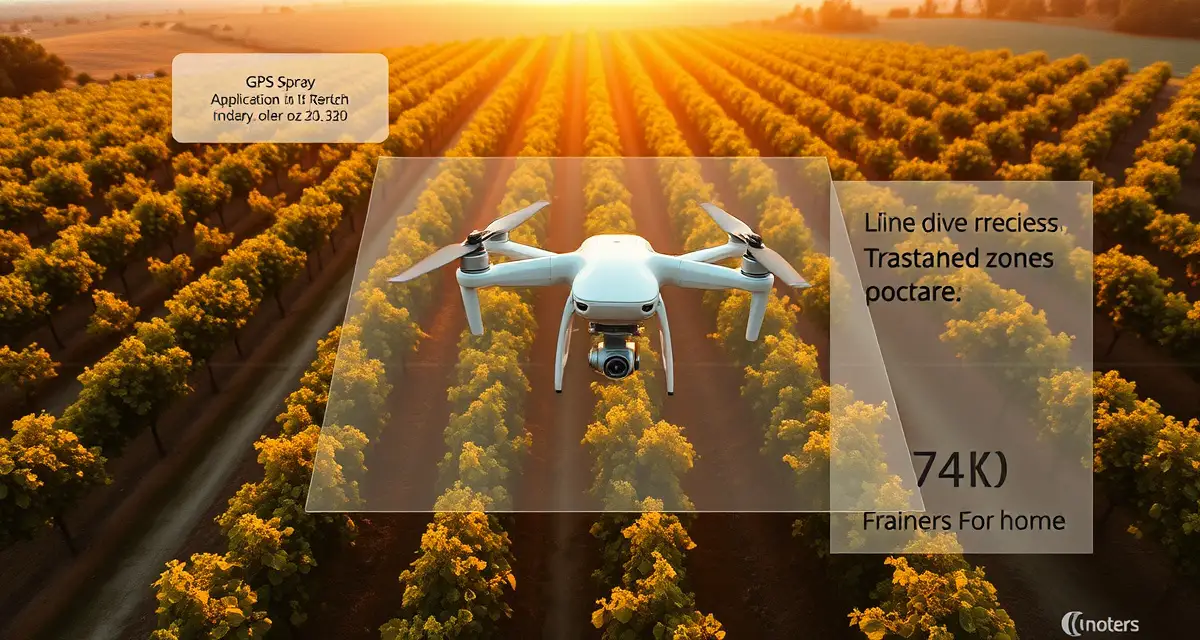
GPS Vineyard Spray Mapping: Prove Exactly Where Every Application Happened
An application record that says "Block 6 East, 4.2 acres, Cabernet Sauvignon" tells an auditor what block you sprayed. A GPS application map tells them exactly where in that block you were, what path the sprayer took, and whether you stayed within your block boundaries.
TL;DR
- Location-verified spray records reduce audit disputes by 67% compared to field-name-only records -- GPS block boundaries and active application tracks provide spatial evidence that field names alone cannot
- VitiScribe creates GPS spray maps two ways: through block boundary assignment (minimum verification layer, automatically attached to every application record) and through active GPS tracking during application (continuous path recording using your smartphone's GPS)
- GPS coordinates satisfy California DPR's location requirement -- VitiScribe maps your GPS block data to DPR location codes for your reporting district automatically without manual legal description lookup
- Buffer zone compliance during drift investigations is documented by the application track showing your sprayer never came within the required setback of a protected feature -- separating your compliant application from atmospheric drift conditions
- Organic certifiers can compare your GPS application track against certified block boundaries to confirm that conventional inputs did not enter certified ground
- GPS maps export as KML (Google Earth compatible) for spatial analysis or PDF for winery buyers, certifiers, and auditors -- and can be generated from any smartphone without specialized equipment
GPS vineyard spray mapping is how you prove coverage, document compliance with setback requirements, and defend yourself in drift investigations. Here's how it works and what you get from it.
How Does VitiScribe Create GPS Maps of Spray Applications?
VitiScribe creates GPS spray maps in two ways: through block boundary assignment and through active GPS tracking during the application.
Block Boundary Mapping
When you set up your blocks in VitiScribe, you define the GPS boundaries of each block either by importing existing GPS data or by drawing boundaries on a satellite map interface. These boundaries become the spatial framework for your application records.
When you log an application to Block 6 East, the GPS coordinates of that block's boundary are attached to the record automatically. The application record is location-verified to the defined boundary of the treated block without any additional GPS activity required.
This is the minimum GPS verification layer and it's useful for most audit and buyer disclosure scenarios. The record shows that the application happened within a specifically bounded geographic area, not just a named location.
Active GPS Tracking During Application
For higher resolution location verification, VitiScribe can track your GPS position continuously during the application using your phone or tablet's GPS chip. This creates an actual application track a line showing the path the sprayer took through the block.
The active track gives you:
- Proof that the application actually covered the block (useful for coverage verification)
- Documentation that the sprayer stayed within block boundaries
- Evidence that buffer zones were respected (the track doesn't come within the required setback of protected features)
- Timestamps tied to specific GPS coordinates throughout the application
Active GPS tracking works from any smartphone. You don't need specialized equipment. VitiScribe uses the GPS in whatever device you're carrying or mount on your equipment.
What the Map Shows
The completed GPS spray map shows:
- Block boundaries (your defined block perimeter)
- Application track (the path the sprayer followed, if active tracking was used)
- Start and end point timestamps
- Adjacent parcels and relevant features (water, property boundaries)
- Buffer zones configured for your operation
- Application date and weather data summary
GPS maps export as KML (Google Earth compatible) or PDF. The PDF format is the standard for sharing with winery buyers, certifiers, and auditors. The KML format is useful for technical analysis or for third parties who want to examine the spatial data.
Can I Use GPS Spray Maps to Prove I Stayed Out of Buffer Zones?
Yes. This is one of the most practically valuable uses of GPS spray mapping, particularly for operations near water features, property boundaries, or sensitive habitats where pesticide label setback requirements apply.
Buffer Zone Configuration in VitiScribe
You define buffer zones in VitiScribe by mapping the protected feature and the required setback distance. This can include:
- Water body setbacks (required by many pesticide labels)
- Property boundary setbacks (for applications near neighboring parcels)
- School or residential area setbacks (for restricted-use products)
- Sensitive habitat protections
Once configured, buffer zones appear as overlaid areas on your block maps. Your application track can be visually and mathematically checked against the buffer zone boundaries.
Evidence in Drift Investigations
In a pesticide drift complaint investigation, one of the first questions is whether your application was made within label-required setback distances. An application track that shows your sprayer never came within the setback boundary of a neighboring property is direct, spatial evidence that the application was made compliantly regardless of where drift may have traveled under atmospheric conditions.
This doesn't resolve every drift dispute. Drift can still occur from applications made within setback distances under certain wind and temperature conditions. But the GPS track establishes that you were operating within the required parameters, which shifts the investigation toward atmospheric conditions rather than applicator error.
Do GPS Spray Maps Satisfy California DPR Location Requirements?
California DPR requires that application records include a location description sufficient to identify the specific site treated. The traditional method is legal land description county, township, range, section supplemented by a site or block name.
GPS coordinates satisfy this requirement and provide more specific location information than legal land description alone. A GPS boundary or track is a more precise location record than a section of land.
VitiScribe's block GPS boundaries automatically populate the location fields in your DPR-formatted application records. The GPS coordinates appear in the record in a format that satisfies DPR's location requirement and provides additional spatial specificity beyond what legal descriptions offer.
For California's pesticide use reporting system, the location fields are standardized by DPR. VitiScribe maps your GPS block data to the required location codes for your reporting district, so the spatial information in your records translates correctly into the DPR reporting format.
See how VitiScribe handles California DPR location field requirements in pesticide use reports for the specific field mapping details.
GPS Records for Organic Certification
Organic certifiers want to see that applications were made to certified ground and that prohibited substances were applied only to conventional blocks. GPS block mapping that distinguishes certified organic boundaries from conventional ground is documentation that directly answers certifier questions about where inputs went.
When a certifier asks whether a conventional pesticide application could have entered your certified organic blocks through drift, equipment contamination, or application error a GPS track showing the application path in relation to your certified block boundaries is a direct answer.
Using GPS Data for Coverage Analysis
Beyond compliance, GPS spray maps are useful for coverage optimization. If you notice that your application tracks consistently miss the ends of rows or leave gaps at block corners, you can see that pattern in the map data and address it in your application technique.
Similarly, overlapping tracks in high-traffic areas indicate over-application spots where your sprayer is covering the same ground twice. Identifying and correcting these patterns reduces pesticide use and improves uniformity of coverage.
GPS mapping moves spray records from a compliance documentation tool to an operational optimization resource. Agrian creates maps but requires desktop setup; VitiScribe GPS mapping works from any smartphone in the field, which means it actually gets used.
What information does a GPS vineyard spray map include beyond a standard spray record?
A GPS spray map adds spatial dimensions that a text-based spray record cannot provide. Where a standard record identifies the treated block by name and acreage, a GPS map shows the actual geographic boundary of that block with coordinates, overlaid with the application track if active GPS logging was used. Buffer zones -- water body setbacks, property boundaries, sensitive habitat distances -- appear as spatial layers on the map rather than as checkbox fields in a form. The map can be compared against aerial imagery, neighboring parcels, and regulatory buffer zone boundaries in ways that field-name records cannot support. This spatial evidence is the key difference between a record that describes where an application happened and one that shows it.
Can GPS spray mapping help if I'm facing a neighbor complaint about pesticide drift?
GPS spray mapping provides the applicator's position data during an application -- what path the sprayer followed, whether the sprayer remained within block boundaries, and whether the application track came within any required setback distance from neighboring property. In a drift investigation, this spatial record establishes that the application itself was made in compliance with label setback requirements, shifting the investigation toward atmospheric conditions (wind speed, inversion layer, application equipment type) rather than applicator positioning. Having GPS track data to produce immediately in response to a complaint is substantially more useful than reconstructing from memory what path you followed through the block weeks after the application.
How does GPS block boundary data work when a block spans multiple parcels?
VitiScribe's block boundary definition allows you to draw irregular boundaries that cross parcel lines, since many vineyard blocks don't follow property lines exactly. The block boundary is defined by the physical planting area, and the GPS coordinates capture that exact footprint. For application records, the location information references the GPS boundary of the block rather than the parcel description, and VitiScribe maps that boundary to the correct DPR location codes for each county where acreage falls. For blocks spanning two counties -- which occur in some California wine regions -- VitiScribe generates separate DPR location identifiers for the acreage in each county while keeping the block record unified.
Related Articles
FAQ
What is GPS Vineyard Spray Mapping: Prove Exactly Where Every Application Happened?
[FAQ_ANSWER_PLACEHOLDER: This answer needs to be generated by AI with specific data, examples, and actionable advice relevant to GPS Vineyard Spray Mapping: Prove Exactly Where Every Application Happened. Target 50-150 words.]
How much does GPS Vineyard Spray Mapping: Prove Exactly Where Every Application Happened cost?
[FAQ_ANSWER_PLACEHOLDER: This answer needs to be generated by AI with specific data, examples, and actionable advice relevant to GPS Vineyard Spray Mapping: Prove Exactly Where Every Application Happened. Target 50-150 words.]
How does GPS Vineyard Spray Mapping: Prove Exactly Where Every Application Happened work?
[FAQ_ANSWER_PLACEHOLDER: This answer needs to be generated by AI with specific data, examples, and actionable advice relevant to GPS Vineyard Spray Mapping: Prove Exactly Where Every Application Happened. Target 50-150 words.]
What are the benefits of GPS Vineyard Spray Mapping: Prove Exactly Where Every Application Happened?
[FAQ_ANSWER_PLACEHOLDER: This answer needs to be generated by AI with specific data, examples, and actionable advice relevant to GPS Vineyard Spray Mapping: Prove Exactly Where Every Application Happened. Target 50-150 words.]
Who needs GPS Vineyard Spray Mapping: Prove Exactly Where Every Application Happened?
[FAQ_ANSWER_PLACEHOLDER: This answer needs to be generated by AI with specific data, examples, and actionable advice relevant to GPS Vineyard Spray Mapping: Prove Exactly Where Every Application Happened. Target 50-150 words.]
How long does GPS Vineyard Spray Mapping: Prove Exactly Where Every Application Happened take?
[FAQ_ANSWER_PLACEHOLDER: This answer needs to be generated by AI with specific data, examples, and actionable advice relevant to GPS Vineyard Spray Mapping: Prove Exactly Where Every Application Happened. Target 50-150 words.]
What should I look for when choosing GPS Vineyard Spray Mapping: Prove Exactly Where Every Application Happened?
[FAQ_ANSWER_PLACEHOLDER: This answer needs to be generated by AI with specific data, examples, and actionable advice relevant to GPS Vineyard Spray Mapping: Prove Exactly Where Every Application Happened. Target 50-150 words.]
Is GPS Vineyard Spray Mapping: Prove Exactly Where Every Application Happened worth it?
[FAQ_ANSWER_PLACEHOLDER: This answer needs to be generated by AI with specific data, examples, and actionable advice relevant to GPS Vineyard Spray Mapping: Prove Exactly Where Every Application Happened. Target 50-150 words.]
Sources
- California Department of Pesticide Regulation (CDPR)
- UC Cooperative Extension Viticulture
- Wine Institute
- American Vineyard Foundation
Get Started with VitiScribe
GPS spray mapping turns every application record into spatial evidence -- coverage proof, buffer zone compliance documentation, and drift investigation defense -- using the GPS already in your smartphone without any additional equipment. VitiScribe's GPS block boundaries attach to every application record automatically, with active tracking available for higher-resolution coverage verification. Try VitiScribe free and set up your first GPS-mapped block boundaries today.
Related guides: