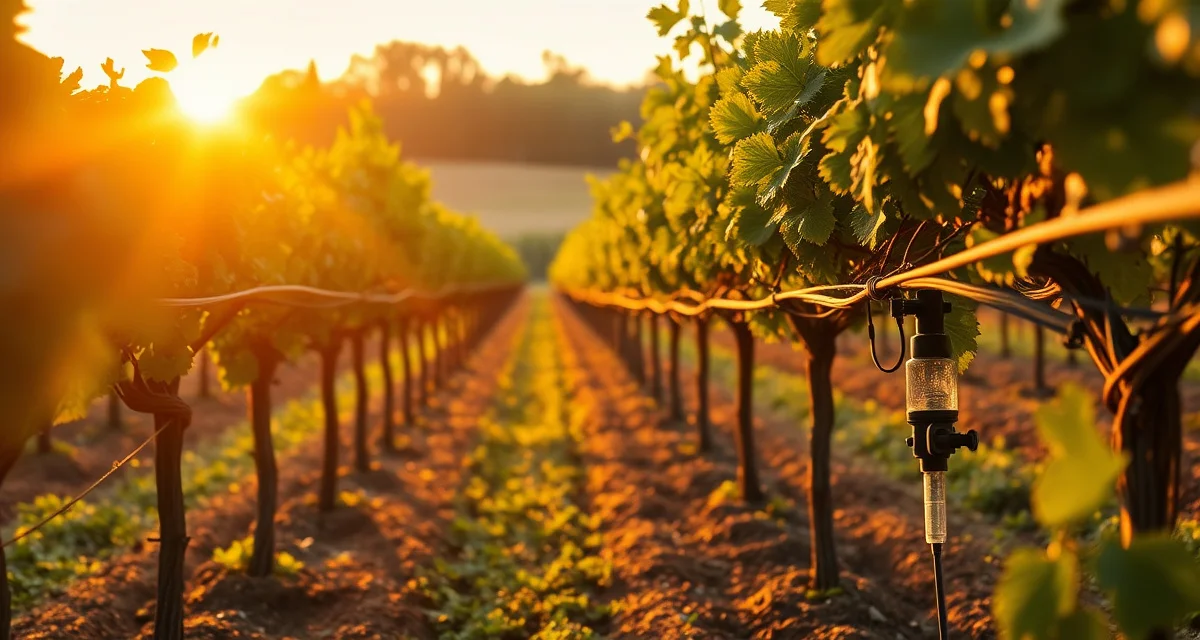
Vineyard Irrigation Scheduling and Record Keeping
Water-stressed vines behave differently. Their stomata close, photosynthesis slows, and their tissue composition shifts in ways that affect both fruit quality and susceptibility to certain pests. Spider mite populations, for instance, increase measurably in drought-stressed vines, giving you both a pest problem and a record-keeping problem if your irrigation and scouting data live in separate places.
TL;DR
- Spider mite populations accelerate under vine water stress -- when your scouting records show elevated mite pressure and your irrigation records show a stressed-vine period immediately prior, that documented sequence is your IPM decision justification for the miticide application that followed
- Vine water stress indicators that should appear in your records include tensiometer readings (action threshold often -40 cbars or more negative depending on variety and growth stage) and midday stem water potential readings from a pressure bomb by block
- Over-irrigated vines can contribute to disease pressure through dense vegetative growth that creates humid canopy microclimate conditions -- tracking irrigation alongside canopy management records shows whether your irrigation program is contributing to disease pressure
- In water-restricted California regions, irrigation records may be required by your water district or district irrigation plan in a specific format; VitiScribe export functions produce CSV and PDF for district submission
- For organic certification, irrigation records demonstrate that water management is part of your integrated approach to pest management and support the complete documentation that certifiers review
- VitiScribe's block timeline shows irrigation runs, spray events, scouting visits, and canopy management work in chronological order -- the integrated view that makes irrigation-pest relationships visible across a season
Irrigation records in VitiScribe link to vine stress data that informs pest management decisions. That connection is where irrigation record keeping goes from administrative task to actual management tool.
Why Irrigation Records Matter Beyond Water Management
Most growers keep irrigation records because their water district requires it, or because they're tracking costs. Both are legitimate reasons. But the bigger value is what irrigation data tells you about vine condition, and how vine condition affects your spray and scouting decisions.
Water-stressed vines show increased susceptibility to certain spider mite outbreaks. They also show different powdery mildew dynamics. A vine under moderate water stress in July may show different disease response than a vine receiving adequate irrigation, even with the same spray program applied.
If your irrigation records and your spray and scouting records are in the same system, you can start to see those patterns. If they're in separate spreadsheets or notebooks, you never will.
What Irrigation Records to Keep
Application Volume and Timing
The basics: date, block, run time, and water volume (gallons or acre-inches). If you're running multiple zones within a block, record them separately. This is the core record that water districts and some certifiers want to see.
If you're using flow meters, record the actual meter reading. If you're calculating from emitter rates and run time, note that too, auditors sometimes ask how volume was determined.
System Type and Emitter Rate
Record the irrigation system type for each block: drip, micro-sprinkler, overhead. For drip systems, log emitter rate (GPH), emitter spacing, and lateral spacing. This is reference data, you capture it once and it stays with the block record.
Soil Moisture and Vine Stress Indicators
If you're using tensiometers, pressure bombs, or capacitance probes to guide irrigation decisions, those readings belong in your records. A tensiometer reading at -40 cbars tells you something very specific about vine water status that a run-time record alone doesn't capture.
Pressure bomb (pressure chamber) measurements are particularly valuable. Recording midday stem water potential by block gives you a direct measure of vine stress that connects to both irrigation decisions and pest risk assessment.
Irrigation Trigger and Decision Notes
Why did you irrigate on that date? Was it a scheduled run, a response to a stress indicator, or a preemptive application before expected heat? Recording the decision rationale, even briefly, makes your records far more useful when you're reviewing them later or discussing your program with a crop consultant.
Connecting Irrigation Records to Spray Decisions
Spider Mite Risk
Spider mite populations accelerate under heat and vine water stress. If your scouting records show elevated mite pressure and your irrigation records show a stressed vine period immediately prior, that's a cause-and-effect relationship you can document and act on.
In VitiScribe, your irrigation records appear in the block timeline alongside scouting observations. You can see that Block 8 ran three weeks behind on irrigation in July, mite counts escalated in the August scouting event, and you responded with a miticide application. That documented sequence is your IPM decision justification.
Disease Risk Interaction
This one is counterintuitive: over-irrigated vines with wet soil and high humidity at the leaf surface can also show elevated disease pressure. Powdery mildew doesn't require free water to infect, but dense, humid canopies created by excessive vegetative growth from over-irrigation do create favorable conditions.
Tracking irrigation alongside canopy management and disease scouting records shows you whether your irrigation program is contributing to disease pressure.
Setting Up Vineyard Irrigation Scheduling Records in VitiScribe
Step 1: Map Your Irrigation Zones to Blocks
Each irrigation zone should correspond to a block boundary in your block map. If your zones don't match your blocks exactly, common in older vineyards, note which zones serve which blocks and calculate block-level water volumes from there.
Refer to the vineyard block mapping GPS guide to make sure your blocks and zones are aligned before setting up irrigation records.
Step 2: Create an Irrigation Activity Type
In VitiScribe, set up irrigation as a tracked activity category separate from spray events. Each irrigation run gets a record: date, zone, run time, volume, and any stress indicator readings taken around that time.
Step 3: Log Stress Indicator Readings
Create a separate observation record for pressure bomb or tensiometer readings, linked to the block and date. Over time, these readings build a block-level vine stress history that you can correlate with pest and disease outcomes.
Step 4: Note Irrigation Decisions Before Spray Events
Before logging a spray event in VitiScribe, check the irrigation record for that block. If the block has been running under stress, note it in your spray decision rationale. If you're applying a miticide, linking it to documented stress conditions is good IPM documentation.
Step 5: Review Irrigation Records at Season End
At the end of each season, pull an irrigation summary by block and compare it to your pest and disease records. Which blocks had the most mite pressure? What was their irrigation status in the weeks before? This analysis takes 30 minutes and can reshape the following season's program.
Irrigation Records and Water District Compliance
In water-restricted regions, much of California, parts of Oregon and Washington, irrigation records may be required by your water district or district irrigation plan. Keep records in a format you can export: date, block, volume, method. VitiScribe export functions produce CSV and PDF versions of irrigation records for submission.
For vineyards with vineyard IPM pillar guide documentation requirements, irrigation records demonstrate that water management is part of your integrated approach to pest management.
Related Articles
- Oregon ODA Pesticide Record Requirements for Vineyards
- Organic Vineyard Record Keeping for CCOF Certification
FAQ
What irrigation records should a vineyard manager keep?
Keep records of every irrigation event: date, block or zone, run time, water volume (in gallons or acre-inches), and the irrigation system type. Add stress indicator readings, tensiometer or pressure bomb measurements, if you're using them to guide timing decisions. Note the reason for each irrigation event, especially if you're responding to a specific stress indicator threshold or a heat event. These records support water district compliance, organic certification documentation, and IPM program analysis.
How does irrigation scheduling affect vineyard disease and pest pressure?
Vine water stress affects both spider mite susceptibility and the canopy microclimate that influences fungal disease conditions. Water-stressed vines become more attractive to spider mites, which reproduce rapidly under heat stress conditions. Over-irrigated vines can produce dense vegetative growth that creates humid canopy conditions favoring fungal disease. Irrigation records that track vine stress alongside pest and disease scouting data let you see those relationships and adjust your program accordingly.
Can I track irrigation in VitiScribe alongside spray and scouting records?
Yes. VitiScribe allows you to record irrigation events as block-level activities in the same system as your spray logs and scouting observations. Each block's timeline shows all activity types, irrigation runs, spray events, scouting visits, canopy management work, in chronological order. That integrated view is what makes it possible to see the relationship between irrigation management, vine stress, and pest or disease outcomes across a season.
How do irrigation records support organic certification audits?
Organic certifiers reviewing your NOP system plan compliance look at water management as one component of your integrated production approach. Irrigation records that show controlled deficit irrigation (a documented strategy for managing vine stress and fruit quality) demonstrate intentional management rather than reactive watering. If your organic system plan describes a specific irrigation approach -- for example, using stem water potential readings to trigger irrigation events -- your irrigation records need to show that approach actually being implemented, with readings logged and decisions documented. Certifiers who find consistent irrigation records in the same system as input records can complete their review more efficiently than those working with separate notebooks.
What should I do when irrigation records show a water district-required volume that doesn't match my spray decision records by block?
Water district reporting often requires total applied water by district or farm-level reporting unit, while your IPM and spray records are block-specific. If your blocks don't exactly match your irrigation zones, or if your district requires reporting by a different geographic unit, VitiScribe can generate both block-level irrigation records (for your own management and certifier use) and aggregated reports at the district-required reporting unit. The key is maintaining block-level data as the foundation so that you can both satisfy the district's aggregated reporting requirement and retain the granular block-level detail your IPM records require.
What is Vineyard Irrigation Scheduling and Record Keeping?
[FAQ_ANSWER_PLACEHOLDER: This answer needs to be generated by AI with specific data, examples, and actionable advice relevant to Vineyard Irrigation Scheduling and Record Keeping. Target 50-150 words.]
How much does Vineyard Irrigation Scheduling and Record Keeping cost?
[FAQ_ANSWER_PLACEHOLDER: This answer needs to be generated by AI with specific data, examples, and actionable advice relevant to Vineyard Irrigation Scheduling and Record Keeping. Target 50-150 words.]
How does Vineyard Irrigation Scheduling and Record Keeping work?
[FAQ_ANSWER_PLACEHOLDER: This answer needs to be generated by AI with specific data, examples, and actionable advice relevant to Vineyard Irrigation Scheduling and Record Keeping. Target 50-150 words.]
Sources
- California Department of Pesticide Regulation (CDPR)
- UC Cooperative Extension Viticulture
- American Vineyard Foundation
- Wine Institute
Get Started with VitiScribe
Irrigation records that live in a separate notebook from your spray and scouting records can never show you the relationship between vine water stress and pest pressure -- the connection that separates reactive from proactive IPM management. VitiScribe's integrated block timeline puts irrigation runs, stress indicator readings, scouting observations, and spray decisions in the same chronological view, making the irrigation-pest relationship visible and documentable across the season. Try VitiScribe free and log your first irrigation event alongside your spray and scouting records today.