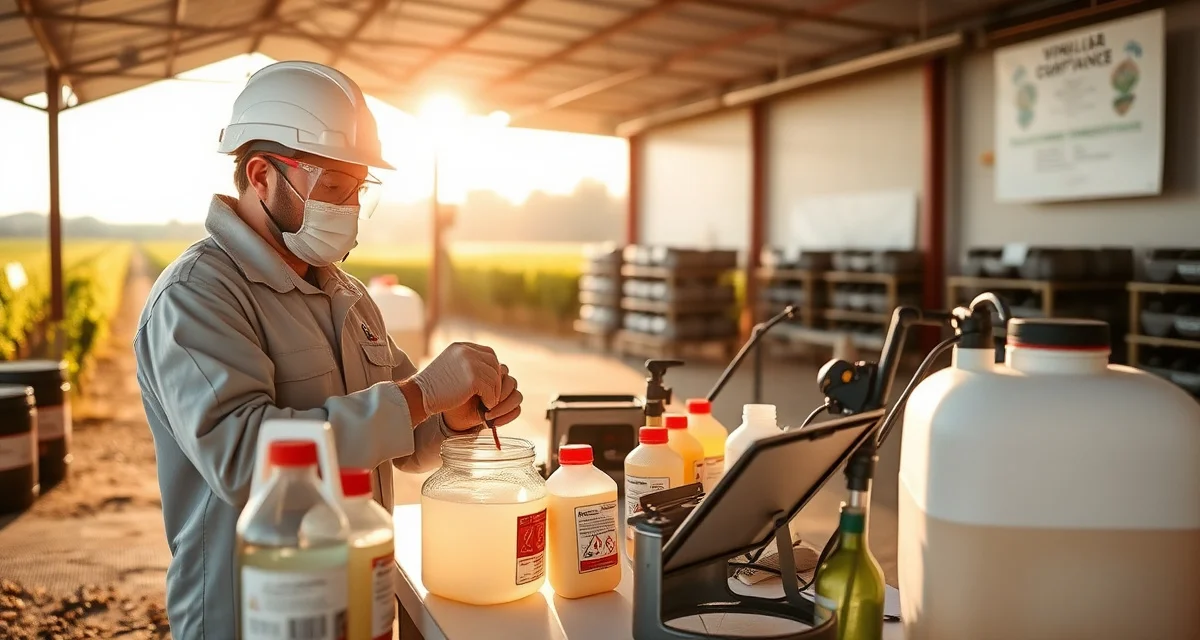
Vineyard Pesticide Mixing Station Records: Documentation at the Point of Preparation
California requires pesticide container disposal records as part of its integrated waste management regulations. Most vineyard operators know this and have some form of container management process. What's less well-known is that mixing and loading records, documenting what happens at the mixing station before the sprayer goes to the field, are also required and are regularly found incomplete during DPR audits.
The mixing station is where pesticides transition from storage to use. It's also where over-application risk is highest (too much product in the tank), where worker exposure is most concentrated (mixing and loading are high-exposure tasks), and where the applicator license requirement is most critical (the person doing the mixing must be licensed or directly supervised by a licensed applicator).
TL;DR
- Mixing and loading records are required alongside application records in California and are regularly found incomplete during DPR audits -- the mixing event and the application event are separate compliance obligations, often performed by different people at different times
- A complete mixing station record must include mixer name and license number, all products mixed with EPA registration numbers and measured amounts, tank volume, PPE worn during mixing, date and time, intended block and pest target, and container disposal documentation
- For restricted-use pesticides, certified applicator presence or direct supervision must be documented at the mixing event specifically -- the RUP requirement applies to mixing and loading, not just the field application
- California integrated waste management regulations require triple-rinsed container documentation: containers must be rinsed, rinse water added to the spray tank, and disposal method recorded for every emptied container at the mixing station
- VitiScribe links mixing station records to application events automatically -- the mixing record and application record appear together in audit reports, showing the complete preparation-to-application chain that DPR inspectors review
- Container disposal records can also serve as a volume-reconciliation tool: if your purchase records show 50 pounds of sulfur purchased and mixing records show 45 pounds mixed, the 5-pound discrepancy requires an explanation
What Mixing Station Records Must Capture
A complete pesticide mixing and loading record includes:
Mixer identification: Name and license number of the person who mixed and loaded the tank. This is the same as the applicator record requirement but specifically for the mixing event, which may be done by a different person than the one who drives the sprayer.
Products mixed: Every product included in the tank mix, with EPA registration numbers and amounts measured. Not estimated, not "about a pound." Measured amounts.
Tank volume: The total volume in the tank at mixing. This is the denominator for your concentration calculation.
Personal Protective Equipment worn: The label specifies PPE requirements for mixing and loading, which are typically more stringent than for application. The record should confirm that PPE requirements were met.
Empty container disposal: For every container emptied at the mixing station, documentation of triple-rinse and disposal method. California's container management regulations require that containers are triple-rinsed before disposal and that rinse water is added to the spray tank.
Date and time of mixing: Timestamped record of when the mix was prepared.
Intended use: Block and pest target for the prepared tank.
Why Mixing Records Are Separate from Application Records
The mixing event and the application event often happen at different times and in different locations. In larger vineyard operations, a crew member mixes and loads the tank at the mixing station while the application equipment is positioned in the vineyard. The person who mixes is not necessarily the person who applies.
If you're maintaining only application records, you're capturing the field event but not the preparation event. That gap leaves several compliance questions unanswered:
- Who had access to the concentrate at the mixing station?
- Was PPE worn during the high-exposure mixing process?
- Were containers properly rinsed and documented?
- Was the concentration in the tank correct?
Application records tell you what was applied. Mixing records tell you what was prepared and by whom. For how application records are structured for DPR compliance, see vineyard spray record format california.
Container Disposal Documentation
California's integrated waste management regulations require that pesticide containers are triple-rinsed before disposal. The rinse water must be added to the spray tank (not poured down a drain). The emptied, rinsed container must be disposed of in an approved manner, typically punctured and sent to a licensed disposal facility, or recycled through a container recycling program if available in your county.
The mixing station log documents this for every container:
- Container type and size
- Product contained
- Triple-rinse confirmed (yes/no)
- Rinse water disposal method (added to tank)
- Container disposal method
For operations using notable pesticide volumes, the container disposal record becomes a volume-reconciliation tool. If your purchase records show you bought 50 pounds of sulfur and your mixing records show you mixed 45 pounds, the 5-pound discrepancy needs an explanation.
Restricted Use Material Mixing Requirements
For restricted use materials, mixing and loading documentation is especially critical. The certified applicator requirement extends to the mixing and loading event, not just the application. If a restricted use material is being mixed by an unlicensed employee without direct supervision of a certified applicator, that's a compliance failure at the mixing station regardless of whether the application itself is done correctly.
VitiScribe's restricted use pesticide records system flags RUP products at the mixing station log stage, requiring certified applicator confirmation before the mixing record can be saved.
Connecting Mixing Records to Application Records
The operational efficiency of keeping mixing station records alongside application records comes from the connection between the two. When the mixing record and the application record are linked, you can verify:
- That the amount mixed matches the amount applied within reasonable tank volume tolerance
- That the concentration in the tank was within label rate range
- That the person who mixed and the person who applied are both documented
- That the time of mixing precedes the time of application on the same day
VitiScribe's pesticide application records and mixing station log systems link automatically. When you create a mixing record, you designate which application event it's associated with. When you generate an audit report, the mixing record and application record appear together as a complete preparation-to-application documentation chain.
The spray applicator records guide covers applicator documentation requirements that apply at both the mixing and application stages. For how inventory records connect to mixing totals, see vineyard pesticide inventory tracking.
Practical Mixing Station Setup
For a small vineyard operation, the mixing station log doesn't need to be elaborate. A simple form at the mixing station that captures the required fields, completed at the time of mixing, provides the documentation baseline.
For digital operations, the VitiScribe mobile app allows mixing station records to be entered in the field on a phone or tablet before moving to the application equipment. The record is timestamped at entry, the certified applicator confirmation is required before saving for RUP products, and the record links to the application event automatically when you log the field application.
Frequently Asked Questions
What records are required at a vineyard pesticide mixing station?
Mixing station records must include: the name and license number of the person mixing and loading, all products mixed with EPA registration numbers and measured amounts, tank volume at mixing, PPE worn during mixing consistent with label requirements, date and time of mixing, and empty container disposal documentation including triple-rinse confirmation and disposal method. For restricted use materials, certified applicator presence or direct supervision must be documented at the mixing event.
How does VitiScribe capture mixing records separately from application records?
VitiScribe's mixing station log is a separate record entry linked to the associated application event. When you create a mixing record, you enter mixer identification, products mixed with amounts, PPE confirmation, and container disposal documentation. The record links to the field application event so that mixing and application documentation appear together in compliance reports and audit review.
Do California vineyards need to record pesticide container disposal?
Yes. California's integrated waste management regulations require documentation of pesticide container disposal including confirmation that containers were triple-rinsed, that rinse water was added to the spray tank rather than disposed separately, and the disposal method used for the emptied container. This documentation is typically maintained as part of the mixing station log and reviewed by county agricultural commissioners as part of pesticide compliance inspections.
How do I document a mixing event when the mixer and the applicator are different people?
Enter the mixer's name and license number in the mixing station record separately from the applicator's information in the application record. VitiScribe's mixing log has a distinct field for mixer identification that is independent of the applicator field in the spray event record. When the records link, the audit output shows both names -- confirming that the person who prepared the tank and the person who applied it in the field are both documented with their respective license credentials. For RUP products, the mixing record requires a certified applicator's confirmation even if that certified applicator is not the person who drove the sprayer.
What is Vineyard Pesticide Mixing Station Records: Documentation at the Point of Preparation?
[FAQ_ANSWER_PLACEHOLDER: This answer needs to be generated by AI with specific data, examples, and actionable advice relevant to Vineyard Pesticide Mixing Station Records: Documentation at the Point of Preparation. Target 50-150 words.]
How much does Vineyard Pesticide Mixing Station Records: Documentation at the Point of Preparation cost?
[FAQ_ANSWER_PLACEHOLDER: This answer needs to be generated by AI with specific data, examples, and actionable advice relevant to Vineyard Pesticide Mixing Station Records: Documentation at the Point of Preparation. Target 50-150 words.]
How does Vineyard Pesticide Mixing Station Records: Documentation at the Point of Preparation work?
[FAQ_ANSWER_PLACEHOLDER: This answer needs to be generated by AI with specific data, examples, and actionable advice relevant to Vineyard Pesticide Mixing Station Records: Documentation at the Point of Preparation. Target 50-150 words.]
What are the benefits of Vineyard Pesticide Mixing Station Records: Documentation at the Point of Preparation?
[FAQ_ANSWER_PLACEHOLDER: This answer needs to be generated by AI with specific data, examples, and actionable advice relevant to Vineyard Pesticide Mixing Station Records: Documentation at the Point of Preparation. Target 50-150 words.]
Who needs Vineyard Pesticide Mixing Station Records: Documentation at the Point of Preparation?
[FAQ_ANSWER_PLACEHOLDER: This answer needs to be generated by AI with specific data, examples, and actionable advice relevant to Vineyard Pesticide Mixing Station Records: Documentation at the Point of Preparation. Target 50-150 words.]
How long does Vineyard Pesticide Mixing Station Records: Documentation at the Point of Preparation take?
[FAQ_ANSWER_PLACEHOLDER: This answer needs to be generated by AI with specific data, examples, and actionable advice relevant to Vineyard Pesticide Mixing Station Records: Documentation at the Point of Preparation. Target 50-150 words.]
What should I look for when choosing Vineyard Pesticide Mixing Station Records: Documentation at the Point of Preparation?
[FAQ_ANSWER_PLACEHOLDER: This answer needs to be generated by AI with specific data, examples, and actionable advice relevant to Vineyard Pesticide Mixing Station Records: Documentation at the Point of Preparation. Target 50-150 words.]
Is Vineyard Pesticide Mixing Station Records: Documentation at the Point of Preparation worth it?
[FAQ_ANSWER_PLACEHOLDER: This answer needs to be generated by AI with specific data, examples, and actionable advice relevant to Vineyard Pesticide Mixing Station Records: Documentation at the Point of Preparation. Target 50-150 words.]
Sources
- California Department of Pesticide Regulation (CDPR)
- California Environmental Protection Agency (Cal/EPA)
- EPA Office of Pesticide Programs
- UC Cooperative Extension Viticulture
- American Vineyard Foundation
Get Started with VitiScribe
Mixing station records are required by California DPR and regularly found incomplete during audits -- the preparation event is a separate compliance obligation from the field application, and documenting both from memory after the fact is where errors occur. VitiScribe's mixing station log captures all required fields at the point of preparation, links to the application event automatically, and includes RUP certification prompts that prevent unlicensed mixing from going undocumented. Try VitiScribe free and log your first complete mixing-to-application record today.