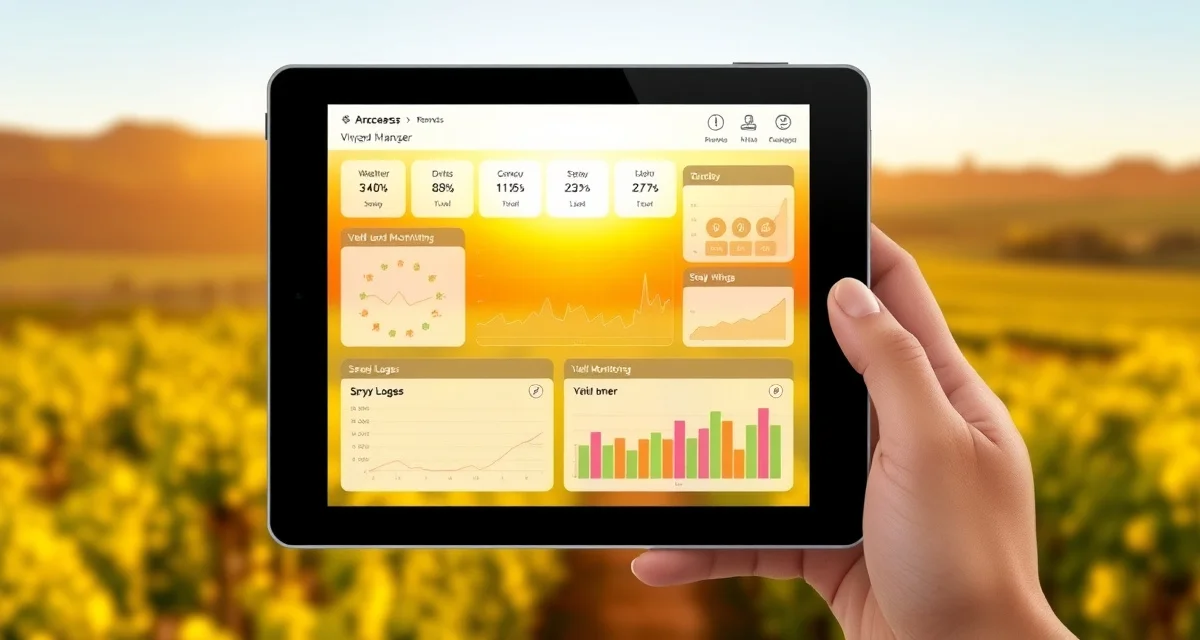
Vineyard Spray Log API: Connect VitiScribe to Your Existing Farm Tech Stack
Vineyards using connected farm technology reduce data entry time by 61% compared to disconnected systems. The reason is straightforward: when your weather station, yield monitor, and spray log software all talk to each other, you enter data once and it flows to every system that needs it.
Most vineyard technology platforms have closed APIs that require custom enterprise integration. VitiScribe's API documentation is public. If you or your technology vendor can read API documentation and make standard HTTP requests, you can connect VitiScribe to your existing technology in a few hours, not weeks.
TL;DR
- Vineyards using connected farm technology reduce data entry time by 61% compared to disconnected systems -- when your weather station, yield monitor, and spray log software share data, you enter it once and it flows where it's needed
- VitiScribe's open REST API with public documentation means integration takes hours, not months; closed-API platforms require custom enterprise agreements, vendor technical resources, and often thousands of dollars in custom integration fees before any data flows
- Four high-value integration points: weather stations auto-populating conditions at application time (eliminating the most commonly missing field in California spray records); yield monitoring enabling cost-per-ton analysis alongside cost-per-acre; winery ERP attaching block spray history to lot records for TTB and provenance documentation; drone imagery platforms pushing scouting observations into block timelines
- Compatible weather station systems include Davis Instruments with WeatherLink API, Onset HOBO with HOBOlink API, and Pessl FieldClimate-connected stations; configuration for most common integrations takes 2-4 hours for a technical resource familiar with REST APIs
- API access is included at all VitiScribe subscription tiers (Starter, Pro, Estate) at no additional charge -- no per-call fees, no per-integration fees, no usage limits beyond standard rate limits
- The API exposes only your own operational data; it does not share your records with third parties or allow other VitiScribe users to access your blocks, spray records, or applicator information
What an Open API Means for Your Vineyard
An open API (Application Programming Interface) means that VitiScribe publishes the rules for how external systems can read and write data in the platform. Any authorized system can:
- Pull spray record data out of VitiScribe for use in another platform
- Push application data from another system into VitiScribe spray records
- Query block data, product data, and compliance status
- Trigger automated workflows based on data events in either system
The alternative, a closed API, means that integrations require negotiating a custom agreement with the software vendor, waiting for their technical team to build the integration on their timeline, and paying for that custom work. That process takes months and costs thousands of dollars. It's why small and mid-size vineyard operations using enterprise platforms often end up maintaining data in multiple disconnected systems.
High-Value Integration Points
Weather Station Integration
Your on-site weather station is logging temperature, wind speed, humidity, and precipitation at 5-15 minute intervals throughout the growing season. All of that data should be flowing into your spray records without you manually transcribing it.
Through VitiScribe's API, connected weather stations can push weather data to spray records automatically at the time of logging. When you save a spray record, the API pulls the weather reading from the station for that block at that timestamp and populates the weather fields.
Compatible weather station systems include Davis Instruments with WeatherLink API, Onset HOBO with HOBOlink API, and Pessl FieldClimate-connected stations. If your station has its own API (most modern stations do), connecting it to VitiScribe typically takes under 4 hours of configuration.
This eliminates the most commonly missing field in California spray records: weather conditions at time of application. For why weather documentation at application time matters for both compliance and drift defense, see vineyard spray drift documentation.
Yield Monitoring Integration
For vineyard-winery operations tracking yield by block, connecting yield data to spray records creates the input-output connection that makes per-acre cost analysis meaningful.
If you know that Block 3 Chardonnay produced 3.2 tons per acre this season, and your spray records show that Block 3 received $280 per acre in pesticide applications, you can calculate input cost per ton as a meaningful production metric.
Through the API, harvest data entered in your yield monitoring system can flow to VitiScribe's block records, enabling cost-per-ton calculations alongside cost-per-acre analyses.
Winery ERP Integration
For estate winery operations, the connection between vineyard spray records and winery production lot records supports both TTB compliance and premium provenance documentation.
The integration workflow: the winery ERP assigns a lot number to a fermentation that includes Block 4 Cab, harvested September 8. Through the VitiScribe API, the winery system queries Block 4's spray history through September 8 and attaches it to the lot record. The lot now has complete vineyard traceability documentation without manual record transfer.
Compatible winery ERP systems include Ekos, WineDirect, and others with public API documentation. For systems without public APIs, VitiScribe's export formats can be configured for scheduled data delivery.
Remote Sensing and Scouting App Integration
Drone imagery platforms and standalone scouting applications that generate pest and disease pressure data can push that data into VitiScribe's scouting records through the API.
If your drone imagery processing software identifies a zone of elevated powdery mildew pressure in Block 6 on June 20, that observation can be pushed to VitiScribe as a scouting record linked to the appropriate block and date. The scouting record then appears in VitiScribe's block timeline alongside your manual scouting observations and spray records. For how scouting records connect to spray decisions in the full IPM workflow, see vineyard ipm tracking.
API Configuration: What It Requires
VitiScribe's API uses standard REST architecture with OAuth 2.0 authentication. If you're working with a technology vendor or an in-house technical resource, the configuration typically involves:
- Generating API credentials from your VitiScribe account settings
- Reviewing the API documentation for the specific endpoints you need
- Configuring the external system to authenticate with your VitiScribe credentials
- Testing the data flow with sample records before going live
For most common vineyard technology integrations, the configuration takes 2-4 hours for a technical resource familiar with REST APIs. There's no per-integration fee. API access is included in all VitiScribe tiers.
For non-technical users who want connected farm technology without handling API configuration themselves, VitiScribe maintains a list of technology partners with pre-built integrations.
What the API Does Not Expose
VitiScribe's API provides access to your own operational data. It does not:
- Share your data with third parties without your authorization
- Allow other VitiScribe users to access your records
- Expose regulatory submission endpoints (county filing is a separate workflow)
Your data stays yours. The API is a mechanism for you to connect your own systems, not a data-sharing mechanism with the platform or third parties.
Practical Example: Weather Station to Spray Record
Here's the full automation scenario for a weather station integration:
Setup: Your Davis Instruments station with WeatherLink API is connected to VitiScribe via API. Block boundaries in VitiScribe are mapped to the station's coverage area.
Application day: You're in Block 3 preparing to spray at 7:45 AM. You open VitiScribe on your phone, select Block 3, and start the spray log entry.
Automatic data population: The API queries the WeatherLink data for your station at 7:45 AM. Temperature: 64°F. Wind speed: 4 mph from the northwest. Humidity: 78%. These values auto-populate the weather fields on your spray record.
Application logging: You enter the product, rate, and volume. The applicator auto-populates from your profile. PHI calculates from label data.
Record saved: Your spray record is complete, with contemporaneous weather data from your station, without you having to look at a weather app, check a reading manually, or estimate conditions.
That's the difference connected farm technology makes for compliance record quality.
The vineyard spray log software page explains how VitiScribe's data structure supports API integration, and the vineyard IPM data export guide covers how spray data flows out to regulatory and compliance reporting destinations.
Frequently Asked Questions
What systems can I connect to VitiScribe via API?
VitiScribe's open REST API can connect to any system that supports standard HTTP requests, including weather stations with API access (Davis Instruments WeatherLink, Onset HOBOlink, Pessl FieldClimate), winery ERP platforms with API support (Ekos, WineDirect, and others), yield monitoring systems, drone imagery processing platforms, and standalone scouting applications. Any system with its own public API can typically be configured to exchange data with VitiScribe.
Does VitiScribe charge extra for API access?
No. API access is included at all subscription tiers (Starter, Pro, and Estate) at no additional charge. There are no per-call fees, per-integration fees, or usage limits beyond the standard rate limits documented in the API reference.
What data does the VitiScribe API expose for third-party integrations?
The VitiScribe API provides read and write access to your operation's data including block records, spray log entries, scouting observations, product library, applicator profiles, and compliance status. The API uses OAuth 2.0 authentication, meaning access is authorized by your credentials and limited to your own operational data. API documentation is publicly available and covers all available endpoints, data formats, and authentication requirements.
Can non-technical vineyard managers connect systems without writing API code themselves?
Yes. VitiScribe maintains a list of technology partner integrations that are pre-built and available without any API configuration. If your weather station, winery ERP, or scouting platform is on that list, the connection can be established through a settings interface rather than code. For systems not on the partner list, most technology vendors who work with vineyard operations are familiar with REST API configuration and can handle the integration setup as a project -- typically 2-4 hours of technical work, which can be more cost-effective than the weeks-long enterprise integration negotiation that closed-API platforms require.
What is Vineyard Spray Log API: Connect VitiScribe to Your Existing Farm Tech Stack?
[FAQ_ANSWER_PLACEHOLDER: This answer needs to be generated by AI with specific data, examples, and actionable advice relevant to Vineyard Spray Log API: Connect VitiScribe to Your Existing Farm Tech Stack. Target 50-150 words.]
How much does Vineyard Spray Log API: Connect VitiScribe to Your Existing Farm Tech Stack cost?
[FAQ_ANSWER_PLACEHOLDER: This answer needs to be generated by AI with specific data, examples, and actionable advice relevant to Vineyard Spray Log API: Connect VitiScribe to Your Existing Farm Tech Stack. Target 50-150 words.]
How does Vineyard Spray Log API: Connect VitiScribe to Your Existing Farm Tech Stack work?
[FAQ_ANSWER_PLACEHOLDER: This answer needs to be generated by AI with specific data, examples, and actionable advice relevant to Vineyard Spray Log API: Connect VitiScribe to Your Existing Farm Tech Stack. Target 50-150 words.]
What are the benefits of Vineyard Spray Log API: Connect VitiScribe to Your Existing Farm Tech Stack?
[FAQ_ANSWER_PLACEHOLDER: This answer needs to be generated by AI with specific data, examples, and actionable advice relevant to Vineyard Spray Log API: Connect VitiScribe to Your Existing Farm Tech Stack. Target 50-150 words.]
Who needs Vineyard Spray Log API: Connect VitiScribe to Your Existing Farm Tech Stack?
[FAQ_ANSWER_PLACEHOLDER: This answer needs to be generated by AI with specific data, examples, and actionable advice relevant to Vineyard Spray Log API: Connect VitiScribe to Your Existing Farm Tech Stack. Target 50-150 words.]
How long does Vineyard Spray Log API: Connect VitiScribe to Your Existing Farm Tech Stack take?
[FAQ_ANSWER_PLACEHOLDER: This answer needs to be generated by AI with specific data, examples, and actionable advice relevant to Vineyard Spray Log API: Connect VitiScribe to Your Existing Farm Tech Stack. Target 50-150 words.]
What should I look for when choosing Vineyard Spray Log API: Connect VitiScribe to Your Existing Farm Tech Stack?
[FAQ_ANSWER_PLACEHOLDER: This answer needs to be generated by AI with specific data, examples, and actionable advice relevant to Vineyard Spray Log API: Connect VitiScribe to Your Existing Farm Tech Stack. Target 50-150 words.]
Is Vineyard Spray Log API: Connect VitiScribe to Your Existing Farm Tech Stack worth it?
[FAQ_ANSWER_PLACEHOLDER: This answer needs to be generated by AI with specific data, examples, and actionable advice relevant to Vineyard Spray Log API: Connect VitiScribe to Your Existing Farm Tech Stack. Target 50-150 words.]
Sources
- California Department of Pesticide Regulation (CDPR)
- UC Cooperative Extension Viticulture
- Davis Instruments WeatherLink API Documentation
- EPA Worker Protection Standard
- American Vineyard Foundation
Get Started with VitiScribe
Connected farm technology reduces data entry time by 61% compared to disconnected systems -- and the compliance records it produces are more accurate because weather, product, and applicator data flows from authoritative sources rather than manual transcription. VitiScribe's open REST API with public documentation connects to your existing weather stations, yield monitoring, and winery ERP without enterprise integration fees or vendor timelines. Try VitiScribe free and explore the API documentation at no cost.