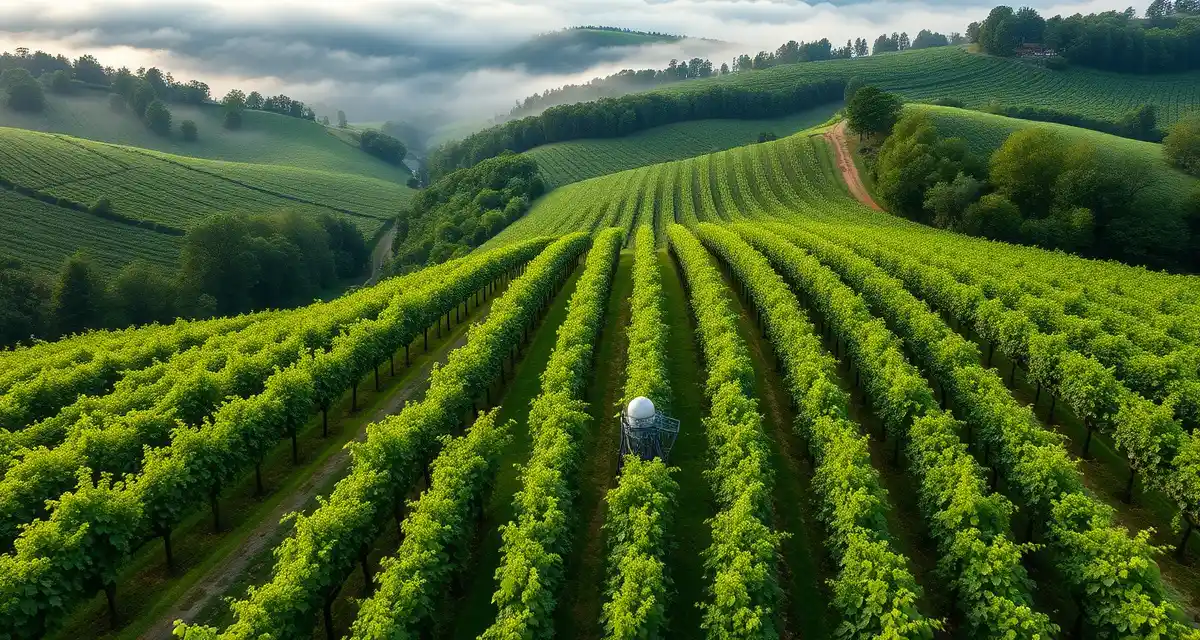
The Complete New York Vineyard IPM Guide
New York's humid summers create the highest grape berry moth and black rot pressure in US wine grape production -- that's not a regional bias but the technical reality that defines what New York vineyard IPM looks like compared to western states. A GBM monitoring and spray program adequate for the Pacific Northwest requires more intensity in the Finger Lakes. A black rot fungicide program appropriate for California needs more applications and tighter intervals in Hudson Valley. Managing New York vineyards requires understanding what makes the eastern pest and disease calendar distinct from the western programs that dominate vineyard management literature.
This guide covers the complete IPM framework for New York wine regions, connecting pest biology, regional pressure differences, spray program design, and DEC compliance records.
TL;DR
- Grape berry moth is New York's most consequential insect pest -- Finger Lakes and Hudson Valley populations require three-generation degree day-based management using Cornell's DD50 biofix model, with biofix set from pheromone trap captures and spray timing at 100-150, 750-850, and 1,150-1,300 DD50 for the three generations
- Black rot can cause complete crop loss in wet years without protection from budbreak through cluster closure; the critical spray window is 2-inch shoot growth through bunch closure with 7-10 day intervals during active infection periods
- New York DEC requires commercial pesticide application records retained for 3 years, including certified applicator name and DEC certification number, site location and county, and weather conditions -- mancozeb is a restricted-use pesticide in New York requiring DEC Category 19 certification
- Finger Lakes Riesling, Chardonnay, and Pinot Noir face the highest harvest-period botrytis risk of any major US wine region -- New York's wet September conditions require 7-day intervals and 0-day PHI materials (Elevate, Miravis Prime, Serenade Optimum) through harvest
- QoI resistance is confirmed in the Northeast -- rotate powdery mildew programs to Groups 3, 7, and 13 with no more than 2 consecutive applications from the same group; bloom-window botrytis programs should rotate Group 9+12 (Switch) and Group 17 (Elevate)
- VitiScribe's GBM degree day tracking uses Cornell-calibrated models with local New York weather station data; DEC-formatted compliance records include all required fields for 3-year retention
New York's Wine Regions and Their Distinct Challenges
Finger Lakes: New York's largest wine grape production region. Cayuga Lake, Seneca Lake, Canandaigua Lake, and others create moderating lake effects that extend the growing season and reduce spring frost risk. The lake effect also increases autumn humidity -- the defining environmental factor that makes botrytis management at harvest critical for Finger Lakes Riesling and Chardonnay programs. GBM pressure is high throughout the Finger Lakes, and three-generation management is standard. Black rot requires active management during wet springs and summers.
Hudson Valley: New York's oldest wine region. Continental climate with more variable seasons than the Finger Lakes lakes. Disease pressure -- black rot, downy mildew, botrytis -- follows the humid continental pattern. GBM is present and requires degree day-based management. Shorter growing season than Finger Lakes for some valley sites affects late-variety harvest timing.
Long Island: Unique maritime climate. The North Fork AVA has warm, moderately humid conditions influenced by the Atlantic Ocean and Long Island Sound. Longer frost-free season than Finger Lakes or Hudson Valley. Disease pressure includes black rot, downy mildew, botrytis, and powdery mildew. GBM is present but at somewhat lower pressure than Finger Lakes. Mildew programs are important in Long Island's humid coastal conditions.
Lake Erie (Chautauqua County): Shares Lake Erie characteristics with Pennsylvania and Ohio. Very high GBM pressure. Dominated by Concord and native Vitis species for juice market, with growing wine production.
Most Important Pests in New York Vineyards
Grape Berry Moth (Paralobesia viteana)
GBM is New York's most consequential insect pest. Unlike many states where GBM is a secondary concern, the Finger Lakes and Hudson Valley have population levels where unmanaged or poorly timed GBM programs result in notable fruit infestation. Three generations per year are typical:
- First generation: eggs laid in May, larvae feed on cluster stems and developing berries in June
- Second generation: July-August, larvae enter berries producing the characteristic entry holes and frass that create botrytis entry wounds
- Third generation: late August-September, larvae infest ripening berries
Degree day monitoring from biofix is the correct timing framework for all three generations. Cornell's GBM degree day model (DD50 base) is the standard tool for New York programs. Biofix is set when consistent adult captures occur in pheromone traps.
Black Rot (Guignardia bidwellii)
Black rot is New York's primary fungal crop threat in wet years. The infection model requires wetting periods at temperatures above 50°F -- conditions that occur multiple times per week during New York's wet May and June periods. Complete crop loss in susceptible blocks during wet seasons without adequate spray programs has been documented in the Finger Lakes and Hudson Valley.
Critical timing: 2-inch shoot growth through cluster closure. Multisite materials (mancozeb, captan) at 7-10 day intervals during wet periods are the program foundation.
Powdery Mildew (Erysiphe necator)
Present throughout New York and requires active management, but typically at lower intensity than in California's Mediterranean climate. The Finger Lakes' cooler summers and higher humidity create infection windows different from California's pattern. QoI resistance is confirmed in the Northeast -- rotate to Groups 3, 7, and 13.
Downy Mildew (Plasmopara viticola)
High-priority spring disease in all New York wine regions. Wet springs create multiple 10-10-24 infection events from April through June. Copper and systemic materials (Revus, Presidio, Zampro) before or within 48 hours of infection events.
Botrytis cinerea
Harvest-period botrytis is the defining challenge for Finger Lakes Riesling and other tight-cluster varieties at harvest. New York's September and October conditions frequently create the humidity and temperature patterns that favor botrytis cluster infection at veraison through harvest. Seven-day intervals through harvest, PHI-compatible materials for late applications.
Grape Leafhopper (Erythroneura elegantula and E. variabilis)
Present throughout New York at generally lower pressure than California. Monitor and apply threshold-based management (15-20 nymphs/leaf first generation, 20-25 second generation) using UC IPM thresholds adapted for New York conditions.
New York DEC Pesticide Compliance Requirements
The New York State Department of Environmental Conservation (DEC), Division of Materials Management administers pesticide compliance in New York under Environmental Conservation Law Article 33.
Record retention: New York requires that commercial pesticide applicators maintain records for 3 years from the date of application -- the same extended period as Ohio. Records must be available for DEC inspection.
Required record fields:
- Licensed pesticide applicator name and DEC certification number
- Application date
- Application site description and county
- Crop or commodity
- Target pest
- Pesticide product name and EPA registration number
- Active ingredient(s)
- Rate per acre
- Total product used
- Application equipment
- Weather conditions at application
New York Certified Pesticide Applicator: Commercial applications of restricted-use pesticides require a New York DEC-certified commercial pesticide applicator. Category 19 (Agriculture) covers vineyard applications. Certification is through DEC's Pesticide Certification Program with written examination and continuing education requirements for renewal.
Restricted materials in New York: Mancozeb is classified as a restricted-use pesticide in New York. Applications require DEC Category 19 certification or direct supervision of a certified applicator.
Posting requirements: New York has specific pesticide application posting requirements for commercial applications near certain sensitive areas. Vineyard operations near residential zones or schools should verify current posting requirements.
Cornell University Extension Resources
Cornell Cooperative Extension is the primary research and extension resource for New York vineyard IPM. Key resources include:
- Cornell Integrated Pest Management for Grapes: Updated annually with regional guidance for Finger Lakes, Hudson Valley, and Long Island
- Cornell Fruit Resources: Disease forecasting models calibrated to New York conditions
- NY Enology & Viticulture: Research publications from Cornell AgriTech in Geneva
- GBM degree day tracking: Cornell's online degree day calculator for NY weather stations
Your local Cornell Cooperative Extension office (Schuyler, Steuben, Seneca, or other Finger Lakes county offices for that region) is the best source for regionally calibrated thresholds and current pest monitoring recommendations.
Building a Complete New York IPM Spray Program
Dormant Season (November-March)
Trunk disease management: Pruning wound protection with Topsin-M or Trichoderma-based materials within 24-48 hours of pruning cuts. New York's wet winters are favorable for Eutypa and Botryosphaeria infection.
Dormant oil: Narrow-range horticultural oil at late dormant to early budbreak for European red mite egg control in blocks with prior mite history.
Program planning: Review prior season FRAC and IRAC rotation records. Plan the coming season's rotation. Order products before the season begins.
Budbreak Through Shoot Elongation (April-May)
Phomopsis: First protective application at budbreak in blocks with Phomopsis history. Mancozeb or captan at 1-2 inch shoot growth.
Downy mildew: Apply copper before forecast rain events meeting 10-10-24 criteria. Begin systemic downy mildew materials (Revus, Presidio) at 4-6 inch shoot growth in high-risk years.
Black rot: First application at 2-4 inch shoot growth. 10-day intervals tightening to 7 days during active infection periods.
Powdery mildew: Begin at 2-4 inch shoot growth. Sulfur or DMI fungicide. Systematic FRAC rotation.
GBM trap deployment: Pheromone traps at tight cluster. Begin biofix monitoring.
Bloom (Late May-June)
Critical spray window. Seven-day intervals for all disease targets.
Botrytis first application: At 50% capfall. Switch (Groups 9+12) or Elevate (Group 17) for the pre-bloom botrytis application -- the most important single botrytis application in most Finger Lakes Riesling programs.
GBM first generation: At 100-150 DD50 from biofix. Altacor (Group 28) or Delegate (Group 5) at bloom timing.
Bee protection: Avoid systemic neonicotinoid applications during bloom. New York's active beekeeping community and pollinator protection requirements warrant attention during bloom-period applications.
Berry Development (June-July)
Black rot: Continue through bunch closure. 10-14 day intervals if pressure is controlled.
Downy mildew: Continue through bunch closure. Extend intervals as canopy closes and fruit risk decreases.
Botrytis: Continue with FRAC rotation. Canopy management (leaf removal east side at fruit set) is the most important non-chemical botrytis intervention.
GBM second generation: At 750-850 DD50. Rotate IRAC group from first generation.
Leafhopper monitoring: Second-generation monitoring in mid-July.
Veraison Through Harvest (August-October)
Botrytis: The most critical management period for Finger Lakes Riesling, Chardonnay, and Pinot Noir. Maintain 7-day intervals through harvest. Apply within 48-72 hours of notable rain events.
Key botrytis PHI considerations:
- Switch (7-day PHI)
- Elevate (0-day PHI)
- Miravis Prime (0-day PHI)
- Serenade Optimum (0-day PHI, biological)
- Botector (0-day PHI, biological)
Powdery mildew: 0-day PHI materials: sulfur, Pristine, Vivando.
GBM third generation: At 1,150-1,300 DD50. PHI selection critical for early-harvest varieties.
Harvest clearance: Export block-level PHI clearance reports before harvest decisions. DEC records must be complete and 3-year retention period applies.
VitiScribe for New York Vineyard IPM
VitiScribe's GBM degree day tracking uses Cornell-calibrated models with local weather station data from Finger Lakes, Hudson Valley, and Long Island stations. DEC-formatted compliance records include all required fields for New York's 3-year retention requirement.
Disease model alerts for black rot, downy mildew, and botrytis infection events are calibrated to local New York conditions rather than national averages. Block-level records track FRAC and IRAC rotation across all disease and pest targets simultaneously.
New York vineyard management software and DEC pesticide compliance records cover the specific compliance framework in more detail. For how to connect scouting observations to your spray record decisions, see ipm scouting records vineyard.
Frequently Asked Questions
What are the most important pests in New York vineyards?
Grape berry moth is New York's most consequential insect pest, with Finger Lakes and Hudson Valley populations requiring three-generation degree day-based management programs to prevent notable berry infestation. Black rot is the most damaging fungal disease in wet years and can cause complete crop loss without adequate early-season protection from budbreak through cluster closure. Botrytis at harvest is the defining challenge for Finger Lakes Riesling and other premium wine programs -- New York's wet September conditions create the highest harvest-period botrytis risk of any major US wine region. Downy mildew and powdery mildew require active management throughout the growing season.
What DEC records are required for vineyard pesticide applications in New York?
New York DEC requires commercial pesticide application records retained for 3 years from the date of application. Required fields include the certified applicator name and DEC certification number, application date, site location and county, crop, target pest, product name and EPA registration number, active ingredient, rate per acre, total product used, application equipment, and weather conditions. Mancozeb is a restricted-use pesticide in New York, requiring DEC Category 19 (Agriculture) certification for applications or direct supervision of a certified applicator. Records must be available for DEC inspection and maintained through the 3-year retention period.
How does VitiScribe support New York vineyard IPM and DEC compliance?
VitiScribe's GBM degree day model uses Cornell-calibrated parameters with local New York weather station data for accurate biofix accumulation through all three GBM generations. Disease infection alert models for black rot, downy mildew, and botrytis use your vineyard's local weather data calibrated to New York conditions. DEC-formatted compliance export includes all required fields for the 3-year New York retention requirement. FRAC and IRAC rotation tracking ensures your resistance management program doesn't repeat mode-of-action sequences that create resistance pressure. Block-level records connect scouting observations to spray decisions for the IPM documentation that DEC and sustainable certification audits require.
How should a New York grower document a GBM spray decision for DEC compliance purposes?
A complete GBM spray record should include the standard DEC-required fields plus the degree day accumulation from biofix that triggered the application timing. Noting the current DD50 accumulation, the generation being targeted (first at 100-150 DD, second at 750-850 DD, third at 1,150-1,300 DD), and the IRAC group of the product applied creates a degree day-anchored record that documents threshold-based decision making rather than calendar timing. Pheromone trap capture data from the week of biofix establishment should be retained as the reference point for the entire season's DD accumulation. VitiScribe's GBM tracking module records the biofix date, integrates DD accumulation from that point, and generates generation-specific application timing alerts that populate the spray record automatically.
What late-season botrytis materials are appropriate for Finger Lakes Riesling at near-harvest timing?
For Riesling and other white varieties harvested in the 7-14 day window, materials with 0-day PHI include: Elevate (fenhexamid, FRAC Group 17), Miravis Prime (pydiflumetofen + fludioxonil, FRAC Groups 7+12), Serenade Optimum (Bacillus subtilis, biological), and Botector (Aureobasidium pullulans, biological). Switch (FRAC Groups 9+12) has a 7-day PHI and is appropriate for applications with a known harvest window beyond that. Within the 0-day PHI window, rotating between Elevate (Group 17), Miravis Prime (Groups 7+12), and a biological material covers multiple modes of action and reduces resistance pressure in the most critical spray period of the season.
What is The Complete New York Vineyard IPM Guide?
[FAQ_ANSWER_PLACEHOLDER: This answer needs to be generated by AI with specific data, examples, and actionable advice relevant to The Complete New York Vineyard IPM Guide. Target 50-150 words.]
How much does The Complete New York Vineyard IPM Guide cost?
[FAQ_ANSWER_PLACEHOLDER: This answer needs to be generated by AI with specific data, examples, and actionable advice relevant to The Complete New York Vineyard IPM Guide. Target 50-150 words.]
How does The Complete New York Vineyard IPM Guide work?
[FAQ_ANSWER_PLACEHOLDER: This answer needs to be generated by AI with specific data, examples, and actionable advice relevant to The Complete New York Vineyard IPM Guide. Target 50-150 words.]
What are the benefits of The Complete New York Vineyard IPM Guide?
[FAQ_ANSWER_PLACEHOLDER: This answer needs to be generated by AI with specific data, examples, and actionable advice relevant to The Complete New York Vineyard IPM Guide. Target 50-150 words.]
Who needs The Complete New York Vineyard IPM Guide?
[FAQ_ANSWER_PLACEHOLDER: This answer needs to be generated by AI with specific data, examples, and actionable advice relevant to The Complete New York Vineyard IPM Guide. Target 50-150 words.]
How long does The Complete New York Vineyard IPM Guide take?
[FAQ_ANSWER_PLACEHOLDER: This answer needs to be generated by AI with specific data, examples, and actionable advice relevant to The Complete New York Vineyard IPM Guide. Target 50-150 words.]
What should I look for when choosing The Complete New York Vineyard IPM Guide?
[FAQ_ANSWER_PLACEHOLDER: This answer needs to be generated by AI with specific data, examples, and actionable advice relevant to The Complete New York Vineyard IPM Guide. Target 50-150 words.]
Is The Complete New York Vineyard IPM Guide worth it?
[FAQ_ANSWER_PLACEHOLDER: This answer needs to be generated by AI with specific data, examples, and actionable advice relevant to The Complete New York Vineyard IPM Guide. Target 50-150 words.]
Related Articles
Sources
- New York State Department of Environmental Conservation (DEC)
- Cornell Cooperative Extension Viticulture
- Cornell AgriTech Geneva
- UC IPM Program
- FRAC (Fungicide Resistance Action Committee)
Get Started with VitiScribe
New York's three-generation GBM pressure, black rot risk, and harvest-period botrytis window require spray program precision that calendar timing can't deliver -- and DEC's 3-year retention requirement with weather conditions documentation demands records that paper logs don't consistently produce. VitiScribe uses Cornell-calibrated degree day models for GBM timing, generates DEC-formatted compliance records with all required fields, and tracks FRAC and IRAC rotation by block across seasons. Try VitiScribe free and log your first New York-compliant spray record today.