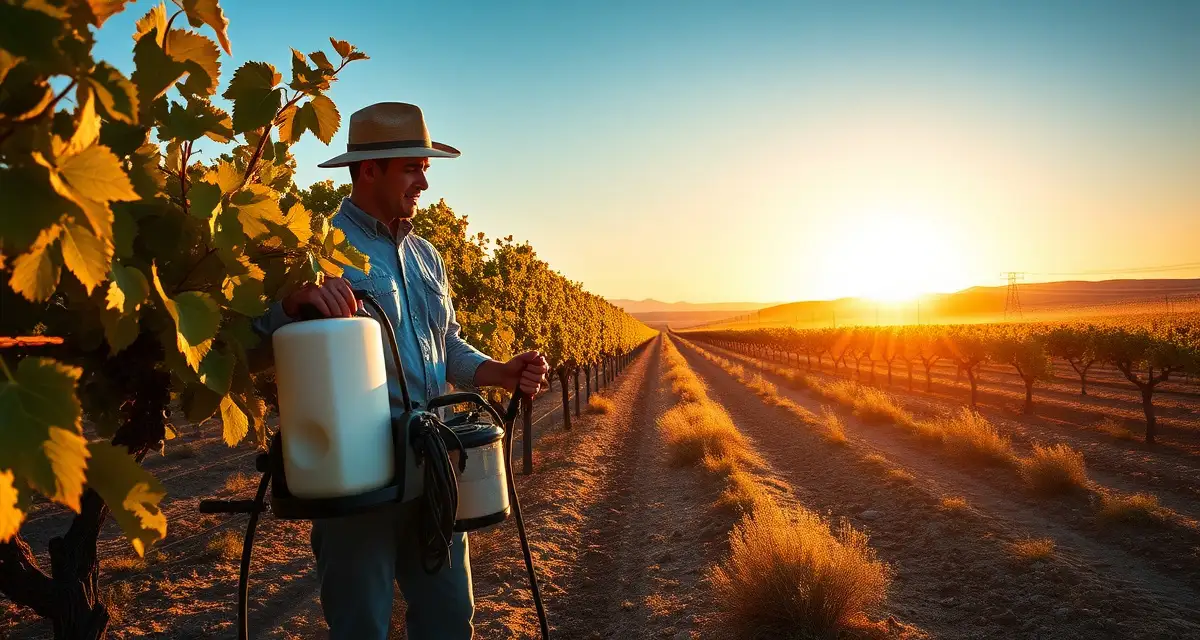
Arizona Vineyard Spray Log Template, AZDA Compliant
Arizona AZDA requirements include fields for irrigation method that affect label compliance -- a detail that California and Texas templates miss entirely. In Arizona's irrigation-dependent high-desert viticulture, the irrigation method used in conjunction with pesticide applications affects how those applications comply with label restrictions about soil-applied versus foliar applications, and about water management that may concentrate or dilute applied materials.
Arizona requires pesticide records kept for minimum 2 years from date of application. This is the basic requirement, but a complete AZDA-compliant spray log for Arizona vineyards needs careful attention to the state's specific field requirements and the unique operational context of high-desert vineyard production.
TL;DR
- Arizona AZDA requires a minimum 2-year record retention period for all commercial pesticide applications, including general-use materials -- organic operations under USDA NOP certification must retain records for 5 years, which overrides the state minimum
- Arizona's irrigation-dependent viticulture creates a unique documentation requirement: the irrigation method (drip, furrow, overhead) must be recorded when applications are made through or in coordination with the irrigation system, to demonstrate label compliance for soil-applied systemics and drip-injected products
- Application time documentation is particularly critical in Arizona -- sulfur phytotoxicity risk begins above 90 degrees F, and at Willcox's 4,200-foot elevation that threshold can be crossed by 10 AM on many June-August days; an early-morning application time supports both label compliance and product efficacy documentation
- Arizona's July-August monsoon season creates disease pressure windows from downy mildew and botrytis that require rapid spray response; records during this period should document the storm-triggered infection events that justified applications, not just the products used
- Pierce's disease risk in lower-elevation Sonoita blocks near riparian corridors requires sharpshooter vector management records that include the monitoring data (trap counts) that triggered the application -- not just the chemistry used
- VitiScribe's offline entry capability is important for Arizona wine regions (Sonoita, Willcox, Verde Valley) where remote vineyard locations frequently have limited cellular coverage; records entered offline sync when connectivity returns, maintaining accurate field-time documentation
Required Fields for Arizona AZDA-Compliant Spray Records
Applicator information:
- Applicator name
- Arizona Commercial Pesticide Applicator license number
- Business name and address (for commercial applicators)
Application site:
- Vineyard/farm name
- County
- Physical address or legal description
- Block or field identifier
- Acres treated
Product information:
- Product name (exact label name)
- EPA pesticide registration number
- Restricted-use pesticide designation (if applicable)
- Active ingredient(s)
Application details:
- Date of application
- Application rate per acre (or per treatment area)
- Total amount of pesticide used (with units)
- Application method
- Equipment calibration notes (recommended for accuracy documentation)
Additional fields relevant to Arizona:
- Irrigation method (drip, furrow, overhead -- where relevant to application type)
- Water source if relevant to application method
Environmental conditions:
- Temperature at time of application
- Wind speed and direction
- Time of application (Arizona's heat makes application timing critical -- document early morning applications)
Target information:
- Target pest(s)
- Crop (wine grapes, table grapes, etc.)
Why Irrigation Method Matters in Arizona
Arizona's entirely irrigation-dependent viticulture means that irrigation system management intersects with pesticide application records in ways that don't apply in rainfall-dependent wine regions.
Soil-applied systemic insecticides: Products like Admire Pro (imidacloprid) applied as soil drench or through drip irrigation systems are labeled with specific requirements about irrigation method and volume. Your spray record should document whether you applied via soil surface drench, injection through drip irrigation, or another soil application method.
Label compliance for drip-applied materials: Some pesticide labels specify requirements for drip injection -- minimum soil moisture at time of application, injection timing relative to irrigation cycles, and verification that material moved through the drip system to the rootzone. Your records should document compliance with these label requirements.
Water quality and drift documentation: Arizona's monsoon season brings high-wind conditions during and after storm events. Documenting wind speed and direction during monsoon-adjacent applications protects you in the event of a drift complaint and demonstrates that you applied under appropriate conditions. For more on weather documentation and drift defense, see vineyard spray drift documentation.
Arizona's Summer Heat and Record Timing
Arizona's high-desert summer temperatures create a narrow early-morning spray window for many products. Documenting application time is particularly important in Arizona to show that you applied when conditions were appropriate.
For sulfur applications, temperatures exceeding 90°F create phytotoxicity risk. In Willcox (elevation ~4,200 ft), summer daytime temperatures regularly exceed this threshold by 10 AM on many June-August days. An application logged at 6:30 AM when temperatures were 72°F tells a different compliance story than one logged at 11 AM when temperatures were 94°F.
Time of application should be captured in your Arizona spray records as standard practice, even when not strictly mandated by state regulation. For how VitiScribe handles weather station integration to auto-populate temperature and wind readings at time of entry, see weather data integration for spray records.
Record Retention and Inspection
Arizona Department of Agriculture requires pesticide application records maintained for a minimum of 2 years from the date of application. Records must be made available for AZDA inspection on request. AZDA agricultural inspectors conduct compliance monitoring visits that can include pesticide record review.
Digital records meeting Arizona format requirements are accepted. VitiScribe's Arizona compliance profile generates AZDA-formatted records stored with secure cloud backup. Remote vineyard locations in Arizona wine regions (Sonoita, Willcox) sometimes have limited connectivity, making VitiScribe's offline entry capability important for field logging at time of application. See Arizona vineyard management software options.
Arizona-Specific Pest Considerations
Arizona's wine regions face pest pressures that don't appear in standard vineyard spray log templates designed for California:
Pierce's disease: Lower-elevation Sonoita blocks adjacent to riparian corridors are at risk from sharpshooter vectors. Spray records for sharpshooter management need to capture the vector target and the IPM rationale (trap monitoring data) that triggered the application.
Monsoon-season disease pressure: Unlike California's dry summer, Arizona's July-August monsoon brings disease pressure from downy mildew and botrytis that requires rapid spray response. Your records during this period should document the storm-triggered infection events that justified applications.
High-UV fungicide interval adjustment: At Arizona's high elevations (4,000-6,000 ft), UV intensity is substantially higher than coastal California. Fungicide residues degrade faster under higher UV exposure. Your spray records should reflect adjusted intervals when appropriate to document that you were managing within residual efficacy windows.
Frequently Asked Questions
What fields are required on an Arizona vineyard spray log?
Arizona AZDA requires pesticide application records to include: applicator name and Arizona Commercial Pesticide Applicator license number (for commercial applications), date of application, location (county and address or legal description), product name and EPA registration number, application rate and total amount used, application method, acres treated, and target pest. For Arizona's irrigation-integrated applications, the method of application (including whether applied through drip irrigation system) should be documented to demonstrate label compliance. Weather conditions at application -- especially temperature and wind speed -- are strongly recommended given Arizona's heat and wind concerns.
How long must Arizona vineyards retain pesticide records?
Arizona AZDA requires pesticide application records retained for a minimum of 2 years from the date of application. This applies to all commercial pesticide applications including general-use and restricted-use materials. Records must be available for AZDA inspection on request. If your Arizona vineyard operates under organic certification, USDA NOP requires 5-year retention for certified organic operations -- plan your record keeping system to meet the longer certification requirement if applicable.
Can VitiScribe generate Arizona AZDA-compliant spray logs?
Yes. VitiScribe's Arizona compliance profile generates AZDA-formatted spray records with all required fields including Arizona Commercial Pesticide Applicator license number format and the irrigation method field relevant to Arizona's drip-based viticulture. The mobile app's offline capability handles remote vineyard locations in Willcox, Sonoita, and Verde Valley where cell coverage is limited. Arizona-specific features include monsoon-season disease pressure tracking, Pierce's disease vector management templates for Sonoita operations, and early-morning application time documentation for heat-compliance records. See the full compliance hub for all state spray log formats.
How do I document drip-injected pesticide applications in Arizona?
For drip-injected materials, your spray record should capture the application method as "drip injection," the irrigation system type, the injection rate, the duration of injection, and whether a flush cycle followed to move the material through the drip lines to the rootzone. Label requirements for drip-applied materials vary by product -- some specify minimum soil moisture conditions at injection, others specify minimum post-injection irrigation volume. Document each of these label-required steps in your record notes field so that your record demonstrates full label compliance, not just that you applied the product.
What should Arizona spray records include for monsoon-season applications?
During Arizona's July-August monsoon season, spray records should document the specific triggering event or disease risk indicator that prompted each application -- for example, "application following 0.4 inch monsoon event on July 14; downy mildew sporulation conditions present." This documentation distinguishes reactive IPM-based applications from calendar spraying and is important if your operation pursues sustainable certification or faces a compliance review. Also document wind conditions before, during, and after application during monsoon periods, since monsoon-adjacent applications face elevated drift scrutiny.
What is Arizona Vineyard Spray Log Template, AZDA Compliant?
[FAQ_ANSWER_PLACEHOLDER: This answer needs to be generated by AI with specific data, examples, and actionable advice relevant to Arizona Vineyard Spray Log Template, AZDA Compliant. Target 50-150 words.]
How much does Arizona Vineyard Spray Log Template, AZDA Compliant cost?
[FAQ_ANSWER_PLACEHOLDER: This answer needs to be generated by AI with specific data, examples, and actionable advice relevant to Arizona Vineyard Spray Log Template, AZDA Compliant. Target 50-150 words.]
How does Arizona Vineyard Spray Log Template, AZDA Compliant work?
[FAQ_ANSWER_PLACEHOLDER: This answer needs to be generated by AI with specific data, examples, and actionable advice relevant to Arizona Vineyard Spray Log Template, AZDA Compliant. Target 50-150 words.]
What are the benefits of Arizona Vineyard Spray Log Template, AZDA Compliant?
[FAQ_ANSWER_PLACEHOLDER: This answer needs to be generated by AI with specific data, examples, and actionable advice relevant to Arizona Vineyard Spray Log Template, AZDA Compliant. Target 50-150 words.]
Who needs Arizona Vineyard Spray Log Template, AZDA Compliant?
[FAQ_ANSWER_PLACEHOLDER: This answer needs to be generated by AI with specific data, examples, and actionable advice relevant to Arizona Vineyard Spray Log Template, AZDA Compliant. Target 50-150 words.]
How long does Arizona Vineyard Spray Log Template, AZDA Compliant take?
[FAQ_ANSWER_PLACEHOLDER: This answer needs to be generated by AI with specific data, examples, and actionable advice relevant to Arizona Vineyard Spray Log Template, AZDA Compliant. Target 50-150 words.]
What should I look for when choosing Arizona Vineyard Spray Log Template, AZDA Compliant?
[FAQ_ANSWER_PLACEHOLDER: This answer needs to be generated by AI with specific data, examples, and actionable advice relevant to Arizona Vineyard Spray Log Template, AZDA Compliant. Target 50-150 words.]
Is Arizona Vineyard Spray Log Template, AZDA Compliant worth it?
[FAQ_ANSWER_PLACEHOLDER: This answer needs to be generated by AI with specific data, examples, and actionable advice relevant to Arizona Vineyard Spray Log Template, AZDA Compliant. Target 50-150 words.]
Sources
- Arizona Department of Agriculture (AZDA)
- EPA Worker Protection Standard
- UC Cooperative Extension Viticulture
- USDA National Organic Program (NOP)
- Arizona Cooperative Extension
Get Started with VitiScribe
Arizona's high-desert viticulture requires spray records that go beyond the standard template -- irrigation method, early-morning application timing, and monsoon-season disease event documentation are details that matter at AZDA inspection and at sustainable certification audit. VitiScribe's Arizona compliance profile includes all AZDA-required fields, offline mobile entry for remote Sonoita and Willcox vineyard locations, and cloud backup that satisfies the 2-year retention requirement. Try VitiScribe free and generate your first AZDA-compliant spray record today.