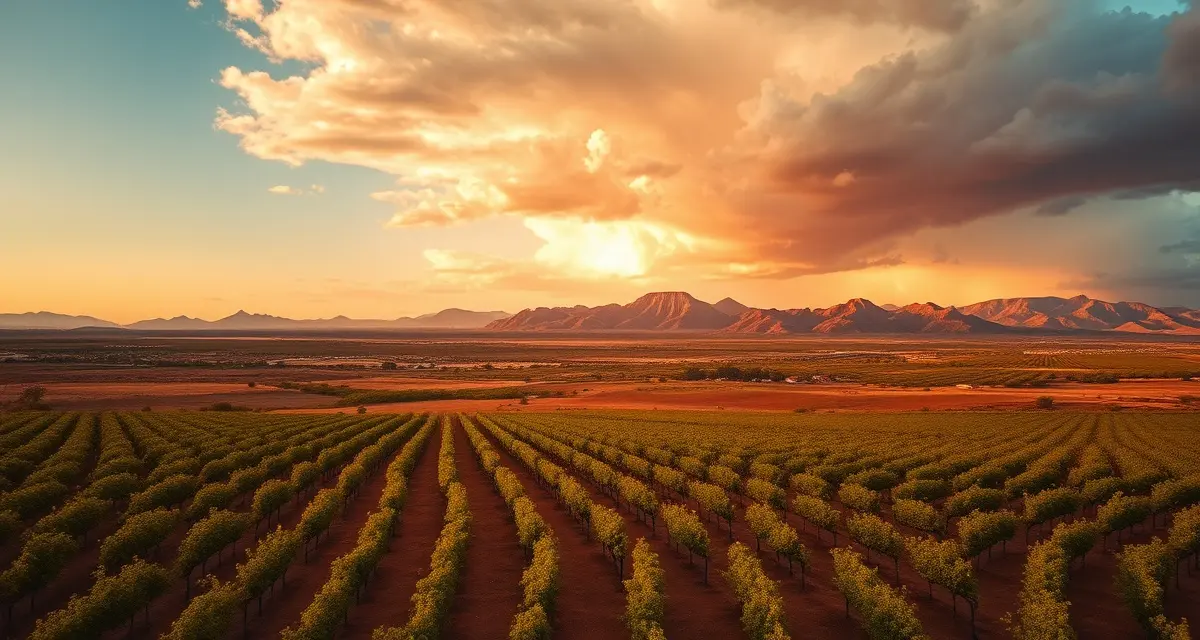
Vineyard Management Software for Arizona Wineries
Arizona wine country is growing rapidly, with unique summer monsoon disease risk windows that no California-focused vineyard software adequately addresses. The Sonoita, Willcox, and Verde Valley wine regions experience a climate regime that's fundamentally different from Napa, Willamette Valley, or Columbia Valley -- hot, dry conditions with a concentrated July-August monsoon season that creates a disease pressure calendar unlike anywhere else in US viticulture.
TL;DR
- Arizona's monsoon season (July-August) creates a concentrated downy mildew and botrytis risk window that does not appear on any standard California or Pacific Northwest IPM calendar
- Sulfur applications must be made before 90 degrees F to avoid phytotoxicity -- early morning spray windows are standard practice in Arizona vineyards through the summer
- Arizona Department of Agriculture requires applicators to hold a valid Commercial Applicator license for restricted-use pesticides, with the license number on every RUP record
- Record retention minimum in Arizona is 2 years from the date of application
- Pierce's disease risk is a real concern in lower-elevation Sonoita blocks adjacent to riparian corridors where glassy-winged sharpshooter is present
- Offline mobile logging is practically necessary in remote Arizona wine regions where cell coverage in the vineyard is limited
- California-designed spray software doesn't account for Arizona's high diurnal temperature variation, monsoon timing, or AZDA compliance requirements
Arizona's high-desert heat creates unique pest timing needs that CA-focused tools simply weren't built for. When your Cabernet Sauvignon vineyard at 4,200 feet elevation in Willcox is getting afternoon thunderstorms in July and experiencing temperatures that swing 40°F between day and night, you need IPM tools calibrated to those conditions -- not a spray calendar designed for the Napa Valley.
Arizona's Wine Regions and Their IPM Challenges
Willcox AVA (4,000-5,000 ft elevation): The largest wine-growing region in Arizona. Semi-arid climate with a strong monsoon season from July through September. Powdery mildew pressure in spring through early summer, followed by a monsoon-driven downy mildew and botrytis risk window that's unlike anything in western wine states. High diurnal temperature variation (40°F+ swings) affects fungicide efficacy and spray timing decisions.
Sonoita AVA (4,800-5,200 ft elevation): Higher elevation than Willcox with similar monsoon patterns. Some of the longest-established Arizona vineyards. notable Pierce's disease risk in lower-elevation blocks adjacent to riparian habitat.
Verde Valley and Arizona's Central Highlands: Lower elevation (3,500-4,500 ft), warmer conditions, different variety mix (some tropical varieties alongside vinifera). notable summer heat limits spray windows to early morning.
Prescott and Northern Arizona: Higher elevation cool-climate regions with shorter growing seasons and unique cold-climate variety focus.
Arizona's Unique Disease Pressure Calendar
Arizona's IPM calendar doesn't map to any standard California or Pacific Northwest template. The monsoon is the defining event.
Pre-monsoon (April - June): Classic dry spring with powdery mildew as the primary disease concern. Spray timing is heat-limited -- applications made when temperatures exceed 90°F risk sulfur phytotoxicity and reduced efficacy of some systemic materials. Early morning applications (before 10 AM) are standard practice.
Monsoon onset (July - August): When the North American Monsoon brings afternoon thunderstorms to southeastern Arizona, the disease pressure calendar shifts completely. Downy mildew infection events can occur multiple times per week. Botrytis risk rises sharply. Phomopsis on shoot lesions can spread rapidly in high-humidity post-storm periods. Growers who have only programmed for dry-season management get caught unprepared.
Post-monsoon harvest (September - October): Conditions return to dry and warm, but residual disease pressure from the monsoon season continues to affect crop quality. PHI management during this period requires careful tracking.
Arizona Department of Agriculture (AZDA) Compliance
Arizona's pesticide use regulations are administered by the Arizona Department of Agriculture. Arizona requires commercial pesticide applicators to maintain records and hold Arizona Commercial Applicator licenses for restricted-use pesticide applications.
Required record fields for Arizona vineyard spray records:
- Applicator name and Arizona Commercial Applicator license number
- Date and time of application
- Location description (property address, APN, or other specific location identifier)
- Product name and EPA registration number
- Application rate and total amount used
- Method of application
- Target pest and crop
- Acres treated
Record retention: Arizona requires pesticide application records to be retained for a minimum of 2 years from the date of application.
Restricted-use pesticides: Any RUP application in Arizona requires an Arizona Commercial Applicator license. The license number must appear on every RUP application record.
VitiScribe's Arizona compliance profile applies AZDA record requirements automatically, including the license number field for RUP applications and state-specific record formats. See transparent pricing and plan options for Arizona vineyards.
Managing Spray Timing in Arizona Heat
High-desert heat creates spray timing constraints that temperate-climate software doesn't account for. In Arizona vineyards, many summer spray applications need to be made before 9-10 AM to avoid:
- Sulfur phytotoxicity at temperatures above 90°F
- Rapid evaporation that reduces spray coverage and efficacy
- Increased drift risk as thermal updrafts develop through midday
- Worker heat stress concerns under Worker Protection Standard
VitiScribe's spray window planning tools account for temperature thresholds. If your vineyard is logging temperatures above sulfur's phytotoxicity threshold, the system can flag that condition when you're scheduling an application. This is the kind of region-specific detail that California-built tools don't accommodate.
For applications involving broad-spectrum insecticides, early morning timing also matters for bee protection. Arizona's wine regions have notable managed pollinator activity and native bee populations that require protection from daytime applications.
Monsoon Season Record Keeping
The monsoon season creates a surge of spray activity in July and August that requires efficient record keeping to stay compliant. Multiple applications per week, changing product choices as disease pressure shifts from powdery mildew to downy mildew and botrytis, and PHI management as harvest approaches in September-October -- all of this needs to be captured accurately and in real time.
Mobile spray log entry at the time of application is especially important in Arizona's monsoon season because conditions and spray decisions can change rapidly. An application planned for a dry day may be rescheduled when an afternoon storm moves through -- and that rescheduling decision needs to be documented. See vineyard spray log mobile entry guide for field logging best practices.
VitiScribe's offline mobile capability means you can log spray records in remote vineyard blocks without cell service and sync when you return to connectivity. In some Arizona wine regions, cell service is limited in the vineyard itself -- offline capability isn't a luxury, it's a necessity.
Pierce's Disease Management in Arizona
Pierce's disease (Xylella fastidiosa) risk in Arizona is concentrated in lower-elevation Sonoita blocks adjacent to riparian corridors, where glassy-winged sharpshooter and other vector species are present. Arizona's warm winters reduce sharpshooter overwinter mortality compared to California, potentially supporting higher overwintering vector populations.
Arizona growers with Sonoita vineyards near riparian habitat should include annual vector monitoring in their IPM documentation. Yellow sticky card traps for glassy-winged sharpshooter provide both monitoring data and documentation for your IPM records. There is no cure for Pierce's disease -- prevention through vector management and monitoring is the only tool.
Frequently Asked Questions
What vineyard management software works for Arizona desert vineyards?
Arizona vineyards need software that handles the monsoon season's rapid disease pressure shifts, heat-adapted spray timing constraints, and AZDA compliance requirements -- not a template built for California or Pacific Northwest conditions. VitiScribe's flexible spray calendar accommodates Arizona's biphasic disease pressure calendar (dry spring powdery mildew season + monsoon downy mildew and botrytis season). AZDA-formatted record exports satisfy compliance requirements, and mobile offline capability handles the connectivity limitations common in remote Arizona vineyard locations.
How does VitiScribe handle Arizona's heat-adapted pest pressure calendar?
VitiScribe connects to local weather station data for your Arizona vineyard location, pulling temperature readings that reflect your high-desert conditions. The spray window planner can incorporate temperature thresholds relevant to sulfur phytotoxicity and heat-stress application limits. Spray templates for Arizona's primary pests -- powdery mildew, downy mildew (monsoon season), botrytis, and Pierce's disease vector management -- can be customized to your regional timing. Block-level spray history reports let you review how your pest management calendar shifted across the monsoon season transition year over year.
What ADA pesticide reporting requirements apply to Arizona vineyards?
Arizona Department of Agriculture requires commercial pesticide applicators to hold a valid Arizona Commercial Applicator license for restricted-use pesticide applications. Spray records must include the applicator's license number, application date and location, product name and EPA registration number, rate and amount applied, method of application, target pest, and acreage treated. Records must be retained for a minimum of 2 years. AZDA compliance inspections can request records on-site. Digital records meeting AZDA format requirements are accepted.
How do Arizona vineyards handle botrytis risk during the monsoon season?
Monsoon-season botrytis management in Arizona requires a shift in spray program emphasis starting in early July. Switch from powdery mildew-focused sulfur and FRAC Group 3 materials to botrytis-specific materials from FRAC Groups 7, 11, and 17. Canopy management completed earlier in the season -- leaf removal at fruit zone, shoot thinning -- significantly reduces botrytis infection risk during the high-humidity monsoon windows. Document canopy management activities alongside spray records so your program reflects the integrated approach.
Does Arizona require spray records for general-use pesticides as well as restricted-use products?
Arizona's record-keeping requirements apply to commercial pesticide applications including restricted-use products. General-use pesticide records are required when applications are made by commercially licensed applicators. For vineyards where the owner applies general-use pesticides themselves, documentation is still recommended as a best practice for PHI tracking, certification audits, and buyer documentation requests. VitiScribe logs both RUP and general-use applications with the same field structure.
How does elevation affect disease management decisions in Arizona vineyards?
Elevation in Arizona wine regions meaningfully affects spray timing and disease risk. Higher-elevation vineyards in Willcox and Sonoita (4,000-5,200 feet) have cooler night temperatures that can slow powdery mildew development but also create longer morning dew periods that favor downy mildew. Lower-elevation Verde Valley blocks have more heat-stress concerns for sulfur timing. Document elevation and microclimate notes in your block data so multi-season records reflect the variation in how blocks respond to similar weather events.
What is Vineyard Management Software for Arizona Wineries?
[FAQ_ANSWER_PLACEHOLDER: This answer needs to be generated by AI with specific data, examples, and actionable advice relevant to Vineyard Management Software for Arizona Wineries. Target 50-150 words.]
How much does Vineyard Management Software for Arizona Wineries cost?
[FAQ_ANSWER_PLACEHOLDER: This answer needs to be generated by AI with specific data, examples, and actionable advice relevant to Vineyard Management Software for Arizona Wineries. Target 50-150 words.]
How does Vineyard Management Software for Arizona Wineries work?
[FAQ_ANSWER_PLACEHOLDER: This answer needs to be generated by AI with specific data, examples, and actionable advice relevant to Vineyard Management Software for Arizona Wineries. Target 50-150 words.]
What are the benefits of Vineyard Management Software for Arizona Wineries?
[FAQ_ANSWER_PLACEHOLDER: This answer needs to be generated by AI with specific data, examples, and actionable advice relevant to Vineyard Management Software for Arizona Wineries. Target 50-150 words.]
Who needs Vineyard Management Software for Arizona Wineries?
[FAQ_ANSWER_PLACEHOLDER: This answer needs to be generated by AI with specific data, examples, and actionable advice relevant to Vineyard Management Software for Arizona Wineries. Target 50-150 words.]
Related Articles
Sources
- Arizona Department of Agriculture (AZDA)
- California Department of Pesticide Regulation (CDPR)
- UC Cooperative Extension Viticulture
- American Vineyard Foundation
- American Society for Enology and Viticulture (ASEV)
Get Started with VitiScribe
Arizona's dual-season disease pressure calendar -- dry spring powdery mildew management followed by monsoon-season botrytis and downy mildew -- requires a spray record system that's flexible enough to follow your actual program, not a template built for California or Oregon. VitiScribe's block-level records, AZDA-compliant export formats, and offline mobile entry are built for vineyards where conditions change fast and cell coverage is spotty. Try it free and see how your Arizona vineyard records look when compliance keeps pace with your season.