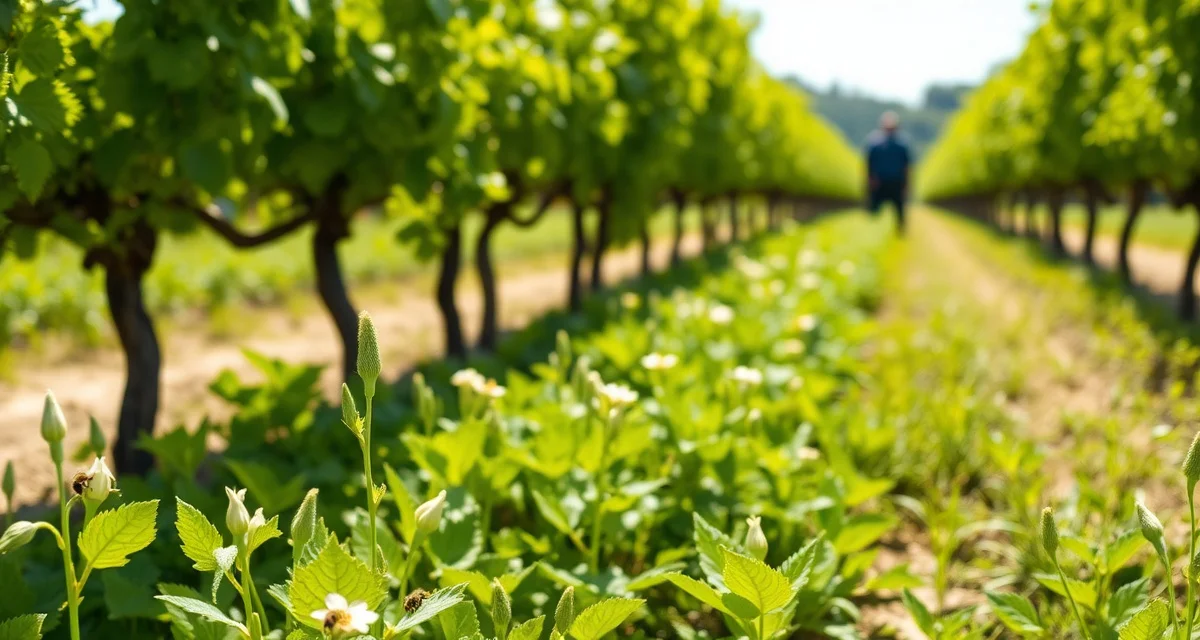
Cover Crop and Spray Interaction Records in Vineyards
Cover crops and pesticide applications are increasingly managed as interconnected decisions in California vineyards, not separate operations. California requires specific pre-notification for pesticide applications near blooming cover crops. Organic certification compliance requires documentation of what was applied near certified ground. And pollinator protection programs, from LODI Rules to the California Department of Food and Agriculture's guidance, expect that bee exposure risk during pesticide applications is assessed and documented.
TL;DR
- California DPR's Pollinator Protection Best Management Practices require that applicators assess and document bee exposure risk when applying materials with bee hazard ratings near blooming cover crops -- the cover crop bloom status needs to be in your spray record
- For certified organic vineyards, herbicide applications to cover crops in conventional check rows represent one of the most common inadvertent compliance failures when drift reaches adjacent certified blocks
- Pre-emergent herbicide residue carryover in cover crop biomass is a real agronomic concern; documenting herbicide applications with cover crop species and growth stage creates a reference file for diagnosing establishment failures in subsequent seasons
- If your operation has registered beekeepers in proximity, California may require specific pre-notification before applying materials with bee toxicity ratings near blooming cover crops -- absent documentation of that notification, an inspection creates exposure
- Cover crops that support natural enemy populations (ground beetles, parasitic wasps, lacewings) are an IPM tool; mowing at full bloom before an insecticide application may disrupt that habitat, and the timing decision deserves a note in the record
- VitiScribe adds a cover crop status field to every spray record; selecting "present and blooming" triggers pollinator protection documentation fields including time of application, bee hazard rating, and pre-notification status
Most spray log systems don't have a field for cover crop status. That's a gap that creates compliance problems in several directions at once.
Why Cover Crop Status Belongs in Your Spray Log
Pollinator Protection Compliance
California DPR's Pollinator Protection Best Management Practices ask that pesticide applicators assess and document pollinator exposure risk when applying materials that carry bee hazard statements. Blooming cover crops in a vineyard interrow represent a direct pollinator exposure pathway.
When you apply an insecticide to a block while the interrow cover crop is in bloom, that application has a different risk profile than the same application to a block with mowed or non-blooming ground cover. Documenting the cover crop status at the time of the application is the evidence that you assessed the exposure risk.
California requires specific pre-notification for applications near blooming cover crops in some situations, including coordination with registered migratory beekeepers. If your operation is in a region with active beekeeping partnerships and you apply without notifying relevant parties, the absence of cover crop documentation in your spray records is a red flag in any inspection.
Organic Certification Compliance
For certified organic or transitioning vineyards, herbicide applications to cover crops represent one of the most common inadvertent compliance failures. A herbicide application that's compliant on a conventional check strip can contaminate adjacent organic blocks if drift reaches a transitioning or certified block.
Documenting cover crop management and any pesticide applications near organic blocks, with cover crop status included, creates the paper trail that certifiers need to verify that prohibited materials weren't applied to certified ground through drift or runoff.
The contamination risk works in both directions. If you apply copper sulfate or an OMRI-listed material to your cover crop in a certified organic block, that application needs to be in your organic input records as well as your spray records.
Herbicide Carryover Records
Herbicide residue carryover in cover crop biomass and in the soil is a real agronomic concern, particularly in high-value permanent crops like vineyards. Pre-emergent herbicides applied to interrow cover crops can have soil residual activity that affects cover crop species establishment in subsequent seasons.
Documenting herbicide applications to cover crops with the cover crop species and growth stage on the record date creates a reference file for diagnosing cover crop establishment failures in subsequent seasons. If your ryegrass interseeding fails two years in a row in the same blocks, and your records show consistent pre-emergent herbicide use in those blocks, the connection is there to see.
What Cover Crop Records Should Include
A cover crop spray interaction record in your spray log should add the following fields to your standard application record:
Cover crop species present: Ryegrass, crimson clover, mustard, fescue, or other. Matters for both drift risk assessment (height and density) and organic material eligibility determination.
Cover crop bloom status: Not blooming, early bloom, full bloom, or past bloom. This drives the pollinator protection assessment.
Interrow management method: Mowed, disced, or standing, as of the application date. Mowed cover crops present lower bee exposure risk than standing blooming cover. This field documents the management decision made before the application.
Pre-notification status: Whether required pre-notification was made to any registered beekeepers in proximity, and the date of notification.
Pollinator exposure risk assessment: A simple notation confirming that the application was assessed for bee exposure risk given the cover crop bloom status and the product's bee hazard rating.
Cover Crops and Organic Programs
The organic vineyard spray records guide covers certification requirements in detail. For cover crop management specifically, organic programs need to document:
- Cover crop species selection and seeding records
- Any inputs applied to cover crops (seeds, inoculants, fertilizers)
- Mowing timing in relation to organic block pesticide applications
- Any herbicide applications to conventional check rows that could create drift risk to certified blocks
Certifiers reviewing organic records sometimes find that cover crop management documentation is the weakest part of the records package. Conventional inputs on ground cover in the interrow of a certified block, even if technically permitted under the certifier's rules, need to be documented and justified.
Documenting Bee-Safe Application Practices
If your vineyard is enrolled in a bee protection partnership or sustainable winegrowing program that requires bee-safe application documentation, your spray records need to include:
- Time of application (confirming applications weren't made during bee foraging hours where required)
- Bee hazard rating of the product applied
- Cover crop bloom status at time of application
- Any pre-application notification made to beekeepers
VitiScribe's vineyard worker safety spray logs system captures these fields alongside standard compliance fields. A cover crop status field is added to every spray record, and bloom status is a required selection when the cover crop status is "present and blooming."
Integrating Cover Crop Records with Your IPM Program
Cover crops that support natural enemy populations, ground beetles, parasitic wasps, and lacewings, are an IPM tool as much as they are a soil health practice. When you mow your cover crop at full bloom to reduce bee exposure before an insecticide application, you may also be disrupting the natural enemy habitat at a critical time in the pest management season.
Documenting both the cover crop management decision and the timing of the adjacent pesticide application creates a record that, over multiple seasons, shows you the relationship between your cover crop management practices and your natural enemy populations. It's the kind of data that's invisible without block-level records that capture both types of information.
Frequently Asked Questions
Why should I track cover crop status in my vineyard spray records?
California DPR requires risk assessment documentation for pesticide applications near blooming cover crops, particularly for materials with bee hazard ratings. Organic certification compliance requires documentation of inputs applied in proximity to certified blocks, including any materials used in interrow cover crops. Herbicide applications to cover crops need to be documented for carryover risk analysis and certifier review. All of these requirements are satisfied by a spray record that includes cover crop status as a documented field.
How does VitiScribe handle spray applications near blooming cover crops?
VitiScribe adds a cover crop status field to every spray record. When you select "present and blooming," the system adds pollinator protection assessment fields to the record, including time of application, bee hazard rating of the applied material, and pre-notification documentation. The bloom status field is a documented risk assessment component that satisfies California DPR's pollinator protection best management practice documentation requirements.
What are California's rules for spraying near pollinator habitat in vineyards?
California DPR's Pollinator Protection Best Management Practices recommend that applicators avoid applying materials with bee hazard ratings during bloom of flowering cover crops and weeds, apply in early morning or evening when bees are less active, pre-notify registered beekeepers before applying materials with bee toxicity, and document these decisions. Some counties have additional requirements. DPR enforcement of these practices is increasing as pollinator protection becomes a higher-priority compliance area.
How do I document a cover crop mowing decision made specifically to reduce bee exposure before a spray application?
Note the mowing action as a canopy or floor management event in VitiScribe, linked to the relevant block, with a notation that the timing was driven by pre-spray pollinator protection. Then log the subsequent spray application with the updated cover crop status (mowed, not blooming) and reference the mowing event in the spray record notes. This two-step documentation -- mowing record linked to spray record -- shows that the management decision was deliberate and recorded before the application, not reconstructed afterward. For sustainable certification programs like Lodi Rules or California Sustainable Winegrowing, this kind of documented decision chain is exactly the evidence auditors look for when evaluating IPM compliance.
Do I need to notify beekeepers before every pesticide application near cover crops, or only for certain products?
The pre-notification requirement in California is triggered by specific product bee hazard designations, not by all pesticide applications. Products labeled "highly toxic to bees" (Bee Hazard 1) in California require that registered beekeepers in proximity be notified before application. The requirement to notify applies when blooming plants that bees visit are present in or adjacent to the application site. Cover crops in bloom fall within this trigger. California's BeeWhere program maintains a registry of beekeeper locations that applicators can use to identify registered operations within notification range. VitiScribe's pollinator protection fields prompt you to note notification status when a product with a bee hazard rating is applied near blooming cover crops, creating a record of that compliance decision at the time of application.
What is Cover Crop and Spray Interaction Records in Vineyards?
[FAQ_ANSWER_PLACEHOLDER: This answer needs to be generated by AI with specific data, examples, and actionable advice relevant to Cover Crop and Spray Interaction Records in Vineyards. Target 50-150 words.]
How much does Cover Crop and Spray Interaction Records in Vineyards cost?
[FAQ_ANSWER_PLACEHOLDER: This answer needs to be generated by AI with specific data, examples, and actionable advice relevant to Cover Crop and Spray Interaction Records in Vineyards. Target 50-150 words.]
How does Cover Crop and Spray Interaction Records in Vineyards work?
[FAQ_ANSWER_PLACEHOLDER: This answer needs to be generated by AI with specific data, examples, and actionable advice relevant to Cover Crop and Spray Interaction Records in Vineyards. Target 50-150 words.]
What are the benefits of Cover Crop and Spray Interaction Records in Vineyards?
[FAQ_ANSWER_PLACEHOLDER: This answer needs to be generated by AI with specific data, examples, and actionable advice relevant to Cover Crop and Spray Interaction Records in Vineyards. Target 50-150 words.]
Who needs Cover Crop and Spray Interaction Records in Vineyards?
[FAQ_ANSWER_PLACEHOLDER: This answer needs to be generated by AI with specific data, examples, and actionable advice relevant to Cover Crop and Spray Interaction Records in Vineyards. Target 50-150 words.]
How long does Cover Crop and Spray Interaction Records in Vineyards take?
[FAQ_ANSWER_PLACEHOLDER: This answer needs to be generated by AI with specific data, examples, and actionable advice relevant to Cover Crop and Spray Interaction Records in Vineyards. Target 50-150 words.]
Related Articles
- Vineyard Spray Records in Ohio: ODA Requirements for Lake Erie Shore Vineyards
- Spray Applicator Records for Vineyards: Track Every Operator and License
Sources
- California Department of Pesticide Regulation (CDPR)
- California Department of Food and Agriculture (CDFA)
- UC Cooperative Extension Viticulture
- American Vineyard Foundation
- Wine Institute
Get Started with VitiScribe
Cover crop and spray interaction documentation is a compliance requirement that most spray log systems don't have a field for -- which is exactly where compliance gaps form. VitiScribe's cover crop status field, pollinator protection documentation prompts, and organic input records give you a single system that captures the full picture of what was applied, near what, and with what pre-application assessment. Try VitiScribe free and add cover crop status to your next spray record from the field.