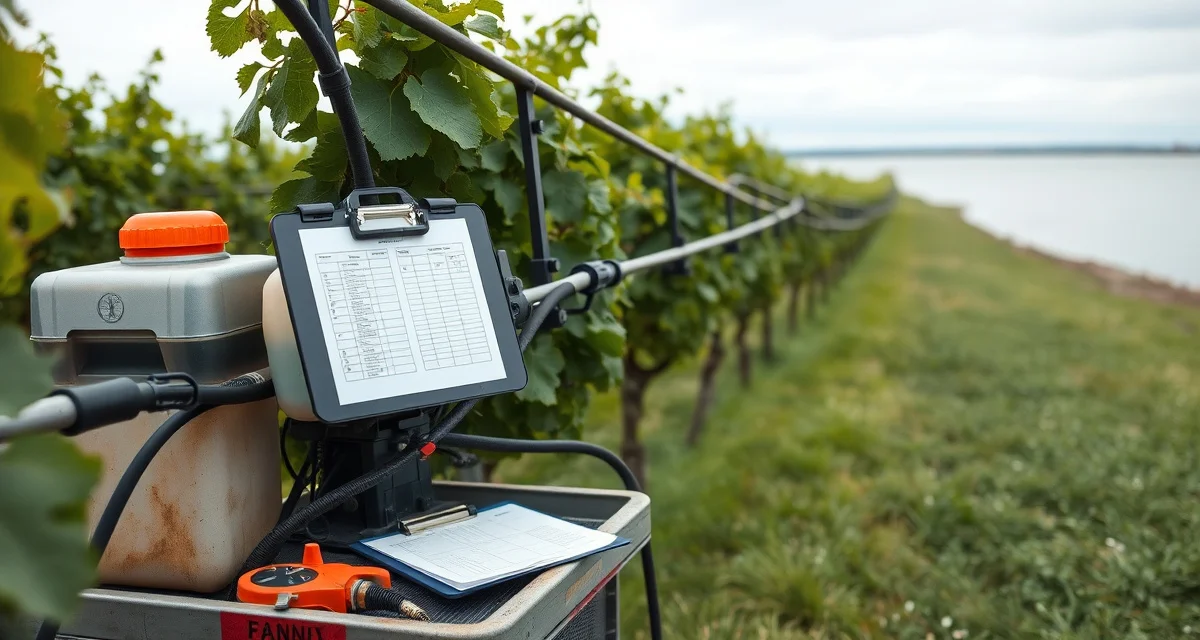
Vineyard Spray Records in Ohio: ODA Requirements for Lake Erie Shore Vineyards
Ohio wine grape acreage grew 11% in 2024-2025 with expanding ODA enforcement of record requirements as the state's wine industry develops. Ohio's proximity to Lake Erie creates aquatic buffer zone spray documentation requirements that most generic farm platforms don't recognize as distinct from standard field records.
TL;DR
- Ohio requires 2-year record retention (unlike the Ohio vineyard management guide which references 3 years -- the spray records compliance focus is the ODA's official 2-year minimum for commercial records under Ohio Pesticide Law Chapter 921)
- Ohio Commercial Pesticide Applicator License number is a required field on all restricted-use pesticide records -- missing this field is the most common ODA citation for Lake Erie shore operations
- Lake Erie shore proximity creates enhanced aquatic buffer zone documentation requirements driven by Ohio's water quality impairment obligations and ODA/Ohio EPA coordination on shoreline agricultural runoff
- Lake Erie Islands blocks (Kelleys Island, Put-in-Bay area) have the most direct lake exposure and the most intensive buffer zone documentation requirements -- the islands' proximity means nearly every block requires buffer documentation
- Grand River Valley AVA (Lake and Ashtabula counties) riverine blocks also require buffer documentation for Ohio River-adjacent applications
- VitiScribe's Ohio block mapping identifies Lake Erie shoreline proximity and activates buffer zone documentation fields automatically for applicable blocks, avoiding manual tracking of which blocks need buffer entries
No competitor has an Ohio vineyard compliance profile. VitiScribe's Ohio profile handles ODA requirements for Lake Erie shore and Ohio River valley vineyards.
Ohio Department of Agriculture Pesticide Requirements
The Ohio Department of Agriculture (ODA) administers pesticide regulation under the Ohio Pesticide Law (ORC Chapter 921). Commercial pesticide applicators in Ohio -- including wine grape vineyard operators -- must maintain pesticide application records that satisfy ODA requirements.
Required fields under Ohio ODA:
- Product name (trade name as labeled)
- EPA registration number
- Active ingredient and concentration
- Application date
- Location of application (county and site description sufficient to identify the location)
- Commodity or use site (wine grapes for vineyard operations)
- Amount of pesticide applied
- Application rate
- Acres treated
- Method of application
- Name of the licensed commercial applicator or private applicator
For restricted-use pesticides, the licensed applicator's Ohio Commercial Pesticide Applicator License number must be recorded on every application record.
Records must be retained for 2 years after the date of application and be available for ODA inspection.
Lake Erie Proximity and Aquatic Buffer Requirements
Ohio's proximity to Lake Erie requires enhanced aquatic buffer zone spray documentation -- the defining characteristic that makes Ohio's compliance profile distinct from neighboring Indiana or inland Ohio operations.
The Lake Erie shoreline is the most productive wine grape region in Ohio. The lake effect creates a more moderate growing season than inland Ohio, allowing Riesling, Pinot Gris, Cabernet Franc, and other cool-climate varietals to succeed. But the lake's proximity also creates the aquatic buffer documentation requirement that applies to most Lake Erie shore vineyard blocks.
Ohio's water quality regulations, shaped in part by Lake Erie's water quality concerns (including the recurring western Lake Erie harmful algal bloom problem), require that spray records document buffer distances from the lake, tributary streams, and wetlands when applications occur near these features.
VitiScribe's Ohio block mapping identifies Lake Erie shore proximity and flags aquatic buffer documentation fields for blocks within the relevant proximity zones. When spray records are entered for these blocks, the buffer zone documentation requirement is activated automatically.
Ohio's Lake Erie Shore Wine Region
Ohio's wine grape production is concentrated in three primary areas:
Lake Erie Islands (Kelleys Island, Put-in-Bay area): The island vineyards have the most direct lake exposure and the most intensive buffer zone documentation requirements. The islands' small-farm character also means most operations are in the small-to-mid-size range.
Lake Erie Shoreline (Ottawa, Erie, and Lorain counties): The mainland shore region is the largest wine grape production area in Ohio. Operations here range from small estate vineyards to larger commercial blocks.
Grand River Valley AVA (Lake and Ashtabula counties): The northeastern Ohio wine region centered on the Grand River watershed. The Grand River's connection to Lake Erie means buffer zone considerations apply to river-adjacent blocks as well.
VitiScribe's block-level mapping covers all three regions with appropriate buffer zone identification.
Are Lake Erie Shore Vineyards Subject to Additional Buffer Zone Requirements?
Yes. Lake Erie shore vineyards in Ohio face enhanced buffer zone requirements compared to inland Ohio operations due to:
Lake Erie water quality: Lake Erie's water quality impairment history, particularly western basin algal blooms linked to phosphorus and other nutrient and chemical runoff, has driven regulatory attention to agricultural chemical management near the lake.
TMDL requirements: Ohio's participation in Lake Erie Total Maximum Daily Load management creates enhanced agricultural runoff management expectations in the shoreline counties.
Ohio EPA coordination: ODA and Ohio EPA coordinate on water quality protection near Lake Erie. Spray records that document buffer zone compliance provide the documentation chain both agencies may review.
For most Lake Erie shore vineyard operations in Ohio, the buffer zone documentation is a consistent requirement across the season rather than an occasional consideration. VitiScribe builds this into the spray record workflow for identified blocks rather than leaving it to manual tracking.
Ohio Pesticide Applicator Licensing
Ohio requires commercial pesticide applicators to hold an Ohio Commercial Pesticide Applicator License issued by ODA. Agricultural pest control applications require Category 1A Agricultural Plant Pest Control certification. Private applicators in Ohio must hold a private applicator certificate.
VitiScribe's Ohio profile requires the Ohio license number on records involving restricted-use pesticides, with the license number field format aligned to Ohio's certification number structure. For a complete overview of Ohio's IPM program requirements and GBM management, see the Ohio vineyard management software guide.
Ohio River Valley Vineyard Compliance
Ohio also has wine grape production in the Ohio River valley in the southeastern part of the state. The Ohio River Valley AVA extends across Ohio, Indiana, Kentucky, and West Virginia. For Ohio-side Ohio River valley operations, the riverine environment creates different buffer zone considerations than Lake Erie -- focused on the Ohio River system rather than the Great Lakes.
VitiScribe's Ohio profile includes Ohio River proximity mapping for valley operations, with buffer documentation fields activated for blocks near the Ohio River and its Ohio-side tributaries.
Frequently Asked Questions
What pesticide records must Ohio vineyard operators maintain?
Ohio vineyard operators must maintain records for all commercial pesticide applications including: product name and EPA registration number, active ingredient, application date, location sufficient to identify the site, commodity (wine grapes), total amount applied, application rate, acres treated, method of application, and the name and Ohio commercial applicator license number. For restricted-use pesticides, the licensed applicator's Ohio Commercial Pesticide Applicator License number is required on every record. For Lake Erie shore blocks, aquatic buffer zone distances should be documented for applications near the lake, tributary streams, and identified wetlands. Records must be retained for 2 years.
How does VitiScribe apply Ohio ODA requirements to vineyard spray logs?
VitiScribe's Ohio profile applies ODA-specific required fields to spray records for Ohio blocks. Block mapping identifies Lake Erie shoreline proximity and activates aquatic buffer zone documentation fields for blocks in the shoreline region. Ohio River valley blocks similarly receive river proximity identification and relevant buffer documentation requirements. The Ohio Commercial Pesticide Applicator License number requirement for restricted-use products is enforced at the time of record entry. For multi-state operations including Ohio and Indiana or Ohio and Pennsylvania blocks, VitiScribe generates separate state-formatted exports for ODA inspection from each state's blocks.
Are Lake Erie shore vineyards subject to additional buffer zone requirements in Ohio?
Yes. Lake Erie shore vineyards in Ohio face enhanced aquatic buffer zone documentation requirements that don't apply to inland Ohio operations. Ohio's water quality management obligations related to Lake Erie's impaired water quality status, combined with ODA and Ohio EPA coordination on shoreline agricultural runoff, create an expectation that spray records for lake-adjacent blocks document buffer distances from the lake and tributary waterways. Most blocks in Ottawa, Erie, Lorain, and Lake counties are close enough to the shoreline or tributary streams that buffer documentation is a regular part of their spray record workflow. VitiScribe handles this automatically based on block mapping rather than requiring manual identification of buffer-relevant applications.
What does an ODA inspector typically request when conducting a pesticide compliance inspection at an Ohio Lake Erie shore vineyard?
ODA pesticide inspectors reviewing Lake Erie shore vineyard records typically request 2 years of complete spray records including all restricted-use pesticide applications with Ohio commercial applicator license numbers, any buffer zone documentation for applications near lake-adjacent blocks, current product labels for all materials in current use, and confirmation that the applicator's Ohio license is current and in the correct category (Category 1A for agricultural applications). Inspectors may also ask to see where restricted-use products are stored and whether they're secured appropriately under Ohio storage requirements. Having records organized by date in a format that allows the inspector to pull specific applications by block and date reduces inspection time substantially compared to paper records sorted by field notebook.
Does Ohio's 2-year record retention requirement change if I'm also certified organic or operating under a winery contract with longer documentation requirements?
Ohio ODA's 2-year retention is the legal minimum, but organic certification and winery contracts often require longer retention. CCOF and other organic certifiers review 3-5 years of records at certification renewal. Some winery supply contracts require multi-year records for quality assurance review. If your winery contract requires 3-year records but ODA only requires 2, maintain records to the longer standard -- meeting the stricter requirement automatically satisfies the less strict one, while the reverse is not true. VitiScribe retains records indefinitely by default, so the retention period question is primarily about ensuring records are accessible and organized, not about when to delete them.
What is Vineyard Spray Records in Ohio: ODA Requirements for Lake Erie Shore Vineyards?
[FAQ_ANSWER_PLACEHOLDER: This answer needs to be generated by AI with specific data, examples, and actionable advice relevant to Vineyard Spray Records in Ohio: ODA Requirements for Lake Erie Shore Vineyards. Target 50-150 words.]
How much does Vineyard Spray Records in Ohio: ODA Requirements for Lake Erie Shore Vineyards cost?
[FAQ_ANSWER_PLACEHOLDER: This answer needs to be generated by AI with specific data, examples, and actionable advice relevant to Vineyard Spray Records in Ohio: ODA Requirements for Lake Erie Shore Vineyards. Target 50-150 words.]
How does Vineyard Spray Records in Ohio: ODA Requirements for Lake Erie Shore Vineyards work?
[FAQ_ANSWER_PLACEHOLDER: This answer needs to be generated by AI with specific data, examples, and actionable advice relevant to Vineyard Spray Records in Ohio: ODA Requirements for Lake Erie Shore Vineyards. Target 50-150 words.]
What are the benefits of Vineyard Spray Records in Ohio: ODA Requirements for Lake Erie Shore Vineyards?
[FAQ_ANSWER_PLACEHOLDER: This answer needs to be generated by AI with specific data, examples, and actionable advice relevant to Vineyard Spray Records in Ohio: ODA Requirements for Lake Erie Shore Vineyards. Target 50-150 words.]
Who needs Vineyard Spray Records in Ohio: ODA Requirements for Lake Erie Shore Vineyards?
[FAQ_ANSWER_PLACEHOLDER: This answer needs to be generated by AI with specific data, examples, and actionable advice relevant to Vineyard Spray Records in Ohio: ODA Requirements for Lake Erie Shore Vineyards. Target 50-150 words.]
How long does Vineyard Spray Records in Ohio: ODA Requirements for Lake Erie Shore Vineyards take?
[FAQ_ANSWER_PLACEHOLDER: This answer needs to be generated by AI with specific data, examples, and actionable advice relevant to Vineyard Spray Records in Ohio: ODA Requirements for Lake Erie Shore Vineyards. Target 50-150 words.]
Related Articles
- IPM Scouting Records for Vineyards: Log Pest Pressure Before You Spray
- Vineyard Spray Records in Pennsylvania: PDA Requirements for Pennsylvania Wine Growers
- Restricted Use Pesticide Records in Vineyards: Extra Requirements You Can't Miss
Sources
- UC Cooperative Extension Viticulture
- American Vineyard Foundation
- Wine Institute
- American Society for Enology and Viticulture (ASEV)
Get Started with VitiScribe
Ohio Lake Erie shore operations need aquatic buffer zone documentation that generic farm software doesn't recognize as a distinct compliance requirement, and the Ohio Commercial Pesticide Applicator License number field is an Ohio-specific requirement that standard templates miss. VitiScribe's Ohio profile activates buffer zone fields automatically for lake-adjacent blocks, enforces license number entry at record creation, and maintains ODA-formatted records ready for inspection without advance notice. Try VitiScribe free and log your first buffer-documented Ohio Lake Erie spray record today.