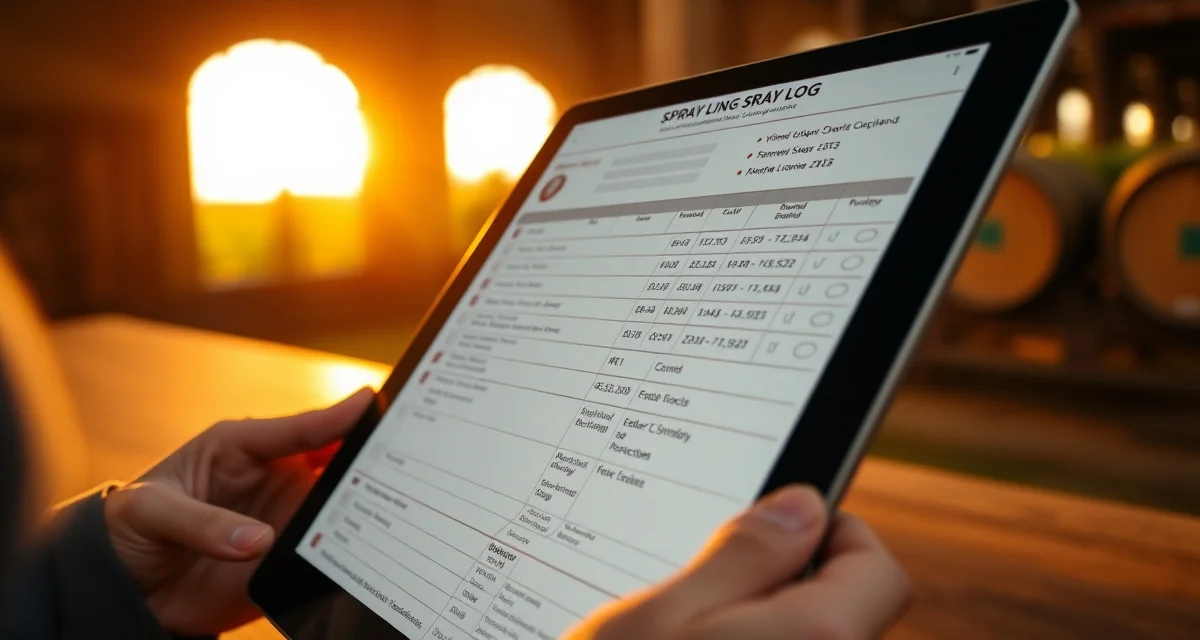
Digital Spray Logs for TTB Compliance: Records Accepted by Federal Auditors
Federal auditors don't give extra credit for intent. When a TTB agent walks into your bonded winery and asks to see pesticide records, they want organized, complete, timestamped documentation not a binder of handwritten logs you've been keeping since 2019.
TL;DR
- TTB bonded winery audits have increased 40% since 2022; under 27 CFR Part 186, bonded wineries must maintain records demonstrating compliance with all applicable federal and state laws -- including pesticide application documentation traceable from vineyard to tank
- Federal record retention for bonded wineries runs 5 years; California DPR requires 3 years -- if you're a California bonded winery, you need 5 years of spray records in an accessible format
- TTB auditors cross-reference spray records against harvest dates to verify PHI compliance for every product applied; block-level date-specific records are required -- field-name-only logs fail this check
- Vineyards that keep paper spray journals and also file California DPR electronic reports often end up with two record sets that don't match; discrepancies are discoverable and shift the burden of explanation to you
- VitiScribe spray logs are timestamped at creation, stored in encrypted cloud infrastructure, accessible for 7 years, and exportable in PDF format -- they meet TTB's electronic record standards under the E-SIGN Act
- One VitiScribe spray log entry generates both the DPR export format and the TTB production records report from the same underlying data
TTB bonded winery audits have increased 40% since 2022. More operations are getting scrutinized, and many of them are discovering their spray records don't satisfy what the Alcohol and Tobacco Tax and Trade Bureau actually requires. The problem usually isn't fraud. It's the gap between what growers think they need to keep and what federal auditors expect to find.
Digital spray logs for TTB compliance solve this. But not all digital records are created equal. Here's what TTB requires, how it intersects with state-level DPR and ODA requirements, and what it means to have records that genuinely satisfy both.
What Pesticide Records Does TTB Require from Bonded Wineries?
TTB doesn't operate its own pesticide registration system. It isn't USDA or EPA. But as the federal agency overseeing bonded winery operations, TTB has authority to examine all business records relevant to the winery's production and that includes records showing that the grapes used in production were grown in compliance with applicable law.
Under 27 CFR Part 186, bonded wineries are required to maintain records sufficient to demonstrate compliance with all applicable federal and state laws. For production records, that means your pesticide application documentation must be traceable from vineyard to tank.
What TTB Auditors Actually Look For
In practice, TTB auditors examining spray records are looking at a few specific areas:
Pesticide residue documentation. If a prohibited substance appears in residue testing, TTB wants to see records that either explain the presence or prove the product was used compliantly. Missing or incomplete records in this scenario expose the winery to notable penalties.
Pre-harvest interval verification. TTB auditors cross-reference spray records against harvest dates to confirm PHI compliance for every product applied. If your records are field-name-only without specific dates and block-level PHI calculations, this check fails.
Chain of custody for purchased fruit. If you buy grapes from contract growers, TTB expects you to have documentation of their spray programs too. This is an area where custom crush and DTC operations are frequently caught unprepared.
Record completeness and retention. Federal record retention requirements run five years. California DPR requires three years. If you're a bonded winery in California, you need five years and those records need to exist in a format auditors can actually review.
The Paper Journal Problem
Paper spray journals technically satisfy TTB minimums. The agency hasn't mandated digital record keeping. But paper records fail in practice when they're cross-referenced against state DPR records and gaps appear.
California DPR records are electronic. When a TTB auditor compares your paper spray journal against DPR's digital submission history and the dates don't align, you have a problem. When California vineyards submit pesticide use reports electronically but maintain separate handwritten records, discrepancies are common and discoverable.
VitiScribe spray logs are accepted by TTB, California DPR, CDFA, and Oregon ODA in their native digital format. One record set satisfies all four.
Are Digital Spray Logs Accepted by TTB Auditors?
Yes, unambiguously. TTB accepts electronic records under the same legal framework that governs most federal record-keeping requirements. The Electronic Signatures in Global and National Commerce Act (E-SIGN) and corresponding TTB guidance explicitly recognize electronic records as legally equivalent to paper records when they meet basic integrity requirements.
Those requirements are:
- The record must be accurate and complete
- It must be accessible for the required retention period
- It must be reproducible in a readable format
- It must be tamper-evident
VitiScribe meets all four. Records are timestamped at creation, stored in encrypted cloud infrastructure, accessible for seven years, and exportable in PDF format that auditors can read without specialized software.
What Happens When Paper Records Fail Cross-Reference Checks
The most common scenario where paper records fail TTB audits isn't missing pages it's inconsistency. A vineyard that logs spray events in a paper journal and also files California pesticide use reports electronically often ends up with two sets of records that don't perfectly match. Application rates differ. Dates are off by a day. Products are listed by trade name in one place and active ingredient in another.
When a TTB auditor cross-references these records and finds discrepancies, the burden shifts to you to explain them. With digital records generated from a single source, that inconsistency disappears. The same data that feeds your DPR submission generates your TTB documentation. One record, two compliance outputs.
How Does VitiScribe Format Records for TTB vs. DPR Requirements?
The practical challenge for bonded winery operators is that TTB and California DPR have different field requirements. DPR wants specific data elements for pesticide use reporting. TTB wants complete production records with different emphasis.
VitiScribe handles this by maintaining a complete underlying record and generating format-appropriate exports for each regulatory body.
DPR Export Format
California DPR requires pesticide use reports in a specific format with fields including:
- County, township, range, section
- Site ID
- Commodity code
- Product registration number
- Amount applied
- Application method code
- Acres treated
- Operator information
VitiScribe exports this data in DPR's required format with one click from your existing spray log. No reformatting. No manual transcription.
TTB Export Format
For TTB purposes, VitiScribe generates a production records report that presents spray history as part of the complete vineyard-to-tank documentation chain. This report includes:
- Block-level spray history with GPS coordinates
- PHI verification for each block relative to actual harvest dates
- Applicator credentials and license numbers
- Tank mix records showing all products applied per event
- Weather conditions at time of application
- Equipment calibration records
This is the documentation that satisfies a TTB auditor's need to see a traceable, compliant pesticide record for the grapes in your production.
Simultaneous State and Federal Compliance
The core advantage of records that satisfy both DPR and TTB simultaneously is that you're not maintaining two separate systems. Growers who keep paper spray journals for field use and then separately compile TTB documentation are doing redundant work and creating the discrepancy risk that trips up audits.
With VitiScribe, you log one application and both compliance outputs are generated from the same data.
Organic Certification and TTB: The Triple Compliance Challenge
Some bonded wineries face a third compliance layer: USDA organic certification. If you're making certified organic wine, your records need to satisfy NOP requirements as well as TTB and state DPR.
NOP requires documentation showing that all inputs are OMRI-listed or otherwise approved, that prohibited substances have never been applied to certified ground, and that complete application records exist going back to the start of your certification.
VitiScribe flags non-OMRI-listed materials before they enter your spray log and maintains a complete organic input history by block. That single record set satisfies NOP requirements, your state certifier, DPR, and TTB simultaneously.
Getting Your Records Audit-Ready Before the Auditor Calls
The worst time to discover your spray records are incomplete is when a TTB agent is already on-site. The right approach is treating compliance documentation as an ongoing operational requirement, not an annual scramble.
VitiScribe's pre-audit report function scans your records and flags any incomplete fields, missing applicator information, PHI conflicts, or REI documentation gaps before you're under scrutiny. You find the problem. You fix it. The auditor finds complete records.
TTB bonded winery audits aren't going away. With audit rates up 40% since 2022, the question isn't whether you'll face scrutiny it's whether your records will hold up when you do.
How long does a California bonded winery need to keep spray records?
California DPR requires pesticide use records to be retained for a minimum of 2 years (with many operations keeping 3 years as a standard practice). Federal TTB requirements for bonded winery production records run 5 years under 27 CFR Part 186. If you're a California bonded winery, the TTB requirement controls -- you need 5 years of spray records in a format that TTB auditors can access and review. VitiScribe retains all records for 7 years by default, covering both state and federal retention requirements without requiring any manual archiving. For operations pursuing organic certification, CCOF and other certifiers typically require 3 years of continuous records, which is also within VitiScribe's standard retention window.
What should I do if a TTB auditor requests spray records for a year when I was using paper logs?
If you have paper spray logs from years before you transitioned to digital record keeping, you have two options: produce the paper logs as-is, or transcribe them into a digital format before producing them. TTB accepts paper records -- the issue is whether they're complete, internally consistent, and match any electronic submissions (like California DPR pesticide use reports) from the same period. If your paper logs don't match your DPR submissions from those years, be prepared to explain the discrepancies. For the current and future seasons, maintaining records in VitiScribe eliminates this risk by generating both the DPR submission and the TTB-compatible report from the same data entry.
Does TTB require spray records for fruit purchased from contract growers, or only for estate-grown grapes?
TTB requires bonded wineries to maintain documentation sufficient to demonstrate that all production was conducted in compliance with applicable law -- and that includes demonstrating PHI compliance for purchased fruit. If you buy grapes from a contract grower, TTB expects you to have documentation of their spray program for that fruit. The practical standard is: if a residue violation were found in your wine, could you produce the complete pesticide application history for the fruit? If the answer is no because the grower didn't give you their records, your compliance exposure is real. Require spray records from growers at delivery and retain them in your own compliance file for the 5-year TTB window. For more on how this plays out in custom crush arrangements, see the custom crush vs estate winery compliance guide.
Related Articles
FAQ
What is Digital Spray Logs for TTB Compliance: Records Accepted by Federal Auditors?
[FAQ_ANSWER_PLACEHOLDER: This answer needs to be generated by AI with specific data, examples, and actionable advice relevant to Digital Spray Logs for TTB Compliance: Records Accepted by Federal Auditors. Target 50-150 words.]
How much does Digital Spray Logs for TTB Compliance: Records Accepted by Federal Auditors cost?
[FAQ_ANSWER_PLACEHOLDER: This answer needs to be generated by AI with specific data, examples, and actionable advice relevant to Digital Spray Logs for TTB Compliance: Records Accepted by Federal Auditors. Target 50-150 words.]
How does Digital Spray Logs for TTB Compliance: Records Accepted by Federal Auditors work?
[FAQ_ANSWER_PLACEHOLDER: This answer needs to be generated by AI with specific data, examples, and actionable advice relevant to Digital Spray Logs for TTB Compliance: Records Accepted by Federal Auditors. Target 50-150 words.]
What are the benefits of Digital Spray Logs for TTB Compliance: Records Accepted by Federal Auditors?
[FAQ_ANSWER_PLACEHOLDER: This answer needs to be generated by AI with specific data, examples, and actionable advice relevant to Digital Spray Logs for TTB Compliance: Records Accepted by Federal Auditors. Target 50-150 words.]
Who needs Digital Spray Logs for TTB Compliance: Records Accepted by Federal Auditors?
[FAQ_ANSWER_PLACEHOLDER: This answer needs to be generated by AI with specific data, examples, and actionable advice relevant to Digital Spray Logs for TTB Compliance: Records Accepted by Federal Auditors. Target 50-150 words.]
How long does Digital Spray Logs for TTB Compliance: Records Accepted by Federal Auditors take?
[FAQ_ANSWER_PLACEHOLDER: This answer needs to be generated by AI with specific data, examples, and actionable advice relevant to Digital Spray Logs for TTB Compliance: Records Accepted by Federal Auditors. Target 50-150 words.]
What should I look for when choosing Digital Spray Logs for TTB Compliance: Records Accepted by Federal Auditors?
[FAQ_ANSWER_PLACEHOLDER: This answer needs to be generated by AI with specific data, examples, and actionable advice relevant to Digital Spray Logs for TTB Compliance: Records Accepted by Federal Auditors. Target 50-150 words.]
Is Digital Spray Logs for TTB Compliance: Records Accepted by Federal Auditors worth it?
[FAQ_ANSWER_PLACEHOLDER: This answer needs to be generated by AI with specific data, examples, and actionable advice relevant to Digital Spray Logs for TTB Compliance: Records Accepted by Federal Auditors. Target 50-150 words.]
Sources
- California Department of Pesticide Regulation (CDPR)
- Wine Institute
- American Vineyard Foundation
- UC Cooperative Extension Viticulture
- American Society for Enology and Viticulture (ASEV)
Get Started with VitiScribe
TTB audit rates are up 40% since 2022, and the difference between a clean audit and an expensive one often comes down to whether your spray records are timestamped, complete, and consistent with your DPR submissions. VitiScribe generates both the DPR-formatted pesticide use report and the TTB production records documentation from the same spray log entry, eliminating the dual-record-set problem that creates discrepancies. Try VitiScribe free and generate your first TTB-compatible spray log from your existing block records today.
Related guides: