Managing Leafhoppers in Wine Grapes
Leafhoppers are a consistent presence in California and Pacific Northwest vineyards, and in most years they're a manageable problem. In high-pressure years, particularly when biological controls are disrupted, they can cause significant leaf stippling that reduces photosynthetic capacity and deposit frass on fruit that affects wine quality. Knowing which species you're dealing with, monitoring populations accurately, and understanding when biological controls will handle the problem versus when intervention is warranted are the core skills of leafhopper management.
Western vs. Variegated Grape Leafhopper
Two species dominate in western U.S. wine grapes. The western grape leafhopper (Erythroneura elegantula) is most common in cooler coastal regions and in vineyards with habitat that supports its primary biocontrol agent, Anagrus epos. The variegated grape leafhopper (Erythroneura variabilis) is more heat-tolerant and tends to be more problematic in warmer interior regions and in blocks where Anagrus populations are limited.
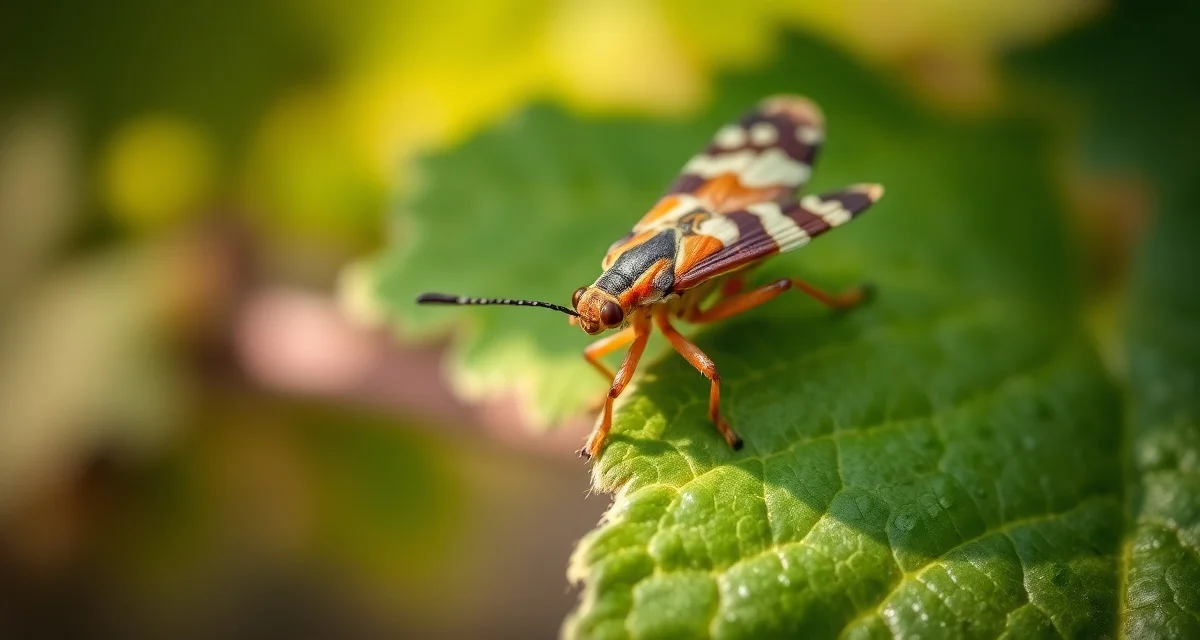
Adults of both species are approximately 3mm long. Western grape leafhopper adults have a cleaner pattern of diagonal red and brown bands on pale wings. Variegated grape leafhopper adults show a more complex mosaic of brown, cream, and reddish markings, giving them a mottled appearance compared to the banded western grape leafhopper. Nymph stage identification requires examination under magnification, and mixed populations are common.
For practical management purposes, both species respond similarly to the available control options, and monitoring targets combined population counts rather than distinguishing them in every sample.
Monitoring with Sticky Traps and Leaf Counts
Sticky card traps placed at vine height near the edge of the canopy are useful for detecting adult flight activity and monitoring general population trends. Yellow sticky traps at 1 to 2 per block during June through August give you an early signal of second generation adult activity.
For management decisions, leaf sampling gives more precise population density data. The standard method is to select 30 to 50 leaves per block, drawn from the middle of the cluster zone, from vines scattered throughout the block, not just from the edges where populations are often higher. Count all nymph stages on the underside of each leaf. Calculate the average nymphs per leaf. Record the sample date, block, sample size, and result in your scouting log.
Sample once per generation: first generation nymphs are active in May and June, second generation in July and August. In warm climates with early bud break, a partial third generation can occur in September.
Economic Thresholds
The economic threshold for leafhoppers in wine grapes is not a single fixed number. UC IPM guidelines have historically suggested that populations of 15 to 20 nymphs per leaf may warrant treatment consideration in conventional programs. In quality-focused programs, particularly in blocks where frass contamination of fruit clusters is a concern, some advisers use a more conservative threshold of 3 to 5 nymphs per leaf as a decision trigger.
The most useful threshold framework combines nymph counts with parasitism assessment. If you're finding 6 nymphs per leaf but 60% of leafhopper eggs are parasitized by Anagrus, the population is in decline and treatment is likely unnecessary. If you're finding 4 nymphs per leaf and parasitism is less than 15%, the population is likely to continue building.
Biological Control: Anagrus
Anagrus epos and related parasitic micro-wasps are the key natural enemies of western grape leafhopper. These wasps are under 1mm long and are rarely visible without magnification, but their impact on leafhopper populations is substantial when habitat supports them. Anagrus overwinters in eggs of leafhopper species that feed on non-grape hosts, particularly Italian prune trees, blackberries, and rose family plants common in hedgerows adjacent to vineyards.
Vineyards that maintain prune tree borders or native hedgerows with suitable overwintering host plants support larger Anagrus populations. Broad-spectrum insecticides that kill Anagrus are a significant driver of leafhopper outbreaks. When a vineyard switches from a broad-spectrum organophosphate program to a more selective approach, leafhopper populations often initially increase as Anagrus populations are still rebuilding, then decline as biocontrol reasserts itself over two to three seasons.
To assess Anagrus activity, examine leafhopper eggs in the leaf tissue. Parasitized eggs appear brownish-amber rather than the pale green of fresh, unparasitized eggs. Counting parasitized vs. unparasitized eggs in a sample of 100 eggs per block gives you a parasitism rate.
Treatment Options
When populations exceed your threshold and biological control is insufficient, treatment choices range from selective materials that spare beneficials to more conventional options.
Kaolin clay (Surround WP) applied consistently at full coverage creates a physical barrier that disrupts feeding and reduces egg deposition. It requires thorough coverage and reapplication after rain, but has no impact on Anagrus or other beneficials. Insecticidal soaps provide knockdown of nymphs on contact with minimal residual effect. Pyrethrin products work similarly and are acceptable in organic programs.
For higher-pressure situations, spirotetramat (Movento) is a systemic option with IRAC Group 23 classification and relatively lower impact on beneficial insects. It requires good coverage and has a delayed mode of action, taking 7 to 10 days to reach peak effect.
Neonicotinoids (imidacloprid, acetamiprid) are effective but carry pollinator risk concerns, are incompatible with most sustainable certification programs, and will disrupt Anagrus populations, undermining the biological control foundation of your long-term leafhopper management program.
Record every treatment application in VitisScribe with the IRAC group alongside your pre-treatment monitoring data. This documentation supports resistance management planning and is required for organic certification and LODI Rules compliance audits.
For more on vineyard pest monitoring and recording, see our guides on IPM scouting records and integrated pest management in wine grapes.
FAQ
What is Managing Leafhoppers in Wine Grapes?
[FAQ_ANSWER_PLACEHOLDER: This answer needs to be generated by AI with specific data, examples, and actionable advice relevant to Managing Leafhoppers in Wine Grapes. Target 50-150 words.]
How much does Managing Leafhoppers in Wine Grapes cost?
[FAQ_ANSWER_PLACEHOLDER: This answer needs to be generated by AI with specific data, examples, and actionable advice relevant to Managing Leafhoppers in Wine Grapes. Target 50-150 words.]
How does Managing Leafhoppers in Wine Grapes work?
[FAQ_ANSWER_PLACEHOLDER: This answer needs to be generated by AI with specific data, examples, and actionable advice relevant to Managing Leafhoppers in Wine Grapes. Target 50-150 words.]
What are the benefits of Managing Leafhoppers in Wine Grapes?
[FAQ_ANSWER_PLACEHOLDER: This answer needs to be generated by AI with specific data, examples, and actionable advice relevant to Managing Leafhoppers in Wine Grapes. Target 50-150 words.]
Who needs Managing Leafhoppers in Wine Grapes?
[FAQ_ANSWER_PLACEHOLDER: This answer needs to be generated by AI with specific data, examples, and actionable advice relevant to Managing Leafhoppers in Wine Grapes. Target 50-150 words.]
How long does Managing Leafhoppers in Wine Grapes take?
[FAQ_ANSWER_PLACEHOLDER: This answer needs to be generated by AI with specific data, examples, and actionable advice relevant to Managing Leafhoppers in Wine Grapes. Target 50-150 words.]
What should I look for when choosing Managing Leafhoppers in Wine Grapes?
[FAQ_ANSWER_PLACEHOLDER: This answer needs to be generated by AI with specific data, examples, and actionable advice relevant to Managing Leafhoppers in Wine Grapes. Target 50-150 words.]
Is Managing Leafhoppers in Wine Grapes worth it?
[FAQ_ANSWER_PLACEHOLDER: This answer needs to be generated by AI with specific data, examples, and actionable advice relevant to Managing Leafhoppers in Wine Grapes. Target 50-150 words.]