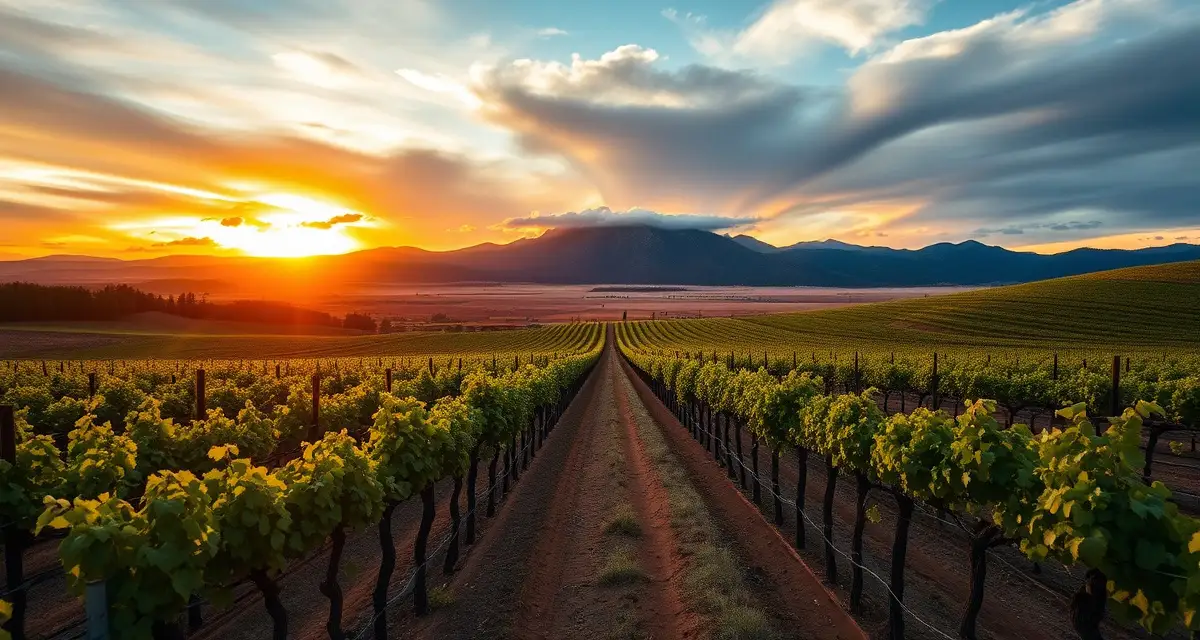
Vineyard Management Software for New Mexico
New Mexico has over 40 wineries with high-altitude vineyards above 5,000 feet -- and the high-altitude UV exposure at those elevations changes fungicide photodegradation rates and application intervals in ways that no standard Pacific Coast or Midwest spray calendar accounts for. When your Merlot block sits at 5,800 feet in the Mesilla Valley, UV intensity can degrade sulfur and copper residues faster than the same material applied in a Napa Valley block at 400 feet.
TL;DR
- UV intensity at 5,000+ feet is 25-35% higher than coastal California at the same latitude -- sulfur and copper residues break down faster, shortening the effective interval from 10-14 days to 7-10 days in many New Mexico high-altitude blocks
- New Mexico's biphasic growing season divides into a dry spring (April-June) focused on powdery mildew and a monsoon season (July-September) that adds downy mildew and botrytis management when afternoon thunderstorms arrive
- Downy mildew can appear with little warning in the monsoon phase even in blocks that had no downy mildew pressure in the dry spring -- copper-based protectant programs timed to storm events are the appropriate response
- NMDA requires 2-year record retention with New Mexico commercial applicator license number on all restricted-use applications -- target pest is a required field in NMDA records
- North-central New Mexico vineyards north of Santa Fe at 6,000-7,500 feet are among the highest-elevation vineyards in the US, with cool-climate variety potential and even more pronounced UV effects on spray residual life
- Tempranillo is New Mexico's best-performing red variety in southern low-humidity sites -- programs typically run 8-12 powdery mildew applications from budbreak through veraison plus monsoon-season downy mildew and botrytis management
New Mexico's high-altitude UV exposure changes fungicide efficacy and application intervals in ways that make this one of the most distinct viticulture environments in the US. Add in the state's unique desert-to-mountain climate variation and the summer monsoon season, and you have an IPM challenge that requires software calibrated to New Mexico conditions -- not borrowed from California.
New Mexico's Wine Regions
Mesilla Valley AVA (southern New Mexico): The most established wine region, anchored around Las Cruces and extending into Texas. Elevations range from 3,500 to 5,500 feet. Hot summers with low humidity. Monsoon season brings July-September rainfall that can create rapid disease pressure shifts.
Mimbres Valley (southwest New Mexico): Emerging wine region. Higher elevations (5,000-6,000 ft) with more moderate summer temperatures than the Mesilla Valley.
Middle Rio Grande Valley: Central New Mexico wine production area near Albuquerque. Range of elevations with unique microclimate variation.
North-Central New Mexico: The emerging mountain wine region north of Santa Fe, with some of the highest vineyard elevations in the US (6,000-7,500 ft). Cool-climate varieties show promise in these high-altitude blocks.
Altitude Effects on IPM Programs
New Mexico's high-elevation vineyards experience several conditions that affect how you design and time your spray program.
UV intensity: At 5,000+ feet, UV radiation is measurably higher than at sea level -- typically 25-35% more intense than coastal California vineyards at the same latitude. This affects:
- Sulfur photodegradation: Sulfur residues break down faster at high elevation. Your 10-14 day interval assumption for sulfur may need to be shortened to 7-10 days
- Copper breakdown: Copper-based fungicides similarly degrade faster under intense UV
- Some synthetic fungicide photostability: Check product labels for UV stability data if you're at high elevation
Temperature swing: New Mexico's high-altitude vineyards experience daily temperature swings of 35-50°F in many locations. This affects spray efficacy, application timing, and pest population development rates. Degree day models calibrated for lower-elevation regions may not translate accurately to New Mexico conditions.
Humidity: New Mexico is dry for most of the growing season (April-June), then becomes substantially more humid during the monsoon (July-September). Your disease pressure calendar has two distinct phases, and your spray program needs to account for both.
New Mexico's Monsoon Season IPM Challenge
The North American Monsoon arrives in southern New Mexico in early July, typically peaking in August and tapering through September. This concentrated period of afternoon thunderstorms creates disease pressure conditions that don't exist during the dry spring season.
Downy mildew becomes a concern during the monsoon. New Mexico vineyards that don't manage downy mildew at all during the dry spring can face rapid buildup when monsoon rains arrive. Copper-based protectant programs timed to storm events are the appropriate response.
Botrytis pressure rises with monsoon humidity. Clusters that were clean and dry in June can develop botrytis infection quickly in the high-humidity post-storm environment of August.
Phomopsis on shoot wounds can spread rapidly if storm damage coincides with periods of high inoculum.
Powdery mildew: The monsoon's increased humidity doesn't eliminate powdery mildew risk. High humidity plus moderate temperatures can actually increase powdery mildew infection rates. Don't drop your powdery mildew program when the monsoon arrives.
NMDA Pesticide Compliance
New Mexico Department of Agriculture (NMDA) administers pesticide use regulations. New Mexico commercial pesticide applicators must be licensed with NMDA for restricted-use pesticide applications.
Required spray record fields:
- Applicator name and NMDA commercial applicator license number
- Date of application
- Location (property address or legal description)
- Product name and EPA registration number
- Application rate and total amount of pesticide used
- Method of application
- Target pest and crop
- Acres or area treated
Record retention: NMDA requires pesticide application records retained for a minimum of 2 years from date of application.
Restricted-use pesticides: New Mexico requires NMDA commercial applicator licensing for RUP purchase and application. License number must appear on all RUP records.
VitiScribe's NMDA compliance profile applies New Mexico-specific record requirements automatically. See the VitiScribe compliance hub for all state profiles.
Variety Programs for New Mexico Conditions
New Mexico's warm days, cool nights, and high UV environment have led successful growers to emphasize varieties that perform well under arid conditions with intense sun. Tempranillo, Cabernet Sauvignon, Syrah, Viognier, and Portuguese varieties show strong performance in southern New Mexico's low-humidity conditions. Cooler northern sites support Chardonnay, Pinot Noir, and Riesling.
Tempranillo spray programs: Tempranillo is relatively tolerant of heat and drought but moderately susceptible to powdery mildew. A practical Tempranillo program in New Mexico runs 8-12 powdery mildew applications from budbreak through veraison. Monsoon season adds downy mildew and botrytis management requirements.
Syrah and Grenache: Both varieties show good performance in New Mexico's warm, dry conditions. Both are moderately susceptible to powdery mildew. Shorter spray intervals during high-UV periods (sulfur degrading faster) and monsoon management are the key program adjustments.
Pricing for New Mexico Vineyard Operations
VitiScribe's pricing for New Mexico vineyards is the same as for all regions -- transparent, published, and not dependent on your operation size negotiation:
- Small vineyard (under 50 acres): $99/month
- Mid vineyard (50-200 acres): $199/month
- Large vineyard (over 200 acres): $399/month
Every tier includes NMDA-formatted compliance records, PHI and REI auto-calculation, mobile offline entry, and all standard compliance reports. There are no add-on fees for state compliance formats. See full pricing details.
Frequently Asked Questions
What vineyard management software works for New Mexico high-altitude vineyards?
New Mexico vineyards need software that accommodates high-altitude UV effects on spray interval planning, the state's biphasic growing season (dry spring + monsoon summer), and NMDA compliance requirements. Generic California-built tools don't account for high-altitude UV degradation of fungicide residues or the monsoon's disease pressure shift. VitiScribe's flexible spray calendar and NMDA-formatted compliance exports provide the tools New Mexico growers need without forcing a California or Pacific Northwest IPM template onto a fundamentally different viticultural environment.
How does VitiScribe handle New Mexico's distinct pest pressure calendar?
VitiScribe's spray records connect to local weather station data for New Mexico vineyard locations, supporting decisions based on actual local conditions rather than regional averages. The flexible spray program design lets you build a two-phase seasonal calendar -- dry spring powdery mildew program through June, transitioning to a monsoon-season program adding downy mildew and botrytis management from July through September. Block-level spray history shows how your program transitions across the monsoon onset each season.
What NMDA pesticide reporting requirements apply to New Mexico vineyards?
New Mexico Department of Agriculture requires commercial pesticide applicators to maintain records for a minimum of 2 years from the date of application. Required fields include applicator name and NMDA commercial applicator license number, date and location of application, product name and EPA registration number, rate and total product used, method of application, target pest, and acreage treated. Restricted-use pesticide applications require a valid NMDA commercial applicator license. Records must be available for NMDA inspection on request.
How should New Mexico vineyards document spray decisions that adjust intervals for high-altitude UV conditions?
Spray records for high-altitude New Mexico blocks should include a brief timing rationale that references the elevation-adjusted interval when you're shortening standard intervals due to UV-driven residue degradation. A record noting "sulfur reapplication at 8-day interval -- high-UV degradation at 5,800 ft site, residual protection estimate insufficient at 14-day standard interval" explains the non-standard timing in a way that a NMDA auditor or winery quality team can follow. If you're following guidance from your local extension service or PCA on elevation-adjusted intervals, noting that basis adds further support. Without this documentation, a shortened interval that deviates from standard regional practice looks like a questionable decision; with it, the documentation makes clear it's a site-specific agronomic choice.
Does NMDA require spray records for general-use pesticides as well as restricted-use materials?
NMDA record-keeping requirements focus on licensed commercial applicators making applications to agricultural crops. For commercial applicators, records are required for all pesticide applications -- not just restricted-use materials. The full required fields apply to both general-use and restricted-use applications, with the addition of the license number specifically required for RUP records. For private applicators (growers applying on their own property), record-keeping obligations for general-use materials are less stringent than for commercial applicators, but best practice for IPM documentation purposes is to maintain complete records for all applications regardless of classification. Any application that might be reviewed by NMDA, organic certifiers, or winery buyers should have a complete record with all standard fields populated.
What is Vineyard Management Software for New Mexico?
[FAQ_ANSWER_PLACEHOLDER: This answer needs to be generated by AI with specific data, examples, and actionable advice relevant to Vineyard Management Software for New Mexico. Target 50-150 words.]
How much does Vineyard Management Software for New Mexico cost?
[FAQ_ANSWER_PLACEHOLDER: This answer needs to be generated by AI with specific data, examples, and actionable advice relevant to Vineyard Management Software for New Mexico. Target 50-150 words.]
How does Vineyard Management Software for New Mexico work?
[FAQ_ANSWER_PLACEHOLDER: This answer needs to be generated by AI with specific data, examples, and actionable advice relevant to Vineyard Management Software for New Mexico. Target 50-150 words.]
What are the benefits of Vineyard Management Software for New Mexico?
[FAQ_ANSWER_PLACEHOLDER: This answer needs to be generated by AI with specific data, examples, and actionable advice relevant to Vineyard Management Software for New Mexico. Target 50-150 words.]
Who needs Vineyard Management Software for New Mexico?
[FAQ_ANSWER_PLACEHOLDER: This answer needs to be generated by AI with specific data, examples, and actionable advice relevant to Vineyard Management Software for New Mexico. Target 50-150 words.]
How long does Vineyard Management Software for New Mexico take?
[FAQ_ANSWER_PLACEHOLDER: This answer needs to be generated by AI with specific data, examples, and actionable advice relevant to Vineyard Management Software for New Mexico. Target 50-150 words.]
Related Articles
- Best Vineyard Management Software for 10-50 Acre Operations
- Best Vineyard Management Software for 50-200 Acre Operations
Sources
- UC Cooperative Extension Viticulture
- American Vineyard Foundation
- Wine Institute
- American Society for Enology and Viticulture (ASEV)
Get Started with VitiScribe
New Mexico's high-altitude UV conditions require shorter spray intervals than standard Pacific Coast programs, the monsoon season creates a distinct disease management phase starting in July, and NMDA compliance records require target pest as a specifically required field. VitiScribe's flexible spray calendar supports New Mexico's biphasic growing season, NMDA-formatted records include all required fields, and the spray decision basis field captures the UV-driven interval rationale that explains non-standard timing to auditors and buyers. Try VitiScribe free and log your first NMDA-compliant New Mexico spray record today.