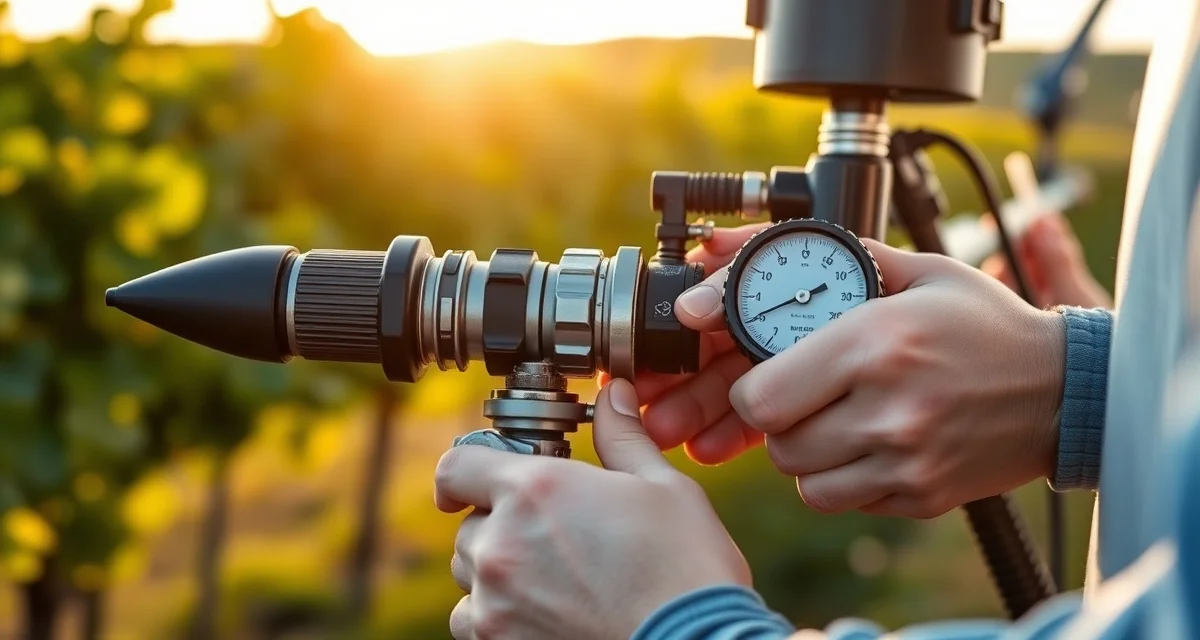
Vineyard Equipment Calibration Records: Why Calibration Data Belongs in Your Spray Log
Mis-calibrated vineyard sprayers over-apply pesticides by an average of 31% per season. That's not a compliance problem in the abstract -- it's a problem that shows up in residue tests, in environmental loads, and in the discrepancy between what your spray log says you applied and what actually went on the vines.
Equipment calibration records are required evidence in pesticide drift complaint investigations. They're the documentation that answers the question every investigator asks first: were you applying at the labeled rate, and can you prove it?
Paper spray logs never capture calibration data. There's usually a line for it on the form, but it gets left blank because calibration is treated as a separate activity from application documentation. By the time someone looks at the spray record, the calibration data from that morning is gone.
VitiScribe makes calibration a required field before a spray record can be saved. Here's why that matters and what calibration data your records should contain.
TL;DR
- Mis-calibrated vineyard sprayers over-apply pesticides by an average of 31% per season -- the discrepancy shows up in residue tests and in the gap between spray log rates and actual delivery, which is exactly what drift complaint investigators examine
- Equipment calibration records are required evidence in pesticide drift complaint investigations; growers who can produce operating pressure, nozzle output, and GPA data for the complained-of application have a defensible position; growers without calibration documentation do not
- Vineyard spray drift complaints cost vineyards an average of $85,000 per investigated incident in legal, settlement, and time costs -- a maintained calibration record is worth considerably more than the time required to keep it
- Nozzle wear at 25% output increase creates a calibration problem; output checks collecting output from each nozzle in a graduated cylinder over a timed interval identify worn nozzles before they create a compliance issue
- Pre-season calibration is a starting point, not a complete program: nozzles wear, pressure regulators drift, and a sprayer calibrated in February may be delivering materially different output by August
- VitiScribe links calibration records to spray applications automatically -- the spray log shows not only the rate claimed but the calibration data that supports that rate claim
What Calibration Data Must Be Recorded With Vineyard Spray Applications?
Calibration documentation for vineyard spray equipment should capture enough information to verify that the actual application rate matched the intended rate and the labeled rate.
Sprayer Output Data
The core calibration measurement is output volume per unit area -- typically gallons per acre (GPA). This is the number that connects your tank mix concentration to the actual amount of product delivered to the target.
If your spray program calls for 50 gallons per acre and your sprayer is actually delivering 65 gallons per acre due to calibration drift, every application since the last calibration has been off-rate. The pesticide rate per acre is calculated from GPA -- if GPA is wrong, the rate is wrong.
Calibration records should document:
- Date and time of calibration
- Equipment ID (specific sprayer, not just "sprayer")
- Nozzle type and size
- Operating pressure (PSI)
- Travel speed (mph or RPM setting)
- Measured output per nozzle (volume per unit time at operating pressure)
- Calculated GPA at operating conditions
- Variation across nozzle set (percent deviation from mean)
- Any nozzle replacements or adjustments made
Pre-Season vs. In-Season Calibration
Annual pre-season calibration is a starting point, not a complete calibration program. Nozzles wear. Pressure regulators drift. Travel speeds change when you shift to different block configurations or terrain. An air-blast sprayer that was calibrated in February may be delivering materially different output by August.
California DPR doesn't specify a mandatory calibration frequency, but best practice and the expectation in drift investigations is calibration at the start of each season, after any equipment maintenance or nozzle replacement, and periodically through the season on a documented schedule.
Nozzle Wear Tracking
Nozzle wear is a particularly common source of calibration drift. Worn nozzles deliver larger droplets and higher volumes than rated output. At 10% wear, output increase is typically acceptable. At 25% wear, you have a calibration problem.
Regular nozzle output checks -- collecting output from each nozzle in a graduated cylinder over a timed interval -- identify worn nozzles before they create a compliance problem. VitiScribe tracks nozzle check records and alerts you when output deviation exceeds the acceptable threshold.
How Does VitiScribe Link Calibration Records to Spray Logs?
Every sprayer registered in VitiScribe has a calibration record history attached to its profile. When you log a spray application and select the equipment used, the system links the most recent calibration record for that piece of equipment to the application record.
This creates a direct, auditable connection between the application and the calibration documentation. The spray log doesn't just say you applied at X gallons per acre -- it shows the calibration data that supports that rate claim.
For broader documentation of application accuracy and program outcomes, see spray window alerts for vineyard for how weather conditions at application time connect to efficacy and compliance records.
Calibration Status on Application Records
If the calibration record for your sprayer is more than a specified interval old -- you set this threshold -- VitiScribe flags the application with a calibration status indicator. You can still save the record, but the flag is documented.
This serves two purposes. First, it reminds you to calibrate before applications when your equipment hasn't been checked recently. Second, it creates an honest record of calibration status for each application, which is better than a false implied precision from undated calibration data.
Equipment Maintenance Records
Beyond calibration, VitiScribe tracks equipment maintenance history: repairs, parts replacements, nozzle changes, pressure gauge replacements, pump service. This history supports the calibration record by documenting when the equipment's performance characteristics changed and when the next calibration was run.
In a drift investigation, an equipment history showing a nozzle replacement two days before the complained-of application, followed by a post-replacement calibration, supports a defense that your application rates were accurate. A spray log with no equipment maintenance or calibration history doesn't support any specific claim about what was actually delivered.
Do I Need Calibration Records for Every Spray Event or Just Annually?
Not every spray event requires a fresh calibration. But calibration records need to be associated with every spray event, even if the calibration data is from earlier in the season.
The standard practice is:
- Pre-season: Full calibration of all spray equipment, documented in VitiScribe
- After maintenance: Recalibration after any maintenance that could affect output (nozzle replacement, pump work, pressure system service)
- Periodic: Output checks at midseason, particularly if conditions (terrain, block configuration, travel speed) have changed
- On demand: After any application where output seemed inconsistent or equipment behavior was unusual
Each calibration record links forward to all applications made with that equipment between that calibration and the next one. If your equipment was calibrated on April 15 and the next calibration was June 3, every application in between points to the April 15 calibration record.
Calibration in Drift Investigations
Equipment calibration records are required evidence in pesticide drift complaint investigations in California. When a neighbor files a drift complaint, the agricultural commissioner's investigation includes a review of application records to determine whether the application was made at or near the labeled rate and whether appropriate nozzle selection and operating conditions were used.
Growers who produce complete calibration records showing operating pressure, nozzle output, and GPA at the time of the complained-of application have a defensible position. Growers whose records show no calibration documentation are in a much harder position, even if the application was actually made correctly.
Vineyard spray drift complaints cost vineyards an average of $85,000 per investigated incident. That figure includes legal costs, settlement costs, and time. A well-maintained calibration record is worth considerably more than the time it takes to keep it.
For documentation of spray drift buffer zones and neighbor notification requirements, see vineyard spray drift documentation.
Frequently Asked Questions
What calibration data should be in my vineyard spray records?
Equipment calibration records should include: date and time of calibration; specific equipment ID; nozzle type, size, and operating pressure; travel speed at operating conditions; measured output per nozzle and calculated gallons per acre; variation across the nozzle set; and any nozzle replacements or adjustments made. These records should link to every spray application made with that equipment until the next calibration. Calibration data in the spray record demonstrates that the application rate logged matches the rate actually delivered -- the question drift complaint investigators and DPR auditors ask first.
How often should I calibrate my vineyard sprayer?
Best practice is calibration at the start of each season, after any equipment maintenance that could affect output (nozzle replacement, pump work, pressure system service), and periodically through the season on a documented schedule. California DPR does not specify mandatory calibration frequency, but the expectation in drift investigations is that calibration was current at the time of the complained-of application. A pre-season February calibration may not accurately represent sprayer output in August after a full season of use.
Are calibration records required in California pesticide drift investigations?
Yes. Equipment calibration records are reviewed in pesticide drift complaint investigations to determine whether the application was made at or near the labeled rate. Growers with complete calibration documentation showing operating pressure, nozzle output, and GPA have a defensible position. Growers without calibration records can't demonstrate that their logged application rates were accurate, which weakens their position in an investigation even if the application was made correctly.
What should I do if I discover mid-season that my sprayer has been delivering significantly more than the logged rate due to nozzle wear?
Recalibrate immediately and document the recalibration in VitiScribe. For applications made between the prior calibration and the recalibration that show significant output drift, the discovery should be documented: when the discrepancy was found, what the measured output deviation was, which blocks and applications were affected, and what corrective action was taken. If the over-application was significant enough to potentially exceed labeled maximum rates, consult with your PCA about whether any notification or reporting obligations apply. The documentation of the discovery and corrective action is better compliance evidence than a gap in calibration records.
What is Vineyard Equipment Calibration Records: Why Calibration Data Belongs in Your Spray Log?
[FAQ_ANSWER_PLACEHOLDER: This answer needs to be generated by AI with specific data, examples, and actionable advice relevant to Vineyard Equipment Calibration Records: Why Calibration Data Belongs in Your Spray Log. Target 50-150 words.]
How much does Vineyard Equipment Calibration Records: Why Calibration Data Belongs in Your Spray Log cost?
[FAQ_ANSWER_PLACEHOLDER: This answer needs to be generated by AI with specific data, examples, and actionable advice relevant to Vineyard Equipment Calibration Records: Why Calibration Data Belongs in Your Spray Log. Target 50-150 words.]
How does Vineyard Equipment Calibration Records: Why Calibration Data Belongs in Your Spray Log work?
[FAQ_ANSWER_PLACEHOLDER: This answer needs to be generated by AI with specific data, examples, and actionable advice relevant to Vineyard Equipment Calibration Records: Why Calibration Data Belongs in Your Spray Log. Target 50-150 words.]
What are the benefits of Vineyard Equipment Calibration Records: Why Calibration Data Belongs in Your Spray Log?
[FAQ_ANSWER_PLACEHOLDER: This answer needs to be generated by AI with specific data, examples, and actionable advice relevant to Vineyard Equipment Calibration Records: Why Calibration Data Belongs in Your Spray Log. Target 50-150 words.]
Who needs Vineyard Equipment Calibration Records: Why Calibration Data Belongs in Your Spray Log?
[FAQ_ANSWER_PLACEHOLDER: This answer needs to be generated by AI with specific data, examples, and actionable advice relevant to Vineyard Equipment Calibration Records: Why Calibration Data Belongs in Your Spray Log. Target 50-150 words.]
How long does Vineyard Equipment Calibration Records: Why Calibration Data Belongs in Your Spray Log take?
[FAQ_ANSWER_PLACEHOLDER: This answer needs to be generated by AI with specific data, examples, and actionable advice relevant to Vineyard Equipment Calibration Records: Why Calibration Data Belongs in Your Spray Log. Target 50-150 words.]
What should I look for when choosing Vineyard Equipment Calibration Records: Why Calibration Data Belongs in Your Spray Log?
[FAQ_ANSWER_PLACEHOLDER: This answer needs to be generated by AI with specific data, examples, and actionable advice relevant to Vineyard Equipment Calibration Records: Why Calibration Data Belongs in Your Spray Log. Target 50-150 words.]
Is Vineyard Equipment Calibration Records: Why Calibration Data Belongs in Your Spray Log worth it?
[FAQ_ANSWER_PLACEHOLDER: This answer needs to be generated by AI with specific data, examples, and actionable advice relevant to Vineyard Equipment Calibration Records: Why Calibration Data Belongs in Your Spray Log. Target 50-150 words.]
Related Articles
- Botrytis Spray Log: Documenting a Bunch Rot Management Program in Your Vineyard
- Vineyard Spray Records in Colorado: CDA Requirements for Grand Valley Wine Growers
Sources
- California Department of Pesticide Regulation (CDPR)
- Riverside County Agricultural Commissioner
- UC Cooperative Extension Viticulture
- EPA Office of Pesticide Programs
- American Vineyard Foundation
Get Started with VitiScribe
A mis-calibrated sprayer over-applying by 31% creates a compliance record that doesn't match what was actually delivered -- and in a drift investigation, the applicator's records have to answer for that gap. VitiScribe makes calibration a required component of spray record entry, links calibration data to every application record automatically, tracks nozzle output deviations, and flags equipment that hasn't been calibrated recently before records are saved. Try VitiScribe free and connect your first equipment calibration record to a spray application today.