Vineyard Spray Records in Colorado: CDA Requirements for Grand Valley Wine Growers
Colorado wine grape acreage in the Grand Valley grew 19% between 2022 and 2025, and the state's high-altitude UV environment creates a distinctive challenge that no other US wine region faces at the same scale: pesticide degradation rates that differ meaningfully from sea-level assumptions built into standard PHI calculations.
TL;DR
- Colorado Grand Valley sits at 4,500-5,500 feet elevation with UV radiation approximately 20-25% higher than at sea level -- sulfur and photolytic fungicides degrade faster than label intervals assume, which is a compliance and performance variable no other major US wine state faces at this scale
- Colorado CDA requires pesticide records retained for 2 years, available for inspection on demand, with required fields including applicator name and Colorado commercial pesticide license number
- Restricted-use pesticide applications require a Colorado-licensed commercial pesticide applicator; private applicators on their own commercial property must hold a Colorado private applicator certification
- Colorado does not have a monthly reporting system like California's PUR; CDA inspections can review records from any point in the prior 2-year retention window
- Grand Valley's semi-arid climate creates a pest management calendar with higher spider mite risk and lower downy mildew pressure than coastal or Great Lakes wine regions
- VitiScribe captures block elevation in setup and provides notation fields to document the specific UV and temperature conditions of each Colorado application alongside standard PHI tracking
No competitor has a Colorado vineyard compliance profile. VitiScribe's Colorado profile covers CDA requirements for Grand Valley and Western Slope operations, with PHI adjustment considerations for high-altitude growing conditions.
Colorado Department of Agriculture Pesticide Requirements
The Colorado Department of Agriculture (CDA) administers pesticide regulation under the Colorado Pesticide Applicators Act. Commercial pesticide applicators in Colorado -- including wine grape vineyard operators in the Grand Valley, West Elks, and other Colorado AVAs -- must maintain records that satisfy CDA requirements.
Required fields under Colorado CDA:
- Product name and EPA registration number
- Active ingredient and formulation
- Application date
- Site of application (location description)
- Commodity treated (wine grapes)
- Total amount of pesticide applied
- Application rate per acre
- Acres treated
- Method of application
- Applicator name and Colorado commercial pesticide license number
Restricted-use pesticides require the certified applicator's Colorado license number and documentation that the application was made or supervised by a licensed applicator.
Records must be retained for 2 years and be available for CDA inspection.
High-Altitude UV and PHI Calculation Complexity
Colorado's high altitude UV environment affects pesticide degradation rates, making PHI calculation more complex than standard label assumptions suggest. This is one of the most distinctive compliance challenges for Colorado vineyard operators and one that standard PHI calculation tools miss entirely.
Most pesticide labels establish pre-harvest intervals based on testing conducted at or near sea level, where UV radiation intensity, temperature variation, and atmospheric pressure are within normal ranges for agricultural research stations. Colorado's Grand Valley sits at approximately 4,500 to 5,500 feet elevation. Western Slope mountain vineyards can exceed 6,000 feet.
At these elevations:
- UV radiation intensity is significantly higher than at sea level (approximately 20-25% higher at 5,000 feet)
- Photolytic pesticide degradation occurs faster than at sea-level test conditions
- Temperature extremes are more pronounced with greater day-night variation
- Atmospheric pressure differences affect some pesticide application behaviors
The practical implication for PHI compliance is that some pesticides may degrade faster in Colorado's high-altitude, high-UV environment than standard label PHI timelines assume. This creates a potentially more conservative margin of safety than the label requires -- but it also means that the standard PHI assumption is probably more protective than needed in most cases.
VitiScribe flags the potential PHI complexity for Colorado operations and lets you document the specific environmental conditions of your applications alongside standard PHI tracking.
Grand Valley AVA Compliance Context
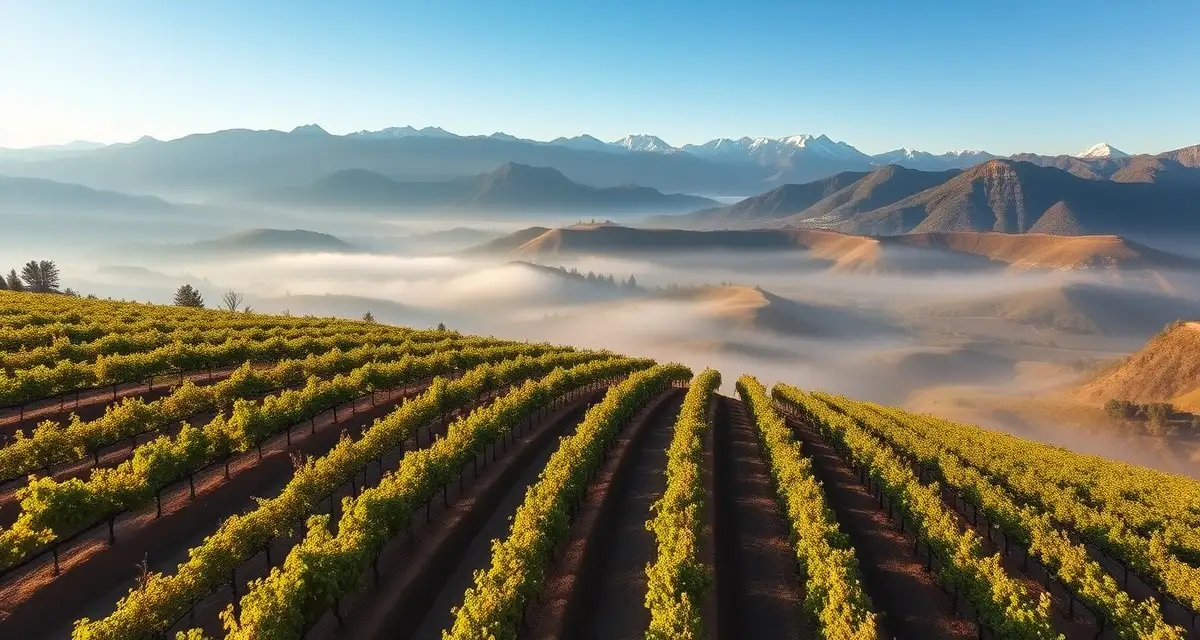
The Grand Valley AVA, centered around Palisade in Mesa County, is Colorado's primary wine grape production area. The region's combination of hot summers, cold winters, and semi-arid climate creates a distinct pest and disease management calendar:
Disease pressure: Powdery mildew is the primary fungal concern. The dry climate limits downy mildew and botrytis pressure compared to eastern wine regions. But irrigation management and any localized humidity can create unexpected disease windows.
Pest pressure: Leafhoppers and spider mites are significant concerns in the hot, dry Grand Valley conditions. The region's arid character creates the spider mite conditions similar to Washington's Yakima Valley.
Frost risk: Spring frost events affect spray timing during the pre-bloom period. Spray records should document any application disruptions related to frost events.
VitiScribe's block-level records for Grand Valley operations track these specific pest pressures in a format appropriate for Colorado's distinct growing conditions.
Western Slope Mountain Vineyard Considerations
Colorado's vineyards outside the Grand Valley -- in areas like Montrose County, Delta County, and the Glenwood Springs area -- operate at even higher elevations with correspondingly more pronounced altitude effects. These operations may see greater PHI complexity and should document application conditions carefully.
Western Slope mountain vineyards also face greater temperature variability and shorter frost-free seasons than the Grand Valley floor. The spray calendar for a 6,000-foot mountain vineyard is compressed compared to the Grand Valley's more forgiving mid-elevation sites.
VitiScribe supports block-level records for all Colorado wine grape growing areas, including both Grand Valley floor sites and higher-elevation Western Slope operations.
Colorado Pesticide Applicator Licensing
Colorado requires commercial pesticide applicators to hold a Colorado Commercial Pesticide Applicator License issued by CDA. Categories relevant to vineyard operations include agricultural pest control applications. Private applicators applying on their own commercial agricultural property must hold a Colorado private applicator certification.
VitiScribe requires the Colorado applicator license number for restricted-use pesticide records. The license number format is validated against Colorado CDA's licensing system format at the time of entry.
Does Colorado Have Unique Requirements Compared to Other Wine Grape States?
Colorado's requirements share the core structure with other western wine states but have distinguishing characteristics:
What's similar to California/Oregon/Washington: The required field list (product, EPA number, active ingredient, date, site, commodity, rate, total applied, applicator license) is consistent with western state standards.
What's unique to Colorado: The high-altitude UV factor affecting pesticide degradation, the semi-arid western slope climate with distinct pest management priorities, and the compressed growing season at higher elevations create compliance and management contexts that sea-level or coastal wine region tools don't address.
The pesticide application records vineyard comparison covers how Colorado fits within the broader multi-state compliance landscape.
Frequently Asked Questions
What pesticide records must Colorado vineyard operators maintain?
Colorado vineyard operators must maintain records for all commercial pesticide applications including: product name and EPA registration number, active ingredient, application date, site of application, commodity (wine grapes), total amount applied, application rate per acre, acres treated, method of application, and applicator name and Colorado commercial pesticide license number. For restricted-use pesticides, the certified applicator's Colorado license number and documentation of licensed supervision are required. Records must be retained for 2 years and be available for CDA inspection on demand.
How does VitiScribe handle PHI calculations for Colorado's high-altitude growing conditions?
VitiScribe applies the standard label PHI for each product applied in Colorado blocks, which is the regulatory requirement -- labels set the minimum PHI regardless of location. For Colorado's high-altitude UV environment, VitiScribe provides a notation field where you can document the specific environmental conditions of each application, including elevation, UV exposure conditions, and temperature data. This documentation provides context if any PHI question arises about a Colorado application. The system also allows you to set a custom additional buffer on PHI timelines if you choose to be more conservative than the label minimum for high-elevation applications.
Does Colorado have unique spray record requirements compared to other wine grape states?
Colorado's basic required fields are similar to other western wine states, but the high-altitude UV environment creates a distinctive PHI complexity that no other major US wine grape state faces at the same scale. The semi-arid Grand Valley climate also creates a distinct pest management calendar with higher spider mite risk and lower downy mildew pressure than coastal or mid-elevation wine regions. Colorado doesn't have a mandatory monthly reporting system like California's, but CDA inspections can review records from any point in the prior 2-year retention period. The absence of a Great Lakes or Chesapeake Bay watershed adjacency means Colorado lacks the enhanced water body buffer documentation requirements found in Michigan and Pennsylvania.
How should Colorado vineyard operators document spray applications that are interrupted by spring frost events?
Frost events during the pre-bloom spray period are a recurring challenge in Colorado's high-altitude vineyards. When a planned application is interrupted or delayed by a frost event, document the interruption in the spray record: note the planned application date, the frost event that interrupted it, the delayed application date, and the growth stage at each point. If the frost event caused observable vine damage that affected the spray program -- shifting timing, changing target pests, or requiring additional applications -- note those decisions and their basis in the record. This documentation is useful for program review at the end of the season and demonstrates IPM-informed management to any certifier or auditor reviewing your records. VitiScribe's field observation log can capture frost event data alongside the spray record timeline.
What happens if a Colorado vineyard operator applies a pesticide without a required CDA commercial applicator license?
Applying restricted-use pesticides without a valid CDA commercial pesticide applicator license is a violation of the Colorado Pesticide Applicators Act. Penalties can include civil fines and license denial or suspension. The specific penalty range depends on the violation type and history. VitiScribe's applicator license verification requires a current Colorado license number before a restricted-use pesticide record can be submitted, building a compliance check into the data entry workflow. If your license has lapsed or if a contractor is applying without a current license, the system flags the issue before the record is completed. Verifying that all applicators -- including contractors -- hold current CDA licenses before any restricted-use application is the best protection against this category of violation.
What is Vineyard Spray Records in Colorado: CDA Requirements for Grand Valley Wine Growers?
[FAQ_ANSWER_PLACEHOLDER: This answer needs to be generated by AI with specific data, examples, and actionable advice relevant to Vineyard Spray Records in Colorado: CDA Requirements for Grand Valley Wine Growers. Target 50-150 words.]
How much does Vineyard Spray Records in Colorado: CDA Requirements for Grand Valley Wine Growers cost?
[FAQ_ANSWER_PLACEHOLDER: This answer needs to be generated by AI with specific data, examples, and actionable advice relevant to Vineyard Spray Records in Colorado: CDA Requirements for Grand Valley Wine Growers. Target 50-150 words.]
How does Vineyard Spray Records in Colorado: CDA Requirements for Grand Valley Wine Growers work?
[FAQ_ANSWER_PLACEHOLDER: This answer needs to be generated by AI with specific data, examples, and actionable advice relevant to Vineyard Spray Records in Colorado: CDA Requirements for Grand Valley Wine Growers. Target 50-150 words.]
What are the benefits of Vineyard Spray Records in Colorado: CDA Requirements for Grand Valley Wine Growers?
[FAQ_ANSWER_PLACEHOLDER: This answer needs to be generated by AI with specific data, examples, and actionable advice relevant to Vineyard Spray Records in Colorado: CDA Requirements for Grand Valley Wine Growers. Target 50-150 words.]
Who needs Vineyard Spray Records in Colorado: CDA Requirements for Grand Valley Wine Growers?
[FAQ_ANSWER_PLACEHOLDER: This answer needs to be generated by AI with specific data, examples, and actionable advice relevant to Vineyard Spray Records in Colorado: CDA Requirements for Grand Valley Wine Growers. Target 50-150 words.]
How long does Vineyard Spray Records in Colorado: CDA Requirements for Grand Valley Wine Growers take?
[FAQ_ANSWER_PLACEHOLDER: This answer needs to be generated by AI with specific data, examples, and actionable advice relevant to Vineyard Spray Records in Colorado: CDA Requirements for Grand Valley Wine Growers. Target 50-150 words.]
Related Articles
- Vine Disease Spray Records: Documentation Requirements for Every Major Vineyard Disease
- Digital vs Paper Vineyard Spray Records: Legal Requirements
- Vineyard Spray Records in Texas: TDA Requirements for Texas Hill Country Wineries
Sources
- Colorado Department of Agriculture (CDA)
- UC Cooperative Extension Viticulture
- American Vineyard Foundation
- Wine Institute
- American Society for Enology and Viticulture (ASEV)
Get Started with VitiScribe
Colorado vineyard compliance requires spray records that capture the state's unique high-altitude context -- UV conditions, elevation, frost event impacts -- alongside standard CDA required fields. VitiScribe's Colorado profile covers all required CDA record fields, captures block elevation data, and provides notation fields to document the environmental conditions specific to each application. Try VitiScribe free and build your first CDA-compliant spray record from the Grand Valley or Western Slope today.