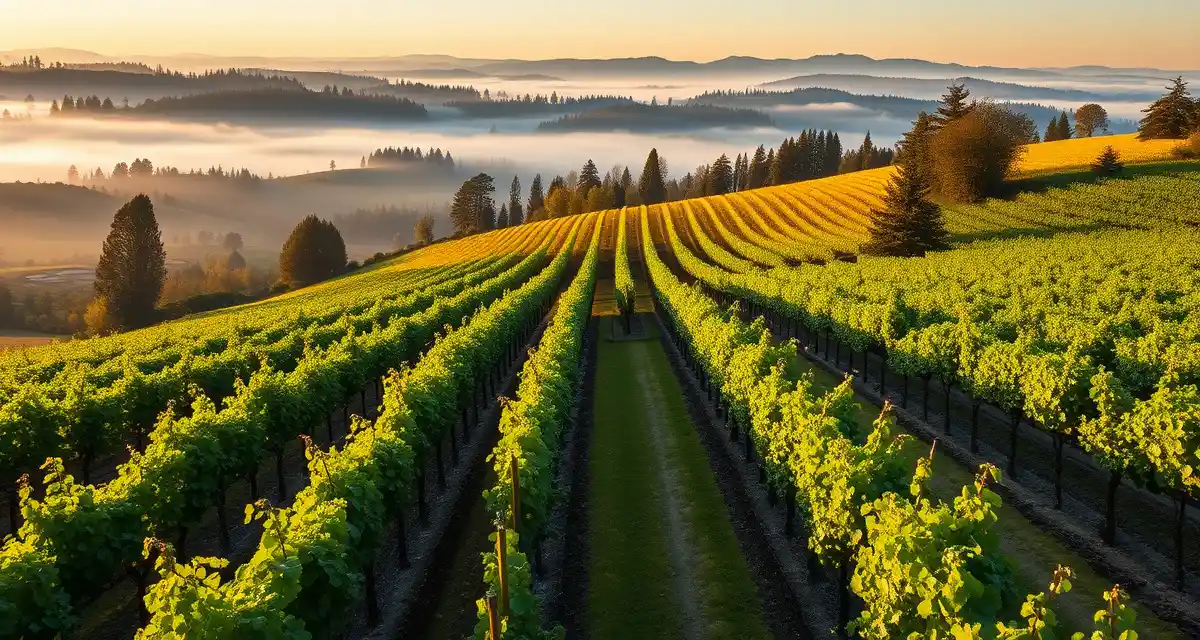
Vineyard Management Software for Willamette Valley
Willamette Valley has over 700 wineries with disease pressure dominated by downy mildew in wet spring years. That's the defining challenge of Willamette Valley viticulture, and it's a challenge that California-focused platforms weren't built to address. Willamette Valley's wet springs create unique disease pressure that CA-designed tools simply don't account for.
VitiScribe is the only vineyard management platform with Willamette Valley weather integration and ODA-specific compliance fields built in.
TL;DR
- Willamette Valley receives 40-60 inches of annual rainfall -- downy mildew is the defining disease management challenge, requiring FRAC group rotations for two major diseases (downy and powdery mildew) simultaneously with distinct modes of action, something California-designed software doesn't account for
- Spotted wing drosophila (SWD) pressure is higher in Willamette Valley than most California wine regions -- the cool moist climate SWD prefers creates a monitoring and intervention requirement that California-focused IPM frameworks treat as a minor concern
- Oregon ODA requires restricted-use pesticide records within 7 days of application -- more forgiving than California's 24-hour window, but record requirements are similar in scope and ODA inspections review completeness
- Willamette Valley has a notable organic and biodynamic sector; NOP copper rate limits require tracking total copper applied per acre per season to stay compliant -- software that accumulates season copper totals by block is essential for organic programs
- Pinot Noir's thin skin makes late-season botrytis a particularly high-stakes compliance window: PHI management for botrytis applications in cool wet falls requires accurate pre-harvest clearance dates updated against shifting harvest timing
- No major vineyard management platform except VitiScribe offers Oregon-specific ODA compliance fields or Willamette Valley weather integration for spray window alerts
Why Willamette Valley Is Different From California Wine Regions
The difference isn't subtle. Willamette Valley gets 40-60 inches of annual rainfall, mostly concentrated in the October-April wet season. Springs are cool and wet, exactly the conditions that favor primary downy mildew infection during the vine's most vulnerable growth stages.
California's Mediterranean climate means most Napa and Sonoma spray programs focus primarily on powdery mildew. Downy mildew is a minor concern in most California wine regions during dry summers.
In Willamette Valley, you're managing both diseases simultaneously through spring and early summer. Your fungicide program needs separate FRAC group rotations for two major diseases with different modes of action. Spray windows are limited by frequent spring rainfall. Timing matters more when you have fewer opportunities to apply.
Willamette Valley IPM: The Real Priorities
Downy Mildew
Downy mildew is the highest-priority disease management challenge for most Willamette Valley vineyards. Primary infections occur when overnight temperatures exceed 50°F and rainfall has wetted foliage for several hours. In wet Willamette Valley springs, these conditions can persist for weeks during critical pre-bloom and bloom growth stages.
Key points for Willamette Valley downy mildew programs:
- First applications should begin at woolly bud or tight cluster in wet springs, earlier than most calendar-based programs suggest
- FRAC groups for downy mildew (4, 40, 45, 49) are distinct from powdery mildew programs, track them separately
- Copper materials are the primary organic option and widely used in Willamette Valley's notable organic sector
- Resistance to some downy mildew chemistries is developing in regions with heavy use history
Powdery Mildew
Powdery mildew is still a concern in Willamette Valley despite the wet climate. Afternoon warming in the valley creates surface temperatures that favor powdery mildew during dry spells between rain events. Pinot Noir programs often require 8-12 powdery mildew applications per season in the Willamette Valley.
Botrytis
Willamette Valley's cool, humid conditions create notable late-season botrytis pressure. Pinot Noir's thin skin makes it especially susceptible. Botrytis programs through harvest in cool wet falls require careful PHI management, you're making spray decisions with tight harvest windows approaching.
Spotted Wing Drosophila (SWD)
SWD has been a serious concern in Willamette Valley since its establishment in the region. The cool moist climate that SWD prefers means Willamette Valley growers typically face higher SWD pressure than most California wine regions. Monitoring and timing interventions around SWD flight activity matters for protecting fruit integrity.
Oregon ODA Compliance for Willamette Valley Operations
Oregon pesticide reporting goes to ODA, with a 7-day filing window for restricted-use pesticide applications. This is more forgiving than California's 24-hour requirement, but the record requirements are similar in scope.
VitiScribe includes ODA-specific compliance fields for Willamette Valley operations:
- Oregon pesticide applicator license number
- ODA-required application fields
- Willamette Valley regional weather integration
- Record formats compatible with ODA inspection requirements
One-click audit export generates records in ODA-compatible format.
For detailed Oregon compliance requirements, see the Oregon ODA pesticide reporting guide. For broader Oregon wine country management, see the Oregon vineyard management software guide.
Willamette Valley Organic Production
Willamette Valley has a notable organic and biodynamic wine sector. The region's cool climate and historical commitment to sustainable practices has driven early adoption of organic certification. If you're managing certified organic blocks, your input records need to document: every application, the material used, its OMRI listing or NOP approval, the pest target, and the block applied.
Downy mildew management in certified organic Willamette Valley vineyards relies heavily on copper-based materials. Copper rate limits under NOP (total copper per acre per year) require careful tracking to stay compliant. Software that tracks copper applications by block and accumulates season totals helps you manage against this limit.
Vineyard Software Comparison for Willamette Valley
| Platform | ODA compliance | WV weather | Downy mildew support | Pricing shown | Setup |
|---|---|---|---|---|---|
| VitiScribe | Built-in | Yes | Yes | Yes ($49-179/mo) | Same day |
| eVineyard | No | No | No | No | Demo required |
| Vintrace | Limited | No | No | No | Multiple days |
| InnoVint | Limited | No | No | No | ~2 weeks |
| AgCode | No | No | No | No | Weeks |
Related Articles
FAQ
What vineyard management software is best for Willamette Valley?
VitiScribe is the strongest fit for Willamette Valley operations. It combines ODA compliance fields, Willamette Valley regional weather integration for spray window alerts, and IPM tools designed for both powdery mildew and downy mildew management. No other platform offers Oregon-specific compliance support or Willamette Valley weather data. Pricing starts at $49/month with no setup fees.
How does VitiScribe handle Willamette Valley disease pressure?
VitiScribe uses Willamette Valley regional weather data for spray window alerts, helping you identify optimal application windows between the frequent spring rain events that characterize the growing season. Block-level records track disease pressure history across seasons, which is especially valuable in a region where year-to-year disease pressure variability is high. FRAC group tracking helps manage resistance across both powdery mildew and downy mildew programs simultaneously.
What are the key IPM challenges in Willamette Valley vineyards?
Willamette Valley's primary IPM challenges are: downy mildew (the defining disease management challenge, driven by wet spring conditions), powdery mildew (still notable despite the wet climate), late-season botrytis in Pinot Noir (especially in wet fall conditions), spotted wing drosophila (a serious pest with higher pressure in Willamette Valley's cool moist climate than most California wine regions), and copper rate management for certified organic operations using copper for downy mildew control.
How should Willamette Valley organic operations track copper applications against NOP rate limits?
NOP regulations permit copper as a plant disease control but include an accumulation and leaching potential restriction that CCOF and other certifiers interpret as an effective cap on annual copper rates. For Willamette Valley organic operations where copper is the primary downy mildew tool, tracking elemental copper applied per block per season is essential for certification compliance. Record each copper application with the elemental copper rate (not just the product rate), and maintain a running season total per block. VitiScribe's organic mode tracks elemental copper rate from product formulation data and accumulates season totals by block, so you can see how your copper use tracks against certification rate expectations without manual calculation.
What is Vineyard Management Software for Willamette Valley?
[FAQ_ANSWER_PLACEHOLDER: This answer needs to be generated by AI with specific data, examples, and actionable advice relevant to Vineyard Management Software for Willamette Valley. Target 50-150 words.]
How much does Vineyard Management Software for Willamette Valley cost?
[FAQ_ANSWER_PLACEHOLDER: This answer needs to be generated by AI with specific data, examples, and actionable advice relevant to Vineyard Management Software for Willamette Valley. Target 50-150 words.]
How does Vineyard Management Software for Willamette Valley work?
[FAQ_ANSWER_PLACEHOLDER: This answer needs to be generated by AI with specific data, examples, and actionable advice relevant to Vineyard Management Software for Willamette Valley. Target 50-150 words.]
What are the benefits of Vineyard Management Software for Willamette Valley?
[FAQ_ANSWER_PLACEHOLDER: This answer needs to be generated by AI with specific data, examples, and actionable advice relevant to Vineyard Management Software for Willamette Valley. Target 50-150 words.]
Sources
- Oregon Department of Agriculture (ODA)
- Oregon State University Extension Viticulture
- Oregon Wine Board
- USDA National Organic Program (NOP) -- 7 CFR Part 205
- CCOF (California Certified Organic Farmers)
Getting Started With Willamette Valley Vineyard Management
Willamette Valley's unique growing conditions require software that was built for Oregon, not adapted from a California or European framework. ODA compliance, Willamette Valley weather integration, and IPM tools that account for downy mildew pressure are all built into VitiScribe from day one.
View pricing or compare vineyard software pricing before deciding.