Vineyard Management Software for Willamette Valley
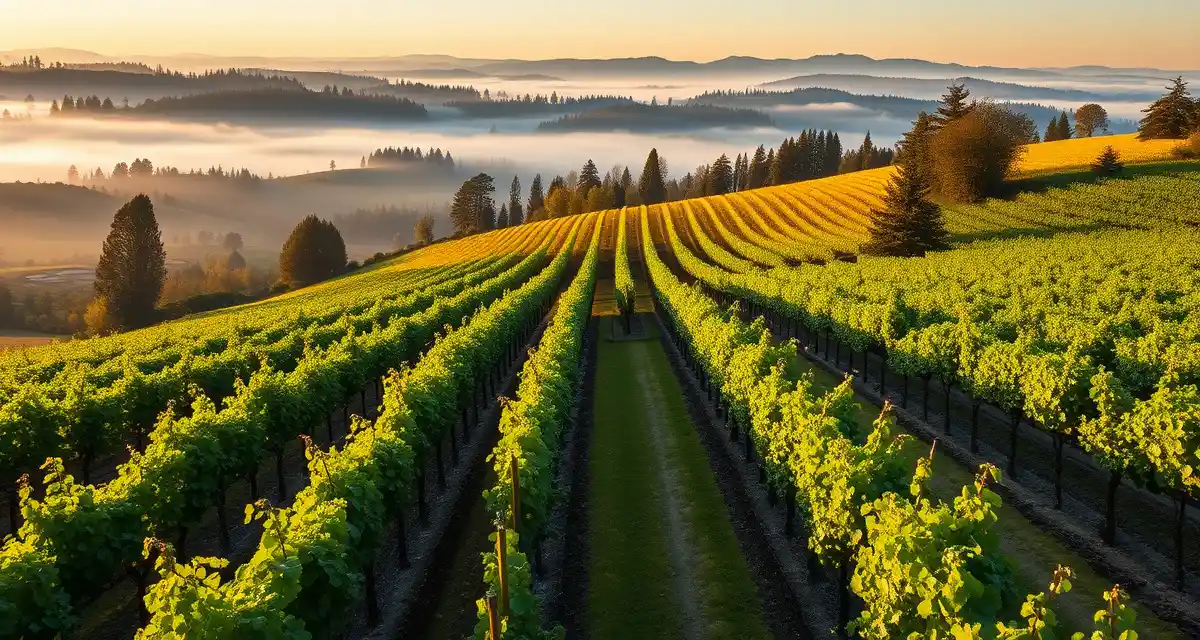
The Willamette Valley produces some of North America's most recognized Pinot Noir, and it does so in one of the more demanding viticultural environments on the continent. Wet springs, a compressed spray window, and the tight cluster architecture of Pinot Noir that makes Botrytis management both critical and challenging are the defining conditions of farming here. The growers who consistently produce quality fruit run disciplined, documented programs where timing and record quality are both taken seriously.
Wet Springs and the Spray Window Problem
The Willamette Valley's marine climate delivers rainfall from October through May with typical annual totals of 40 to 55 inches in the northern valley. During the critical bloom and post-bloom window, typically late May through early July, multi-day rain events are common and spray windows can close for days at a time.
The practical consequence is that every dry window during this period is a potential application opportunity, and missing one means either going longer without a fungicide cover than the disease pressure warrants or applying under marginal conditions. A weather station on your property is not optional in this climate; it's the only way to know precisely when a window opened and whether conditions at your site were actually suitable.
Recording weather conditions at the time of every application is also critical here because rain-fast intervals matter constantly. A fungicide with a 4-hour rain-fast requirement applied at 8 AM before a rain event at 11 AM requires a reapplication decision. Without a weather record tied to the spray log, you're reconstructing from memory.
Botrytis as the Primary Management Target
Botrytis bunch rot in Pinot Noir is the disease that sets the tone for the entire spray program in the Willamette Valley. Infection events during bloom, when infected flower debris becomes trapped in developing clusters, are the most important to interrupt. The best fungicide applications of the season in Willamette Valley Pinot Noir are the two to three applications timed from early bloom through fruit set.
Timing these applications correctly requires knowing when your blocks are actually at bloom, not when your calendar says they should be. Bloom timing varies by site, aspect, and clone. VitisScribe's phenology tracking records bud break and bloom dates by block, giving you the historical data to predict bloom timing more accurately each spring and compare current season timing against your multi-year average.
FRAC group rotation in a Botrytis program is also managed more easily with block-level records. Overusing Group 7 (SDHI) fungicides in your Pinot Noir blocks creates selection pressure for fungicide resistance, and Botrytis resistance to SDHI and fungicide Group 17 (phenylpyrroles like fludioxonil) has been documented in commercial vineyards globally. Rotation tracking by block tells you how many applications of each FRAC group have been made this season.
Powdery Mildew and Downy Mildew Programs
Powdery mildew pressure in the Willamette Valley is generally lower than in California's warmer regions, but it is not absent and certain blocks and vintages produce significant pressure. Sulfur remains the backbone of organic and low-input programs, but its phytotoxicity risk above 85°F is real even in Oregon's cooler climate during heat events.
Downy mildew is a consistent secondary concern, particularly in north-facing blocks, lower elevations with slower canopy drying, and sites near streams or drainage features. The primary infection period for downy mildew requires wet conditions during the sporangial germination window, which the Willamette Valley provides reliably most springs.
Block-level spray records that distinguish which blocks received downy mildew-targeted materials and which received only powdery mildew programs help you evaluate whether your disease pressure is being generated in specific blocks or uniformly across the vineyard.
Sub-AVA Documentation
The Willamette Valley contains seven approved sub-AVAs: Chehalem Mountains, Ribbon Ridge, Dundee Hills, Yamhill-Carlton, McMinnville, Eola-Amity Hills, and Van Duzer Corridor. Premium producers and estate wineries labeling wine under these sub-AVAs need block records that clearly document which blocks fall within each sub-AVA boundary.
GPS block mapping in VitisScribe provides the documentation trail for appellation claims. Harvest records showing tonnage by block, combined with GPS block boundaries and variety records, are the foundation of the paperwork supporting an estate sub-AVA designation claim.
OLCC Compliance for Estate and Farm Wineries
Oregon Liquor and Cannabis Commission licensing governs wine production and sales at Oregon wineries. Licensed farm wineries sourcing fruit from their own estate vineyard need records connecting vineyard production to winery intake: variety, block, tonnage, and harvest date should flow from your vineyard records to your winery intake records without gaps.
OLCC does not require the same level of vineyard production detail as federal TTB reporting, but the documentation trail connecting grape sourcing to wine production is a foundational part of the compliance record for any direct-to-consumer licensed producer.
Oregon Wine Board Data
The Oregon Wine Board conducts periodic vineyard and winery census surveys to compile industry production statistics. Growers with organized block-level records can complete these submissions accurately and quickly. Growers without organized records submit estimates. The difference affects the quality of industry-level data that the Oregon Wine Board uses for market research, production analysis, and appellation promotion.
Participating in Oregon Wine Board surveys with accurate data also positions your operation well if you're seeking access to industry programs, export promotion resources, or participation in OWB-organized trade events.
LIVE and Salmon-Safe Certification
A significant portion of Willamette Valley production is certified under LIVE (Low Input Viticulture and Enology) or Salmon-Safe programs. Both require documented spray records, water use data, worker practice records, and habitat management documentation. LIVE audits are conducted by third-party auditors who review your records against the LIVE standard.
VitisScribe's spray logs, irrigation event records, and canopy management notes provide the documentation base for LIVE and Salmon-Safe certification without requiring a parallel record system. The spray log format captures weather conditions, applicator information, and block-level detail that LIVE auditors look for in a spray record review.
For more on Oregon-specific compliance, see our guide on Oregon ODA pesticide record requirements. For disease management records, see vineyard spray record keeping.
FAQ
What is Vineyard Management Software for Willamette Valley?
[FAQ_ANSWER_PLACEHOLDER: This answer needs to be generated by AI with specific data, examples, and actionable advice relevant to Vineyard Management Software for Willamette Valley. Target 50-150 words.]
How much does Vineyard Management Software for Willamette Valley cost?
[FAQ_ANSWER_PLACEHOLDER: This answer needs to be generated by AI with specific data, examples, and actionable advice relevant to Vineyard Management Software for Willamette Valley. Target 50-150 words.]
How does Vineyard Management Software for Willamette Valley work?
[FAQ_ANSWER_PLACEHOLDER: This answer needs to be generated by AI with specific data, examples, and actionable advice relevant to Vineyard Management Software for Willamette Valley. Target 50-150 words.]
What are the benefits of Vineyard Management Software for Willamette Valley?
[FAQ_ANSWER_PLACEHOLDER: This answer needs to be generated by AI with specific data, examples, and actionable advice relevant to Vineyard Management Software for Willamette Valley. Target 50-150 words.]
Who needs Vineyard Management Software for Willamette Valley?
[FAQ_ANSWER_PLACEHOLDER: This answer needs to be generated by AI with specific data, examples, and actionable advice relevant to Vineyard Management Software for Willamette Valley. Target 50-150 words.]
How long does Vineyard Management Software for Willamette Valley take?
[FAQ_ANSWER_PLACEHOLDER: This answer needs to be generated by AI with specific data, examples, and actionable advice relevant to Vineyard Management Software for Willamette Valley. Target 50-150 words.]
What should I look for when choosing Vineyard Management Software for Willamette Valley?
[FAQ_ANSWER_PLACEHOLDER: This answer needs to be generated by AI with specific data, examples, and actionable advice relevant to Vineyard Management Software for Willamette Valley. Target 50-150 words.]
Is Vineyard Management Software for Willamette Valley worth it?
[FAQ_ANSWER_PLACEHOLDER: This answer needs to be generated by AI with specific data, examples, and actionable advice relevant to Vineyard Management Software for Willamette Valley. Target 50-150 words.]