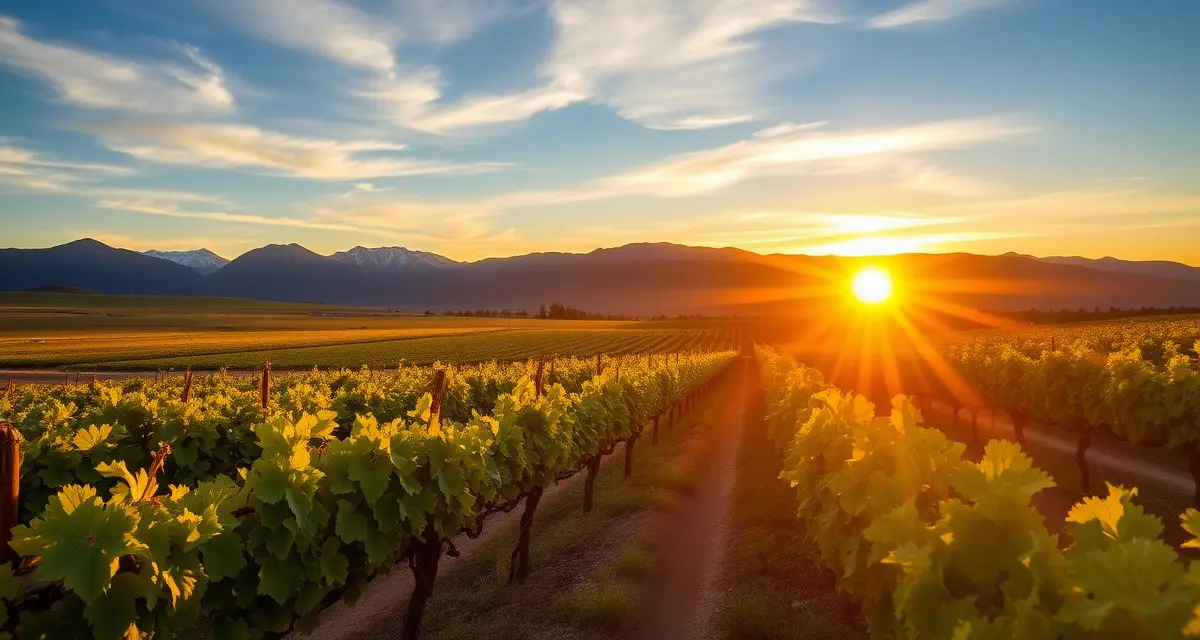
Vineyard Management Software for Colorado Wineries
Colorado has over 150 wineries with Grand Valley as the primary wine region -- and Colorado's high-altitude UV intensity affects fungicide photodegradation rates unlike any other wine state. At 4,000-7,000 feet of elevation, UV radiation is substantially higher than at sea level, and products like sulfur and some organic fungicides break down faster in Colorado's intense sunlight than their label performance data suggests. No vineyard software built primarily for California or Oregon was tested against this variable.
TL;DR
- Colorado's Grand Valley elevation (4,500-5,000 feet) produces UV radiation approximately 25-30% higher than sea level -- sulfur and organic fungicides photodegrade faster than label intervals suggest, and Colorado growers may need shorter application cycles than standard recommendations during peak June-July UV
- Powdery mildew can infect at relative humidity as low as 20-30% when temperatures are in the 70-90°F range -- Colorado's dry climate does not eliminate mildew risk
- Hail events in July-August create immediate wound sites for botrytis and bacterial infections; apply botrytis fungicide within 24-48 hours of notable hail events -- most vineyard software guides don't address this Colorado-specific requirement
- Colorado CDA requires pesticide records retained for 2 years and available on request; restricted-use applications require a CDA-licensed commercial pesticide applicator
- VitiScribe captures block elevation in setup and integrates local weather station data for Grand Valley, West Elks, and other Colorado growing regions
- Spring frost after budbreak and fall frost before late-variety harvest are recurring risks; block-level phenological monitoring helps identify which blocks are at vulnerable stages during frost events
VitiScribe's weather integration and product performance tracking allows Colorado vineyard managers to monitor what's actually happening in their blocks rather than relying on label interval recommendations calibrated for lower-elevation, lower-UV environments.
Colorado's Growing Regions and Their Characteristics
Grand Valley AVA: Located along the Colorado River near Grand Junction, Grand Valley is Colorado's most productive wine region. Elevation ranges from 4,500 to 5,000 feet. Continental semi-arid climate with hot summers and cold winters. Disease pressure is lower than in humid eastern states -- powdery mildew is the primary fungal concern, with botrytis and downy mildew of secondary importance in most years. Afternoon thunderstorms from July through September can create localized disease pressure windows.
West Elks AVA: Located in the North Fork Valley near Paonia, West Elks sits at 5,500-6,500 feet elevation. Cooler growing season temperatures than Grand Valley produce more aromatic white varieties. Disease pressure profile is similar to Grand Valley but with more variable spring moisture.
Other Colorado growing areas: Emerging wine production occurs on the Front Range near Denver and Colorado Springs, in the Arkansas River Valley, and in mountain sites. Elevation and microclimate vary dramatically, requiring site-specific disease and pest pressure assessment.
Colorado-Specific IPM Considerations
High-altitude UV and fungicide performance: At Grand Valley's elevation, UV radiation intensity is approximately 25-30% higher than at sea level during summer months. Sulfur, potassium bicarbonate, and some organic fungicides are photodegraded by UV exposure, potentially reducing effective residual life between applications. Colorado growers using these materials may need shorter application intervals than label recommendations suggest, particularly during peak summer UV intensity in June and July.
Powdery mildew: The dominant disease management challenge in Colorado vineyards. Colorado's semi-arid climate -- lower humidity than most US wine regions -- does not eliminate powdery mildew risk. Erysiphe necator can infect at relative humidity as low as 20-30% when temperatures are in the optimal 70-90°F range. Grand Valley's warm days and cooler nights create dew formation on vine tissue that can be sufficient for infection even when afternoon humidity is low.
Botrytis: Less of a concern in Grand Valley's drier climate than in Oregon or the Finger Lakes, but the afternoon thunderstorm pattern in July-August creates periodic high-humidity windows that warrant monitoring. Walla Walla-style premium red variety programs in Grand Valley benefit from botrytis management at veraison even in low-pressure years.
Hail: Grand Valley and West Elks experience notable hail events in summer months. Hail damage creates wound sites for botrytis and bacterial infections. Apply botrytis fungicide within 24-48 hours after notable hail events to protect damaged tissue. This is a Colorado-specific management consideration absent from most vineyard management guides.
Frost in spring and fall: Colorado's high-altitude growing regions face spring frost risk after budbreak and fall frost risk before late-variety harvest. Block-level phenological monitoring in VitiScribe helps track which blocks are at each growth stage for frost protection timing.
Varieties Grown in Colorado
Colorado's primary varieties reflect the continental climate and its strengths:
- White: Chardonnay, Riesling, Gewurztraminer, Sauvignon Blanc, Viognier, Pinot Gris
- Red: Cabernet Franc, Merlot, Syrah, Cabernet Sauvignon (in warmer Grand Valley sites), Lemberger
Cold-hardy hybrid varieties are used in higher-elevation and Front Range locations where winter kill is a recurring risk for vinifera.
Colorado Regulatory Framework: CDA Requirements
The Colorado Department of Agriculture (CDA) administers pesticide compliance in Colorado.
Record retention: Colorado requires pesticide application records to be retained for 2 years from the date of application. Records must be made available to CDA upon request.
Required record fields: Applicator name and certification number; application date; location; crop; target pest; product name and EPA registration number; rate; total product used; application equipment; and weather conditions at application.
CDA Commercial Pesticide Applicator License: Restricted-use pesticide applications require a CDA-licensed commercial pesticide applicator. Licensing categories include Ornamentals and Turf (category 3) and Agricultural Pest Control Plant (category 1).
VitiScribe for Colorado Operations
VitiScribe's weather station integration connects to local stations in Grand Valley, West Elks, and other Colorado growing regions. For high-altitude Colorado locations, elevation is captured in block setup and used to adjust UV-related performance expectations in product timing recommendations.
Disease model alerts for powdery mildew are calibrated to Colorado's semi-arid conditions -- accounting for the fact that infection risk can be high even at low humidity when temperatures are in the optimal range. CDA-formatted compliance export covers all required record fields for state inspection.
VitiScribe pricing is publicly available. The spray log compliance hub covers cross-state compliance reference for operations that source from multiple locations.
Frequently Asked Questions
What vineyard management software works for Colorado high-altitude vineyards?
Colorado vineyards need software that accounts for the high-altitude UV intensity affecting fungicide performance, the continental semi-arid climate that creates low-humidity powdery mildew risk, and the hail events that require immediate post-event spray response. Most vineyard management software documentation doesn't address altitude-related UV effects on product performance. VitiScribe's block setup captures elevation data, and weather station integration tracks the actual conditions -- humidity, temperature, and wind -- driving disease risk at your specific Colorado vineyard location rather than applying generalized regional models.
How does VitiScribe handle Colorado's high-altitude pest pressure calendar?
VitiScribe's disease model alerts for powdery mildew in Colorado are calibrated to the semi-arid conditions of Grand Valley and West Elks, where infection risk is driven primarily by temperature and dew formation rather than ambient humidity. The afternoon thunderstorm pattern that creates botrytis and hail-wound infection risk in July-August is captured in weather data connected to your local station, triggering alerts when conditions following a storm event warrant a protective application. Spring and fall frost risk windows can be tracked using VitiScribe's phenological stage monitoring, helping you identify which blocks are at vulnerable growth stages during late or early frost events.
What CDA pesticide reporting requirements apply to Colorado vineyards?
Colorado requires pesticide application records retained for 2 years from application date, with records available to CDA upon request. Required fields include applicator name and CDA commercial pesticide applicator license number, application date, property location, crop, pest target, product name and EPA registration number, rate and total product, application equipment, and weather conditions. Restricted-use pesticide applications require involvement of a CDA-licensed commercial applicator. The CDA Pesticide Program administers licensing examinations through the Department of Agriculture's Pesticide Section.
How should Colorado growers document hail event responses in spray records?
When a hail event warrants a post-event botrytis fungicide application, the spray record should note the triggering event -- specifically, that the application was a response to hail damage creating wound sites -- alongside the standard required fields. This note matters for two reasons: it explains why the application occurred outside the normal spray schedule interval, and it demonstrates that your program is IPM-based and responsive to actual field conditions rather than purely calendar-driven. Document the date and estimated severity of the hail event as a field observation record in VitiScribe, then link the subsequent spray application to that scouting event. If you're pursuing sustainable certification, this event-response documentation is exactly the kind of evidence certifiers look for when verifying IPM compliance.
Do cold-hardy hybrid varieties in Colorado require the same pesticide record-keeping as vinifera?
Yes. Colorado CDA record-keeping requirements apply to all commercial pesticide applications regardless of grape variety. The crop entry on the pesticide record should specify the variety or at least identify it as a wine grape -- whether that's a vinifera variety like Riesling or a cold-hardy hybrid like Marquette or Frontenac. Hybrid varieties may have different disease susceptibility profiles than vinifera -- many are bred for improved resistance to downy mildew and botrytis -- but any pesticide application still requires a complete record. If hybrid variety blocks operate under an organic or sustainable certification, input records for certified inputs also need to be maintained with the same rigor as vinifera blocks.
What is Vineyard Management Software for Colorado Wineries?
[FAQ_ANSWER_PLACEHOLDER: This answer needs to be generated by AI with specific data, examples, and actionable advice relevant to Vineyard Management Software for Colorado Wineries. Target 50-150 words.]
How much does Vineyard Management Software for Colorado Wineries cost?
[FAQ_ANSWER_PLACEHOLDER: This answer needs to be generated by AI with specific data, examples, and actionable advice relevant to Vineyard Management Software for Colorado Wineries. Target 50-150 words.]
How does Vineyard Management Software for Colorado Wineries work?
[FAQ_ANSWER_PLACEHOLDER: This answer needs to be generated by AI with specific data, examples, and actionable advice relevant to Vineyard Management Software for Colorado Wineries. Target 50-150 words.]
What are the benefits of Vineyard Management Software for Colorado Wineries?
[FAQ_ANSWER_PLACEHOLDER: This answer needs to be generated by AI with specific data, examples, and actionable advice relevant to Vineyard Management Software for Colorado Wineries. Target 50-150 words.]
Who needs Vineyard Management Software for Colorado Wineries?
[FAQ_ANSWER_PLACEHOLDER: This answer needs to be generated by AI with specific data, examples, and actionable advice relevant to Vineyard Management Software for Colorado Wineries. Target 50-150 words.]
How long does Vineyard Management Software for Colorado Wineries take?
[FAQ_ANSWER_PLACEHOLDER: This answer needs to be generated by AI with specific data, examples, and actionable advice relevant to Vineyard Management Software for Colorado Wineries. Target 50-150 words.]
Related Articles
- Vineyard Management Software for Michigan Wineries
- Vineyard Management Software for Missouri Wineries
Sources
- Colorado Department of Agriculture (CDA)
- UC Cooperative Extension Viticulture
- American Vineyard Foundation
- Wine Institute
- American Society for Enology and Viticulture (ASEV)
Get Started with VitiScribe
Colorado's high-altitude growing conditions -- UV-driven fungicide breakdown, hail event response requirements, and frost risk at both ends of the season -- require spray record tracking that captures actual field conditions, not just product names and dates. VitiScribe's block-level elevation capture, weather station integration, and CDA-formatted compliance export give Colorado vineyard managers the documentation they need for both regulatory compliance and program refinement year over year. Try VitiScribe free and log your first Colorado-specific spray record from the field today.