Best affordable vineyard spray and labor tracking software 2025 to 2026

TL;DR
- The best affordable options for vineyard spray and labor tracking in 2025 to 2026 are Agrivi, AgWorld, Vine and Wine 365, FieldClock, and a few purpose-built tools starting under $100/month.
- The right pick depends on whether your priority is EPA WPS compliance records, pesticide application logs, harvest labor timecards, or all three.
- Most operations under 50 acres spend $40 to $150 per month.
What should vineyard spray and labor software actually do?
Two jobs. That's what this software really does, and almost no tool does both equally well, so get clear on your problem before you compare prices.
The first job is spray recordkeeping. Under the EPA Worker Protection Standard (40 CFR Part 170) and most state pesticide regulations, you're legally required to log the product applied, EPA registration number, application rate, application date, target pest, and the restricted-entry interval (REI) for every pesticide you apply. [1] California, Washington, Oregon, and New York pile more on top, including county Ag Commissioner reports in California's case. A good spray log tool builds these records from your product library, timestamps them, and exports them in a format your inspector can actually read.
The second job is labor tracking. This means accurate timecards for every worker, job code assignment (so you know that pruning in Block 4 cost you X hours), and in many states, piece-rate records that must be kept separately from hourly pay under wage-and-hour law. H-2A workers tighten those obligations further.
Some operations run both jobs through one platform, and that works fine when you land on the right tool. Others keep spray logs in one place and labor in another, connected by a spreadsheet or good filing habits. Neither approach is wrong. But the all-in-one tools save real time at the end of a long harvest week when you don't want to reconcile two systems by hand.
What are the EPA Worker Protection Standard recordkeeping requirements?
You must keep pesticide application records for at least two years after the application date, and each record has to name the product, its EPA registration number, the active ingredient, the treated area, the start date and time, and the REI. That's the federal floor under 40 CFR Part 170.309. States build higher walls on top of it.
The EPA revised the Worker Protection Standard in 2015, with most provisions in full effect by 2017. [1] The standard also requires you to post that application information at a central location workers and handlers can reach, or hand it over directly on request. That posting requirement is where a lot of small operations get caught. If your spray record is a PDF buried on your laptop, you're not really meeting it.
A few software tools generate a print-ready REI posting automatically. Watch for that feature when you shop. WSU Extension has a clear breakdown of the 2015 WPS updates if you want the full regulatory picture. [2]
State requirements layer on. California's DPR requires Pest Control Advisors to file use reports for restricted-use and some general-use pesticides, and growers must keep their own records matching those filings. [3] The UC IPM program publishes detailed guidance on which records California growers need and in what format. [4] If you operate across state lines, check each state's ag department separately, because the rules genuinely differ.
How much does vineyard spray and labor tracking software actually cost?
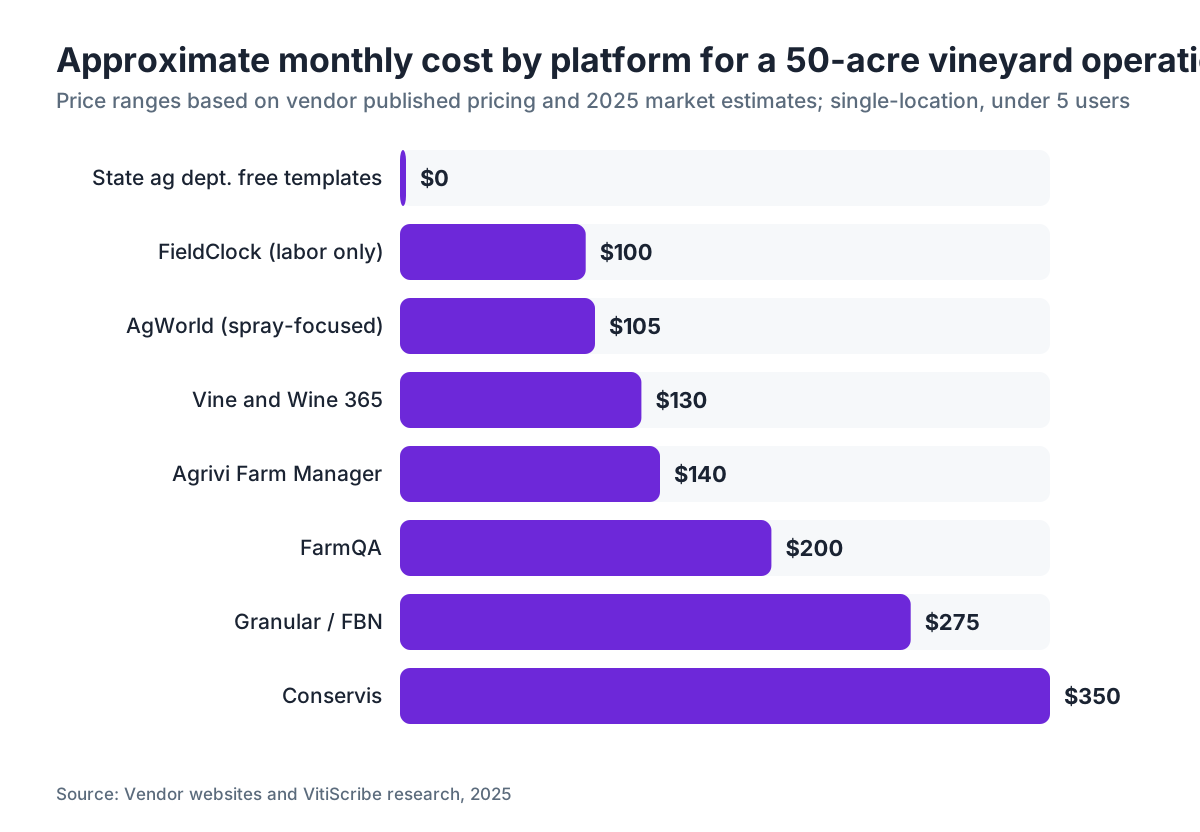
Most operations under 50 acres spend $40 to $150 per month, but pricing is all over the map and most vendors don't publish it cleanly. Here's what you'll actually encounter in 2025.
At the entry level, tools like Granular (now part of Corteva's FBN ecosystem) and free state ag department templates give you basic spray log capability for very little, sometimes nothing. The catch is that free templates automate nothing, so you still spend 20 minutes per application entering data.
Mid-range tools run roughly $50 to $200 per month and include AgWorld, Agrivi's Farm Manager plan, and Vine and Wine 365. These typically ship with a product library carrying pre-loaded EPA registration numbers, block mapping, and export to PDF or CSV. Labor tracking at this tier is usually basic: clock-in, clock-out, job codes. Some have mobile apps for field crews.
At the higher end ($200 to $600+ per month), you get platforms like Agworld Enterprise, FarmQA, and Conservis. These are built for large row-crop operations and often feel over-engineered for a 30-acre estate vineyard. You'll pay for features you'll never touch.
Purpose-built vineyard tools are a separate category. Vine and Wine 365 (used widely in California wine country, including the Paso Robles wineries region) and a handful of European-origin platforms focus on grapevine phenology, block-level spray scheduling, and winery compliance. Pricing tends to cluster around $80 to $180 per month for operations under 100 acres.
FieldClock focuses almost entirely on agricultural labor, not spray records, but it's the most polished labor tool under $150/month at most vineyard scales. If your spray logs are already handled, FieldClock is worth a close look for the harvest labor side. [5]
| Tool | Best for | Approx. monthly cost | Spray logs | Labor tracking | Mobile app |
|---|---|---|---|---|---|
| AgWorld | Spray scheduling + compliance | $60, $150 | Yes, strong | Basic | Yes |
| Agrivi Farm Manager | All-in-one farm ops | $80, $200 | Yes | Yes | Yes |
| Vine and Wine 365 | Dedicated vineyard ops | $80, $180 | Yes, wine-specific | Moderate | Yes |
| FieldClock | Harvest/labor-focused ops | $50, $150 | No | Yes, excellent | Yes |
| FarmQA | Scouting + spray records | $100, $300 | Yes | No | Yes |
| Granular/FBN | Large mixed operations | $150, $400+ | Yes | Yes | Yes |
| Conservis | Row crop, adapted for vines | $200, $500+ | Yes | Yes | Yes |
| State ag dept. templates | Bare-minimum compliance | Free | Manual only | Manual only | No |
Which tools handle EPA-compliant pesticide application records well?
AgWorld and FarmQA both handle pesticide records better than most alternatives at their price points. Both maintain product libraries keyed to EPA registration numbers, so when you select a product you've already set up, the registration number and active ingredient auto-populate. That one feature saves the most time per spray entry, and it kills the transcription errors that bite you during audits.
AgWorld lets you build a spray program (a planned sequence of applications for a block or variety) and then convert those planned applications to actual records after you've sprayed. If you plan ahead, that workflow is genuinely smooth. [6]
FarmQA has a stronger scouting integration, so if you have a PCA or in-house scout on the same platform, their field observations and your spray decisions live in one record. Cornell University's Lake Erie Regional Grape Program has pointed to FarmQA as one approach to meeting DEC recordkeeping requirements in New York, though they don't formally endorse any commercial product. [7]
Vine and Wine 365 includes block-level spray maps, useful if your blocks carry different labels or rate restrictions for the same product. Logging a different rate for your older own-rooted Zinfandel block versus your newer grafted Cab is a real need that generic farm tools handle poorly.
One thing none of these fully solve: the REI posting requirement. You still need to print or post records where workers can see them. Some tools generate a formatted REI notice; others give you a raw export and leave formatting to you. Ask vendors this exact question before you buy.
What's the best software for vineyard labor tracking and harvest timecards?
FieldClock is the most purpose-designed tool for agricultural labor, and several hundred agricultural employers in California use it specifically because it was built to handle piece-rate compliance under California Labor Code. [5] That matters because California piece-rate law (AB 1513 and later changes) requires separate accounting for rest and recovery periods, and general timekeeping apps get that wrong.
Outside California's piece-rate rules, the math is simpler. You need worker clock-in and clock-out by block and job code, a way for supervisors to approve time from the field, and an export your payroll service can actually import. Agrivi handles this adequately. Vine and Wine 365 has reasonable labor tracking for harvest and vineyard maintenance, though managers who've used it heavily say the labor module isn't as polished as FieldClock's.
If you run H-2A workers, the payroll and recordkeeping rules sit in the Department of Labor's regulations at 20 CFR Part 655. [8] Your software needs to capture hours accurately enough to show you met the Adverse Effect Wage Rate (AEWR), and you have to keep those records at least three years. Most mid-range tools produce the necessary export. The real question is whether your crew supervisors can use the mobile app in the field without a lot of training.
For a very small crew (under 10 workers), a paper timecard system with weekly spreadsheet entry is honestly not crazy. Software earns its keep once you have 20 or more seasonal workers across multiple blocks with different pay codes, because reconciling that by hand at week's end eats hours you don't have.
How do the top tools compare on mobile usability in the field?
Mobile usability is where a lot of platforms fall apart. A tool that looks great on a laptop in your office is useless if your applicator can't finish a log entry on a phone with dirty hands next to a running spray rig.
FieldClock has the most field-tested mobile interface in this category. The clock-in flow is simple enough that crew members with minimal smartphone experience use it after a short demo. It supports offline mode, which matters in blocks with no cell signal. [5]
AgWorld's mobile app is functional but better suited to the agronomist or manager than to equipment operators. The application record entry has more steps than it needs.
Agrivi's app improved after its 2023 redesign, and recording a spray application on it is reasonably straightforward now. Offline sync works, though a few users report sync conflicts when several people enter records at once without connectivity.
FarmQA's app is built for field scouting first, with spray records as a secondary function. If your PCA is the main user, it's a good tool. If you want your tractor operator logging applications, plan for more training time.
One honest recommendation. Before you commit, make whoever will actually do the data entry test the mobile app for a week. Not you. The person who touches it every day. Their friction decides whether your records are complete or full of gaps.
Does vineyard software integrate with QuickBooks or payroll systems?
Integration depth varies a lot, and vendor claims on this point are sometimes aspirational. FieldClock integrates directly with QuickBooks Online and several payroll processors including ADP and Paychex, pushing approved timecards into payroll batches. That's a real time saver at week's end. [5]
Agrivi has a QuickBooks integration that handles cost tracking and some payroll exports, though it's reported to need manual field mapping during setup. The support docs cover it, but plan for a few hours of configuration.
AgWorld leans toward agronomic records over financial integration. Its exports are clean CSV or PDF files rather than direct API connections to payroll or accounting software. For most small vineyards that's fine, because you hand the CSV to your bookkeeper.
Vine and Wine 365 has limited integration with external financial systems, which is a real gap if you want everything to flow automatically. It does connect with some European winery management platforms, which fits its origin.
The honest truth about integration: for most operations under 200 acres, you don't need an automated pipeline running field data straight into payroll. You need records that are accurate and exportable. Paying an extra $100/month for native QuickBooks integration only makes sense if you're running payroll weekly for 30 or more workers.
Is there purpose-built software specifically designed for vineyard blocks and wine grape compliance?
Yes. A small category of tools goes past generic farm management to hit vineyard-specific needs: block and row-level mapping, variety-specific spray programs, phenological stage tracking (bud break, bloom, veraison, harvest), and in some cases integration with winery production systems.
Vine and Wine 365 is the most widely adopted vineyard-specific platform in the U.S. market right now. It was built around the wine grape production calendar and covers spray records, block maps, vintage tracking, and some harvest logistics. The domain knowledge behind it shows in the product design.
Agrivi also carries a crop model that includes grapevines, so spray intervals and phenology reminders mean something rather than reading as generic.
Outside the U.S., platforms like Fruition Sciences (focused on vine water status monitoring and spray timing) and Tracesol (European) serve similar niches, but their U.S. support is thin.
This is where a tool like VitiScribe fits. It's designed specifically for vineyard compliance and field operations, with records shaped around the regulatory and operational language vineyard managers and small winery owners actually use, rather than a generic farm tool bent to fit wine grape production.
For a vineyard with clearly defined blocks, varietals, and a documented spray program, a purpose-built tool saves meaningful setup time because the vocabulary and workflow match your reality from day one. You're not forcing a cotton farm's data model onto a 40-acre Pinot Noir estate.
What do university extension programs recommend for vineyard recordkeeping?
Extension programs won't endorse commercial products, but they publish useful decision frameworks and sometimes evaluate tools in research. The common thread across all of them: the tool has to work for your crew under field conditions, more than look good in a demo.
UC Cooperative Extension has published guidance on integrated pest management recordkeeping for California vineyards, stressing that records must be retrievable within 24 hours of an inspector's request, and that spray records must be legible, complete, and matched to field maps. [4] Their farm advisors tell growers that whatever system you use has to survive real field use.
WSU Extension's viticulture program has done comparative work on technology adoption in Washington vineyards. Their finding, published in extension bulletins, is that the biggest predictor of whether a grower keeps good records is whether the tool is easy enough to use in the field without switching context. [2] In plain language: if logging a spray takes five minutes on a desktop and two minutes on a phone, growers use the phone version more consistently.
Cornell's Lake Erie Regional Grape Program and the New York State IPM program publish spray record templates and guidance on electronic recordkeeping that meets DEC requirements. [11] They note that any electronic system has to produce a retrievable, printable record, and that digital signatures are acceptable in New York for pesticide use records as long as they include the applicator's name and license number.
The broader takeaway: compliance is table stakes. The real argument for software is that good records help you cut inputs over time by showing patterns in spray intervals, disease pressure by block, and labor cost per ton. That's where the return on a $100/month tool actually shows up.
What should you watch out for when buying vineyard software?
A few traps come up over and over.
First, per-user pricing stacks up fast. Some platforms charge per seat, so a $60/month tool becomes $240/month once you add your applicator, foreman, office manager, and PCA. Always ask for total cost at your expected user count.
Second, data portability matters more than most buyers think at purchase time. If you switch platforms in two years, can you export all your historical spray records in a format that's actually readable? Ask vendors exactly what export formats they support, and test the export before you sign any multi-year contract.
Third, product libraries go stale. A pesticide database that was current in 2022 may list products that have since had label changes or been cancelled. Ask how often the library updates and who maintains it.
Fourth, watch the contract length. Some ag software vendors push annual contracts with auto-renewal and clunky cancellation. Month-to-month options exist and are worth a small premium, at least in the first year while you're testing fit.
Don't pay for a smartphone app upgrade that's actually a basic feature. Mobile access should be included in any field operations platform in 2025. If a vendor charges extra for mobile, that tells you how they think about the product.
VitiScribe offers a free trial for vineyard recordkeeping, worth taking if you want to compare a purpose-built compliance tool against a more generic farm management platform before you commit.
How do spray and labor records protect you during a labor or pesticide audit?
Clean, dated, timestamped records are the difference between a five-minute inspection and a two-hour scramble. The two audits that hit vineyards most often are CDFA (or the equivalent state ag department) pesticide use inspections and California Labor Commissioner (or DOL) wage-and-hour investigations.
In a pesticide audit, the inspector wants your spray records to match your purchase receipts (you didn't apply more product than you bought) and wants proof your REI postings went up before workers re-entered treated areas. An electronic spray log that timestamps every entry with a GPS pin for the block is far harder to dispute than a handwritten notebook. The EPA's own enforcement guidance under WPS notes that recordkeeping gaps are the most common violation finding. [1]
In a labor audit, the examiner wants timecard records showing each worker's daily hours, start and stop times, and pay rate. In California you also have to show rest period compliance and, if you pay piece rate, the separate accounting required under Labor Code 226.2. [9] Gaps in records, or records clearly filled in all at once rather than as the work happened, get treated as evidence of noncompliance.
Software doesn't make you compliant. You still have to post REI notices, give workers access to pesticide records, and pay correctly. But it keeps the paper trail solid enough that when an inspector shows up, you pull records in under five minutes instead of reconstructing a spray log from memory.
Operations that have been through audits report the same thing. The auditor's whole posture changes when you hand over clean, organized records. It doesn't erase scrutiny, but it redirects it.
Frequently asked questions
What is the cheapest way to keep EPA-compliant spray records for a small vineyard?
The cheapest compliant option is a free paper log or spreadsheet template from your state's department of agriculture or a university extension program. UC IPM and WSU both publish templates. The real cost is your time: hand-logging a full spray record takes 10 to 15 minutes per application. At 40 to 60 applications per season, that adds up to 10 or more hours of clerical work, which often makes a $50 to $80/month software tool cost-neutral or cheaper.
Does vineyard spray software automatically generate REI posting notices?
Some do, some don't. AgWorld and Vine and Wine 365 both generate formatted restricted-entry interval notices you can print and post at the field entry point. FarmQA generates the record but doesn't format a posting notice automatically. FieldClock doesn't handle spray records at all. Ask this specific question of any vendor before you buy, because the REI posting requirement under 40 CFR Part 170.309 is one of the most commonly cited WPS violations.
Can vineyard software handle H-2A worker recordkeeping requirements?
Most labor tracking platforms can capture the records you need (daily hours, job codes, wage rates) to show compliance with H-2A Adverse Effect Wage Rate requirements under 20 CFR Part 655. FieldClock and Agrivi both support the necessary timecard detail. The software won't file your H-2A job orders or manage visa logistics, but it can produce the payroll records the Department of Labor expects you to keep for at least three years.
How long do I have to keep pesticide application records?
Under the EPA Worker Protection Standard (40 CFR Part 170.309), agricultural employers must retain pesticide application records for at least two years from the application date. California requires growers to keep pesticide use records for three years under Food and Agricultural Code Section 12981. Washington state also requires three years. If your operation crosses state lines or sells to markets with longer traceability requirements, keep records for three years minimum to be safe.
What's the difference between AgWorld and Agrivi for vineyard use?
AgWorld is stronger on spray records and agronomic planning, with a well-maintained pesticide product library keyed to EPA registration numbers. Agrivi is more of a full farm management platform covering financials, labor, inventory, and spray records. For a vineyard focused mainly on compliance records, AgWorld is often the cleaner fit. Agrivi makes more sense if you also want farm cost accounting and labor payroll in one tool. Both run $60 to $200 per month depending on your scale.
Is FieldClock good for vineyard spray record compliance?
No. FieldClock is designed for agricultural labor and harvest logistics, not pesticide application records. It does crew management, block-level timecards, piece-rate tracking, and payroll exports very well. But it has no spray log functionality, no pesticide product library, and won't generate REI notices. If you need both spray records and labor tracking, run FieldClock alongside a separate spray record tool, or choose a platform that genuinely handles both.
Do I need separate software for spray records and labor, or can one tool do both?
A few tools do both reasonably well, including Agrivi and Vine and Wine 365. No single tool in the under-$200/month range does both at the level of a specialist tool. Most vineyard managers with 20 or more seasonal workers and a structured spray program end up with two tools, or use one platform for records and a spreadsheet for the other function. The all-in-one approach is worth pursuing, but test both modules before committing.
What features matter most for California vineyard pesticide compliance?
California requires pesticide use reports for many products that are general-use elsewhere. Your software needs to log the California Department of Pesticide Regulation product number alongside the EPA registration number, flag restricted-use products, and export in a format compatible with county Ag Commissioner reporting. UC IPM and CDPR both publish guidance on required record fields. Any tool you choose must let you record the site ID exactly as it appears on your county use permit.
Can vineyard software replace a paper logbook for worker protection standard compliance?
Yes, electronic records fully satisfy EPA WPS requirements under 40 CFR Part 170.309, as long as they can be printed or displayed within a reasonable time and include all required fields. Electronic records have one advantage: timestamping is automatic, which makes it much harder for an inspector to question whether the record was completed as the work happened. The main condition is that you must be able to produce the record within 24 hours of a request in most states.
How do Washington state vineyard spray record requirements differ from California's?
Both Washington and California require pesticide application records to be kept for three years (the federal minimum is two). The Washington State Department of Agriculture also requires records to include the license number of the applicator for restricted-use products. WSU Extension's viticulture publications cover these requirements and are updated more regularly than many commercial resources. The practical difference is mainly in the applicator license field and the county reporting structure.
What should a vineyard manager look for in a software free trial?
During any free trial, test four things. Enter one full spray application record including EPA registration number and REI, then export it as a PDF and check that every required field is there. Add three workers, assign them to a block with a job code, and run a timecard report. Try the mobile app in a low-signal area and confirm offline entry works. Finally, ask the vendor how you export all your data if you cancel. That last answer tells you a lot.
Is there vineyard management software that works offline in the field?
FieldClock and Agrivi both support offline entry with sync when connectivity returns. AgWorld has limited offline capability depending on which app version you're using. In areas with poor cellular coverage (many foothill vineyards, Sonoma coast blocks, elevated Sierra Foothills sites), offline mode isn't optional. Test it before buying: actually disable cell data on your phone, enter a record, and verify it syncs cleanly when you reconnect. Vendor claims about offline support vary in accuracy.
How do vineyard spray records factor into wine grape certification programs like CCOF or SIP?
Both California Certified Organic Farmers (CCOF) organic certification and the Sustainability in Practice (SIP) program require complete pesticide application records as part of annual audits. CCOF also requires every input to be cleared against the allowed materials list. Software that logs products against their EPA registration numbers and lets you tag products as OMRI-listed or NOP-compliant makes those audits much easier. Neither program endorses specific software, but clean exportable records are non-negotiable for both.
Sources
- EPA, Worker Protection Standard (40 CFR Part 170): Agricultural employers must retain pesticide application records for at least two years; records must include product name, EPA registration number, active ingredient, treated area, application date and time, and REI.
- WSU Extension, Viticulture and Worker Protection Standard guidance: WSU Extension publishes breakdowns of the 2015 WPS updates and finds that ease of field use is the biggest predictor of whether growers keep good records.
- California Department of Pesticide Regulation, Pesticide Use Reporting: California requires pesticide use reports for restricted-use and many general-use pesticides filed through county agricultural commissioners; growers must maintain matching records.
- UC Statewide Integrated Pest Management Program, Pesticide Recordkeeping guidance: UC Cooperative Extension guidance states spray records must be retrievable within 24 hours of an inspector's request and must be legible, complete, and matched to field maps.
- FieldClock, Agricultural Labor Management Platform: FieldClock supports direct integration with QuickBooks Online, ADP, and Paychex, and includes offline timekeeping with sync for agricultural operations.
- AgWorld, Crop Management and Spray Planning: AgWorld maintains a pesticide product library keyed to EPA registration numbers and allows spray programs to be converted from planned to actual application records.
- Cornell University, Lake Erie Regional Grape Program: Cornell's Lake Erie Regional Grape Program has noted FarmQA as one approach to electronic recordkeeping meeting New York DEC requirements; digital signatures with applicator name and license number are acceptable.
- U.S. Department of Labor, H-2A Temporary Agricultural Program (20 CFR Part 655): H-2A regulations require employers to maintain payroll records demonstrating compliance with the Adverse Effect Wage Rate for at least three years.
- California Labor Code Section 226.2, Piece-Rate Compensation: California Labor Code 226.2 (AB 1513) requires separate accounting and payment for rest and recovery periods for piece-rate employees, distinct from piece-rate compensation.
- California Food and Agricultural Code Section 12981, Pesticide Record Retention: California requires growers to retain pesticide use records for three years from the date of application.
- Cornell University New York State Integrated Pest Management Program: Cornell's NY IPM program publishes spray record templates and guidance on electronic recordkeeping meeting New York DEC requirements for vineyards.
- Agrivi, Farm Management Software: Agrivi includes a crop model for grapevines with spray intervals, phenology reminders, labor tracking, and QuickBooks integration in its Farm Manager plan.
Last updated 2026-07-09