Vineyard Botrytis Spray Schedule: Timing by Growth Stage
Botrytis management is not about the number of applications. It's about timing them at the windows where they matter and using the right mode of action in the right rotation.
TL;DR
- The bloom to 50% cap fall application is the single most important botrytis timing -- protecting dying flower tissue prevents latent infections that activate at veraison
- A three-application program at bloom, bunch closure, and post-veraison with proper FRAC rotation will outperform eight calendar-timed applications of the same product
- Elevate (fenhexamid, FRAC 17) and Captan carry the shortest PHIs among botrytis fungicides -- they are the practical late-season tools when harvest is within 7 days
- Maximum application limits per product class: Switch class (FRAC 9+12) 2 per season, Elevate (FRAC 17) 2 per season, SDHI materials (FRAC 7) 2-3 per season depending on label
- Every botryticide application record must include FRAC group notation to verify that rotation was maintained across the season
- Post-veraison applications are not always necessary -- they are warranted in high-pressure seasons, after injury events that create entry points, or in susceptible tight-cluster varieties with wet post-veraison weather
A grower who applies three botryticide applications at bloom, bunch closure, and post-veraison with proper FRAC rotation will outperform one who sprays eight times on a calendar interval with the same product. The biology drives the timing.
Application 1: Bloom to 50% Cap Fall
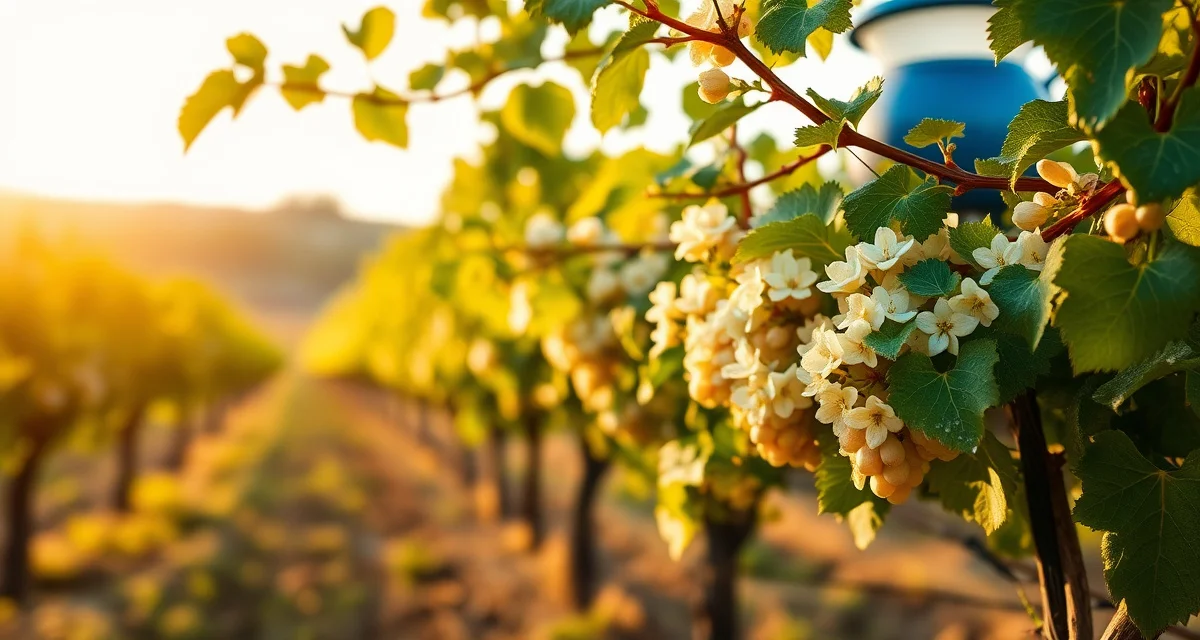
This is the most important timing. Dead flower parts (calyptras, stamens) trapped in developing clusters are the primary substrate for early-season botrytis establishment. Protecting clusters at this stage prevents the latent infections that activate at veraison.
Target timing: When 20-30% of caps have fallen to full bloom (50-80% cap fall)
Products:
- Switch (fludioxonil + cyprodinil, FRAC 12+9): 11-14 oz/acre, excellent activity
- Scala (pyrimethanil, FRAC 9): 7 fl oz/acre
- Elevate (fenhexamid, FRAC 17): 0.5 lb/acre
Application notes: This application needs to get inside the cluster to the rachis and flower tissue. Consider using a penetrant adjuvant. Water volume matters -- 50+ gallons/acre with an air blast sprayer calibrated to penetrate the cluster zone.
Organic options at bloom:
- Serenade (Bacillus subtilis): Some activity; use at full labeled rate
- Regalia: Plant defense induction; limited standalone efficacy
- Canopy management is more valuable than organic fungicide at this timing
Application 2: Bunch Closure (Late Fruit Set to Pre-Veraison)
The last opportunity for good spray penetration to the cluster interior before berries press together and form a dense mass.
Target timing: When berry size is approximately 8-10mm and clusters are tightening but not yet touching (approximately 30-50 days after bloom depending on variety)
Products (rotate FRAC group from Application 1):
- Pristine (pyraclostrobin + boscalid, FRAC 11+7): 10.5-14 oz/acre
- Luna Experience (fluopyram + tebuconazole, FRAC 7+3): 6-11 fl oz/acre
- Endura (boscalid, FRAC 7): 3.5-4.5 oz/acre
Application notes: This is the second high-priority timing. If you can only make two botrytis applications in a low-pressure season, make them at bloom and bunch closure.
Application 3: Post-Veraison (High-Risk Situations Only)
Post-veraison applications are warranted in:
- High-pressure seasons with significant disease in neighboring vineyards or blocks
- After injury events (hail, bird damage, insect feeding wounds) that create entry points
- Wet conditions post-veraison that extend into the harvest window
- Susceptible varieties (Chardonnay, Pinot Noir, Grenache) in tight cluster vintages
PHI management is critical at this timing. Know the PHI of every product before application.
PHI reference for common botrytis products:
- Switch: 7 days
- Scala: 7 days
- Elevate: 0 days
- Rovral (iprodione): 7 days
- Captan: 0 days (check label -- some formulations 3 days)
Products with short PHI for late-season use:
- Elevate (fenhexamid, FRAC 17): 0 days PHI -- can apply close to harvest
- Captan (FRAC M4): 0-3 days PHI depending on formulation
Products to avoid late-season unless PHI is confirmed:
- Switch: 7-day PHI -- plan carefully
- Pristine: 0-day PHI for grapes (verify current label)
VitiScribe auto-calculates PHI completion dates when you log any post-veraison application.
Season Summary: Rotation Template
| Application | Growth Stage | FRAC Group | Example Product |
|---|---|---|---|
| 1 | Bloom (50% cap fall) | 9+12 | Switch |
| 2 | Bunch closure | 7 | Endura |
| 3 | Pre-veraison (if needed) | 17 | Elevate |
| 4 | Post-veraison (high risk only) | M4 | Captan |
Maximum applications per season by product class:
- FRAC 9+12 (Switch class): 2 per season
- FRAC 17 (Elevate): 2 per season
- FRAC 7 (SDHI): 2-3 per season (check labels)
Documentation Requirements
Every botryticide application needs:
- Product name and EPA reg number
- FRAC group (for rotation tracking)
- Application date and block
- PHI calculation relative to planned harvest
- Rate and water volume
Track FRAC groups in VitiScribe to ensure you're rotating properly and not building resistance. For full resistance management context, see botrytis resistant fungicides for vineyards.
Related Articles
- Weather Window Alerts for Vineyard Spray Timing
- Vineyard Block Spray History Report: Full Pesticide Record by Location
- Organic Botrytis Control for Vineyards
FAQ
When is the most important time to spray for botrytis in vineyards?
The most important timing is at bloom to 50% cap fall. This application protects dying flower tissue -- the primary entry point for early-season infection that leads to late-season bunch rot. If you can only make one or two botryticide applications per season, prioritize bloom and bunch closure over any other timing.
What botrytis fungicide can I apply closest to harvest?
Elevate (fenhexamid, FRAC 17) has a 0-day PHI for grapes and can be applied very close to harvest. Captan has a PHI of 0-3 days depending on formulation -- verify your specific product label. Most other botrytis fungicides have PHI of 7 days, so plan applications carefully against your projected harvest date. VitiScribe auto-flags any application that puts you inside a PHI window relative to your scheduled harvest.
How do I document botrytis spray decisions for organic certification?
For organic certification, document each botrytis-related application with the OMRI-listed product name, application date, growth stage, target pest (Botrytis cinerea), rate, and block treated. Also document the scouting observations or weather conditions that justified the application. Organic certifiers want to see that spray decisions were made based on IPM principles -- pest pressure observation or weather-based risk -- not just calendar spraying.
How does water volume affect botrytis fungicide efficacy at bloom?
Adequate water volume is critical for bloom applications because the target tissue -- flower rachis and calyptras inside the developing cluster -- is shielded by surrounding leaves and cluster architecture. Most agronomists recommend a minimum of 50 gallons per acre with an airblast sprayer calibrated to direct spray into the cluster zone. Inadequate water volume creates surface-level coverage that doesn't protect the inner floral tissue where early infections establish. Document your water volume in every spray record so you can correlate coverage with efficacy outcomes across seasons.
Should I adjust botrytis spray intervals based on cluster compactness ratings from scouting?
Yes. Tight-clustered blocks or vintage years where cluster compactness is visibly higher than average warrant shorter intervals (5-7 days) during the critical bloom through bunch closure window. Looser-clustered blocks with better airflow can tolerate 10-14 day intervals when disease pressure is moderate. Recording cluster compactness ratings from your scouting data in VitiScribe alongside botrytis incidence creates the data trail to justify interval decisions and refine your program in subsequent seasons.
What is Vineyard Botrytis Spray Schedule: Timing by Growth Stage?
[FAQ_ANSWER_PLACEHOLDER: This answer needs to be generated by AI with specific data, examples, and actionable advice relevant to Vineyard Botrytis Spray Schedule: Timing by Growth Stage. Target 50-150 words.]
How much does Vineyard Botrytis Spray Schedule: Timing by Growth Stage cost?
[FAQ_ANSWER_PLACEHOLDER: This answer needs to be generated by AI with specific data, examples, and actionable advice relevant to Vineyard Botrytis Spray Schedule: Timing by Growth Stage. Target 50-150 words.]
How does Vineyard Botrytis Spray Schedule: Timing by Growth Stage work?
[FAQ_ANSWER_PLACEHOLDER: This answer needs to be generated by AI with specific data, examples, and actionable advice relevant to Vineyard Botrytis Spray Schedule: Timing by Growth Stage. Target 50-150 words.]
Sources
- California Department of Pesticide Regulation (CDPR)
- UC Cooperative Extension Viticulture
- Oregon Department of Agriculture (ODA)
- American Society for Enology and Viticulture (ASEV)
- American Vineyard Foundation
Get Started with VitiScribe
Botrytis spray scheduling requires more than a calendar -- you need to track FRAC groups across the season, calculate PHI against a moving harvest target, and connect your applications to the scouting observations and weather events that justified them. VitiScribe handles all of it from a single block-level record. Try it free and log your next botrytis application with growth stage, FRAC group, and PHI clearance built into the entry form.