Weather Window Alerts for Vineyard Spray Timing
Spray timing in vineyard management is a two-constraint problem. The first constraint is the biological one: the target pathogen or pest has a window when it is most vulnerable, and applications outside that window are less effective or ineffective. The second constraint is the physical one: application conditions must be suitable for the product to be applied correctly, reach the target, and remain on the plant long enough to provide coverage.
Weather window alerts address the second constraint. When you know that conditions will be suitable for application in the next 12 to 24 hours, you can plan application to align with both biological timing and physical suitability. Missing either constraint reduces the value of every input dollar and labor hour spent on that application.
What Makes a Spray Window
A suitable spray window requires:
Wind speed within range. Most vineyard pesticide labels specify maximum wind speed of 10 mph for aerial application and recommend 2 to 8 mph for ground applications. Low wind speed prevents drift to non-target areas and neighboring properties. No-wind conditions create inversion layers that can cause spray to drift unpredictably rather than settling into the canopy.
Temperature in range. High temperatures at or above 85 to 90°F increase evaporation from droplets before they reach the canopy target, increase the risk of phytotoxicity from sulfur-based products on sensitive varieties, and increase pesticide volatilization. Very cold temperatures below 50°F slow absorption of some systemic materials and can reduce efficacy. For most vineyard applications, a temperature range of 55 to 85°F is appropriate.
No rain within the rain-fast period. Every pesticide label specifies a minimum dry period required after application for the product to be absorbed or secured to the plant surface before rain washes it off. Rain-fast intervals range from 1 hour for some contact fungicides to 4 hours for many systemics. In high-pressure regions like the Willamette Valley or Virginia, knowing that a dry window will last at least 4 hours post-application is essential before committing to an application.
Acceptable relative humidity. Humidity affects spray droplet evaporation and product performance. Very low humidity under 30% accelerates evaporation and reduces effective coverage. Very high humidity combined with still air can create conditions where the sprayed canopy stays wet longer than intended, sometimes increasing the risk of contact-type products causing plant stress.
Rain-Fast Interval Tracking
The rain-fast interval is one of the most practically important specifications on the pesticide label, and it is one of the most commonly overlooked. A grower who sprays at 7 AM with a 4-hour rain-fast interval must have at least 4 hours of dry weather after the application is complete to have a valid application. If rain begins at 10 AM, the product applied to the last block sprayed at 9:30 AM may have inadequate time to reach its rain-fast interval.
In regions with convective summer thunderstorms, like Virginia and Texas, afternoon thunderstorms can arrive rapidly and unexpectedly. Weather window alerts that integrate hourly forecast data and on-site weather observations help identify morning application windows before afternoon convective activity, which is often the only reliable window in humid summer weather.
In the Willamette Valley and coastal California, where multi-day rain systems arrive from the Pacific with more predictable timing, weather window alerts help identify the specific dry hours within a frontal break when conditions are suitable for application. A 36-hour dry window between two frontal systems is a precious resource; knowing when it starts and how long it will last determines whether you can complete the block coverage you need.
Disease Infection Events and Spray Window Alignment
Weather window alerts are most valuable when they can be aligned with disease infection event timing. The most critical spray windows in a vineyard season aren't random: they correspond to periods when primary disease infection is occurring or about to occur.
For downy mildew (Plasmopara viticola), the primary infection window is defined by the 10/10/24 rule used in many forecasting systems: temperature above 10°C (50°F), rainfall above 10mm, and primary infection within the 24-hour period following rain. Weather that meets these thresholds creates a downy mildew infection risk period. Applying a protectant fungicide in the dry weather window immediately before the forecasted rain event, if adequate coverage can be achieved with a rain-fast interval satisfied before rain starts, is the most effective application timing.
For powdery mildew (Uncinula necator), germination and infection requires temperature between 50 and 95°F and no free moisture, but high relative humidity. Effective spray timing is at or before the predicted infection periods, which in California are often concentrated from the green tip to bloom period when conditions are suitable for ascospore germination.
Recording the relationship between spray application dates, weather conditions, and disease incidence over multiple seasons creates the data to evaluate whether your spray windows were aligned with actual infection events. A season where you sprayed during poor conditions repeatedly but missed key infection windows will show up in your disease incidence records even if the spray event count was adequate.
Drift Prevention and Regulatory Compliance
Weather window selection isn't only an efficacy decision; it's a regulatory compliance decision. Applying pesticides under wind conditions that cause drift to non-target areas including neighboring properties, public roads, waterways, or adjacent crops is a violation under the Federal Insecticide, Fungicide, and Rodenticide Act and equivalent state laws. California, Oregon, and Washington have specific spray drift regulations with enforceable wind speed limits, and violations can result in significant penalties and neighbor complaints that trigger county agricultural commissioner inspections.
Recording wind speed and direction at the time of every application is required on California pesticide use reports and is good practice in all states. An on-site weather station that logs these conditions automatically creates a defensible record showing that you assessed conditions before applying. If a drift complaint arises, your weather records for the application period are your primary evidence.
VitisScribe's spray record form includes weather conditions as required fields at the time of entry, ensuring that every application has documented conditions rather than reconstructed ones.
Setting Up Weather Window Alerts
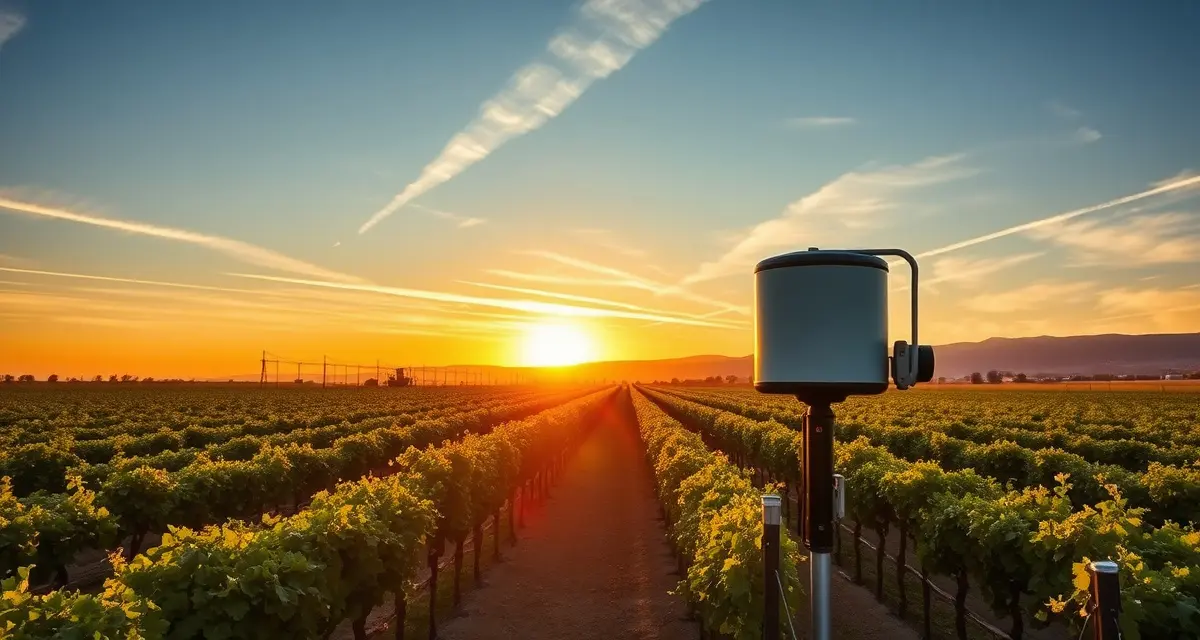
An effective vineyard weather alert system requires an on-site weather station. Regional airport or CIMIS station data is insufficient because local site conditions can differ meaningfully from a station several miles away. Topographic effects on wind, fog and marine influence, and local terrain features all create conditions at the vineyard that may not match the nearest reference station.
Davis Instruments and Onset HOBO stations both support configurable alert thresholds for temperature, wind speed, and rainfall. Most cellular-connected stations can send email or text notifications when conditions enter or leave the defined acceptable range.
The most useful alert configuration for spray window planning:
Wind speed dropping below 8 mph (start of suitable window) and exceeding 10 mph (end of suitable window or spray should stop).
No rain in the past 4 to 6 hours (rain-fast period clear) combined with no forecast rain in the next 4 hours.
Temperature between 55 and 82°F for general applications; tighter upper limit of 75°F for sulfur applications in Grenache, Zinfandel, or other sulfur-sensitive varieties.
Weather Records as a Compliance Defense
Pesticide applicator inspections increasingly focus on whether applications were made under conditions consistent with label requirements. Labels that specify wind speed limits are creating a compliance obligation, not just an advisory. Documented weather records at the time of application demonstrate due diligence that your application met the label's environmental conditions.
A complete weather record tied to each spray event, showing temperature, wind speed, wind direction, and recent rainfall, is the documentation that makes a compliance case for appropriate application conditions. Without it, you are relying on memory during an inspection conversation that may occur months after the application.
FAQ
What is Weather Window Alerts for Vineyard Spray Timing?
[FAQ_ANSWER_PLACEHOLDER: This answer needs to be generated by AI with specific data, examples, and actionable advice relevant to Weather Window Alerts for Vineyard Spray Timing. Target 50-150 words.]
How much does Weather Window Alerts for Vineyard Spray Timing cost?
[FAQ_ANSWER_PLACEHOLDER: This answer needs to be generated by AI with specific data, examples, and actionable advice relevant to Weather Window Alerts for Vineyard Spray Timing. Target 50-150 words.]
How does Weather Window Alerts for Vineyard Spray Timing work?
[FAQ_ANSWER_PLACEHOLDER: This answer needs to be generated by AI with specific data, examples, and actionable advice relevant to Weather Window Alerts for Vineyard Spray Timing. Target 50-150 words.]
What are the benefits of Weather Window Alerts for Vineyard Spray Timing?
[FAQ_ANSWER_PLACEHOLDER: This answer needs to be generated by AI with specific data, examples, and actionable advice relevant to Weather Window Alerts for Vineyard Spray Timing. Target 50-150 words.]
Who needs Weather Window Alerts for Vineyard Spray Timing?
[FAQ_ANSWER_PLACEHOLDER: This answer needs to be generated by AI with specific data, examples, and actionable advice relevant to Weather Window Alerts for Vineyard Spray Timing. Target 50-150 words.]
How long does Weather Window Alerts for Vineyard Spray Timing take?
[FAQ_ANSWER_PLACEHOLDER: This answer needs to be generated by AI with specific data, examples, and actionable advice relevant to Weather Window Alerts for Vineyard Spray Timing. Target 50-150 words.]
What should I look for when choosing Weather Window Alerts for Vineyard Spray Timing?
[FAQ_ANSWER_PLACEHOLDER: This answer needs to be generated by AI with specific data, examples, and actionable advice relevant to Weather Window Alerts for Vineyard Spray Timing. Target 50-150 words.]
Is Weather Window Alerts for Vineyard Spray Timing worth it?
[FAQ_ANSWER_PLACEHOLDER: This answer needs to be generated by AI with specific data, examples, and actionable advice relevant to Weather Window Alerts for Vineyard Spray Timing. Target 50-150 words.]
For more on spray record documentation that includes weather conditions, see our guide on California DPR reporting and our article on PHI and REI compliance in the vineyard. For disease timing context, see our articles on downy mildew management and powdery mildew spray programs.