Cover crop species selection records and seeding rate documentation
TL;DR
- Vineyards must document cover crop species, seeding rates, dates, and application methods to satisfy USDA NRCS cost-share programs, organic certifiers, and some state water quality permits.
- A complete record has the species name, variety, pounds of pure live seed per acre, row or zone treated, equipment used, and the person who seeded.
- Missing records can void your program payment.
Why do vineyards need to keep cover crop records at all?
The short answer is money and liability. If you're taking USDA NRCS payments under EQIP (Environmental Quality Incentives Program) or CSP (Conservation Stewardship Program), the agency wants documentation of what you planted, at what rate, and when. Auditors can ask for those records years after the contract closes, and an inability to produce them can trigger repayment of the full practice payment. [1]
Organic certification is the other big driver. The National Organic Program (NOP) requires certified operations to keep records that document all practices and materials used on the operation for at least five years. Cover crops count as a practice. If your certifier asks how you managed the inter-row floor last spring and you can't show the seed invoices plus a field log, you have a problem. [2]
State rules are patchier. California's Irrigated Lands Regulatory Program, run through the Regional Water Quality Control Boards, increasingly asks growers in certain watersheds for evidence of erosion-control practices. A cover crop seeding record is exactly the kind of evidence that keeps you clear during a third-party audit. [3]
Even if none of those programs touch you right now, good records pay off later. They protect you when you sell the vineyard, hire a consulting viticulturist, or hand off management mid-season. The person taking over needs to know what's in the ground, and a shrug is not an answer.
What information belongs in a cover crop seeding record?
A useful record has eight fields. Miss any one and the record may not satisfy your program.
- Date of seeding (or a date range if you seeded over several days)
- Block or zone identifier, tied to your vineyard map
- Common name and botanical name of each species planted
- Variety or cultivar, if it's commercially available and relevant
- Seeding rate in pounds of pure live seed (PLS) per acre, not bulk seed weight
- Application method (broadcast, drill, inter-row airseeder, hand spreader)
- Equipment ID or description
- The person who did the seeding, plus a signature line
The PLS distinction is where growers trip. Bulk seed weight and PLS weight are different numbers. PLS accounts for germination percentage and purity percentage. The formula is PLS rate = bulk rate x (germination % / 100) x (purity % / 100). USDA NRCS practices like Cover Crop (340) require seeding rates documented in PLS. [1]
Seeding a mix? Record each species separately with its own PLS rate. A single line reading "40 lb/acre cover crop mix" will not pass an NRCS audit.
Some certifiers and programs also want the seed lot number or supplier invoice number so the material traces back to the bag. Staple the seed tag or invoice to the field record. That's the easiest audit-prep habit you'll ever build, and it takes ten seconds.
What are the standard seeding rates for common vineyard cover crops?
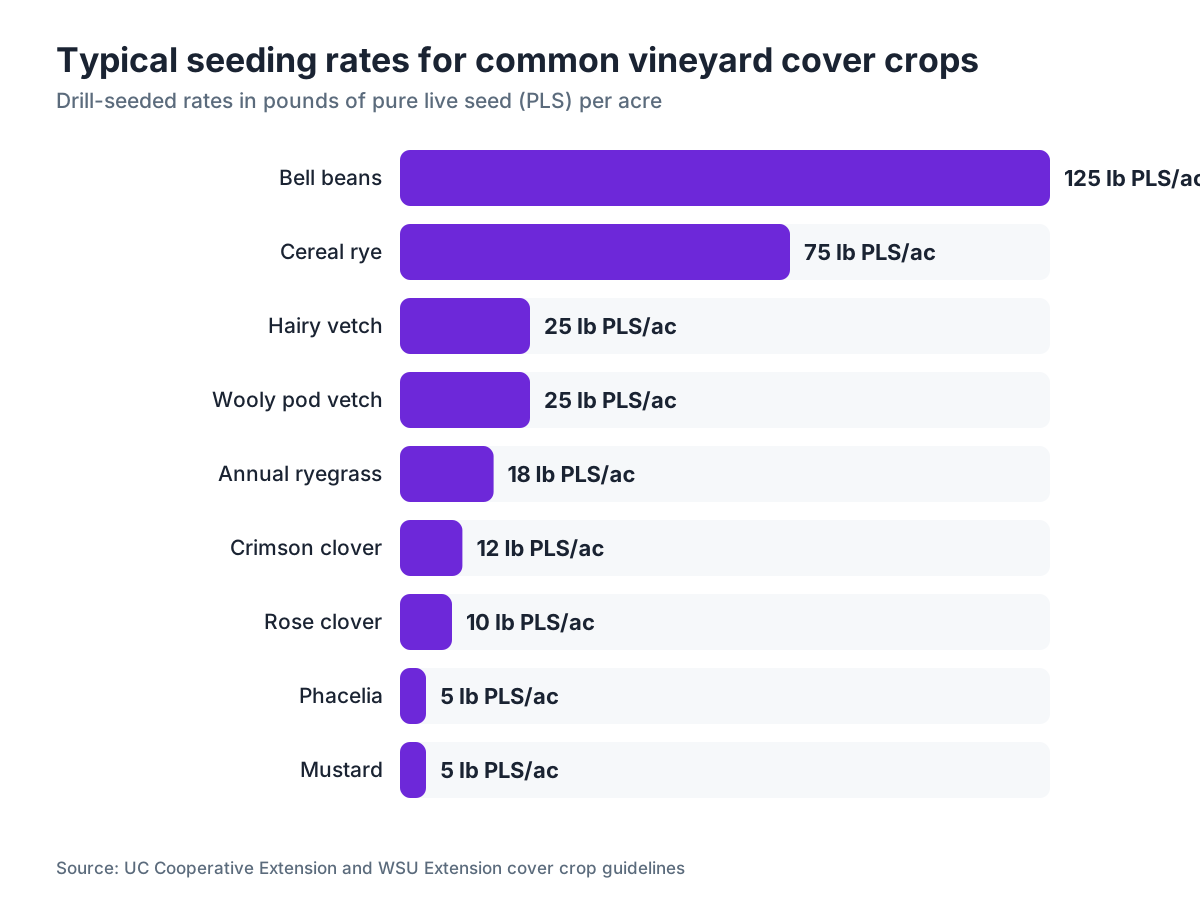
Rates change with species, planting method, and whether you're running a monoculture or a mix. The table below pulls from UC Cooperative Extension and WSU Extension guidelines. All rates are pounds of PLS per acre for inter-row vineyard strips unless noted. [4][5]
| Species | Drill (lb PLS/ac) | Broadcast (lb PLS/ac) | Notes |
|---|---|---|---|
| Cereal rye | 60-90 | 90-120 | Winter annual; widely adapted |
| Crimson clover | 10-15 | 15-20 | Fixes N; needs inoculant |
| Hairy vetch | 20-30 | 30-40 | Aggressive; limit in wet climates |
| Bell beans (fava) | 100-150 | 150-200 | Heavy seed; drill preferred |
| Phacelia | 4-6 | 6-8 | Strong pollinator; short season |
| Wooly pod vetch | 20-30 | 30-40 | Drought tolerant; CA valleys |
| Blando brome | 15-20 | 20-30 | Permanent or semi-permanent |
| Rose clover | 8-12 | 12-16 | Reseeding annual; dry areas |
| Annual ryegrass | 15-20 | 20-30 | Erosion control; avoid in wet soils |
| Mustard (Sinapis) | 4-6 | 6-8 | Biofumigant; terminate before seed set |
Broadcast rates run higher because seed-to-soil contact is worse. When you record the rate, note the application method next to it so the number makes sense to whoever reads it later.
For mixes, the usual move is to knock each species down to 40-60% of its monoculture rate, then check the total adds up to something reasonable. The SARE cover crop guides published through the extension system give species-by-species compatibility notes for wine grape regions. [4]
WSU Extension work in eastern Washington shows that drill-seeded cereal rye at 60-80 lb PLS/acre reaches adequate cover (more than 70% ground cover by spring) in the Columbia Valley, which is the threshold some NRCS practice standards want. [5]
How do you document species selection decisions, more than what you planted?
Record-keeping isn't only about what went in the ground. Programs like EQIP's Cover Crop (340) practice want you to show that species selection fit your soil, climate, and management goals. That means keeping a short rationale on file.
A one-paragraph notes field attached to each season's record does the job. It should capture the primary goals (nitrogen fixation, erosion control, water infiltration, pollinator habitat, weed competition), why the chosen species fit those goals, and any agronomic constraints that shaped the pick (compaction, drainage, frost dates, irrigation for establishment).
Cornell's viticulture extension program recommends a site assessment before you settle on species: soil texture, slope, frost pocket location, and vine vigor patterns across blocks. Those site notes, even scribbled, belong in the record folder. [6]
Did you talk to an agronomist, an NRCS district conservationist, or a PCA? Note their name and the date of the conversation. That paper trail shows the decision was thought through, which matters if a practice ever gets challenged during payment verification.
Seed invoices are worth keeping for the same reason. They establish both the supplier and the actual quantity bought. If you seeded 12 acres and bought 480 lb of a mix, the math closes. Auditors notice when pounds purchased don't square with acres seeded at the claimed rate.
Do cover crop records connect to pesticide or worker protection requirements?
Yes, in one specific way people miss. If you apply any pesticide (herbicide, fungicide, insecticide) to a block before or after seeding a cover crop, and workers or handlers might contact treated areas, the EPA Worker Protection Standard (WPS) requires pesticide application records that include the location treated. [7]
The link runs through restricted-entry intervals (REIs). Say a fungicide with a 24-hour REI went on before seeding, and you sent someone in to seed inside that window. Now you have a WPS problem. Your cover crop seeding date record and your pesticide application record are both evidence in that investigation.
Keep the cover crop field log and the spray record in the same folder, physical or digital, by block. The WPS, at 40 CFR Part 170, requires pesticide application records for two years. Your NRCS or organic records may run longer. Match the longest standard across your whole record set and stop thinking about it. [7]
Some growers document cover crop termination too. If you mow, crimp, or apply a burndown herbicide to kill a cover crop, that termination date and method is its own record line. It marks when the soil is re-exposed, which matters for erosion and water quality compliance.
What record format actually works for an audit?
Paper or digital both pass audits. What fails is inconsistency. Switch systems mid-season and you get gaps, and gaps are what auditors circle.
A paper system that works: one page per block per seeding event, filed in a three-ring binder by year. The page carries a header with all eight required fields, blank lines to fill in, a signature block, and a staple point for the seed invoice or tag. When the auditor shows up, you hand over the binder. Done.
A digital system that works: a spreadsheet or a purpose-built farm platform that timestamps entries and exports a dated PDF. The export matters. An auditor can't log into your software. They need a printed or PDF document they can review offline.
Managing several blocks with different mixes? A software record system heads off the copy-paste errors that plague paper forms. Tools like VitiScribe let you attach seed invoices to block-level field records and export the whole season's cover crop log as one auditable PDF, which cuts most of the manual assembly when a program auditor calls.
Whatever you use, date-stamp everything at the time of the event, not the following week. Programs take a dim view of records that look backfilled. A contemporaneous record carries more weight than a tidy one written from memory.
How long do you have to keep cover crop seeding records?
It depends on which program governs your operation, and several requirements can stack.
USDA NRCS EQIP and CSP contracts run three years after the contract end date, though some practice standards specify longer. The NRCS program manuals are the authoritative source, so check your contract language. [1]
National Organic Program: five years from the date of each record. That's federal regulation at 7 CFR 205.103. [2]
EPA Worker Protection Standard pesticide records, which often ride along with cover crop records: two years. [7]
California organic registration under CDFA: five years, consistent with NOP. [10]
The practical answer is to keep everything for five years. One policy covers every program above, and it's not a real storage burden. One physical binder per year, or one archived digital folder per year, is all it takes.
How do NRCS cover crop practice standards affect your record-keeping?
NRCS Practice Standard 340 (Cover Crop) is the governing document for any federal cost-share payment tied to cover cropping in vineyards. The current version says species must be adapted to the site, seeding rates must reach an adequate stand, and you must use appropriate planting dates and methods. [1]
The standard doesn't hand you specific species or rates for every region. It defers to local NRCS technical notes instead. Your state NRCS office publishes an approved species list and acceptable seeding rates for your Major Land Resource Area (MLRA). Napa County sits in a different MLRA than the Yakima Valley, so the approved lists differ. Download and file the local technical note that was in effect when you seeded. It proves you followed the guidance that applied.
NRCS runs a payment verification process where a field check can accompany a record review. If the inspector sees bare ground in a block your records say got 80 lb/acre of cereal rye, you have a discrepancy to explain. Good records and good stands are both required, and one without the other won't save you.
NRCS EQIP program policy directs growers to keep documentation of the conservation practices they carry out for the duration of the contract and beyond. That policy, not the practice standard itself, governs how these standards get enforced. [8]
What cover crop species work best in different vineyard regions, and how does that affect what you record?
Species selection is regional, and your record should reflect local adaptation, not whatever the seed catalog recommended.
In California's Central Coast and North Coast, cool wet winters support crimson clover, bell beans, wooly pod vetch, and phacelia. UC Cooperative Extension trials show these species establish well with 8-12 inches of winter rainfall and can be managed for nitrogen contribution of 50-100 lb N/acre in legume-dominated stands. [4] For a legume cover crop, your record should note whether you inoculated the seed, which inoculant species you used, and the rate per pound of seed. Skipping inoculation on legumes cuts nitrogen fixation hard, and certifiers or NRCS reviewers may ask about it.
In eastern Washington and Oregon, shorter growing seasons and drier conditions favor cereal rye, annual ryegrass, and drought-tolerant legumes like rose clover. WSU Extension research in the Columbia Basin documents establishment trouble with small-seeded legumes when fall rainfall drops below 6 inches, which feeds directly into your species selection rationale. [5]
In high-elevation Rocky Mountain and Southwest vineyards, frost dates squeeze the seeding window into a narrow fall period. The rationale field in your record should name the frost date constraint and the chosen species' cold tolerance.
For vineyards in warm-climate regions like Paso Robles or the Temecula Valley, permanent native grass or summer-cover options can fit. Native perennial bunchgrasses seeded at establishment rates (often 4-8 lb PLS/acre) are a different record category from annual reseeding cover crops, and your documentation should keep permanent plantings clearly apart from annual management.
How do you calculate and record seeding rates correctly?
The PLS calculation is where most growers make their documentation mistake. Here's the math, step by step.
You buy a bag of crimson clover. The tag says germination 85%, purity 98%. You want to seed at 12 lb PLS/acre.
PLS factor = 0.85 x 0.98 = 0.833
Bulk seed needed = 12 / 0.833 = 14.4 lb bulk seed per acre
Record both numbers. Log the PLS rate, the bulk rate, and the tag's germination and purity percentages. Keep the seed tag or a photocopy with the field record.
For mixes, run this calculation for each component separately. Then sum the bulk weights to get the total bulk seeding rate for spreader calibration. The proportions in the mix are set by PLS, even though the spreader gets loaded with bulk seed.
Spreader or drill calibration records add credibility to the rate claim. A quick calibration log (date calibrated, equipment, setting used, output per acre measured) attached to the seeding record shows you didn't just estimate. NRCS field offices routinely ask whether equipment was calibrated for the seeded rate.
Using a custom seeding contractor? Get their calibration sheet and application rate documentation in writing and file it with your block record. Their paperwork becomes your record.
How can a vineyard build a simple, reusable record template?
You don't need fancy software to start. A one-page field form that covers every required field is enough for most operations.
Column headers to include: Block ID, Seeding Date, Species (common), Species (botanical), Variety/Lot, Bulk Rate (lb/ac), PLS Rate (lb/ac), Germ %, Purity %, Total Acres, Total Seed Used (lb), Application Method, Equipment, Inoculant Used (Y/N), Inoculant Species, Irrigation for Establishment (Y/N), Person Seeding, Supervisor Signature, Seed Invoice #.
That reads like a lot, but most fields are one word or a checkbox. The form fills in five minutes per block.
Attach the seed invoice, the seed tag, and any NRCS or certifier correspondence about the planned seeding. File by block, then by year. A two-inch binder holds a decade of cover crop records for a 50-acre vineyard without straining.
Want a digital version? A spreadsheet with one row per seeding event and those same columns exports straight into program reporting. VitiScribe includes a pre-built cover crop record module that generates the NRCS-formatted export automatically, but a well-organized spreadsheet gets you 90% of the way there if that's what you've got.
Review the template every year. Programs change their documentation requirements. WSU Extension and UC Cooperative Extension both publish updated farm record guides listing current requirements for the major programs in their states. [4][5]
What happens if your cover crop records are incomplete during an audit?
The outcome depends on which program is auditing and how bad the gap is.
For NRCS EQIP, a missing or incomplete record for a practice payment can produce a finding of non-compliance. The agency may require partial or full repayment of the practice payment for the affected year. Repeat findings can hit your eligibility for future program participation. [8]
For NOP organic certification, an isolated missing record is a minor deficiency. A pattern of missing records, or a missing record for a material that could have compromised organic integrity, can bring a notice of non-compliance. Continued non-compliance leads to suspension or revocation. [9]
For state water quality programs, consequences vary by state and regional board. In California, a grower in a regulated watershed who can't show evidence of erosion-control practices may be told to submit a corrective action plan. Financial penalties are possible but not automatic on a first finding. [3]
The right response to a gap is not to backfill it with invented information. That turns a documentation gap into a fraud problem. Give whatever contemporaneous evidence exists (invoices, dated photos, delivery receipts), document the gap honestly, and lay out a corrective plan going forward. Program staff have discretion, and transparency reads a lot better than discovered falsification.
Frequently asked questions
Do I need to record cover crop seeding rates if I'm not in an NRCS program?
If you're organically certified, yes. NOP requires records of all practices for five years under 7 CFR 205.103. If you're in a state water quality program, check your permit conditions. Even with no program requirement, seed purchase invoices and a simple field log protect you in a sale or ownership transition and take about five minutes per block to complete.
What is pure live seed (PLS) and why does NRCS require it for seeding rate documentation?
PLS is the portion of a seed lot that is both pure (the right species, not weed seed or inert matter) and viable (able to germinate). The calculation is bulk weight x (germination % / 100) x (purity % / 100). NRCS requires PLS rates because bulk rates mislead when germination or purity is low. A bag labeled 100 lb with 80% germination and 95% purity delivers only 76 lb PLS.
How do I document a cover crop mix with multiple species?
List each species on a separate line, with its own PLS rate and share of the mix. Calculate the bulk weight for each species separately, then sum them for your total seeder load. Keep the blend invoice or your blending worksheet attached to the field record. A single-line entry for a multi-species mix will not satisfy NRCS Practice 340 documentation requirements.
Can I use photos as part of my cover crop documentation?
Photos are supporting evidence, not a substitute for a written record. Dated, geotagged photos of an established stand can corroborate a seeding date and location, and NRCS field staff sometimes note them favorably during verification visits. But photos don't show seeding rate, species identity, or who did the work. Use them alongside your written field log, not in place of it.
How do I document cover crop termination for organic certification?
Record the termination date, method (mow, crimp, tillage, or burndown), block ID, and the person who did it. If you applied a material, even an allowed one, log it in your spray record and note the cover crop connection. Your certifier needs to see that you terminated before seed set if you're using an aggressive reseeder like mustard, so the termination record backs your weed management narrative.
What's the minimum record retention period for USDA NRCS cover crop payments?
NRCS requires records for three years after the contract end date under EQIP program policy. Your specific contract may specify longer, so read it. If you're also organically certified, NOP requires five years from the date of each record. Keep everything for five years to satisfy both with one policy.
Do I need to record the inoculant used when seeding legume cover crops?
You should. For organic certification, inoculant use is a practice that must be documented under NOP's general record-keeping requirement. NRCS doesn't always require inoculant records explicitly, but field advisors treat inoculation as part of meeting the adequate-stand requirement for legumes. Record the inoculant product, Rhizobium species, application rate per pound of seed, and date.
Does my cover crop seeding record need to reference my vineyard map?
Yes, for any program with spatial verification. NRCS practice payments tie to specific parcels identified by legal description or field reference on a farm map. Your field record should use the same block or field ID as your vineyard map so an auditor can match the record to the location. A record that says 'the middle section' means nothing to someone who wasn't there.
What university extension resources cover vineyard cover crop selection and documentation?
UC Cooperative Extension publishes cover crop guides for California wine regions through its Sustainable Agriculture Research programs. WSU Extension covers Pacific Northwest vineyards through its wine grape publications. Cornell Cooperative Extension covers the northeastern U.S. All three post free downloadable species selection guides with regional seeding rate recommendations you can cite in your record rationale.
Can a custom seeding contractor's records substitute for my own field records?
Partly. A contractor's invoice and application record can cover the who, when, what, and how much if the document is detailed enough. But block identification, vineyard map reference, and program-specific fields like NRCS practice standard compliance usually need confirming by you. Get the contractor's calibration sheet and application log in writing, attach it to your own block record, and add a note confirming the work matches your program plan.
How do EPA Worker Protection Standard requirements connect to cover crop seeding?
The WPS connection is indirect but real. If a pesticide with a restricted-entry interval went on a block before seeding workers entered to plant a cover crop, and the REI hadn't expired, you have a WPS violation. Keeping your pesticide application records and cover crop seeding records in the same block folder makes it easy to confirm the timing was legal. WPS records must be kept for two years under 40 CFR Part 170.
What's a reasonable seeding rate for a cereal rye and vetch mix in a California vineyard?
A common starting point is 50-70 lb PLS/acre cereal rye combined with 15-20 lb PLS/acre hairy or wooly pod vetch, broadcast or drilled in October through mid-November. UC Cooperative Extension trials suggest this ratio reaches good ground cover by January while giving meaningful nitrogen fixation from the vetch. Adjust for your rainfall zone and target termination date. Document each component separately in your record.
Is there a difference in record requirements between permanent cover crops and annual reseeded ones?
Yes. Permanent cover crops (native grasses, perennial clovers) are usually documented once at establishment plus any overseeding events. Annual mixes need a new record each season since species, rates, and timing change. NRCS practice payments may apply to establishing a permanent cover but not to ongoing management, while annual cover crop payments require a new record each contract year. Your certifier may treat them differently for NOP purposes too.
Sources
- USDA Agricultural Marketing Service, National Organic Program, 7 CFR 205.103: NOP requires certified operations to maintain records documenting all practices and materials for at least five years
- California State Water Resources Control Board, Irrigated Lands Regulatory Program: California Irrigated Lands Regulatory Program requires growers in certain watersheds to document erosion-control practices including cover cropping
- UC Agriculture and Natural Resources, Cover Cropping in Vineyards: UC Cooperative Extension provides species-specific seeding rates and regional adaptation guidance for California wine grape regions including legume nitrogen contribution estimates of 50-100 lb N/acre
- Washington State University Extension, Wine Grape Vineyard Floor Management: WSU Extension documents that drill-seeded cereal rye at 60-80 lb PLS/acre achieves greater than 70% ground cover by spring in Columbia Valley conditions
- Cornell CALS, Viticulture and Enology, Vineyard Floor Management: Cornell's viticulture extension recommends site assessment including soil texture, slope, frost pocket location, and vine vigor before cover crop species selection
- US EPA, Agricultural Worker Protection Standard, 40 CFR Part 170: EPA WPS at 40 CFR Part 170 requires pesticide application records including treated location to be kept for two years; restricted-entry intervals must be respected before workers enter treated areas
- USDA Agricultural Marketing Service, National Organic Program: NOP certifiers may issue notices of non-compliance for missing records; continued non-compliance can result in suspension or revocation of organic certification
- California Department of Food and Agriculture, State Organic Program: California organic registration under CDFA requires five-year record retention consistent with NOP requirements
Last updated 2026-07-11