Gopher and ground squirrel management records for non-chemical control
TL;DR
- No federal pesticide record is required for non-chemical gopher and ground squirrel control in vineyards.
- You still need documentation for GAP audits, crop insurance claims, water board inspections, and your own IPM program.
- Log the date, location, method, operator, and outcome for every trapping or exclusion event.
- Most county ag departments and extension programs recommend a simple field log tied to your pest management plan.
Why do vineyard managers need records for non-chemical rodent control at all?
The honest answer: for non-chemical methods, you often don't have a hard legal mandate the way you do for a restricted-use pesticide. There is no federal requirement under FIFRA or the EPA Worker Protection Standard to keep records of trapping or exclusion [1]. So why bother?
Three real reasons.
If you ever apply a rodenticide, even once, your existing non-chemical records prove to the inspector or the certifier that you exhausted alternatives first. That's the spine of an IPM program, and it's what a CCOF or SCS audit asks for. Crop insurance claims for gopher damage to vine roots also need documented evidence of the problem and your response. The USDA Risk Management Agency can deny claims when growers have no field records [2].
Then there's your own sanity. Gopher populations in a vineyard can double between one growing season and the next if you miss a block. Without a log, you genuinely don't know whether the trapping you ran in Block 7 last March did anything.
Think of these records less as compliance paperwork and more as the cheapest scouting tool you own.
What information should a non-chemical rodent control log actually include?
Keep it simple. UC IPM recommends that field scouting logs for vertebrate pests capture at minimum: date, location, pest species, population estimate or sign density, action taken, and result [3]. For trapping and exclusion, add the operator name (county ag departments ask who set the trap when there's a question) and the trap type or exclusion material.
A workable one-line format for each event:
| Field | Example entry |
|---|---|
| Date | 2025-03-14 |
| Block / Row range | Block 4, rows 1-18 |
| Species | Botta's pocket gopher |
| Sign / pressure | 12 fresh mounds |
| Method | Macabee trap, 2 per mound |
| Operator | J. Reyes |
| Check date | 2025-03-16 |
| Outcome | 7 gophers caught, 5 mounds re-active |
| Follow-up | Re-trapped re-active mounds 3/17 |
Ground squirrels need colony size estimates and burrow counts, since squirrels are social and the pressure score works differently from a solitary gopher. WSU Extension recommends counting active burrow entrances as a repeatable metric [4].
Running an organic operation? Your certifier wants proof that non-chemical methods came first and stayed primary, so date and sequence matter. The log is your evidence.
Which trapping methods need to be documented differently?
Not every trap type creates the same documentation need. Here's how to sort them.
Macabee and Cinch traps for gophers are unregulated killing devices. No permit, no record legally required. Log them anyway for the reasons above.
Conibear-style body-grip traps set at ground squirrel burrows can be regulated at the county level in California, and some counties require a written statement that children and pets can't reach the set area [5]. Check with your local county agricultural commissioner before you set them.
Live traps for ground squirrels are legal in most states, but release is usually the sticking point. California Fish and Wildlife rules generally prohibit relocating California ground squirrels (Otospermophilus beecheyi) because of disease risk, plague in particular. If you're catching and releasing, know your state's rules. Document the disposition, kill or release, every single time.
Raptor perch poles and nest boxes are passive infrastructure, not events. Log installation dates and any maintenance or usage signs you spot. This helps your IPM plan and any conservation program payments, since some NRCS EQIP contracts include raptor perch establishment [6].
Underground exclusion mesh (wire baskets for new plantings, or buried hardware cloth barriers) is a one-time installation record. Note the material gauge, depth, block, and date. This matters when you rip and replant a block years later and want to know what's already in the ground.
Are there any state or county rules that affect non-chemical rodent control records in vineyards?
Yes, and they vary more than most growers realize.
In California, the county agricultural commissioner is the primary enforcement body for vertebrate pest management. Ground squirrels are classified as non-game mammals under California Fish and Game Code Section 4152, so they can be taken by any legal method on property where they're causing damage [5]. No state permit is required for trapping. County practice varies, though. Napa, Sonoma, and San Luis Obispo counties have run active outreach from their ag commissioner offices encouraging growers to document IPM steps before moving to toxicants. A written log from your non-chemical program smooths that conversation fast.
In Washington, WSU Extension recommends that growers keep records as part of a written Pest Management Plan, especially for operations chasing food safety certification [4]. No state statute mandates it for non-chemical work, but the expectation is baked into most third-party audits.
In New York, Cornell Cooperative Extension advises vineyards to update their pest activity logs annually, including vertebrate pests, as part of their farm plan [7].
Federal organic certification under the National Organic Program (NOP) does require you to document all pest management actions and show that a hierarchy of methods was followed. For vertebrate pests, the NOP allows mechanical and physical controls (trapping, exclusion) as permitted methods. Your records need to show what you did, when, and the result [8].
How do GAP and food safety audits evaluate rodent control records?
GAP audits, whether USDA GAP, SQF, or GlobalG.A.P., treat rodent control as a food safety question more than a pest management one. The worry is contamination of harvested fruit from rodent feces, urine, or carcasses near harvest equipment or bins.
For non-chemical methods, auditors want three things: a written pest management plan that names vertebrate pests, field logs showing monitoring and control actions were taken, and corrective action records when activity turned up near a food-contact area.
The USDA Harmonized GAP audit standard, now the most common third-party baseline in the U.S., requires documented evidence of monitoring frequency and control measures taken [9]. Evidence in practice means dated entries in a field log or a farm management software record. A mental note does not pass.
One thing auditors flag in vineyards: ground squirrel activity near picking bins or gondolas staged in the field. If your log shows you found active burrows within 50 feet of a staging area and acted before harvest, you pass. No record, and the auditor has to assume you did nothing.
For vineyards keeping records digitally, a tool like VitiScribe can structure these logs so they're audit-ready without adding work at harvest, when you have zero bandwidth for paperwork.
What is the recommended trapping frequency and scouting schedule for vineyard gopher control?
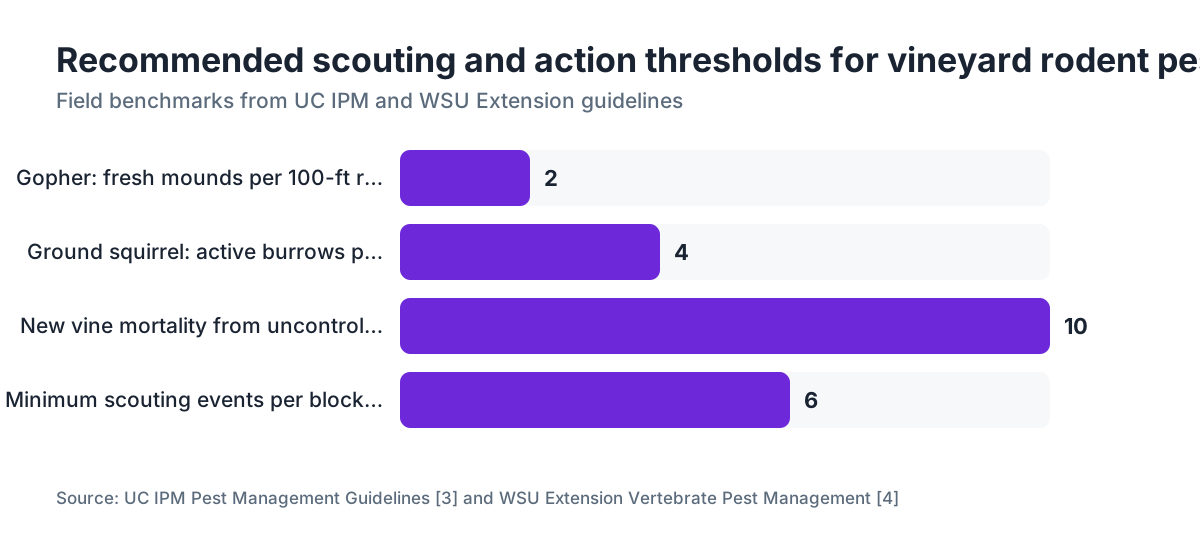
UC IPM recommends scouting for pocket gopher activity monthly from bud break through harvest, with checks every two weeks during spring when gopher activity and root damage risk both peak [3]. For your log, that means at least one scouting entry per block per month during the growing season.
Ground squirrels run on a different clock. Squirrels are active above ground from late winter through early fall, and populations are easiest to assess in March and April before vegetation gets tall enough to hide burrow activity. WSU Extension recommends counting active burrows twice a year, once in early spring and once in late summer after harvest, as a baseline population index [4].
Tie trapping intensity to your population index. A rough California threshold: more than 2 fresh gopher mounds per 100-foot vine row signals active pressure worth trapping, more than monitoring. For ground squirrels, more than 4 active burrow entrances per acre is the point UC Cooperative Extension often cites where damage to irrigation lines and vine roots turns economically significant [3].
Log the threshold numbers you're using in your pest management plan. Then, if someone asks why you started trapping when you did, the answer sits in the plan, not in your memory.
How should exclusion and habitat modification be recorded in a vineyard IPM plan?
Exclusion and habitat modification are the least-documented parts of most vineyard rodent programs, partly because they happen once and then just sit there. They still earn a few lines in your records.
For underground wire mesh barriers (commonly 1/4-inch or 1/2-inch hardware cloth buried 18 to 24 inches and bent outward at the bottom to deter burrowing), record the installation date, block, material spec, and the contractor or operator who put it in. If you used a specific product, note the product name and gauge. This pays off when you're budgeting replants and want to know whether barriers are already in place.
Habitat modification in vineyards mostly means vegetation management around the perimeter. Dense grass and brush on the border gives ground squirrels cover from raptors and a safe base to expand from. If you mow or clear that cover, log the date and the treated area. It sounds like overkill until squirrel pressure drops and you want to know exactly what worked.
Raptor perches are the easiest win nobody logs. American kestrels and red-tailed hawks do real work on squirrel populations. If you've installed perch poles, note the date, location (GPS coordinates if you have them), and height. Check them quarterly for use signs (whitewash, pellets below the perch) and log those too. Some NRCS EQIP conservation practice standards for raptor perches require this kind of monitoring log to verify the practice was maintained [6].
What records do you need if you switch from non-chemical to a rodenticide?
This is where your non-chemical records earn their keep.
Apply a rodenticide (zinc phosphide, chlorophacinone, diphacinone, or any registered product) and you enter FIFRA record-keeping territory. Certified pesticide applicators must keep records of restricted-use pesticide applications for two years, including product, EPA registration number, rate, target pest, crop, location, and operator [1]. California requires these records for three years under California Food and Agricultural Code Section 12981 [10].
Here's the link to your non-chemical records: when an inspector or an organic certifier asks why you used a rodenticide, your prior trapping and exclusion logs are the proof you tried the non-chemical approach first and it fell short. Without that paper trail, you're telling a story with no receipts.
The UC Statewide IPM Program recommends documenting the decision to escalate from non-chemical to chemical control: what thresholds got exceeded, what non-chemical methods you tried, and why they weren't enough [3]. That's a short paragraph in your field log or your pest management plan, not a 10-page report. But it has to be there.
One practical move: keep your non-chemical and chemical records in the same system so the timeline reads clean. Separate binders or separate software modules make it easy to lose the narrative.
How do you document non-chemical rodent control for an organic certification audit?
Under USDA National Organic Program regulations (7 CFR Part 205), certified organic operations must keep records sufficient to show compliance with NOP requirements for five years [8]. For pest management, your records need to show what pest pressure existed, what steps you took in what order, and that you used only allowed materials and methods.
For gophers and ground squirrels, trapping and exclusion are allowed under the NOP. Toxic rodenticides are generally not allowed in organic production, though narrow exceptions exist for some materials used inside enclosed traps, depending on your certifier's reading.
Your organic records should include:
- Scouting logs with dates and population estimates
- Trap placement records (type, location, date set, date checked)
- Outcome records (captures, trap resets)
- Exclusion installation records
- Any purchased equipment or materials (trap brands, mesh specs) with receipts
The NOP regulation at 205.201 requires the farm plan to address, in the regulation's words, "practices to prevent pest problems" and document the practices used [8]. A well-kept field log is your primary evidence that the plan was actually followed, more than written.
Most certifiers (CCOF, Oregon Tilth, MOSA, and others) will ask to see at least the prior season's pest management records during an inspection. Gaps in the log cause more trouble than admitting a pest event happened and you responded to it.
What's the simplest record format that actually gets used in the field?
The record format that works is the one your crew fills out at the time, not the elaborate spreadsheet you design in February that nobody touches by June.
For most vineyards under a few hundred acres, a paper field log on a clipboard at the shop, or a shared notes file on a phone, does the job. USDA GAP and most organic certifiers accept handwritten logs as long as they're legible, dated, and signed. The format doesn't have to be fancy.
Here's the minimum field-workable format:
Date | Block/Row | Species | Sign count | Method | Operator | Outcome
Trapping multiple blocks in one day? One line per block. Checking traps you set earlier? Update the outcome column from that earlier entry or add a new row with the check date.
For operations logging dozens of events per week, a simple digital tool makes more sense. VitiScribe is built for vineyard field records and lets you log trapping and scouting events with block-level GPS, export for audits, and track outcomes over time without rebuilding a spreadsheet every season.
One habit kills most logging systems: logging at the end of the week from memory. Write it down the same day, even if it's ugly. A slightly incomplete same-day entry beats a tidy entry written four days later from guesswork.
For vineyard operations of any size, the record-keeping burden here is genuinely low. Two minutes per trapping event, done consistently, adds up to a defensible audit trail by the end of the season.
How does rodent damage translate to actual vine loss, and why does that affect how you record it?
Gopher damage to grapevine roots can kill a mature vine outright, and the risk runs highest in the first three to five years after planting, when the root system is still shallow and the trunk is thin enough to be girdled completely. UC Cooperative Extension has documented vine mortality of 5 to 15 percent in newly planted vineyards under uncontrolled gopher pressure [3]. At $10 to $25 per vine for replacement stock plus labor, one uncontrolled season in a new block is a real financial hit.
Ground squirrels do a different kind of damage: trunk gnawing (worse in dry years, when green bark is one of the few moisture sources around), irrigation drip line chewing, and burrow collapse around vine roots. The burrow collapse is the sneaky one, since it happens over winter when nobody's watching.
Why does this shape your records? Your crop insurance policy, your lender, and possibly your state agriculture department all want documentation that damage came from the pest, not from poor management. A scouting log showing you found active gopher pressure in Block 3 in March, ran trapping in April, and still lost 8 vines by June is a defensible claim. No log means the insurance adjuster is staring at dead vines with no story.
The USDA RMA Nursery Value Select and Whole Farm Revenue Protection policies both include provisions for documenting pest events as part of a loss claim [2]. The documentation standard is your field records.
Frequently asked questions
Do I need to keep records of gopher trapping even if I'm not using any pesticides?
No federal law requires records for non-chemical trapping alone. But crop insurance claims, GAP audits, organic certification inspections, and your own IPM program all benefit from written logs. A one-line entry per trapping event (date, block, method, outcome) takes two minutes and covers you for all of those. Most county ag commissioner offices and extension programs recommend keeping these records regardless of legal mandate.
What is the minimum information I need to log for each gopher trapping event in a vineyard?
Date, block or row range, species, sign count or fresh mound count, trap type, operator name, check date, and outcome (number caught, mounds still active). That's it. If you do follow-up trapping, add another entry for that event. UC IPM recommends this level of detail as the baseline for a vertebrate pest field log.
Can I use Macabee traps in a certified organic vineyard and how do I document it?
Yes. Mechanical traps including Macabee, Cinch, and Gopher Hawk models are allowed under the USDA National Organic Program as physical control methods. Document the trap type, placement date, location, and outcome for each event. Your certifier wants to see trapping as your primary intervention, so logging every session matters. Keep records for five years per NOP requirements at 7 CFR Part 205.
How often should I scout for ground squirrel activity in a vineyard?
WSU Extension recommends at least two formal counts per year: once in early spring when squirrels emerge and once in late summer after harvest. During the active season (roughly March through September), monthly scouting of active burrow entrances by block gives you a workable population index. Log each count with the date, block, and number of active burrows. That baseline shows whether your trapping program is actually reducing pressure over time.
Do ground squirrel records look different from gopher records, and why?
Yes, because the pests behave differently. Ground squirrels are colonial, so you're counting active burrow entrances and estimating colony size, not individual mounds. UC Cooperative Extension suggests more than 4 active burrows per acre as an action threshold. Your log should capture burrow counts, more than trap outcomes. Note above-ground sightings during daylight too, since squirrels are diurnal and easy to count during active periods.
What records do I need to support a crop insurance claim for gopher damage to vines?
USDA RMA adjusters want documented evidence of pest presence, management actions taken, and resulting damage. Your scouting log showing active gopher pressure before damage occurred, trapping records showing your response, and a field map marking dead or damaged vines are the core documents. Without prior scouting records, the adjuster has no basis to separate pest damage from cultural or weather issues. Contact your crop insurance agent before filing to confirm their specific documentation requirements.
Are there any permits required to trap ground squirrels on vineyard property in California?
No permit is required in California to trap or kill California ground squirrels (Otospermophilus beecheyi) on property where they're causing damage, under California Fish and Game Code Section 4152. Some counties have local ordinances affecting trap placement near public areas, and live-trapped squirrels generally cannot be legally relocated due to disease risk. Check with your county agricultural commissioner for any local requirements before trapping.
How do I document raptor perch poles and nest boxes as part of an IPM plan?
Record installation date, GPS location or block, pole height, and box type for each structure. Check quarterly and log any use signs: whitewash, pellets below the perch, or actual sightings of birds using the structure. NRCS EQIP contracts for raptor perch establishment (Conservation Practice Standard 649) may require monitoring documentation to verify the practice was maintained. Even without a payment contract, this log shows your habitat approach stayed active, more than installed and forgotten.
How long do I need to keep non-chemical rodent control records for a vineyard?
For organic certification, NOP regulations require five years of records. For USDA GAP certification, the Harmonized standard generally requires records from the current and prior season. For crop insurance, keep records at least three years to match the RMA standard. California pesticide records (for any chemical rodenticides used alongside) must be kept three years under California Food and Agricultural Code Section 12981. When in doubt, five years is a safe default.
What should a written IPM plan say about non-chemical gopher and ground squirrel control?
Your IPM plan should name the target species, describe the monitoring method and frequency, define the action threshold you use (such as 2 fresh mounds per 100-foot row for gophers), list your non-chemical methods in priority order, and describe when and how you'd escalate to chemical control if non-chemical methods fail. UC IPM's guidelines for pocket gopher and ground squirrel management give specific threshold recommendations you can cite directly in your plan.
Does the EPA Worker Protection Standard apply to non-chemical rodent control methods in vineyards?
No. The EPA Worker Protection Standard (40 CFR Part 170) applies to pesticide applications, not to mechanical or physical pest control like trapping or exclusion. Workers handling traps or installing exclusion mesh aren't covered by WPS for those tasks, though general agricultural safety requirements still apply. If you later apply a rodenticide, WPS requirements including training and PPE documentation kick in for that application.
Can I use the same field log for gopher control and other vineyard scouting records?
Yes, and it's often cleaner that way. A combined scouting log with a column for pest type lets you see the full picture of each block at a glance. The key: vertebrate pest entries need enough specifics (sign count, trap type, outcome) to satisfy an auditor looking specifically at your rodent program. UC Cooperative Extension's sample field scouting forms include a vertebrate pest section alongside insect and disease categories for exactly this reason.
What's a realistic time commitment for logging non-chemical rodent control in a 50-acre vineyard?
Two to three minutes per trapping event, logged in the field at the time it happens. For a 50-acre vineyard with active trapping across multiple blocks, expect 15 to 30 minutes per week during peak pressure periods (March through May). Scouting entries are faster, maybe one minute per block. The time cost is low. The recovery cost when you can't reconstruct your management history for an audit or an insurance claim is much higher.
Sources
- EPA, Federal Insecticide, Fungicide, and Rodenticide Act (FIFRA) Record-keeping Requirements: Federal FIFRA record-keeping requirements apply to restricted-use pesticide applications; no federal record-keeping mandate exists for non-chemical pest control methods.
- USDA Risk Management Agency, Crop Insurance Program Overview: USDA RMA crop insurance policies require documented evidence of pest presence and management actions to support loss claims for crop damage.
- UC IPM, Pocket Gophers and Ground Squirrels Pest Management Guidelines: UC IPM recommends monthly scouting for gopher activity during the growing season, with a threshold of 2 fresh mounds per 100-foot row; vine mortality from uncontrolled gopher pressure in new plantings can reach 5 to 15 percent.
- Washington State University Extension, Vertebrate Pest Management in Agriculture: WSU Extension recommends counting active burrow entrances twice yearly (spring and late summer) as a repeatable population index, and keeping records as part of a written Pest Management Plan for food safety certification.
- California Fish and Game Code Section 4152, Non-game Mammals: California Fish and Game Code Section 4152 classifies ground squirrels as non-game mammals that may be taken by any legal method on property where they are causing damage, without a state permit.
- Cornell Cooperative Extension, New York State Integrated Pest Management: Cornell Cooperative Extension advises vineyards to update pest activity logs annually, including vertebrate pests, as part of their farm plan.
- USDA National Organic Program, 7 CFR Part 205: NOP regulation 205.201 requires the organic farm plan to address practices to prevent pest problems; records must be maintained for five years per 7 CFR Part 205.
- USDA Agricultural Marketing Service, Harmonized GAP Audit Standard: The Harmonized GAP audit standard requires documented evidence of pest monitoring frequency and control measures taken as part of food safety compliance.
- California Food and Agricultural Code Section 12981, Pesticide Record-keeping: California Food and Agricultural Code Section 12981 requires pesticide application records to be kept for three years.
Last updated 2026-07-11