How to document a grafting operation in an existing vineyard block
TL;DR
- Documenting a vineyard grafting operation means capturing four things: a pre-graft block map showing which vines get worked, a dated log of the grafting crew and method, a pesticide application record for any dormant sprays or wound sealants applied, and a varietal change entry that ties into your AVA, TTB, and crop insurance paperwork.
- Miss any one of these and you'll have trouble at harvest.
Why does grafting documentation matter more than most field tasks?
Most field tasks are reversible or at least forgettable. Grafting is neither. You're permanently changing the genetic identity of a vine in a registered block, and that change has downstream consequences for your wine labels, crop insurance claims, and bonded winery records. The TTB requires that a winery's records support whatever variety is printed on a label, and a grafting event is the exact moment when a Cabernet block becomes, say, a Merlot block. If you can't show when that happened and which rows were converted, you're guessing on compliance years later.
There's also the worker protection angle. Any pesticide applied before, during, or after grafting, including dormant oils, copper fungicides, or wound sealants containing active ingredients, triggers a Worker Protection Standard (WPS) application record under 40 CFR Part 170. The EPA's agricultural employer requirements are not relaxed just because the application was small or incidental [1].
Good grafting records are also the only honest way to track take rates, troubleshoot failures, and plan your replant budget. Nobody has clean industry-wide data on field graft success rates, but University of California Cooperative Extension work on own-rooted conversions in Napa and Sonoma puts take rates anywhere from 50 to 90 percent depending on method, timing, and operator skill [2]. Without row-level records you can't tell whether a 60 percent take was acceptable or a disaster.
What records do you legally need to keep for a vineyard grafting operation?
The short answer is: more than most growers keep. Here's the breakdown by category.
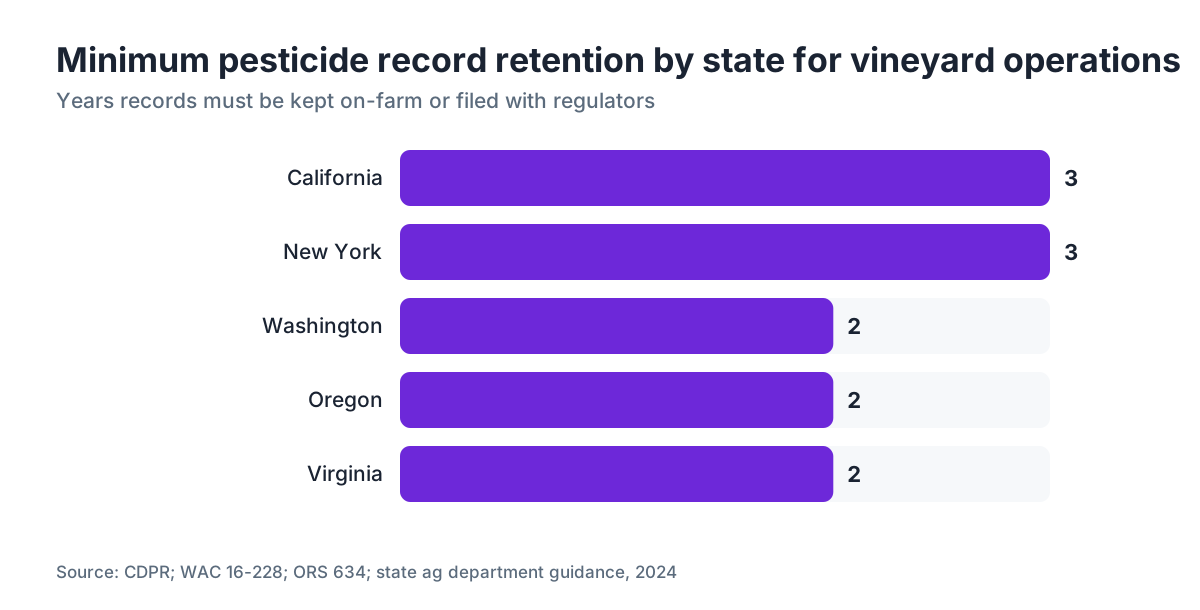
Pesticide application records. If you apply anything with an EPA registration number, state law in virtually every wine grape state requires you to record it within 24 hours of application. California's requirement under the Department of Pesticide Regulation (CDPR) is the strictest: records must be filed with the county agricultural commissioner within seven days and retained for three years [3]. Washington State requires records retained for two years under WAC 16-228 [4]. Federal WPS requires that application records be accessible to workers and their designated representatives.
Crop insurance documentation. If you carry crop insurance through USDA Risk Management Agency (RMA) policies, a grafting operation almost always triggers a "practice change" report. You typically have a narrow window, often 72 hours to a few days after the practice begins, to notify your crop insurance agent. Check your specific policy, but RMA's Vineyard Crop Insurance standards require growers to report any change that affects the insured practice [5].
TTB records. A bonded winery must be able to trace wine in the bottle back to the vineyard source. The Alcohol and Tobacco Tax and Trade Bureau's recordkeeping rules under 27 CFR Part 19 require wine premises to maintain records sufficient to verify variety. A grafting log with row numbers, date of completion, new scion variety, and rootstock is the cleanest way to do that [6].
State viticulture records. Some states and AVAs have self-reporting requirements or third-party auditor expectations around variety changes. Check with your state grape growers association.
Table: State pesticide record retention minimums for vineyard operations
| State | Retention Period | Filing Requirement | Authority |
|---|---|---|---|
| California | 3 years | File with county ag commissioner within 7 days | CDPR |
| Washington | 2 years | Keep on-farm, available on request | WAC 16-228 |
| Oregon | 2 years | Keep on-farm | ORS 634 |
| New York | 3 years | Keep on-farm, available to DEC on request | ECL 33-1205 |
| Virginia | 2 years | Keep on-farm | 2VAC5-670 |
What should a pre-graft block map include?
Before a single vine gets worked, draw the map. This is the most skipped step and the most consequential one.
A pre-graft block map should show the block boundaries with permanent identifiers (block name or number, GPS corners if you have them), the total vine count, which specific rows or vine positions are scheduled for grafting, the current variety in place, and the intended new scion variety. Mark the rootstock if you know it, because you might be grafting onto an existing rootstock or onto a new one after a topwork.
Row and vine numbering matters here. Cornell's viticulture extension program recommends a consistent row-and-vine numbering system recorded in a permanent block map that follows the vineyard's life [7]. Their guidance suggests numbering rows from a fixed reference point (like the road end) and numbering vines from the uphill end of each row. This gives every vine a unique two-number address.
For grafting specifically, you want a column on your map for "status" with at least these codes: S (scheduled), G (grafted, date), T (took, date confirmed), F (failed, replant needed). You fill this in as the season progresses. By end of season one you'll know your take rate by row, by grafting crew member if you have multiple people, and by position in the block, which sometimes reveals a soil or microclimate issue.
Digital maps are better than paper for this work because you can overlay them with soil maps, irrigation zones, and yield data. But a paper map stored in a binder beats no map at all.
How do you record the grafting operation itself day by day?
The daily grafting log is where the legal and agronomic records meet. You need to capture these fields for each day of operation:
- Date
- Block name and specific rows worked
- Number of vines grafted
- Grafting method (T-bud, chip bud, cleft, bark graft)
- Scion source: nursery name, lot number, certification status (certified virus-tested or not)
- Grafting crew: names or employee IDs
- Weather conditions at time of work (temperature, wind, humidity if relevant)
- Any wound sealant or protectant applied (product name, EPA registration number, rate)
- Notes on vine condition, bark slippage quality, any problems encountered
The scion source entry is not optional. If you're using certified planting material, you want proof. UC Davis Foundation Plant Services maintains a catalog of certified grapevine material and issues lot documentation with every release [8]. If phylloxera, Pierce's Disease, or a virus issue ever surfaces in that block, you'll need that chain of custody.
For the wound sealant line: many growers use wax-based sealants with no active ingredients, and those don't trigger a pesticide record. But products containing fungicides like thiophanate-methyl or copper do require the full WPS application record. If you're unsure whether a product is a registered pesticide, check the EPA's pesticide product label search [1]. The label is the law.
Keep the daily log in the same place as your pre-graft map. A loose-leaf binder by block works fine. A digital field record system is better because you can search by date, variety, or scion lot number in seconds.
What scion source records do you need to keep?
This is where a lot of small operations are exposed. You need to document where your scion wood came from before the first cut.
If you cut scion wood from your own vineyard, you need to record which rows and vines the wood came from, the date it was harvested, and how it was stored (waxed and refrigerated is standard). You should also note whether the source vines have ever been tested for viruses. Using wood from untested vines is legal in most states but it's a risk you're making an explicit choice about, and you should write that choice down.
If you purchased certified material, get the nursery's certification paperwork and staple it to your grafting log. California requires that certified grapevine material be accompanied by a phytosanitary certificate from the California Department of Food and Agriculture (CDFA) [9]. Other states have similar requirements. Keep that certificate with your block records, not in a drawer somewhere.
The Foundation Plant Services (FPS) at UC Davis maintains the National Clean Plant Network's grape program, which provides virus-tested foundation stock to nurseries and directly to growers in some cases [8]. If your scion traces back to FPS-certified material, that documentation has real value: it's the best evidence you have that you didn't introduce leafroll or corky bark into your block.
Scion storage records matter too. Scion wood stored above 40°F for extended periods or dried out before budding will perform poorly, and if you have a bad take rate you'll want to know whether that's a storage issue or a grafting technique issue.
How do you update your vineyard block records after grafting?
The grafting itself is a few weeks of work. The record-keeping obligation lasts for the life of that block.
Once graft take is confirmed, usually 4 to 8 weeks after budding when the new shoot is actively growing, you need to update your master block record. That update includes:
- New variety name (and clone designation if you have it)
- Date of successful take for each row or vine position
- Rootstock identity (unchanged from pre-graft, but confirm it's recorded)
- Year one vine count for the new variety
- Any failed positions scheduled for a subsequent graft attempt or own-rooted replant
For your TTB wine premises records, the variety change is now official as of the confirmed take date. Some compliance consultants recommend a simple internal memo dated that day, signed by the vineyard manager, stating "Block X, Rows Y-Z converted from Variety A to Variety B, take confirmed [date]." That memo lives with the block record and with your bonded winery file.
For crop insurance, notify your agent when take is confirmed. The RMA's reporting obligations differ by policy type but the principle is the same: your insured variety has changed and the policy needs to reflect that [5].
For your AVA self-reporting (if applicable), check with your state's grape growers association. Some premium AVAs have variety census surveys that your data feeds into.
A tool like VitiScribe can link your pre-graft map, daily log, scion records, and updated block registry into a single searchable file, which is genuinely useful when a compliance auditor asks for the history of a block five years after the graft.
How does a grafting operation affect your pesticide use records?
Grafting sits in a period of elevated pesticide use. Dormant pruning and grafting usually happen in the same window when growers are also applying dormant sprays. Then post-grafting protection against Botrytis and Powdery Mildew on the new growth kicks in. Every one of those applications needs to be in your pesticide records.
The EPA's WPS at 40 CFR Part 170 requires agricultural employers to provide pesticide application information to workers in a way they can access, and to maintain records of applications [1]. The application record must include: product name, EPA registration number, active ingredient, application date, location, total amount applied, and the name of the applicator (and their license number if they're a certified applicator).
For grafted vines specifically, flag any applications where the target was the graft union area. If you're spraying a fungicide directly onto fresh graft unions, the rate and coverage matter agronomically and the record should note that this was a directed application to graft unions vs. a whole-canopy spray.
Washington State University's tree fruit and viticulture extension has published guidance on re-entry intervals (REIs) after pesticide applications that applies directly to grafting crews [4]. If your grafters are going back into a block where a dormant spray was applied, you need to know the REI for that product. It's in your records and on the product label. The WPS requires that you post application information at a central location and that workers are informed before entering treated areas.
Bottom line on pesticide records: keep them in the same binder as your grafting log. The two records are tied to the same block in the same season and they get reviewed together by auditors.
What's the best system for organizing all these records by block?
The honest answer is that any consistent system beats an ideal system you never actually use.
For a paper-based operation, the block binder method works. One binder per block (or one binder per vineyard site if you have small blocks), with tabs for: Block Map, Annual Grafting/Planting Log, Pesticide Applications, Scion/Plant Material Certificates, Crop Insurance Correspondence, and TTB Variety Notes. Every relevant document goes into the right tab immediately. The binder lives in the farm office.
For a digital operation, the minimum viable setup is a shared folder structure mirroring those same tabs, with a consistent file naming convention: BLOCKNAME_YEAR_DOCUMENT. Photos of graft unions at take confirmation are easy to add to a digital system and genuinely useful.
What trips people up most often is the time gap between the field and the office. You graft vines at 7am and the paperwork doesn't happen until Friday. By then you've forgotten which rows had slippage problems. The fix is a simple field form, paper or phone, that captures the seven core fields while you're still in the block. Transcribe it to your master record the same day.
Washington State University Extension's farm records guidance recommends that agricultural operations maintain records in a format that an outside reviewer, an auditor, a bank lender, a crop insurance adjuster, can interpret without your verbal explanation [4]. That's a good test. Hand your grafting log to someone who wasn't there. Can they reconstruct what happened, when, and in which rows? If not, the record isn't complete.
For vineyards managing multiple blocks across different sites, VitiScribe offers a free trial for vineyard record-keeping that covers block maps, spray logs, and variety tracking in one place. It's worth a look if you're spending real time each week reconciling paper logs against digital files.
How do you handle documentation when grafting fails and you need to rework or replant?
Failed grafts are part of the operation and they need their own paper trail.
For vines where the graft didn't take, record the failure in your block map (F status), the date you confirmed failure, and your intended response: re-graft the same season (if timing allows), re-graft dormant season, or replant on new rootstock. If you re-graft, create a new daily log entry for those specific vine positions. Don't overwrite the original failed graft record. You want to be able to see that Vine 47 in Row 12 took three attempts before it held.
For crop insurance, failed grafts in a conversion block have implications for your yield history and insured vine count. Some RMA policies use vine count as part of the actuarial basis. Report the failed vine count to your agent and ask how it affects your coverage for the transition years [5].
For TTB purposes, a block with 70 percent take after year one is a mixed block: part old variety (the failed positions still have old rootstock or old variety suckers), part new variety. Your records need to clearly show which rows or positions are which variety. This is where your status-coded block map earns its keep.
If you end up replanting failed positions with own-rooted vines or on new rootstock, that creates a new planting record and potentially a new nursery certificate. Keep it in the same block binder, tabbed separately from the grafting log.
What do AVA regulations and TTB label rules require you to track after a variety change?
This is the part most growers don't think about until they're filling out label approval paperwork three years after the graft.
The TTB allows wine labeled with a grape variety name if at least 75 percent of the wine is made from that variety (85 percent in Oregon and Washington by state law for state appellations). If your block produced Cabernet Sauvignon fruit before conversion and Merlot after, your records need to clearly show when the first Merlot harvest occurred and that the fruit used in a labeled wine traces to the grafted vines [6].
For AVA certification, some high-scrutiny AVAs, Napa Valley is the example everyone knows, have third-party verification programs. The Napa Valley Vintners' Code of Sustainable Winegrowing and associated audits can ask for variety records going back to planting or last major variety change. Your grafting documentation is exactly what satisfies that ask.
The TTB's regulations at 27 CFR 4.23 define varietal labeling requirements. The specific text: "The wine must be labeled with a truthful and adequate statement of composition." Your grafting records are what makes a varietal statement truthful when a block has been converted [6].
Timing matters at harvest. In the first year after a successful graft, many growers harvest the new variety separately and process it as a separate lot, clearly labeled in the winery's lot records as "first leaf" or "conversion year" fruit. That's a prudent practice both for quality (first-leaf fruit is often unbalanced) and for records clarity.
What can go wrong with grafting records and how do you fix it?
The most common failure mode is this: the grafting happened, someone kept rough notes, but nothing was formally recorded and the notes are gone. You now have a block with an unknown conversion date, scion of uncertain origin, and a pesticide record that doesn't tie to the block history. That's a real problem when you need to file an insurance claim after a late frost hits your young grafted vines.
Fix it by reconstruction. Go back to your purchasing records for the scion material. Pull your pesticide purchase invoices to establish what was applied that season. Look at aerial or satellite imagery from the conversion year, some USDA NAIP imagery goes back to the early 2000s [5], and compare canopy density year over year to confirm when the block was in conversion. Write up a reconstruction memo, dated today, signed by you, stating what you know and what you're inferring. That's not ideal but it's vastly better than nothing for compliance purposes.
A second failure mode is inconsistent block naming. If your grafting log calls a block "South Block" and your crop insurance policy calls it "Block 4" and your TTB records call it "Chardonnay Block," auditors will have to reconcile three systems by hand. Pick one naming convention and use it everywhere. A GPS-bounded block polygon with a permanent ID number solves this definitively.
A third common problem: the scion source documentation never made it into the block file. Nurseries can re-issue certificates if you contact them and give them the order number and year. Do it now, before the nursery's records age out.
Frequently asked questions
How long do I need to keep grafting and pesticide records for my vineyard?
Pesticide records: California requires three years from application; Washington and Oregon require two years. Crop insurance records should be kept through the policy period plus three years to cover any audit window. For TTB label compliance purposes, variety change records (including grafting logs) should really be kept for the life of the block, since label audits can revisit the basis for any wine in the bottle.
Do I need to report a grafting operation to the TTB?
The TTB doesn't require a "grafting notification" form per se. What it does require is that your bonded winery records support any varietal claim on a label. Your internal grafting log, with confirmed take date and new variety, is the record that satisfies 27 CFR Part 19's documentation requirements. Keep it on file and make it accessible to your compliance manager before label submission.
Does a vineyard grafting operation trigger EPA Worker Protection Standard requirements?
Yes, indirectly. The grafting operation itself isn't a pesticide application, but any pesticide applied before, during, or after grafting, including wound protectants with EPA registration numbers, triggers WPS records at 40 CFR Part 170. Grafting crews re-entering blocks after dormant sprays must also be informed of REIs. Post application information at your central WPS location before crews enter any treated block.
What variety records does my crop insurance require after topworking a block?
USDA RMA vineyard policies treat a variety conversion as a practice change that must be reported, often within 72 hours to a few days of starting the practice. At minimum you need to report the block identity, the old and new varieties, and the number of vines converted. Contact your crop insurance agent before you start grafting, not after. The specific window and documentation requirements vary by policy type.
What scion source information should be in my grafting record?
Record the nursery name, the lot or certification number, whether the material is certified virus-tested (and by which program, such as CDFA-certified or UC Davis FPS), the variety and clone designation, the date of receipt, and storage conditions before use. If you cut your own scion wood, record the source block, row numbers, and whether the donor vines have been virus-tested.
Can I graft multiple varieties in the same block and how do I document that?
Yes, and it's actually common in blocks being converted in phases. Your block map needs a row-by-row or vine-by-vine variety status column. Color-coding by variety on a printed or digital map works well. Your TTB records must then show each harvest lot's variety composition if the block produces fruit before conversion is complete. Keep a separate harvest log for each variety row group.
How do I document the grafting method and why does it matter for my records?
Record the specific method: chip budding, T-budding, cleft grafting, or bark grafting. Method affects expected take rates, timing of take confirmation, and what follow-up care is needed. If you have a poor take rate and need to diagnose whether it was technique, timing, scion quality, or rootstock incompatibility, your method records are the first place you look. It also matters for crop insurance purposes if you need to show you used an acceptable practice.
What records do I need if I hire a contract grafting crew?
All the same records apply, plus a contractor agreement that specifies the block, variety, method, and their obligation to provide daily production logs. If the contractor applies any pesticide as part of their work, confirm whether your WPS program or theirs covers that application, and get a copy of their pesticide application record. You as the farm operator are ultimately responsible for records compliance on your property under most state regulations.
Is there a standard grafting log form I can use?
No single federal or state form is mandated. UC Cooperative Extension and WSU Extension have published vineyard record-keeping templates that include grafting log formats. UC Cooperative Extension's Integrated Pest Management program has farm record templates available through their county offices. You can also build a simple spreadsheet with the seven core fields: date, block, rows, vines grafted, method, scion source, and notes. The format matters less than the consistency.
How do I document graft take rate and what's a normal range?
Record a take confirmation date, typically 4-8 weeks after budding when new shoot growth is confirmed, on a vine-by-vine or row basis using a status code on your block map. UC Cooperative Extension research on field grafting in California found take rates ranging from 50 to 90 percent depending on method, timing, and operator skill. Track your own rate by method and crew member across seasons to establish your baseline.
Do I need special documentation for phylloxera-resistant rootstock when topworking?
If you're topworking vines onto existing phylloxera-resistant rootstock, document the rootstock identity in your block record (it should already be there from original planting). If you're grafting onto new rootstock material, treat it the same as scion documentation: nursery name, lot number, certification status. California's CDFA requires phytosanitary certificates for regulated nursery stock, and keeping those certificates in your block binder satisfies that requirement.
How far in advance of harvest should my grafted block records be complete?
All records should be complete and current before harvest begins. Your block map should show confirmed take by row, your scion lot documentation should be filed, and your pesticide records for the conversion season should be current. If you're harvesting from a converted block for the first time and using the new variety on a label, your TTB compliance manager needs to see the grafting documentation as part of the label review process.
Sources
- EPA, Worker Protection Standard (WPS) for Agricultural Pesticides, 40 CFR Part 170: WPS requires agricultural employers to maintain pesticide application records accessible to workers, including re-entry interval information for all treated areas.
- UC Cooperative Extension, Grapevine Topworking and Retraining Guidelines: Field graft take rates in California vineyards range from 50 to 90 percent depending on method, timing, and operator skill.
- California Department of Pesticide Regulation, Pesticide Use Reporting: California requires pesticide application records to be filed with the county agricultural commissioner within seven days and retained for three years.
- Washington State University Extension, Vineyard Pest Management and Recordkeeping, WAC 16-228: Washington State requires pesticide application records be retained for two years under WAC 16-228 and that farm records be interpretable by an outside reviewer.
- USDA Risk Management Agency, Vineyard Crop Insurance Standards: RMA vineyard policies require growers to report any practice change, including variety conversion by grafting, within the policy-specified window, often 72 hours to a few days of beginning the practice.
- Alcohol and Tobacco Tax and Trade Bureau, 27 CFR Part 4 and Part 19 Wine Labeling and Recordkeeping: 27 CFR 4.23 requires that wine be labeled with a truthful and adequate statement of composition, and 27 CFR Part 19 requires bonded winery records sufficient to verify variety source.
- Cornell Cooperative Extension, Vineyard Site and Block Record System Guidelines: Cornell's viticulture extension recommends a consistent row-and-vine numbering system recorded in a permanent block map, numbering rows from a fixed reference point and vines from the uphill end.
- UC Davis Foundation Plant Services, National Clean Plant Network Grape Program: UC Davis FPS maintains certified virus-tested foundation grapevine stock and issues lot documentation with each release that growers should retain in block records.
- California Department of Food and Agriculture, Nursery and Seed Program, Phytosanitary Certificates: California requires that certified grapevine nursery material be accompanied by a CDFA phytosanitary certificate when it changes hands.
- EPA, Pesticide Product Label System (PPLS): The EPA maintains a searchable database of registered pesticide products and labels; the label is the law and determines whether a product requires a WPS application record.
Last updated 2026-07-10