How to document a vineyard hedgerow installation for habitat and compliance
TL;DR
- Documenting a vineyard hedgerow takes a pre-installation site map, a species list with planting dates and densities, GPS coordinates tied to your field blocks, photos at installation and each growing season, and records linking the planting to any cost-share program like USDA EQIP.
- Keep those records at least five years, or eight if you took EQIP money.
Why does hedgerow documentation matter for compliance?
Hedgerows do real work in a vineyard. They house beneficial insects, hold soil on steep end rows, and catch spray drift headed toward your neighbor. The paperwork side gets ignored, and that is where growers get burned. If you installed the hedgerow with help from USDA's Environmental Quality Incentives Program (EQIP) or a state cost-share, thin records can trigger repayment of the whole payment, not a slice of it. [1]
Two other reasons the records matter. If you catch a pesticide drift complaint or a Worker Protection Standard audit, a hedgerow documented with GPS coordinates and spray buffer records shows exactly what got planted where and why any adjacent no-spray zone exists. Second, certifiers like California Certified Sustainable Wine or LIVE (Low Input Viticulture and Enology) want proof of biodiversity practices on paper, not a story you tell the auditor. [2]
The core document set is short. Four to six document types, each created at a specific moment. Miss those moments and you are rebuilding records from memory across a folding table while an auditor waits. Nobody wants that.
What records do you need before you break ground on a hedgerow?
Pre-installation paperwork is where most vineyard managers drop the ball, because it feels premature. Do it anyway. You need four things before the first shovel goes in.
A site map showing where the hedgerow runs relative to your vine rows, property lines, and any water features. A species list with the common and scientific name of each plant, the source nursery, and any state-certified weed-free certificate if your program requires it. A soil and site assessment, which can be as simple as a USDA Web Soil Survey printout with the relevant map units highlighted. And a baseline photo set: one photo looking down the planting row each direction, plus one of the adjacent vine block. [3]
If you are working under an NRCS Conservation Practice Standard, the one for hedgerows is Practice Standard 422 (Hedgerow Planting). It requires a planting plan with species composition, plant spacing, and a written purpose statement tying the installation to a resource concern like pollinator habitat or a field windbreak. Local specifications vary by state, so pull the current 422 from your local Service Center, not a generic search result. [1]
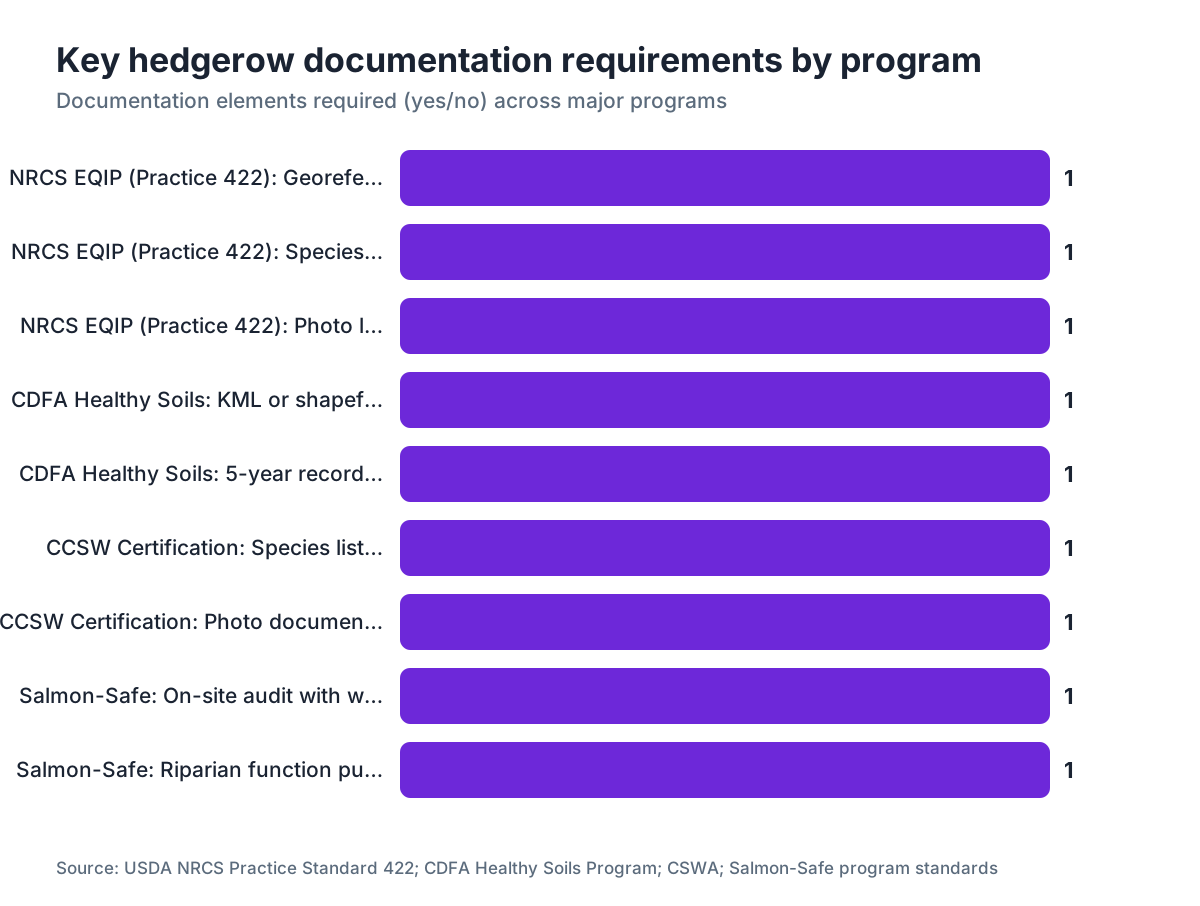
California growers face an extra step. The California Department of Food and Agriculture's Healthy Soils Program and its Sustainable Agricultural Lands Conservation program both want georeferenced practice maps, meaning a KML or shapefile, not a hand sketch. No GIS software? Google Earth Pro is free and exports KML. [4]
How do you create a GPS-linked site map for a hedgerow planting?
You do not need survey equipment. A phone running Esri's free FieldMaps app, or Google Earth Pro's polygon tool, gets you there. Walk the hedgerow line, drop waypoints at the start, the end, and every direction change, then export a KML file with the date in the filename. That is your georeferenced baseline.
The map needs the hedgerow line or polygon, the adjacent vine block ID (whatever you call it on your ranch map), the nearest cross-reference like a road intersection or water valve, and a scale bar. One page.
If you submit to NRCS, they usually import your KML into their own system, but keep your own copy regardless.
Name files the same way every time: property, practice, block, date. Something like OakviewVineyard_HedgerowPlanting_Block4N_20250410.kml. That convention feels fussy right up until year three, when you find the file in thirty seconds instead of thirty minutes with an auditor at the door.
Running multiple hedgerow segments on a big ranch? Build a log table in a spreadsheet. One row per segment, with columns for segment ID, GPS start and end coordinates, linear feet, installation date, species installed, and the cost-share contract number. That table is the master index everything else links back to.
Which species records do federal and state programs require?
Every cost-share program that pays for hedgerows carries a native plant or approved species requirement, and the documentation follows from it. Get the species record right and the rest is downhill.
For EQIP contracts under Practice Standard 422, you document that a set percentage of species are locally appropriate natives or approved regionally adapted plants. The percentage varies by state. California's NRCS office has typically required a minimum of 50 percent native species composition for pollinator-focused hedgerows, though that shifts with each program year. [1]
Your species record for each segment should carry the common name, the scientific binomial, the plant source (nursery name and city), whether the plant is a native or adapted non-native, the container size at installation (1-gallon, 5-gallon, bare root), the count of each species, and the on-center spacing. If your program calls for a particular ecotype, note that too.
UC Cooperative Extension's hedgerow and farmscape ecology work, run through UC Davis, recommends at least 3 to 5 flowering species with sequential bloom across the season for pollinator plantings. That kind of functional detail, the bloom timing and sequence, belongs in your planning documents and makes a strong case to certifiers that the planting was designed on purpose. [5]
Keep the nursery receipts. An auditor who sees a species list and no purchase records has no way to confirm the plants ever hit the ground. Invoices with plant names and quantities are the chain of custody for your species composition claim.
What does a proper photo log look like and how often do you need to update it?
Photos are the cheapest convincing evidence you can make. Unorganized photos are close to worthless, and most managers shoot good photos at installation and never go back.
A usable photo log has four parts: the file, the date and time (embedded in EXIF data on a phone or digital camera, which you should confirm is on), a GPS tag or a written location that matches your site map, and a short caption saying what the photo shows and why.
For EQIP and most state programs, the expectation is photos at installation, at one growing season (one year in), and at the end of the contract period, usually three to five years out. Some certifiers want annual photos through the whole contract. Put a reminder in your farm calendar today.
Store photos in a folder tree that mirrors your site map log: OakviewVineyard > Hedgerows > Block4N > Photos > 2025 (installation), 2026 (year one), and so on. Back them up off-site. Growers have lost entire photo sets to a dead hard drive and had to rebuild documentation from nothing, which is painful and sometimes impossible. [1]
One trick worth the two seconds: photograph a handwritten date card in at least one shot per session. EXIF dates are right most of the time, but cameras and phones drift, and a date visible in the frame settles the argument.
How do hedgerow records connect to your pesticide spray records?
This is the link most growers miss, and it matters more than almost anything else in an audit. Your hedgerow record and your spray record have to talk to each other.
If the hedgerow sits next to a vine block, your spray records for that block need to document the buffer distance between your equipment and the hedgerow, especially with products carrying bee-protection or habitat-buffer language on the label. EPA's label is the law, and several common fungicides and insecticides require a buffer from flowering plants during bloom. [6]
The practical step: add two fields to the spray record for blocks next to hedgerows. "Hedgerow present" (yes/no) and "bloom status at application" (pre-bloom, in bloom, post-bloom). If you skipped a spray or changed the application because the hedgerow was blooming, write down that decision. That one annotation, made in real time, separates a clean record from one that reads like you never noticed the hedgerow existed.
EPA's Worker Protection Standard (WPS), revised in 2015, matters here too. Workers entering a treated area next to a hedgerow have to know the restricted entry interval (REI) for the products applied. The hedgerow itself is not a treated area, but it can fall inside the buffer zone for certain products, so your safety training and application records need to agree with each other. [7]
California growers file Pesticide Use Reports (PURs) with the county Agricultural Commissioner, and those already capture block-level application data. What they do not capture is hedgerow adjacency. Your internal spray records hold that detail. California requires pesticide records for three years, though keeping them five is smarter. [8]
What does NRCS Practice Standard 422 actually require you to document?
NRCS Conservation Practice Standard 422 (Hedgerow Planting) is the federal benchmark, and reading what it actually says beats any generic checklist.
The standard defines a hedgerow as "one or more rows of trees, shrubs, or other perennial plants established to provide wildlife habitat, manage air flow, or accomplish other resource management goals." The documentation baked into it: a planting plan with species composition and spacing, a purpose statement naming the resource concern, and a schedule for any follow-up management like weed control during establishment. [1]
NRCS does not make you count beneficial insects or monitor pollinator activity. The obligation covers installation and establishment, not ecological outcomes. If you enroll in a higher-tier program like the Regional Conservation Partnership Program (RCPP) or a USDA pollinator health project, those may layer on their own monitoring rules with separate protocols.
The standard also says species should suit the site's climate, soil, and hydrology. Your pre-installation soil assessment covers that, and so does any record of the nursery stock's regional provenance. A sentence or two in your planting plan connecting the plant to the site does the job cleanly. Something like: "Salvia mellifera selected for drought tolerance suited to the site's loamy sand soil and 14-inch annual precipitation." That satisfies the requirement without ceremony.
How do cost-share program audits work and what triggers them?
EQIP audits are neither random nor rare. NRCS runs what it calls practice verification reviews, and they have picked up as EQIP funding has grown. For practices in the $5,000 to $15,000 payment range, which covers most vineyard hedgerows of 300 to 1,000 linear feet, assume at least one on-site verification visit during the contract. [1]
What pushes a routine review into an intensive one? A complaint from a neighbor or a conservation group. A practice that looks neglected in the office's remote sensing checks, now done more and more with satellite imagery. Or a prior contract that had compliance trouble. Clean record, and verification visits stay short and paperwork-focused.
At a verification visit, the NRCS rep wants the planting plan, the species records, the photo log, and proof that the required share of plants are alive and the practice meets its installed condition. Establishment-period mortality under 20 percent is generally acceptable. Higher than that, and you may have to replant a portion before the contract closes.
Keep everything in one place, physical or digital, organized by contract number. NRCS contract numbers are your primary key. Every document in the hedgerow file should reference that number so there is never a question about which planting a photo or species record belongs to.
What third-party sustainability certifications need hedgerow records?
Chasing certification under California Certified Sustainable Wine (CCSW), LIVE, or Salmon-Safe? Your hedgerow documentation feeds those audits directly, often from the same folder you built for EQIP.
CCSW, run by the California Sustainable Winegrowing Alliance (CSWA), uses a self-assessment scorecard, and hedgerow planting scores under the Vineyard Ecosystems section. Full credit takes documented evidence: a species list with native plant percentage, a site map, and photos. Say you planted a hedgerow with nothing to back it and you get partial credit at best. [9]
Salmon-Safe, relevant for vineyards in watersheds with anadromous fish, sets a higher bar. Auditors inspect on-site and review written records. Hedgerows near waterways have to document their function as riparian buffers, and the species list should favor deep-rooted natives that hold stream banks. [10]
LIVE (Low Input Viticulture and Enology), used heavily in Oregon and Washington, wants annual self-reporting through a biodiversity scorecard. The documentation is a management record showing what you planted, when, and what maintenance you did, updated every year. WSU Extension has published guidance on beneficial insect habitat in Pacific Northwest vineyards that lines up with LIVE's requirements. [11]
One habit worth keeping: file your certification records separate from your cost-share records, even when the practice is the same hedgerow. Different programs use different forms with different retention rules, and one merged file breeds confusion at exactly the wrong moment.
How should you maintain and update hedgerow records over time?
The installation record is the foundation. The ongoing record is what shows the practice actually works.
Set an annual hedgerow inspection in your farm calendar, ideally late spring when the plants are growing and bloom status shows. Walk the line with your site map in hand and note the survival rate of planted species (rough percentage of originals still alive and healthy), invasive weed pressure needing treatment, any gaps that need replanting, and what is flowering right now. Shoot photos from the same reference points you used at installation. That visual consistency over years is the most persuasive establishment evidence you can put in front of an auditor.
Run a field operations platform like VitiScribe for spray records and block notes? The hedgerow log can live alongside your vine block records instead of in a separate binder. When you pull up a block for spray planning, the adjacent hedgerow record is right there, which cuts the odds of forgetting to log bloom status.
For EQIP contracts, NRCS requires notice of any practice modification during the contract. Replanting a section, adding a species, changing the management approach: get it documented in writing with your local Service Center before you act, not after. Undocumented modifications are one of the most common ways growers fall out of compliance.
What is a realistic record-keeping system for a small vineyard operation?
A small vineyard, say 20 to 50 acres, does not need a complicated system. It needs a consistent one.
The simplest working setup is a dedicated hedgerow folder, physical or in cloud storage, with a subfolder per segment. Inside each: the planting plan PDF, the species list (a one-page spreadsheet is fine), the GPS file or a screenshot of the site map with coordinates showing, the annual photo sets by year, and scanned nursery receipts. Have a cost-share contract? Add the signed contract and any correspondence with NRCS or the state agency.
Documents at installation: maybe eight to twelve files. Annual additions: five to ten photos and a one-page inspection note. Figure 45 minutes per hedgerow per year if you stay organized. That is nothing. What eats your week is rebuilding three years of records the night before an audit.
For the inspection note, a simple template does the work. Date, observer name, segment ID, estimated survival rate, dominant species in bloom, weed pressure (none, low, moderate, high), management actions taken, and next scheduled action. One page, filed the same day you inspect. [5]
Running multiple sites or prepping for certification across a larger portfolio? VitiScribe's record-keeping module lets you attach photos, GPS data, and species notes straight to block-level records, so hedgerow documentation stays indexed to the right vineyard blocks instead of floating in a separate system.
Cornell Cooperative Extension's publication on farmscape habitat documentation for New York vineyards is worth reading even outside New York. The record structure they recommend travels well across programs and regions. [12]
What are the most common documentation mistakes and how do you avoid them?
The most common mistake is installing the hedgerow before the paperwork is approved. NRCS will not pay for a practice put in before a signed contract or letter of intent. If you are waiting on approval and the weather window is right, call your local Service Center, get verbal confirmation you can proceed, then chase it with written confirmation the same day. Document the conversation.
Second most common: species substitution with no paper trail. You ordered one plant, the nursery swapped another, you planted it, and now your species list does not match the dirt. Fix it right away by updating the species record with a note explaining the swap. If the substitution drops your native percentage below the required threshold, call NRCS before the plants go in the ground, not after.
Third: thin photo coverage. One photo of one plant proves nothing. You need shots showing the full length of the planting, the install density, and the site context next to the vine block. Think like a skeptical auditor. Could someone look at these photos and confirm this is a real, complete hedgerow? If not, shoot more.
Fourth: letting the annual inspection slide. One missed year leaves a gap in the photo log that is hard to explain. If you miss a year, note when you caught it, shoot photos as soon as you can, and add a line explaining the gap. An honest explanation beats no record every time.
Fifth: storing records only on a local hard drive with no backup. Farm computers die. Use cloud storage, a USB drive kept off-site, or both.
Frequently asked questions
How many years do I need to keep hedgerow installation records?
EQIP contracts typically run three to five years and NRCS may audit for up to three years after a contract closes, so a minimum of eight years of retention is prudent for cost-share records. California Pesticide Use Reporting requires pesticide records for three years. Certifiers like CCSW or Salmon-Safe generally want records back to the installation date, so keeping everything indefinitely is safest for certified operations.
Do I need a licensed contractor or biologist to design a compliant hedgerow?
No, not in most cases. NRCS Practice Standard 422 does not require a licensed professional for the design, though your local Service Center may assign a staff conservationist to review and approve your planting plan. For Salmon-Safe or riparian buffer certifications, having a plant ecologist review the species selection adds credibility but is not a legal requirement. Native plant nursery staff are often a practical free resource for species selection.
Can I document a hedgerow installed before I enrolled in a cost-share program?
For EQIP, generally no. NRCS will not cost-share a practice installed before contract execution. A pre-existing hedgerow can sometimes count as a base condition that lets you document expansion or enhancement under a new contract. For certifications like CCSW, pre-existing hedgerows with any supporting documentation (old photos, nursery receipts) can count toward your biodiversity score.
What GPS accuracy do I need for a NRCS hedgerow submission?
NRCS does not publish a minimum accuracy specification for hedgerow mapping in the 422 standard, but for field-level practices, accuracy within 5 to 10 meters is generally accepted. A smartphone with GPS enabled in Google Earth or Esri FieldMaps gives you 3 to 5 meter accuracy under open sky, which is enough. Survey-grade GPS is not required or expected for this practice type.
How does hedgerow documentation relate to EPA Worker Protection Standard compliance?
EPA's WPS (revised 2015) requires pesticide applications to protect workers and bystanders, and adjacent hedgerows with flowering plants can create obligations around bee-protection label language. Your spray records for blocks next to hedgerows should note bloom status at the time of application. That documentation shows you considered the label requirements for bee protection, which matters during a WPS audit by your state department of agriculture.
What native plant percentage is required for EQIP-funded hedgerows in California?
California's NRCS office has typically required a minimum of 50 percent native species composition for hedgerows funded under EQIP Practice Standard 422, with emphasis on pollinator-supporting species. That percentage can vary by resource concern and program year. Always confirm the current requirement with your local NRCS Service Center when you submit your planting plan, since specifications get updated periodically.
Can I use my hedgerow records for a Salmon-Safe certification audit?
Yes, and the overlap is large. Salmon-Safe auditors review planting plans, species lists with native percentage, GPS-referenced site maps, and photo logs, essentially the same core documents EQIP needs. The difference is that Salmon-Safe focuses on riparian function, so your purpose statement and species notes should address soil stabilization, shade for waterways, and pesticide buffer function if the hedgerow sits near a watercourse.
What should I do if plants die and I need to replant a section of the hedgerow?
Document the mortality first. Take photos of the dead or missing plants, note the count and species affected, and record a probable cause if you can spot one (drought stress, gopher damage, disease). Then notify your NRCS Service Center in writing before replanting. Replanting the same species keeps your composition record intact; substituting species requires written approval. File the replant date and new counts as an amendment to your original species record.
Is there a standard form for hedgerow planting records, or do I create my own?
NRCS provides form NRCS-CPA-6 for conservation practice installation records, and your local Service Center will have the current version. For the species list and photo log, there is no federally standardized form; most growers use a simple spreadsheet. UC Cooperative Extension and Cornell Cooperative Extension both publish template checklists for farm habitat documentation that you can adapt, free on their extension websites.
How do I document a hedgerow for a California Healthy Soils Program application?
California CDFA's Healthy Soils Program requires a georeferenced practice map (KML or shapefile), a practice description including species list and planting density, before and after photos, and a completed practice worksheet from the CDFA application portal. The program runs on state funding cycles, so application windows open and close. Records must be kept for five years after the final payment, per CDFA program requirements.
What bloom timing documentation do I need for pollinator habitat compliance?
Most programs do not require formal bloom monitoring, but noting which species bloom during each growing season visit strengthens your habitat record. A simple line in your annual inspection log listing species in bloom on the inspection date is enough. For EQIP pollinator-focused practices, showing that your species selection provides sequential bloom from early spring through late fall is part of the planting plan rationale, not an ongoing monitoring obligation.
Can hedgerow documentation help me if I face a pesticide drift complaint?
Yes, a lot. A hedgerow documented with GPS coordinates, adjacent block spray records noting buffer distances, and dated photos showing its location and condition at the time of the alleged event gives you a factual record to present to the county Agricultural Commissioner. It does not erase liability, but it shows operational awareness and can demonstrate your applications were consistent with label requirements on nearby habitat.
How do WSU Extension recommendations apply to hedgerow documentation in Washington state?
WSU Extension's guidance on beneficial insect habitat in Pacific Northwest vineyards recommends documenting species composition with emphasis on native flowering shrubs and grasses, annual photo logs, and weed management records during establishment. These records line up with LIVE certification's biodiversity scorecard used by many Washington growers. WSU's Small Farms program also has templates for farm habitat records in their extension publications catalog.
Sources
- California Sustainable Winegrowing Alliance, CSWA Program Overview: CCSW certification requires documented evidence of biodiversity practices including hedgerow installation under the Vineyard Ecosystems section of the self-assessment scorecard
- USDA Web Soil Survey, NRCS: Soil and site assessment documentation can be generated from Web Soil Survey printouts with map units highlighted for the relevant parcel
- California Department of Food and Agriculture, Healthy Soils Program: CDFA Healthy Soils Program requires georeferenced practice maps (KML or shapefile) and records retained for five years after final payment
- UC Agriculture and Natural Resources, hedgerow and farmscape ecology guidance: UC Cooperative Extension recommends including 3 to 5 flowering species providing sequential bloom across the growing season for pollinator-supporting hedgerows; annual inspection note template guidance
- US EPA, Pollinator Protection: EPA label language on commonly used fungicides and insecticides requires buffer distances from flowering plants during bloom; the label is the law
- US EPA, Agricultural Worker Protection Standard: EPA WPS revised 2015 requires pesticide applications to protect workers and bystanders; restricted entry interval documentation requirements for treated areas adjacent to habitat plantings
- California Department of Pesticide Regulation, Pesticide Use Reporting: California law requires pesticide use records to be retained for three years; county Agricultural Commissioner offices maintain required Pesticide Use Reports
- California Sustainable Winegrowing Alliance, Vineyard Ecosystems Workbook: CCSW Vineyard Ecosystems section scores hedgerow planting with full credit requiring species list with native plant percentage, site map, and photos
- Salmon-Safe, Certification Standards: Salmon-Safe auditors require written records of hedgerow species composition, GPS-referenced site maps, and photo logs; emphasis on riparian buffer function and deep-rooted native species
- Washington State University Extension: WSU Extension guidance on beneficial insect habitat recommends annual photo logs, species composition records emphasizing native flowering shrubs and grasses, and weed management records during establishment for LIVE certification
- Cornell Cooperative Extension, farmscape habitat documentation for New York vineyards: Cornell Cooperative Extension publishes record structure recommendations for farm habitat documentation that generalize across programs and regions; free template checklists available
Last updated 2026-07-11