Annual vineyard compliance checklist: pesticide, water, and labor records

TL;DR
- A complete annual vineyard compliance review covers three pillars: pesticide application records (kept 2 years under federal law, longer in many states), water diversion or irrigation logs, and Worker Protection Standard documentation including safety training and handler records.
- Miss one pillar and you risk fines, permit suspension, or a failed audit.
- This checklist walks through every category in plain language.
What records does a vineyard legally have to keep every year?
More than most small operations realize. Federal law sets the floor. Most grape-growing states stack more on top.
Start with pesticides. The Federal Insecticide, Fungicide, and Rodenticide Act (FIFRA) requires commercial applicators to keep records of restricted-use pesticide (RUP) applications for two years [1]. Many states go further. California requires three years for most records and mandates that county agricultural commissioners get pesticide use reports monthly [2]. Washington State requires records to include the product name, EPA registration number, application date, target pest, location, and amount used [3]. Operate in more than one state, and you comply with whichever standard is stricter.
Water is the second pillar. What you owe depends on whether you hold a surface water diversion right, pump from a well under a groundwater basin management plan, or use recycled water. In states with appropriative water rights (most of the West), you may have to submit annual diversion reports to the state water board. California's State Water Resources Control Board requires most surface water right holders to file an Annual Water Use Report by July 1 each year [4].
Labor records are the third leg. The EPA's Worker Protection Standard (WPS), last revised in 2015, applies to any agricultural establishment that uses pesticides and has workers or handlers present [5]. WPS records include training documentation, handler information, safety data sheet access, and proof that restricted-entry intervals (REIs) get posted and enforced.
A few records fall outside these three buckets but still show up in audits: equipment calibration logs, Right-to-Know postings, Hazard Communication plans under OSHA, and food safety traceability records if you sell to buyers with GAP (Good Agricultural Practices) requirements. This checklist focuses on the big three and flags the rest where they overlap.
What goes into a complete pesticide application record?
A pesticide record is a legal document. Treat it like one.
For restricted-use pesticides, FIFRA record rules require the brand name and EPA registration number of the product, the total amount applied, the size and location of the treated area, the date of application, and the name and certification number of the certified applicator who made or supervised the application [1]. That last field matters. The record has to tie back to a licensed person. If you contract out spraying, you need copies of the contractor's records, more than an invoice.
California's rules cover all pesticide applications, not only RUPs. The county pesticide use report adds the application start and end time, the method (airblast sprayer, backpack, drip injection), and the target pest [2]. The University of California publishes a pesticide use records workbook that shows exactly which fields satisfy both state and federal requirements at once. Keep it handy when you build your log template [6].
A few fields people forget:
- Wind speed and direction at application time (required in many states, and your first line of defense in a drift complaint)
- The restricted-entry interval posted and the actual re-entry date
- Any adjuvants mixed with the pesticide (some states require these)
- The application equipment ID, which matters when calibration records get checked against application rates
Log the spray the same day you make it. Memory fades. Reconstructed records are a red flag in any audit, and in some states they carry their own penalty separate from whatever they were covering.
Store records so they're findable. A box of crumpled paper in the barn does not meet the "accessible for inspection" standard in most state regulations.
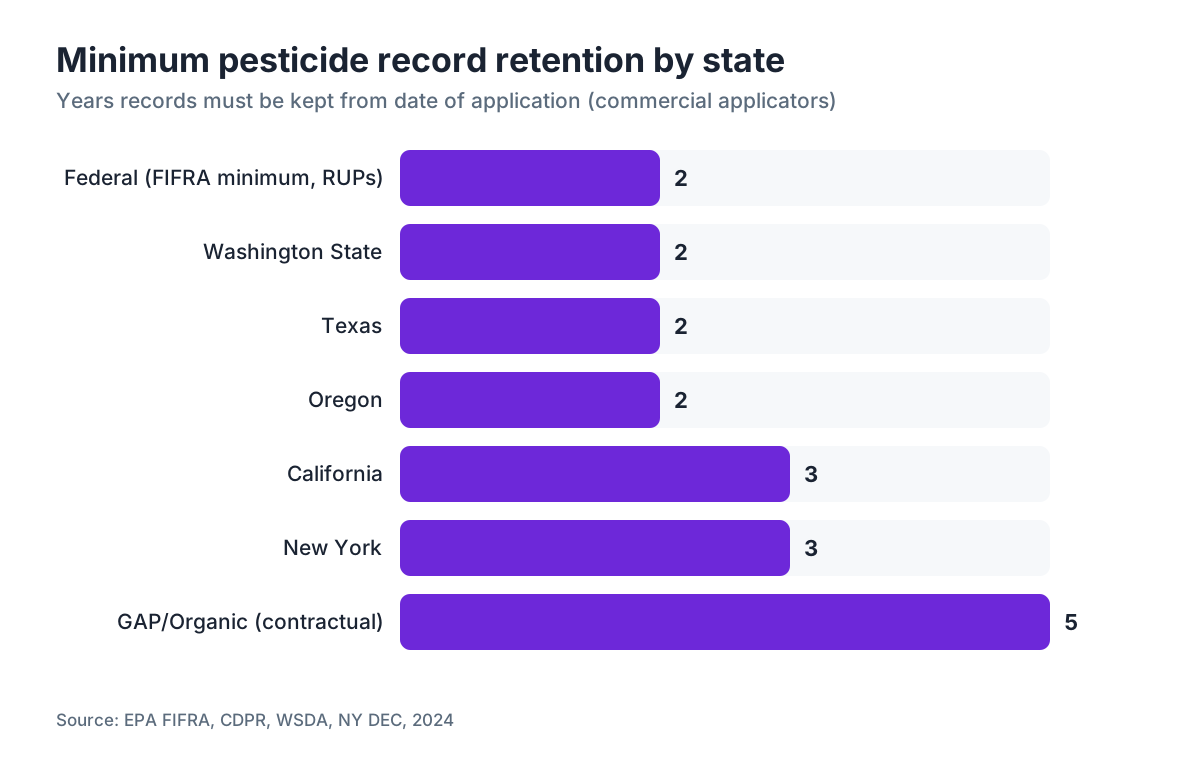
How long do you have to keep vineyard pesticide records?
The federal floor under FIFRA is two years from the date of application for restricted-use pesticide records [1]. That's the floor, not the ceiling.
State minimums vary, and some differ by record type:
| State | Minimum retention period | Applies to |
|---|---|---|
| California | 3 years | All pesticide use reports [2] |
| Washington | 2 years | RUP application records [3] |
| Oregon | 2 years | All commercial applicator records |
| New York | 3 years | Commercial applicator records [7] |
| Texas | 2 years | RUP records |
If you're GAP-certified or sell to buyers who require third-party food safety audits, those programs often want five years of pesticide records tied to specific lots. That's a contract term, not a regulation, but the practical advice is identical: keep everything five years minimum. Hard drive space is cheap. Defending a gap in your records is not.
For WPS records, the EPA requires handler training records kept for two years [5]. Employee exposure records under OSHA's Hazard Communication Standard carry a 30-year retention requirement for documented exposures to certain hazardous chemicals, which could in theory include some pesticide concentrations. Most vineyard managers aren't tracking exposure at that level. The rule still exists, so know it's there.
What water records does a vineyard need to maintain?
This one genuinely depends on your water source and your state. That makes it the most variable part of any compliance checklist.
Hold a pre-1914 or post-1914 appropriative water right in California, and if your diversion tops certain thresholds, you file an Annual Water Use Report with the State Water Resources Control Board by July 1 each year, covering the prior year's diversions [4]. The threshold used to be high enough that many vineyards were exempt. The board has been tightening enforcement since around 2020.
Pump groundwater in a basin under the Sustainable Groundwater Management Act (SGMA), and your Groundwater Sustainability Agency may require annual well extraction reports. Basins in critically overdrafted status carry the toughest requirements [4].
In Washington, surface water rights often require annual reporting to the Department of Ecology, especially for rights with measuring devices installed under a department order [3].
For irrigation generally, keep these regardless of any regulatory mandate:
- Monthly water meter readings by block or zone
- Irrigation scheduling worksheets or ET-based calculations
- Water quality test results (relevant for spray water and nutrient management)
- Well pump test dates and results
- Backflow preventer inspection records (often required by local ordinance)
Water records earn their keep the day you face a drought curtailment order, a neighbor's complaint about diversion, or a GAP audit asking for water management documentation. Cornell Cooperative Extension publishes vineyard irrigation record-keeping templates that work well as a starting point [8].
What Worker Protection Standard records does a vineyard need?
The WPS, codified at 40 CFR Part 170, applies to you if you use any pesticide registered for agricultural use and you have agricultural workers or pesticide handlers on site [5]. That covers just about every operating vineyard.
The 2015 revision added record-keeping requirements the original 1992 rule didn't have. Here's what you document.
Pesticide handler training: Handlers (people who mix, load, or apply pesticides) must be trained before doing any handler task. Training runs through a certified applicator or an EPA-approved program. Keep a record of each handler's training with their name, the date, and who delivered it. Records stay on file for two years [5].
Worker training: Workers (anyone doing field tasks like hand-harvesting, tying, or canopy work) must get WPS safety training within 30 days of hire. Same documentation standard.
Central posting: Post pesticide safety information and application-specific information (product name, EPA registration number, REI, location treated) at a central location every worker and handler can reach. You don't have to log each posting, but you do retain the application records that drove it.
Application and re-entry records: These overlap with your pesticide log. The WPS-specific piece is documenting when an REI expires and confirming workers stayed out during the interval.
Emergency medical contact information has to be posted and current. It looks like busywork. It shows up on WPS compliance checks all the time.
WSU Extension has a practical WPS compliance guide for Washington growers that walks each requirement with examples [9]. Even outside Washington, the structure holds up because it tracks the federal standard closely.
Using pesticide safety training modules from an EPA-approved provider? Keep the completion certificates. They're your proof if an inspector questions whether training happened.
What's the best way to organize all three record categories in one system?
Most managers who struggle with compliance understand the rules fine. They fail because the records live in three different places: spray logs in a binder in the shop, water meter readings in a spreadsheet on a laptop nobody backs up, and WPS training certificates in a manila folder somewhere in the office.
The approach that actually works is a folder structure, paper or digital, organized by calendar year, with subfolders or tabbed sections for:
- Pesticide applications (one record per application event, filed by date)
- Pesticide purchases (invoices, which help verify quantities applied)
- Water diversion and irrigation logs
- WPS training certificates and handler records
- Equipment calibration records (sprayers)
- Annual regulatory submissions (copies of anything filed with the county or state)
If you prefer paper, UC Agriculture and Natural Resources publishes record-keeping workbooks with print-ready log sheets formatted for California county requirements [6]. For multi-block operations, paper gets unwieldy fast.
Digital systems have a real edge. Timestamps happen automatically. Records open from anywhere. And you can generate the county pesticide use report format from the same data you entered for your own logs. VitiScribe is built specifically for vineyard compliance and produces records that satisfy both federal and California county formats from a single entry. That deduplication matters when you're logging fifty spray events a season.
Whatever system you pick, the annual review is the moment to confirm every record exists, is complete, and sits somewhere a second person could find it without asking you.
What are the most common compliance violations found in vineyard audits?
Missing documentation is the top finding by a wide margin. A pesticide got applied but the record has no EPA registration number. A handler worked before their WPS training was documented. A water report went in late or never went in at all.
Second most common: incomplete records that exist but can't be used. A spray log that lists the product but not the application rate. A training certificate with no date. A water use report with no meter readings to back up the numbers.
A few violations that come up over and over in California county inspection reports:
- Failing to report pesticide use to the county agricultural commissioner inside the required monthly window [2]
- Missing certified applicator name on records for applications that required a licensed applicator
- REI violations, meaning workers re-entered a treated area before the interval expired
- Failing to post WPS pesticide safety information at the central location
On the water side, the biggest issue is simple: growers don't know they have a reporting obligation. Many who inherited water rights got no clear guidance on annual reporting when they took over the property.
For labor, OSHA's Hazard Communication Standard (HazCom) overlaps heavily with WPS but a different agency enforces it. Cal/OSHA has cited vineyards for missing Safety Data Sheets and for failing to keep an up-to-date written Hazard Communication Program. If you're in a state with a state-plan OSHA (California, Oregon, Washington, Michigan, and about 19 others), your state OSHA may hit agriculture harder than federal OSHA does.
The honest truth about audit frequency: most small vineyards go years without an inspection. That doesn't make you safe. An employee injury, a neighbor's drift complaint, or a water curtailment dispute can trigger an inspection on short notice, and inspectors can go back two to three years in your records.
When during the year should you do a compliance records review?
Once a year is the minimum. Twice is better.
The natural timing for a full review is late winter, January or February, before the season starts. The prior year's records are still fresh, you have time to fix problems before regulatory deadlines, and you can spot gaps in your logging systems before the new spray season begins.
A practical calendar:
January: Pull all prior-year pesticide application records and compare them against purchase invoices. Every product you bought should map to applications that account for it. File copies of county pesticide use reports and confirm none are missing.
February: Review WPS training records. Any handler or worker hired last year should have a dated training certificate on file. Check applicator licenses for renewal dates (most certifications run two to five years depending on state).
March: Confirm water use reports are filed or prepare them. California's deadline is July 1 for the prior year, so you have room, but running the numbers in March while you're still close to the irrigation season is easier.
April or May (mid-season check): Spot-check that new hires got WPS training within 30 days. Confirm spray logs are being filled out same-day. Good time to verify your SDS binder or digital file covers any new products.
November or December: End-of-season reconciliation. Make sure all spray events are logged, calibration records are dated, and any water meter readings needed for annual reports are captured before winter makes site access hard.
Work with a licensed pest control adviser (PCA)? Their recommendation records are part of your compliance file in California. PCAs keep their own copies, but you should have yours too.
What fines and penalties apply for vineyard compliance violations?
Federal FIFRA civil penalties for record-keeping violations can reach $5,500 per violation for commercial applicators and up to $19,507 per violation for certified applicators under the adjusted penalty schedule [1]. The EPA re-indexes these numbers for inflation periodically.
State penalties vary a lot. In California, a county agricultural commissioner can issue a written notice of violation for a first offense and escalate to civil penalties up to $5,000 per violation per day for continuing violations. Serious or knowing violations can cost you a suspended or revoked license.
For WPS violations, the EPA can assess civil penalties up to $19,507 per violation under current penalty adjustment tables [5]. Federal enforcement in agriculture has historically been light, but WPS enforcement jumps after reported worker illnesses or accidents, and any such incident can trigger a full records inspection going back two years.
Cal/OSHA penalties for serious HazCom violations start at $18,000 per violation and can reach $25,000 for willful or repeat violations. These are per-citation, not per-day, but a single inspection can generate a stack of citations.
Water violations in California run from administrative civil liability of $1,000 per day for minor reporting failures to $10,000 per day for unauthorized diversion, plus the cost of any water illegally diverted [4]. During drought years, curtailment enforcement has gotten much more active.
Here's the practical point. Fines are real, but the bigger business risk is often the disruption of an audit, the legal cost of answering a notice of violation, or the reputational hit if a violation goes public. For vineyards selling to premium buyers, a documented compliance failure can damage buyer relationships in ways that cost more than any fine.
What's a practical annual compliance checklist you can actually use?
Run this section by section each January. Adapt it to your state's specific rules.
PESTICIDE RECORDS
[ ] All restricted-use pesticide application records complete with: product name, EPA reg number, date, location, amount applied, application method, certified applicator name and license number
[ ] All records dated same-day or contemporaneously (not reconstructed)
[ ] Wind speed/direction and equipment ID included where state-required
[ ] County pesticide use reports submitted for all required months (California)
[ ] Copies of PUR acknowledgment receipts on file (California)
[ ] Records stored in accessible location, minimum two years back (three years in CA, NY)
[ ] Pesticide purchase invoices reconcile against application records
[ ] Adjuvants and tank-mix partners documented
WATER RECORDS
[ ] Annual water use report filed with state board if required
[ ] SGMA well extraction reports submitted if in a monitored basin (California)
[ ] Monthly irrigation meter readings on file for prior year
[ ] Water quality test results filed if irrigation water was tested
[ ] Backflow preventer inspection current
[ ] Surface water right conditions reviewed for any reporting changes
WORKER PROTECTION STANDARD AND LABOR
[ ] WPS training records on file for all handlers hired in prior year
[ ] WPS training records on file for all workers hired in prior year (within 30 days of hire)
[ ] Certified applicator licenses current (note renewal dates for current year)
[ ] Safety Data Sheets current and accessible for all products used in prior year
[ ] Written Hazard Communication Program current (OSHA requirement)
[ ] Emergency medical contact information posted at central location
[ ] Central location WPS posting compliant (pesticide safety poster current version)
[ ] REI records documented for treated areas
EQUIPMENT AND CALIBRATION
[ ] Sprayer calibration records dated and on file
[ ] Any measuring device installation records for water diversion on file
ANNUAL ADMINISTRATIVE
[ ] Prior-year files archived and labeled by year
[ ] New blank log forms ready for current season
[ ] Contact information current for county ag commissioner, state water board, and your PCA
Want to consolidate the data entry side into one platform? VitiScribe connects spray events, block records, and handler information so a single application entry fills your county use report, your WPS posting record, and your equipment log at once. Free trial at vitiscribe.com.
For a well-run operation under 50 acres, this full review takes about half a day, once a year. For larger properties with multiple applicator licenses, multiple water rights, and seasonal labor, budget a full day and hand off sections to your leads.
Where can you get free compliance templates and training resources?
Several university extension programs publish free, print-ready templates and guidance that are genuinely useful, not academic filler.
UC Davis and the UC Cooperative Extension system keep a large library of pest management and record-keeping resources through the UC Agriculture and Natural Resources portal [6]. Their pesticide use records workbook is built to satisfy California county ag commissioner requirements and gets updated to reflect regulatory changes.
Cornell Cooperative Extension publishes vineyard-specific guides for the Northeast covering both record-keeping and regulatory compliance, including water management documentation and WPS training materials [8]. These help New York growers, who face different state pesticide reporting rules than western states.
WSU Extension covers Washington State requirements in depth, including WPS compliance and the state's pesticide record-keeping rules [9]. WSU's tree fruit resources often translate well to vineyards given similar spray program structures.
The EPA maintains a worker safety portal with current training materials, including approved pesticide safety training curricula in English and Spanish [5]. The Spanish-language materials matter given the demographics of most vineyard labor pools.
Your state's department of agriculture is the best first contact for state-specific water use reporting forms and pesticide use report formats. Most are available as downloadable PDFs from the state ag department website.
For WPS training delivery, the Pesticide Educational Resources Collaborative (PERC), based at UC Davis, offers train-the-trainer resources and worker training modules the EPA accepts as meeting the WPS training requirement. They're free to download [10].
One practical tip: bookmark your county agricultural commissioner's website. County-level pesticide use reporting forms and deadlines sometimes differ from state guidance, and the county commissioner is the entity that actually shows up to inspect.
Frequently asked questions
Do I need to keep records for every pesticide I apply or only restricted-use pesticides?
Federal FIFRA requires records only for restricted-use pesticides (RUPs), but most states require records for all commercial pesticide applications. California requires reporting all pesticide use to the county agricultural commissioner, regardless of whether the product is an RUP. Check your state's department of agriculture. In practice, logging everything is simpler than tracking which products fall under which standard.
What's the penalty for a late or missing county pesticide use report in California?
California county agricultural commissioners can issue notices of violation and assess civil penalties starting at $1,000 per violation for late or missing pesticide use reports, with higher penalties for repeat or serious violations. Penalties can reach $5,000 per violation per day for continuing noncompliance. First-time violations for small operations often get a written warning, but that courtesy sits entirely at the commissioner's discretion.
Does the Worker Protection Standard apply to family members working in the vineyard?
Mostly yes, with a narrow exception. The WPS exempts the establishment owner and their immediate family from WPS requirements, so you don't have to document WPS training for yourself, a spouse, or your children. But any hired worker or handler, even a part-time seasonal employee, triggers full WPS requirements. If you pay someone to work in the vineyard, WPS applies no matter how few hours they work.
Can my pest control adviser keep the spray records instead of me?
Your PCA is required by California law to keep copies of their written recommendations, but that doesn't substitute for your own pesticide use records. You separately have to maintain your own application records. PCAs and operators carry parallel but distinct obligations. Having your PCA's records is helpful supplemental documentation, but regulators expect to find records in your possession when they inspect.
How do I handle water records if I'm on a well and not required to report to the state?
Even without a state reporting requirement, keep monthly meter readings and note any unusual drawdown or pump performance changes. If your groundwater basin later comes under SGMA monitoring in California, or a neighbor files a complaint, historical records give you a factual baseline. Some crop buyers also ask for water use documentation as part of sustainability certifications. Tracking costs nearly nothing; having the data can be worth a lot.
What does 'accessible for inspection' mean for my records? Do they have to be on-site?
Federal and most state regulations require pesticide application records to be available for inspection by regulatory officials, typically within 24 hours of a request. They don't have to sit on-site at all times, but they can't be stored somewhere that makes them effectively unavailable (like an off-site server you can't reach without outside help). Digital records in a cloud system you can pull up on a phone generally meet this standard.
How often does the EPA actually inspect vineyards for WPS compliance?
Routine proactive WPS inspections of individual farms are relatively rare at the federal level. Most EPA agricultural inspections are complaint-driven, following reported worker illnesses, pesticide drift incidents, or advocacy group complaints. State agricultural agencies and OSHA conduct more frequent agriculture inspections in some states. California's Division of Occupational Safety and Health (Cal/OSHA) keeps a more active agriculture enforcement presence than most states.
Do I need records for cover crop herbicide applications between vine rows?
Yes. If the product is a restricted-use pesticide, federal records are required. Many states require records for all pesticide applications including herbicides, regardless of RUP status. Cover crop and weed management applications get treated the same as insecticide or fungicide applications for record-keeping. The location field in your log should note 'undervine row middles' or equivalent to distinguish it from canopy applications.
What's the difference between a certified applicator and a licensed handler under WPS?
A certified applicator holds a state-issued pesticide applicator license, which requires passing an exam and meeting continuing education requirements. They can apply or supervise the application of restricted-use pesticides. A WPS pesticide handler is anyone who mixes, loads, applies, or handles pesticides in an agricultural setting. Handlers need WPS safety training but not necessarily a full applicator license, unless they're applying RUPs, which requires licensed applicator involvement.
Are there compliance differences for organic vineyards?
Organic operations still need pesticide records for OMRI-listed or NOP-compliant materials they apply commercially. The federal organic program requires records sufficient to demonstrate compliance with NOP regulations for five years, longer than FIFRA's two-year minimum for RUPs. Organic producers generally don't use RUPs, but they do apply materials that require logging. NOP record requirements sit at 7 CFR Part 205.
What happens to my compliance obligations if I lease my vineyard to another operator?
The operator actually applying pesticides and employing workers carries primary compliance responsibility. If you lease the vineyard and the lessee employs the workers and makes the applications, they hold the compliance obligations for that period. But water rights stay with the right holder, so water reporting obligations may remain with the property owner. Review your lease to clarify which party holds each regulatory responsibility and who keeps copies of records.
Is a simple notebook acceptable as an official pesticide log, or does it have to be a specific form?
A handwritten notebook is legally acceptable if it contains all required fields. Federal FIFRA and most state regulations specify the data fields required in a pesticide record but don't mandate a specific form. The practical problem with notebooks is they're harder to search, copy for submissions, or verify for completeness during an audit. Most county ag commissioners publish recommended log sheet formats, and using one cuts the risk of a missing-field violation.
What training program satisfies WPS pesticide safety training for workers?
WPS training must cover the topics listed at 40 CFR 170.401 and must be delivered by or under the supervision of a certified applicator, or via an EPA-approved pesticide safety training program. The Pesticide Educational Resources Collaborative (PERC) offers EPA-accepted training modules in English and Spanish, free to use. Training can be group-based. You document it with a dated attendance sheet signed by the trainer and the workers present.
Sources
- U.S. EPA, Pesticides program (FIFRA record-keeping requirements): FIFRA requires commercial applicators to keep RUP application records for two years; civil penalties for certified applicators can reach $19,507 per violation under current adjusted penalty schedules.
- California Department of Pesticide Regulation, Pesticide Use Reporting: California requires pesticide use reports to be filed monthly with county agricultural commissioners and records retained for three years.
- Washington State Department of Agriculture, Pesticide record-keeping: Washington requires pesticide records to include product name, EPA registration number, application date, target pest, location, and amount used, and to be kept two years.
- California State Water Resources Control Board, Water Rights: California surface water right holders must file Annual Water Use Reports by July 1 each year; SGMA requires groundwater extraction reporting in critically overdrafted basins.
- U.S. EPA, Agricultural Worker Protection Standard (40 CFR Part 170): WPS requires handler training records retained for two years, central posting of application information, and REI enforcement documentation; WPS civil penalties can reach $19,507 per violation.
- University of California Agriculture and Natural Resources, pest management and record-keeping resources: UC Cooperative Extension publishes pesticide use records workbooks formatted to satisfy California county agricultural commissioner requirements.
- New York State Department of Environmental Conservation, pesticide applicator record-keeping: New York requires commercial pesticide applicators to keep application records for three years.
- Cornell Cooperative Extension, vineyard management and record-keeping resources: Cornell Cooperative Extension publishes vineyard-specific record-keeping guides covering water management documentation and WPS training materials for Northeast growers.
- Washington State University Extension: WSU Extension publishes a practical WPS compliance guide for Washington state growers that walks through federal and state record-keeping requirements.
- Pesticide Educational Resources Collaborative (PERC), UC Davis, WPS training modules: PERC offers free EPA-accepted WPS pesticide safety training curricula in English and Spanish that satisfy the WPS worker and handler training requirement.
- USDA Agricultural Marketing Service, National Organic Program (7 CFR Part 205): NOP regulations require organic producers to maintain records demonstrating compliance for five years.
Last updated 2026-07-11