How to set up a vineyard visitor log for compliance and liability

TL;DR
- A vineyard visitor log records who entered your property, when, and why.
- Done right, it satisfies EPA Worker Protection Standard re-entry interval documentation, meets state agricultural inspection requests, and gives you a dated paper trail if a liability claim lands.
- The minimum: visitor name, date and time, block entered, and a signed pesticide hazard acknowledgment for any area under a restricted-entry interval.
Why does a vineyard visitor log matter for compliance and liability?
Most vineyard managers file a visitor log under hospitality, somewhere near the tasting room guest book. That's a mistake. It's a legal record that can decide whether you pay a fine, lose a lawsuit, or both.
The EPA Worker Protection Standard (WPS), codified at 40 CFR Part 170, requires agricultural employers to keep workers and "handlers" out of treated areas during a restricted-entry interval (REI). When a visitor, agronomist, or field consultant walks into a block you sprayed this morning, you have an affirmative duty to prove the person was told about the hazard before entry [1]. Without a dated, signed log, that proof is nearly impossible to produce in an enforcement inspection or a courtroom.
Premises liability law in every state puts the burden on the property owner to show reasonable care. A visitor trips over a drip line. Someone catches a face full of sulfur dust off a passing airblast rig. A tour guest reacts to a treated row. Your log is the evidence you took the visit seriously. No log, and your defense attorney starts the case downhill.
State departments of agriculture stack their own rules on top. California's DPR, Washington's WSDA, and New York's DEC all run WPS enforcement inspections and can ask for worker entry records on the spot [2][3]. A well-kept log answers that question before an inspector finishes asking it.
What fields does a compliant vineyard visitor log need to include?
There's a minimum floor, and then there's the version that actually protects you.
The WPS-minimum fields are visitor full name, date of visit, time of entry, the specific block or zone entered, the REI status of that block at time of entry (active or clear), and a signed or initialed acknowledgment that the visitor got the pesticide safety information required under 40 CFR 170.311 [1]. That last piece goes missing most often, and it's the one inspectors hunt for first.
Above the regulatory floor, a liability-protective log adds company or affiliation (so you can tell the agronomist from the sales rep), an emergency contact or phone number, purpose of visit, the employee who escorted or authorized entry, a vehicle description or plate (handy if a worker's comp or trespasser question surfaces later), and a short note on any PPE provided.
Here's the full field list in table form:
| Field | Required by WPS? | Recommended for Liability? |
|---|---|---|
| Full name | Yes | Yes |
| Date and time in/out | Yes | Yes |
| Block(s) entered | Yes | Yes |
| REI status at entry | Yes | Yes |
| Pesticide hazard info acknowledged (signed) | Yes | Yes |
| Company / affiliation | No | Yes |
| Emergency contact | No | Yes |
| Purpose of visit | No | Yes |
| Escort / authorizing employee | No | Yes |
| PPE provided or declined | No | Yes |
| Vehicle info | No | Situational |
Don't overbuild the form for regular farm visitors. A single half-page card covers the WPS requirements and the liability basics. Save the longer intake form for contractors or anyone entering during an active REI.
What does the EPA Worker Protection Standard actually say about visitor entry records?
The 2015 revised WPS rule, effective January 2, 2017, is the governing federal text [11]. The core requirements for entering treated areas sit at 40 CFR 170.405 and 170.505, for agricultural employers of workers and handlers respectively.
Before any person enters an area under an REI, the rule requires the employer to do three things: confirm the REI hasn't expired, make sure the person got pesticide safety training or a specific safety information disclosure, and verify the person has the required PPE if entry during an REI is a genuine need rather than an oversight. The WPS does not spell out a written visitor log for non-worker visitors by name. It does require documented pesticide application and treated area information kept in a way that's accessible [1].
Here's the practical reality. The WPS application records you already have to keep, which list the product, EPA registration number, application rate, REI, and treated location, become the backbone of your visitor log system. When an inspector asks whether the visitor who walked Block 14 yesterday knew about the Movento application from the day before, your application record plus a signed visitor acknowledgment is the only answer that holds.
EPA's Agricultural Worker Protection Standard resources at epa.gov summarize the 2015 rule and include sample safety disclosure language you can adapt for your acknowledgment form [1]. UC Cooperative Extension has published field-ready WPS compliance material for California operations that walks through how to connect application records to worker and visitor entry documentation [4].
The phrase "central location" matters here. Under 40 CFR 170.311, pesticide application and safety information has to be posted where workers can reach it. Your visitor log belongs at that same station.
How long do you need to keep vineyard visitor log records?
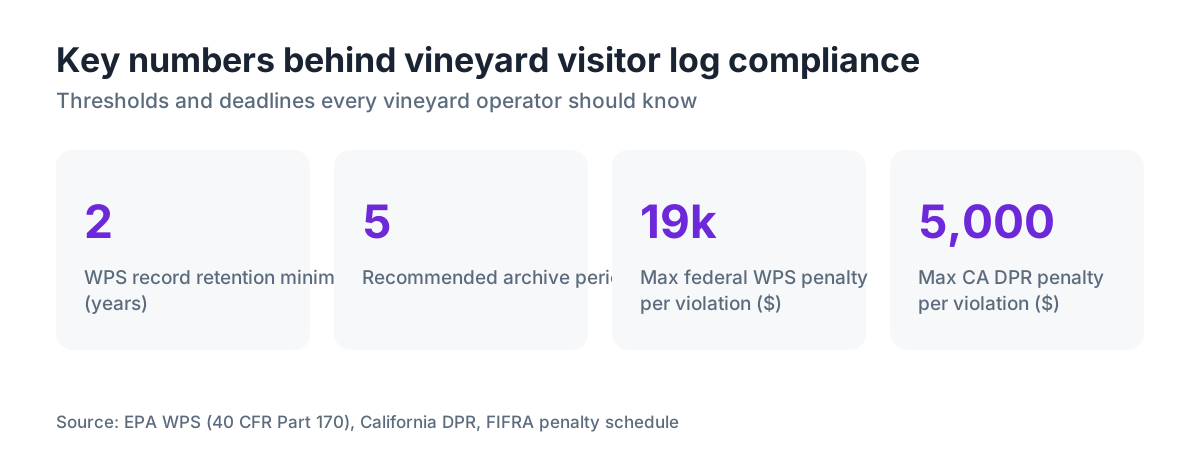
WPS application records must be kept for two years from the date of application [1]. That's the federal floor. Because your visitor log references specific applications and blocks, keep it on the same schedule at a bare minimum.
For liability, two years usually isn't enough. General premises liability claims in most states carry a two- to three-year statute of limitations, but personal injury claims can run longer depending on when the injury is discovered. California workers' compensation claims, for example, can be filed up to one year from the date of injury or from the date the worker knew or reasonably should have known the injury was work-related, with some exceptions running longer [5].
A workable retention policy: keep current-year and prior-two-year records within arm's reach, and archive anything older for five years total before you destroy it. That covers the WPS window, the standard personal injury window in most states, and leaves buffer for a late-discovered claim. Store archived paper in a waterproof box or scan it. A flooded barn is not a compliance defense.
Going digital? Your backup and access policy is the whole game. A log that lives only on a tablet that ends up in the fermenter is not a log.
What are the specific pesticide hazard notice requirements for vineyard visitors?
This is where small vineyards fall short. Before a worker or handler enters a treated area, the WPS requires they have access to the pesticide application and safety information [1]. For non-employee visitors (consultants, buyers, journalists, tour groups), there's no identical federal mandate. The disclosure is still your liability protection.
At minimum, your acknowledgment language should list the active ingredients of any pesticides applied in the blocks the visitor will enter, the REI for those products, the date and time the REI expires, the treated location, and a statement that the visitor received the information and accepts or declines PPE as appropriate.
A sample sentence that works: "I acknowledge that I have received pesticide application safety information for the area(s) I am entering today and understand the re-entry interval status of those areas."
For areas under an active REI, don't let non-essential visitors in at all unless the entry qualifies as an exception under 40 CFR 170.405(b), which covers early entry with added PPE and employer authorization. Keep that the rare exception, not a courtesy for a wine buyer who wants to see the vines "real quick."
Cornell Cooperative Extension publishes practical WPS compliance guides for New York grape growers, including sample pesticide safety information disclosure language [6]. Washington State University Extension offers WPS compliance resources built for Pacific Northwest fruit and wine grape operations [7].
How do you set up the physical log, and where should it live?
Paper or digital, the log goes at the point of entry, not in the farm office. Most vineyards funnel visitors through one main gate or parking area. That's where the log station goes.
A physical station needs a weatherproof clipboard or binder with current-week log sheets, a laminated summary of any active REIs (updated daily during spray season), a pen that works, and the pesticide central display information WPS already requires. You're not building new infrastructure. You're combining what you must post anyway with a sign-in sheet.
For vineyards with steady traffic, a two-part carbon form lets the visitor keep a copy of the pesticide information they acknowledged. Extension agents and consultants like having a record for their own files.
Digital options have gotten practical. A tablet with a simple form app, or a QR code linking to a mobile form, works well for tasting rooms with foot traffic. You get automatic timestamps and searchability. The cost is power, connectivity, and someone to manage the data. For remote blocks, paper still wins. Paper in the field, digital at the tasting room, is a hybrid that plenty of mid-size operations run and that holds up fine in an inspection.
VitiScribe's record-keeping platform includes a visitor log module that ties entry records straight to the block-level spray records you're already keeping, which answers the "which blocks were under REI?" question on its own. That integration is what makes digital worth the switch once you're running more than a handful of spray applications per season.
For wineries that host regular tours or events, the visitor volume at a place like Gervasi Vineyard or a large destination property makes a digital log close to mandatory. Paper breaks down fast when 200 people walk through on a Saturday.
Do wine tourists and tasting room visitors need to be in the vineyard log?
Yes and no, and the line between them matters.
A tasting room guest who never leaves the hospitality building has no WPS exposure. Your liability there runs on standard premises and liquor liability law, not pesticide documentation. Keep a head count or reservation record for fire code and event planning, but a full pesticide acknowledgment form isn't needed for those guests.
The moment that guest steps into the vineyard rows, the math changes. If any block has an active REI, they can't enter without the disclosure and, for active-REI areas, the required PPE and authorization. If every REI has cleared, they should still sign in with date, time, and blocks entered, because a fall or an equipment run-in can happen no matter the pesticide status.
For formal tours, fold the log into your check-in. Hand each visitor a short card summarizing any treated area information, have them sign, collect the cards. Ninety seconds. That's the difference between a manageable incident and a deposition.
Destination vineyards and winery-resorts, the kind of operation you see at South Coast Winery or Ponte Winery, move high visitor volumes and have usually built intake processes that cover this. Smaller operations with occasional visitors are where the gap tends to live.
How do you handle contractor and vendor entry in the log?
Contractors are the highest-risk category in your log. A trellising crew, an irrigation contractor, a vine nutrition consultant, a drone service, anyone doing work in the rows earns the full intake treatment.
The WPS covers agricultural workers and handlers by the nature of the activity, not the employment relationship. A contractor's employee running pesticide application equipment is a "handler" under WPS and must have full handler training documentation before work begins [1]. A contractor's crew repairing trellis in a block sprayed two days ago is a "worker" for WPS purposes if the REI hasn't expired.
Your contractor log should carry everything from the standard log plus the contractor company's pesticide license number if they're applying anything, the specific task, the name and contact for the crew lead, and a note that WPS training verification was completed or that you confirmed their employer (not you) is the agricultural employer of record responsible for their WPS training.
The WPS allows an arrangement where the contractor is the agricultural employer and carries responsibility for their crew's training. Get that in writing in your service contract, more than your log. The log records what happened. The contract defines who's responsible.
What should your vineyard visitor log look like during a state or federal inspection?
Inspectors from California DPR, WSDA, New York DEC, or a federal WPS audit usually ask for three things in the first five minutes: your pesticide application records, your worker training records, and proof the central display is current [2][3]. Your visitor log doesn't always come up unless the inspection was triggered by a complaint or an incident.
When it does come up, they want a log that's current (not backfilled), one that correlates with your application records (if you applied a product to Block 7 on Tuesday, the Block 7 log for Tuesday and Wednesday should reflect the REI), and acknowledgment language that's substantively accurate, not a generic "I'm aware of farm safety hazards" waiver.
Common failures here: logs running days behind, logs that never name specific blocks, and acknowledgment language so vague it documents nothing. California DPR publishes inspection checklists that lay out exactly what gets reviewed during a WPS field inspection [2]. Reading one before spray season is a good annual habit.
WSU Extension's WPS training materials state that "employers must ensure that workers and handlers have and understand the pesticide safety information" before entering treated areas, which drops the documentation burden squarely on the operation [7]. A log with a signature is your evidence that you carried it.
How do you train your staff to actually use the visitor log consistently?
A log that gets used when the manager is around and ignored when they're not is worse than no log. It builds a false paper trail with obvious holes.
The fix is procedure, not good intentions. Make signing the log a physical prerequisite for getting through the gate, not an honor system. A lockbox holding the key to the vineyard utility vehicle, kept right next to the log clipboard, forces the behavior without surveillance. Whoever grabs the key owns the log entry for that visitor.
Tasting room staff who sometimes walk guests to the vineyard need two things: how to check REI status before the walk (a quick look at the spray board or block status sheet), and where the log lives. A three-minute segment in your annual WPS refresher covers it.
Build the log check into your harvest crew morning briefing too. When forty pickers show up and two agronomists are already in Block 6, someone should have logged those agronomists before the crew walked past them with spray residue still on the canopy.
UC Cooperative Extension has published pesticide applicator safety communication guides with suggested language for worker and visitor briefings, easy to adapt for your morning stand-up [4].
What's the cheapest and simplest setup that still meets legal requirements?
A $3 spiral notebook with a laminated one-page form taped inside the cover gets you 90% of the way there, if you design the page right. The WPS doesn't require a specific form. It requires documented disclosure and record retention.
Here's what a minimum-viable paper log needs per entry: date, time in, visitor name, blocks entered, REI status at entry (yes/no), a checkbox or signature line confirming pesticide hazard information was provided, and the initials of the staff member who handled check-in. One line per visitor. You fit about 20 entries per page.
The laminated insert at the front should show your block map with current REI status, updated each morning. Swap the insert during spray season. Post it at the gate or wherever you receive visitors.
Print the form yourself. EPA's WPS resources include templates for pesticide safety information disclosure [1]. Cornell and UC Cooperative Extension both offer downloadable farm safety templates [4][6]. None of this costs more than printer paper and an afternoon of setup.
The only case where paper isn't enough is high-volume visitor operations, harvest-season contractor management with many subcontractors, or operations under multi-county or federal auditing with remote record access requirements. There, a digital platform that ties your visitor log to your spray records earns its keep. VitiScribe is built for exactly that, with application records and visitor log cross-referencing automatically.
Keep the vineyard context in mind through all of this. A two-acre estate carries a genuinely different risk profile than a 200-acre operation with a full field crew, multiple contractors, and daily tour groups. Match your system complexity to your actual exposure.
Frequently asked questions
Is a vineyard visitor log legally required by federal law?
The EPA Worker Protection Standard requires documentation of pesticide application information and proof that workers and handlers received safety information before entering treated areas (40 CFR Part 170). The WPS doesn't name a specific 'visitor log' form, but the documentation obligations effectively require one. State ag departments often add requirements. The log is also your primary liability evidence under premises liability law.
Can I use a digital app instead of paper for my vineyard visitor log?
Yes. Federal WPS and state ag rules don't specify paper. A tablet form, QR-code intake, or purpose-built software all work, as long as records are retained at least two years (the WPS minimum) and stay accessible during an inspection. Make sure your digital system has an offline mode or backup for field locations without reliable connectivity.
What is a restricted-entry interval and why does it affect visitors?
A restricted-entry interval (REI) is the time after a pesticide application during which entry into the treated area is restricted to limit exposure. REIs run from 4 hours for many fungicides to 48 hours or more for some insecticides. Any visitor, worker, or contractor entering a block during an active REI must receive the pesticide safety disclosure and, in most cases, wear the PPE listed on the product label.
Do wine tourists on a vineyard tour need to sign a visitor log?
If they're walking into vineyard rows, yes. Any person entering a treated area must have received pesticide safety information, and you need documentation of it. For tasting room guests who never leave the building, standard premises liability intake (reservation records, event sign-ins) is enough. Build pesticide acknowledgment into tour check-in as a standard step during spray season.
How do I handle a visitor who refuses to sign the log?
Don't let them enter treated areas. The WPS obligation sits on the employer, not the visitor, so if you allow entry without documentation, you carry the compliance risk. For non-REI areas, a refusal is more of a liability judgment call. Document the refusal (date, time, who declined) and decide based on the situation. For contractor crews, refusing to sign should be a contractual disqualifier.
What's the difference between a visitor log and a WPS worker training record?
Worker training records document that your employees and hired workers completed WPS safety training (required within the first work period for workers, before handling pesticides for handlers). The visitor log documents entry events and pesticide hazard disclosures for specific visits. They're separate records with separate retention requirements, but they work together during an inspection.
How do I update the log for REI status each day during spray season?
Post a block status board at your log station and update it each morning from the previous day's application records. List each block, the last application date and product, and the REI expiration date and time. Cross-reference your spray records. During heavy spray periods, updating the board takes five minutes and saves hours of compliance headaches.
Are agronomists and PCA consultants subject to my visitor log requirements?
Yes, and they're usually the most frequent non-employee visitors entering blocks. A licensed PCA walking a treated block faces the same REI entry requirements as any other visitor. Most PCAs know this and want the application information anyway. Log their entry like any other visitor, and note that they reviewed current spray records as part of their entry acknowledgment.
What happens if I get cited for a WPS violation related to visitor entry records?
EPA and state penalties vary. Federal WPS civil penalties can reach $19,017 per violation under the current inflation-adjusted FIFRA penalty schedule. State penalties differ; California DPR can assess up to $5,000 per violation for WPS infractions under Food and Agricultural Code Section 12999. A documented, good-faith compliance effort typically reduces penalty exposure.
Can I use the same form for employees and visitors?
You can, but separating them is cleaner. Employee entry records tie to your WPS worker training documentation and personnel files. Visitor records are standalone disclosure documents. Using one form blurs the record type and can complicate an inspection. A two-form approach, one for workers and handlers, one for all other visitors, keeps the records clear.
How do I handle a large harvest event or vineyard tour group in the log?
Use a group intake sheet: one page per tour or event, listing date, time, tour guide name, blocks visited, REI status, and a group sign-in section. Have each participant sign or initial. For large groups (20+ people), a pre-signed waiver handed out at the start and collected at the end is practical and defensible, as long as it carries the required pesticide safety information language.
Does the visitor log have to include emergency contact information?
Federal WPS doesn't require emergency contact fields in a visitor log. From a liability standpoint, though, a phone number for a visitor who was in a treated block and later reports a symptom is worth a lot. It's also the information you'll want for any first aid or medical emergency on your property. Two fields (cell phone, emergency contact name and number) add almost no friction and real value.
Where should the visitor log be stored after the season ends?
Store completed logs with the pesticide application records for the matching season. They're companion documents; an inspector or attorney reviewing an August application will want the visitor log for that same period. Keep both in the same binder, cabinet, or folder. After two years (the WPS minimum), move to your five-year archive before destruction. Scan anything you'd hate to lose to water or fire.
Sources
- EPA, Agricultural Worker Protection Standard (WPS), 40 CFR Part 170: WPS requires agricultural employers to document pesticide application information and ensure workers and handlers have received safety information before entering treated areas; records must be retained for two years.
- California Department of Pesticide Regulation, Worker Health and Safety: California DPR conducts WPS enforcement inspections and can assess penalties up to $5,000 per violation under Food and Agricultural Code Section 12999.
- Washington State Department of Agriculture, Pesticide Program: WSDA enforces WPS requirements for agricultural employers in Washington State, including worker entry and record-keeping obligations.
- University of California Agriculture and Natural Resources (UC ANR) Extension, Pesticide Safety Resources: UC Cooperative Extension publishes field-ready WPS compliance guides and pesticide safety communication resources for California vineyard and farm operations.
- California Department of Industrial Relations, Division of Workers' Compensation: In California, workers' compensation claims can be filed up to one year from the date of injury or from the date the worker knew or reasonably should have known the injury was work-related.
- Cornell Cooperative Extension, Pesticide Safety Education Program: Cornell Cooperative Extension publishes WPS compliance guides for New York grape growers, including sample pesticide safety information disclosure language.
- Washington State University Extension: WSU Extension WPS training materials state that 'employers must ensure that workers and handlers have and understand the pesticide safety information' before entering treated areas.
- EPA, Pesticide Enforcement under FIFRA: Federal WPS civil penalties can reach $19,017 per violation under the current inflation-adjusted FIFRA penalty schedule.
- EPA, WPS Application-Specific Information and Pesticide Safety Information, 40 CFR 170.311: Under 40 CFR 170.311, pesticide application and safety information must be posted at a central location accessible to workers; REI, active ingredients, application rate, and treated location are required fields.
- OSHA, Agricultural Operations Safety: OSHA's general duty clause and agricultural safety standards establish premises safety obligations for farm operators hosting workers and visitors.
- EPA, How to Comply with the 2015 Revised Worker Protection Standard for Agricultural Pesticides: The 2015 revised WPS rule became effective January 2, 2017, and expanded requirements for pesticide safety disclosure, training, and record-keeping for agricultural employers.
Last updated 2026-07-10