How to transition vineyard records from paper to a digital farm management system

TL;DR
- Moving vineyard records digital takes roughly 4-8 weeks for a typical 50-100 acre operation.
- The core steps are auditing your existing paper records, choosing a system that covers spray logs and EPA Worker Protection Standard documentation, digitizing historical data back at least two years, training staff, and running paper and digital in parallel for one full spray cycle before cutting over.
Why are vineyard managers switching from paper records to digital systems?
Paper binders work until they don't. A wet harvest season, a misplaced spray log, or an audit request from a third-party certifier can expose exactly how fragile a paper-only system is. Most managers who switch aren't chasing technology for its own sake. They're tired of spending two hours reconstructing a pesticide application record the morning a certifier calls.
The pressure comes from a few directions. The EPA Worker Protection Standard (40 CFR Part 170) requires pesticide application records to be kept for at least two years and be available for inspection [1]. California's Department of Pesticide Regulation adds a state layer requiring Pesticide Use Reports within one month of application [2]. When those records live in three different binders in the farm office, compliance is a memory sport. When they're digital and searchable, it's not.
Then there's the labor math. UC Cooperative Extension work on farm operations reports that managers spend real hours each week on paperwork during active spray seasons, and much of it is duplicate entry [8]. Digital systems don't erase that time. They cut the duplication.
And there's succession and scale. If you're a small winery owner running 20 acres yourself, paper probably works fine today. The moment you hire a second spray applicator or bring in a vineyard management contractor, the single-binder system breaks. Too many hands need the same information at the same time.
What records should I include in the digital transition?
Before you pick a platform, inventory what you actually have on paper. Most operations own more record types than they realize.
The non-negotiables are spray records (pesticide application logs including product name, EPA registration number, rate, water volume, application method, operator, date, and REI), scouting and pest monitoring logs, irrigation records, fertilization logs, and harvest data. If you're Certified Organic or working toward it, you'll also have input approval records and field history going back three years [3].
Beyond compliance, most operations carry informal records worth capturing: block-level brix notebooks, pruning weight logs, tissue sample results, weather station downloads, and tractor hour logs for equipment maintenance. These carry no legal weight. They're often more useful for management decisions than the ones that do.
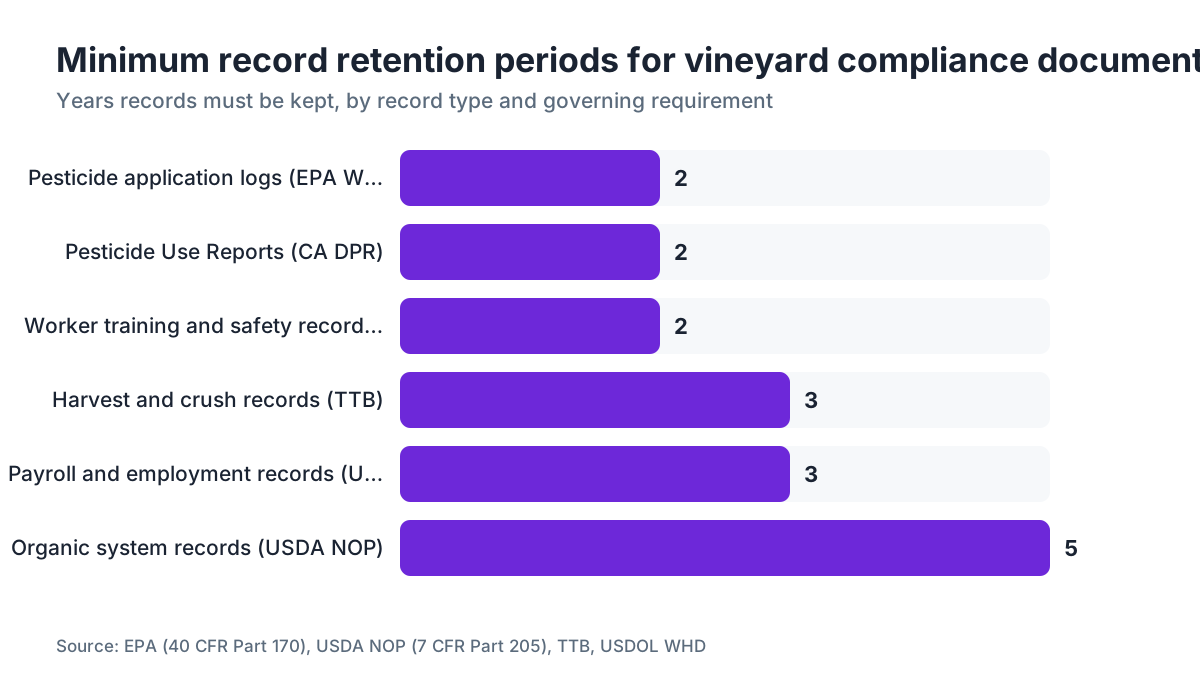
| Record Type | Minimum Retention Period | Legal Basis |
|---|---|---|
| Pesticide application logs | 2 years | EPA WPS, 40 CFR Part 170 [1] |
| Pesticide Use Reports (CA) | 2 years at county | CA DPR [2] |
| Organic system records | 5 years | USDA NOP, 7 CFR Part 205 [3] |
| Worker training and safety records | 2 years | EPA WPS [1] |
| I-9 / wage records | 3 years | USDOL [4] |
| Harvest/crush records | 3 years (federal) | TTB [5] |
The table covers minimum retention, not recommended retention. Most compliance attorneys and extension advisors say keep everything for at least five years, because certification audits run behind the calendar.
Make a physical list of every record type before you evaluate software. It stops scope creep during the transition, and it gives you a clean test for whether a platform actually covers your needs.
How do you audit your existing paper records before migrating?
This step gets skipped most often. It also causes the most pain later.
Pull every binder, folder, notebook, and sticky note from the office, the shop, and the cab of the spray rig. Seriously, all of it. Applicators often keep their own informal spray logs separate from the office copy. You want both versions in front of you.
For each record category, note the date range covered, whether entries are complete (every required field filled in), and whether there are gaps. A gap in a spray log isn't only an audit risk. It's data that won't exist once you go digital and drop the paper habit.
Decide on a backfill cutoff date. Most managers digitize the past two calendar years of spray and compliance records, because that matches the EPA WPS minimum retention window [1]. Go further back for organic records (five-year lookback) or if you're in a watershed with a TMDL compliance plan. Going further back also eats a lot more time, so be honest about your staff's bandwidth before you commit.
Flag incomplete records now. If an application is missing a product rate or an operator signature, call the applicator and try to reconstruct it before it moves into the digital system. Digitizing a bad record doesn't fix it. It makes the gap searchable and easier for an auditor to find.
Washington State University Extension farm management resources suggest sorting records by urgency: those still inside their active retention window, those approaching the end of the required period, and those already past it [6]. The last group can often be archived or discarded under your retention policy, which cuts the volume you actually migrate.
How do you choose the right farm management software for a vineyard?
The market has thinned out but it's still messy. You'll find general-purpose farm platforms, ag tools that handle multiple commodities, and vineyard-specific systems built around spray scheduling and block management. The right pick depends on three things: the records you need to keep, whether the system has survived real compliance audits, and whether your team will actually fill it in from the field.
For compliance, the floor is simple. The system has to produce a pesticide application record that satisfies EPA WPS requirements [1], and in California it has to generate a Pesticide Use Report in a format your county ag commissioner accepts [2]. Ask vendors point-blank whether their export has been accepted in recent audits. A vague answer is a red flag.
For viticulture work, look for block-level record keeping (not farm-level), variety and clone tracking, growth stage logging, and weather integration. Cornell Cooperative Extension farm management resources include evaluation criteria for record systems, including whether a platform supports block-level inputs and can generate documentation for conservation program reporting [7][10].
The most common failure mode is a system that shines in the office and dies in the field. It's too slow or too fiddly to fill in from a phone at the end of a spray run. Test that before you commit. Ask for a trial where your spray applicator fills in a record right after a practice application, not a polished demo run by the vendor rep.
Cost varies widely. Entry-level platforms aimed at small operations run roughly $30-80 per month. Mid-tier vineyard-specific systems with compliance reporting tend to run $150-400 per month for operations under 200 acres. Enterprise platforms with ERP integration are priced on negotiated contracts and are overkill for independent growers under 500 acres. None of these are official benchmarks. They reflect the market as of mid-2025 and will drift.
VitiScribe is one platform built specifically for vineyard compliance and spray record workflows, with EPA WPS record exports and block-level tracking built in. If your focus is spray compliance and field operations rather than winery production tracking, that narrower scope can help. Run any platform through a real spray cycle before you pay for a year.
What's the right process for digitizing historical paper records?
There are two ways to do this: manual re-entry and scanning plus indexing. Both have tradeoffs.
Manual re-entry means someone types each record into the new system. It's slow and prone to transcription errors. But it forces a review of every record, catches gaps and inconsistencies, and produces data that's fully searchable and usable by the reporting tools.
Scanning and indexing means you photograph or scan each page and attach it to a digital record. Much faster. The downside is that scanned images aren't searchable unless you run OCR (which adds cost and complexity), and they don't feed the system's reporting or compliance features. A scanned spray log attached as a PDF beats nothing, but it won't populate a PUR report on its own.
The practical answer for most operations is a hybrid. Re-enter all spray and pesticide records inside the active retention window by hand, because those are the ones you'll report on. Scan everything older as a searchable archive. Your compliance records end up fully functional, and your historical records stay retrievable.
Batch the re-entry by block and date range, not by record type. That lets one person work through a logical slice of the operation at a time and spot inconsistencies (two different rates logged for the same product in the same block in the same week) as they go.
Plan for roughly 3-5 minutes per spray event once a staff member is comfortable with the system. A two-year backfill covering 40 spray events across 6 blocks runs about 15-20 hours of entry. Add 30-40% for checking, correcting, and learning the software, and you're looking at 20-28 hours total. Budget for it explicitly or it won't happen.
How do you get vineyard staff to actually use the new system?
Adoption is the part that kills most transitions. The software works fine. The data doesn't make it in, because the applicator filled out the paper form from habit, or the field tablet died, or entering data on a phone in work gloves is genuinely hard.
A few things actually help.
Involve the spray applicator and the crew lead in the selection. Not as token participants. Have them test the mobile interface during the trial. If they can't complete an entry in under two minutes after three practice runs, the interface is too complex for field conditions.
Run paper and digital in parallel for exactly one full spray cycle, no longer. Parallel running is a safety net, and safety nets stretch forever if you let them. Set a hard cutoff at the end of the first spray cycle after launch and hold the line.
Name one system owner. In a small operation that's usually the vineyard manager or compliance person. Their job is to check entries within 24 hours of each spray event during the first season, catch incomplete records, and chase applicators the same day. Fast feedback loops early on decide whether the habit sticks.
Make the output visible. Print a compliance summary from the system and tape it to the break room wall. When crew see that what they type turns into a real-looking record, the sense that data vanishes into a black box goes away.
UC Cooperative Extension research on technology adoption in small farm operations found that peer demonstration (watching a neighboring operation use the tool) drove adoption better than formal training sessions alone [8]. If you're in a grower association or appellation group, find someone who's already switched and ask if your crew can visit during a spray event.
How do you keep digital vineyard records compliant with EPA Worker Protection Standard requirements?
The EPA Worker Protection Standard (40 CFR Part 170) was revised heavily in 2015, and its record-keeping rules are more specific than many managers expect [1].
A pesticide application record under WPS needs the product name, EPA registration number, active ingredient(s), location and description of the treated area, date and times of application, and the Restricted Entry Interval. Keep it for two years, and make it available for inspection within a short window during an on-site inspection.
That availability requirement is what makes digital systems genuinely useful. A searchable database beats a binder hunt for a specific application date. But only if the data went in correctly the first time.
EPA guidance on WPS record keeping states that "employers must keep records of all pesticide applications made to agricultural establishments and must make those records available to workers, their designated representatives, and representatives of EPA and state lead agencies" [1]. Your digital system needs to export or print in a format a state inspector can read without a software license.
Check whether your platform can generate a PDF or CSV export of application records. This sounds obvious, but some platforms lock data behind proprietary export formats, which creates trouble during audits and when you switch systems.
For Restricted Entry Interval and entry notification rules, a system that flags active REIs by block earns its keep. Paper systems make someone check the binder and the product label by hand. A block map showing current REI status is a safety tool as much as a compliance tool.
What are the common mistakes when migrating to digital farm records?
The most common mistake is buying software before finishing the records audit. You pick a platform off a demo instead of off your actual record types, then find the gap six months in.
Second most common: migrating everything. Not every paper record belongs in the farm management system. Some historical records are better off as scanned PDFs on a shared drive or in cloud storage. Trying to force 10 years of handwritten brix notebooks into a structured database is a project that never finishes.
Third: no backup plan. A digital system can fail, get hacked, or go out of business. Your spray records are legal documents. Keep an offline backup (downloaded CSV or PDF exports) at least quarterly. Some states require records to be producible independently of any third-party software.
Fourth: skipping validation. After migrating a block of spray records, spot-check 10% against the original paper. Entry errors are common, and some of them matter, like a transposed product rate.
Fifth: treating the transition as a one-time event. Records management runs forever. Set a calendar reminder every six months to review whether fields are being completed, whether the system is current with regulatory changes, and whether your backup exports are running. That maintenance discipline is what keeps the digital system from turning into the old binders with a login screen.
Cornell Cooperative Extension farm management resources recommend a quarterly records audit even after a full digital transition, to catch record gaps before they age into compliance problems [7].
How long does a full vineyard records migration actually take?
Realistic timelines turn on three things: the size of the operation, how complete your paper records already are, and whether you have dedicated staff time.
For a one- or two-person operation under 30 acres, a focused four-week push (roughly 4-6 hours a week of dedicated time) is doable. That covers system selection, setup, a two-year backfill of spray records, and one full parallel spray cycle.
For a 50-200 acre operation with multiple blocks, varieties, and two or more applicators, plan on 8-12 weeks. The bottleneck usually isn't data entry. It's coordinating staff training and the parallel-running period across several people.
The fastest transitions have one person owning the project with clear authority to pick the platform and set the cutoff date. Committee-run transitions take two to three times longer and rarely fully drop the paper system.
Don't start a migration in the middle of harvest or a high-pressure spray stretch. The transition itself makes extra work, and piling it onto a stretched team in September is a reliable way to get a half-finished job. The best windows are post-harvest in fall or late winter before bud break.
Can small vineyard operations realistically afford digital record-keeping systems?
Yes, with some nuance.
Entry-level farm management software runs $30-80 per month (the exact figure depends on the vendor and feature set, and these prices move). For a 20-acre operation, that's $360-960 a year. The honest comparison is against the labor cost of maintaining and reconstructing paper records, not against zero. If one audit takes your vineyard manager four hours to pull records at $80 an hour of their time, you've already paid for six months of software.
Free options exist, but they're limited. UC Cooperative Extension publishes free pesticide use record spreadsheets and basic farm record templates that work for very small operations [8]. WSU Extension has similar resources for Washington growers [6]. These lack the compliance reporting and mobile entry of commercial platforms, but they're a legitimate start if budget is genuinely tight.
The cost of non-compliance is harder to pin down but real. Under FIFRA, EPA civil penalties per violation are adjusted for inflation annually, and the 2024 figure reaches $19,507 per violation [1][9]. A missing or incomplete spray record found in an audit rarely draws the maximum, but the ceiling is worth knowing.
VitiScribe offers a trial period for growers testing whether a vineyard-specific compliance and field operations system fits their workflow. Worth doing before you commit to any annual subscription.
For growers who want to see what a well-run vineyard operation looks like at scale, operations like Ponte Winery and properties in regions like Paso Robles and South Coast Winery often run structured compliance programs worth learning from. And if you're building toward a full vineyard operation, the records foundation matters from day one.
What should a vineyard records system look like after a successful migration?
After a complete migration, the daily workflow should feel lighter than paper, not heavier.
Your spray applicator fills in the application record on a phone or tablet at the end of the spray run, inside the same hour. The record captures every WPS-required field automatically, because you set up product and block templates in advance. The vineyard manager reviews entries the next morning, not the next week.
At the end of each month in California, a PUR summary generates from the system in a few clicks instead of getting transcribed from binders [2]. At audit time, you pull every spray event in a specific block for any date range in under a minute.
Scouting and pest monitoring records sit in the same system, linked to blocks and dates. Deciding whether a second powdery mildew spray is warranted, you pull the scouting notes and the last application date without leaving your desk.
Historical data starts paying off. After two or three seasons you can see spray interval patterns, compare disease pressure by block, and notice that Block 4 consistently needs an extra protectant application in May. That pattern is invisible in a paper binder.
The test isn't whether the system works. The test is whether, six months after the transition, your team still uses it consistently and your compliance records stay current within 48 hours of each application. If both are true, the migration worked.
Frequently asked questions
How far back do I need to digitize my spray records?
The EPA Worker Protection Standard requires pesticide application records for the past two years to be available for inspection (40 CFR Part 170). California's DPR adds its own two-year requirement at the county level. Organic certification under USDA NOP requires a five-year field history. Digitize at least two years of spray records, five years if you're certified organic or working toward it.
Do digital farm records satisfy EPA Worker Protection Standard requirements?
Yes, provided they contain all required fields (product name, EPA registration number, active ingredient, treated area, application date and time, and REI) and can be produced for inspection during an on-site inspection. EPA does not require paper records. The key is accessibility. Make sure your system can generate a readable PDF or printout that doesn't require the inspector to have a software account.
What's the best free resource for vineyard record-keeping templates?
UC Cooperative Extension and UC ANR publish free pesticide use record spreadsheets and farm management templates. WSU Extension has similar resources tailored to Washington state requirements. Cornell Cooperative Extension has farm record-keeping guides with evaluation criteria for digital systems. These work for small operations but lack the compliance reporting and mobile entry of commercial platforms.
Can I use a general farm management app instead of a vineyard-specific one?
General platforms work if they support block-level record keeping, can generate EPA WPS-compliant pesticide application records, and let you customize fields for viticulture data like growth stage and canopy position. The gap is usually in variety and clone tracking, REI mapping by block, and state-specific exports like California's Pesticide Use Reports. Test against your actual record types before committing.
How do I handle spray records that were never filled out completely on paper?
Reconstruct them before migrating. Call the applicator, check the purchase invoice for product quantities, and cross-reference weather station data for timing. If a field genuinely can't be reconstructed, document the gap in writing and note why. Migrating a blank field beats inventing data. An incomplete record with a documented explanation is meaningfully different from an absent record.
What happens to my data if the farm management software company shuts down?
This is a real risk. Before signing up, confirm you can export all your records as CSV or PDF files independently of their system. Download a complete backup at least quarterly and store it offline or in your own cloud storage. Your spray records are legal documents with retention requirements. They have to be producible whether or not the vendor is still in business.
How do I train seasonal workers to use digital record-keeping systems?
Keep mobile entry as simple as possible. Pre-load product templates, block names, and applicator profiles so workers fill in as few fields as possible per record. Run a practice session before the first real spray event, not during it. Assign one person to check entries within 24 hours and give immediate feedback. Seasonal workers respond to fast feedback far better than end-of-season reviews of accumulated errors.
Do I need to keep the original paper records after migrating to digital?
Check your state's requirements. Federal EPA WPS does not specify paper originals, only that records be available for inspection. Some states specify the format. California DPR accepts electronic records for Pesticide Use Reports. If you're certified organic, USDA NOP allows electronic records but your certifier may add requirements. When in doubt, keep paper originals for the legally required retention period, then dispose of them under your retention policy.
Can a digital system help with TTB winery compliance records as well?
Vineyard field records and TTB winery compliance records are separate domains. TTB requires records on wine production, bottling, tax payments, and formula filings. Some integrated platforms cover both vineyard and production records, but most vineyard-specific systems stop at the crush pad. If you run both a vineyard and a bonded winery, confirm which records the platform covers before assuming it handles TTB requirements.
How do I handle block name changes or vineyard replanting in a digital records system?
Set up block history as a permanent record, not an editable field. When a block is replanted or renamed, archive the old block record rather than overwriting it. Most compliance and certification audits ask about historical block use, especially for organic certification. A system that lets you edit or delete block records without an audit trail creates compliance problems. Confirm before purchase that the platform keeps full block history.
What's a realistic cost for transitioning vineyard records to digital?
Budget for three components: software (roughly $30-400 per month depending on platform and scale), staff time for the records audit and data migration (20-60 hours for a 50-100 acre operation with a two-year backfill), and ongoing training. Total first-year cost including software runs roughly $800-6,000 for most independent growers. Free UC Cooperative Extension and WSU extension templates are available for operations with very tight budgets.
How often should I audit my digital vineyard records after the transition?
Cornell Cooperative Extension recommends a quarterly review even after a complete digital transition. At minimum, check quarterly that all required fields are being completed, that records are current within 48 hours of each spray event, and that your offline backup exports are running. Run a more thorough annual review before any certification renewal or before the end of the calendar year when Pesticide Use Report totals are due.
Does digital record-keeping help with sustainable winegrowing or third-party certification audits?
Significantly. Programs like CCSW, Lodi Rules, and LIVE require documented records of pesticide use, soil management, and water use that align closely with EPA WPS and USDA NRCS fields. A digital system that already captures block-level spray and input records can generate audit packages in hours rather than days. Auditors generally respond well to searchable digital records, though some programs still require original signatures on certain documents.
Sources
- EPA, Worker Protection Standard for Agricultural Pesticides (40 CFR Part 170): Pesticide application records must be kept for two years and made available for inspection; WPS revised in 2015
- California Department of Pesticide Regulation, Pesticide Use Reporting: California requires Pesticide Use Reports to be filed with the county agricultural commissioner within one month of application and retained for two years
- USDA Agricultural Marketing Service, National Organic Program (7 CFR Part 205): USDA NOP requires certified organic operations to retain records for five years covering the production, harvesting, and handling of products sold as organic
- U.S. Department of Labor, Wage and Hour Division, agriculture recordkeeping: Agricultural employers must retain payroll and employment records including I-9s for at least three years
- TTB, Alcohol and Tobacco Tax and Trade Bureau: TTB requires winery production and transaction records to be retained for three years
- Washington State University Extension, Agriculture: WSU Extension recommends categorizing records by active retention window, records approaching end of required period, and records past required retention to manage migration scope
- Cornell Cooperative Extension, Cornell CALS: Cornell CCE farm management resources include evaluation criteria for digital farm record systems and recommend quarterly records audits after digital transitions
- UC Agriculture and Natural Resources (UC Cooperative Extension): UC Cooperative Extension research found peer demonstration more effective than formal training for driving digital tool adoption among small farm operators; also publishes free pesticide use record spreadsheet templates
- EPA, Enforcement: Maximum civil penalty per violation under FIFRA and WPS is adjusted annually for inflation; the 2024 figure is $19,507 per violation
Last updated 2026-07-11