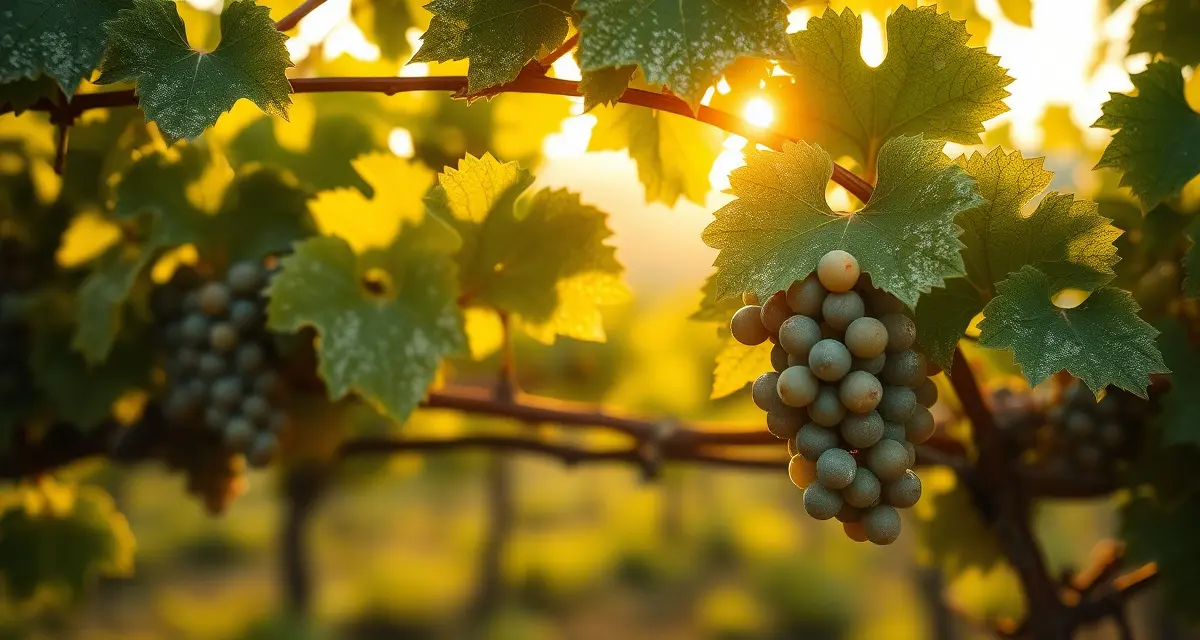
Washington State Powdery Mildew Spray Schedule for Vineyards
Columbia Valley's warm dry climate makes powdery mildew the primary disease threat in Washington vineyards. That might seem counterintuitive, powdery mildew doesn't need rainfall to infect. It thrives in the warm, dry days and cool nights that define the Columbia Valley's growing season, and it can destroy a crop before you realize how severe the pressure is.
VitiScribe's Washington weather data triggers spray alerts for Columbia Valley dry summers, so your program responds to actual conditions in your vineyard, not a generic calendar.
TL;DR
- Columbia Valley powdery mildew risk runs from early April through harvest without rain-driven breaks -- the warm dry conditions that prevent downy mildew actively favor E. necator, which infects without free moisture
- Pre-bloom from cluster separation through first bloom is the most critical spray window in Columbia Valley -- hot weather accelerates conidia production, and if a heat-driven spray window opens after 3+ consecutive days above 85°F, treat within 5 days regardless of last application date
- Sulfur phytotoxicity above 95°F is a real constraint in Columbia Valley's July-August heat -- avoid sulfur applications within 24 hours before forecast temperatures exceeding 95°F, particularly during fruit set
- QoI resistance in powdery mildew is documented in Washington vineyards -- limit FRAC Group 11 to 2 applications per season maximum and alternate modes of action every application
- WSDA records must be filed within 72 hours of each application (not California's 24 hours), retained for 3 years, and must include equipment calibration date -- records must be available for WSDA inspection within 72 hours of request
- Late-season powdery mildew on berries causes economic loss even when fruit looks visually clean -- infected berries undergo arrested development and contribute off-flavor compounds to wine
Understanding Powdery Mildew in the Columbia Valley
Unlike downy mildew, Erysiphe necator (grape powdery mildew) doesn't require free water to infect. It spreads through airborne conidia under the warm, dry conditions that Columbia Valley growers enjoy. Night temperatures that drop below 50°F slow infection, but Yakima, Walla Walla, and the Red Mountain AVAs spend most of June through August in the prime infection window.
Susceptibility peaks from budbreak through about 8 weeks post-bloom, the period when fruit is still small and infections can penetrate the berry skin. An uncontrolled powdery mildew outbreak during this window doesn't just cause cosmetic damage; it causes berry cracking, secondary botrytis, and crop loss.
For the FRAC group rotation framework applicable to Washington powdery mildew programs, see the fungicide FRAC groups guide.
Washington State Powdery Mildew Spray Schedule
Stage 1: Early Season, Budbreak to 6-Inch Shoot
Timing: When shoots reach 1-3 inches (typically early April in the Columbia Valley)
Goal: Establish protection before primary inoculum cycle begins
Products: Sulfur (4-6 lb/acre), JMS Stylet Oil (OMRI for organic), Luna Experience or Pristine as early sterol inhibitors for conventional programs
Notes: Columbia Valley's windy springs make thorough coverage difficult. Schedule sprays for calm morning conditions. VitiScribe weather integration flags high-wind periods that make early applications ineffective.
WSDA requirements: All applications must be recorded within 72 hours of application. Record applicator license number, equipment ID, product rate, and treated acreage.
Stage 2: Pre-Bloom, 3 to 6 Inches Through Cluster Separation
Timing: Critical window, every 7-10 days
Goal: Protect developing flower tissue, which is highly susceptible
Products: Rotate FRAC codes. Follow a sterol inhibitor (FRAC 3) with a QoI fungicide (FRAC 11) with strobilurin restriction awareness. Sulfur every other application to anchor resistance rotation.
Notes: This is your most important spray window in the Columbia Valley. Hot weather accelerates conidia production dramatically. If a spray window opens after temperatures exceed 85°F for 3+ consecutive days, treat within 5 days regardless of last application date.
Resistance management: Don't apply FRAC 11 products more than twice per season. VitiScribe tracks FRAC code rotation and alerts when you're at risk of over-using a single mode of action.
Stage 3: Bloom Through Fruit Set
Timing: Every 7 days during bloom; extend to 10-14 days after fruit set if conditions allow
Goal: Protect berries during the period of highest infection risk
Products: Avoid sulfur within 14 days of bloom when temperatures exceed 95°F, phytotoxicity risk is real in Columbia Valley's midsummer heat. Continue FRAC rotation with SI, SDHI (FRAC 7), and biological products for gap filling.
Notes: This is the stage where weather tracking earns its cost. VitiScribe alerts from CIMIS-equivalent weather station data for Eastern Washington will signal spray windows during this critical period.
WSDA records: Bloom-period applications require complete label compliance records including REI posting documentation.
Stage 4: Veraison Through Harvest
Timing: Every 14-21 days depending on pressure
Goal: Maintain fruit protection without creating PHI conflicts
Products: Transition to products with shorter PHIs. Copper, sulfur, and OMRI biologicals for organic programs. Miravis Prime (FRAC 7+12) has a 7-day PHI. Check every product against your anticipated harvest date.
PHI management: VitiScribe calculates earliest safe harvest date from every application automatically. Any new application logged within potential PHI conflict range triggers an alert before the record saves.
Notes: Late-season powdery mildew on berries causes economic loss even if fruit visually looks clean, infected berries undergo arrested development and contribute to off-flavor compounds in wine.
For the complete PHI reference for fungicides used in Washington late-season programs, see the fungicide PHI guide.
Resistance Management for Columbia Valley Growers
Powdery mildew resistance to QoI fungicides (strobilurins) has been documented in Washington vineyards. FRAC 11 resistance makes those products unreliable as your primary protection chemistry.
A compliant resistance management program:
- Limits FRAC 11 products to 2 applications per season maximum
- Alternates modes of action every application
- Includes sulfur as a rotation anchor (no resistance risk)
- Documents FRAC codes for every fungicide application
VitiScribe tracks FRAC codes automatically from your product database and alerts when resistance rotation patterns are at risk.
WSDA Record Keeping Requirements
Washington State requires pesticide application records to be kept for a minimum of 3 years and must include:
- Date, location (township/range/section and GPS coordinates accepted)
- Pesticide name, EPA registration number, and rate applied
- Treated acreage and growth stage
- Applicator name and WSDA license number
- Equipment type and calibration date
Records must be available for WSDA inspection within 72 hours of request. VitiScribe generates WSDA-formatted reports for any date range with one export click.
See the Washington WSDA vineyard pesticide compliance guide for complete state requirements, and the powdery mildew vineyard IPM hub for the full disease management framework.
FAQ
What fungicides are registered for powdery mildew in Washington State vineyards?
Washington State vineyards have access to the same USEPA-registered fungicides as other western states, subject to WSDA registration. Key product groups include sulfur (FRAC M2), sterol inhibitors like myclobutanil and tebuconazole (FRAC 3), SDHI fungicides including boscalid and penthiopyrad (FRAC 7), QoI strobilurins like azoxystrobin and pyraclostrobin (FRAC 11), and biological options including Bacillus subtilis products. Potassium bicarbonate and JMS Stylet Oil are OMRI-listed options for organic programs. WSDA maintains a searchable pesticide registration database at agr.wa.gov.
How do I time powdery mildew sprays for the Columbia Valley climate?
The Columbia Valley's warm, dry growing season means powdery mildew risk persists from budbreak through harvest without the rainfall triggers that define downy mildew timing in western Washington or Oregon. Use a 7-10 day interval from budbreak through fruit set, extending to 14 days after berry cell division is complete. When temperatures exceed 85°F for multiple consecutive days, shorten intervals. VitiScribe's weather integration tracks temperature and moisture conditions for Columbia Valley locations and sends spray window alerts based on disease pressure models.
What WSDA records are required for powdery mildew fungicide applications?
Every pesticide application must be recorded within 72 hours under Washington law. Required fields include: application date and time, location (GPS coordinates satisfy location requirements), product name and EPA registration number, application rate and total amount used, treated acreage, target pest, growth stage at application, applicator name and WSDA pesticide license number, and equipment used. Records must be retained for 3 years and must be produced for WSDA inspection within 72 hours of request.
How does powdery mildew spray timing differ between Yakima Valley, Walla Walla, and Red Mountain AVAs within Washington's Columbia Valley?
All three AVAs share the Columbia Valley's fundamental powdery mildew dynamic -- warm dry conditions that maintain infection pressure through summer without the rain-break that limits disease in western Washington or Oregon. Timing differences come primarily from temperature variation: Red Mountain's warmer temperatures push the primary inoculum window and bloom earlier than Yakima Valley's slightly cooler climate. Walla Walla's location on the eastern edge of the Columbia Basin creates somewhat different summer humidity patterns than central Yakima. The practical program differences are smaller than AVA distinctions suggest -- the 7-day bloom interval, FRAC Group 11 limitation, and sulfur phytotoxicity monitoring apply across all three. Block-level weather station data is more useful than AVA-level generalization for making interval decisions.
What documentation should accompany a WSDA-required spray record for a Columbia Valley block where the spray interval was extended beyond 14 days due to equipment breakdown, and the extended window followed a documented heat event?
The spray record should document: the last application date and product, the weather conditions during the extended interval (including the heat event that would have prevented sulfur use if that was the intended product), the equipment breakdown date and the maintenance record that shows when it was resolved, and the scouting observation that assessed disease status after the extended interval. The combination of weather data (high temperatures preventing sulfur) plus equipment record (airblast unavailable) plus scouting observation (disease assessment after the gap) provides the three-element documentation that explains the extended interval and demonstrates the program wasn't simply neglected. VitiScribe's field activity notes capture equipment and weather context alongside spray entries.
What is Washington State Powdery Mildew Spray Schedule for Vineyards?
[FAQ_ANSWER_PLACEHOLDER: This answer needs to be generated by AI with specific data, examples, and actionable advice relevant to Washington State Powdery Mildew Spray Schedule for Vineyards. Target 50-150 words.]
How much does Washington State Powdery Mildew Spray Schedule for Vineyards cost?
[FAQ_ANSWER_PLACEHOLDER: This answer needs to be generated by AI with specific data, examples, and actionable advice relevant to Washington State Powdery Mildew Spray Schedule for Vineyards. Target 50-150 words.]
How does Washington State Powdery Mildew Spray Schedule for Vineyards work?
[FAQ_ANSWER_PLACEHOLDER: This answer needs to be generated by AI with specific data, examples, and actionable advice relevant to Washington State Powdery Mildew Spray Schedule for Vineyards. Target 50-150 words.]
Sources
- Washington State Department of Agriculture (WSDA)
- Washington State University Extension
- UC Cooperative Extension Viticulture
- American Vineyard Foundation
- Wine Institute
Get Started with VitiScribe
Washington Columbia Valley powdery mildew programs require 72-hour WSDA record filing with equipment calibration dates, FRAC rotation tracking against confirmed QoI resistance, sulfur phytotoxicity monitoring during July-August heat events, and PHI calculation through a September-October harvest window across multiple blocks -- compliance requirements that are different from California DPR fields and that generic spray logs don't auto-generate in WSDA format. VitiScribe's Washington state profile generates WSDA-formatted records with calibration date fields, tracks FRAC rotation by block, monitors weather station temperatures against spray schedules, and calculates PHI clearance dates automatically. Try VitiScribe free and build your first Columbia Valley powdery mildew program record today.