Powdery Mildew Vineyard IPM: The Complete Hub
Powdery mildew (Erysiphe necator) is the number one disease threat to most wine grape vineyards in the United States. It's in every wine region. It attacks every part of the vine -- leaves, shoots, clusters, rachis. And it can destroy a crop if you let your spray program slip.
If you've managed vineyards through a high-pressure year -- a wet spring followed by a hot, dry July in Napa, or a prolonged cool, humid stretch in the Willamette Valley -- you know that getting powdery mildew management right isn't about following a calendar. It's about understanding the biology, knowing your pressure windows, and having a spray program that's tight enough to hold the disease without building resistance.
This hub is the starting point for everything powdery mildew: identification, spray timing, fungicide rotation, resistance management, and how to document your IPM program for compliance and certification.
TL;DR
- Visible powdery mildew lesions appear 7-14 days after the infection event -- by the time you see white mycelium on shoots, the infection that caused it happened 1-2 weeks earlier; spray programs protect against invisible infection, not visible disease
- FRAC Group 11 (QoI strobilurins -- Abound, Flint) resistance is widespread in most California wine regions and confirmed in Oregon, Washington, and New York -- limit to 2 applications per season maximum and never rely as a primary program material
- Bloom through 2 weeks post-bloom requires 7-10 day spray intervals regardless of weather conditions -- this is the window where missing an interval has the most damaging consequences for cluster quality
- Sulfur phytotoxicity above 90-95°F is a real program constraint in California's inland valleys, Columbia Valley, and Paso Robles -- check 24-hour temperature forecasts before every sulfur application in summer
- Block-level FRAC rotation records are what matter for resistance management -- resistance builds at the block level, and a rotation that looks diverse operation-wide may have consecutive same-group applications in specific blocks
- FRAC M2 (sulfur) has been used for thousands of years without resistance development -- it belongs in every program as the multi-site backbone that anchors rotation and provides no resistance risk
The Problem With Most Powdery Mildew Programs
Most small-to-mid vineyard operations manage powdery mildew adequately in average years. The problem is the bad years.
A single infection event during bloom can set off a season-long fight. If you're on 10-day spray intervals and the weather puts you at day 12 before you get back in, or if you applied sulfur during a heat spike above 95°F and it burned rather than controlled, or if you're on your third application of the same FRAC group and the pathogen population has developed tolerance -- any of those scenarios can break your program.
The growers who come through bad years with clean fruit are the ones who understand their blocks, know their variety susceptibilities, track their spray history, and adjust their program based on what's happening in the field rather than following a static calendar.
Powdery Mildew Biology: What You're Fighting
Erysiphe necator overwinters as cleistothecia on the bark of infected wood. In spring, ascospores are released during rain events -- typically when temperatures are above 50°F and vines are at woolly bud to 1-inch shoot. These primary infections are invisible for weeks.
The critical insight: you're protecting against invisible infection. By the time you see powdery mildew lesions, the primary infection happened 7-14 days ago. Your spray program needs to prevent infection events before they happen, not respond to visible disease.
Temperature Ranges for Infection and Development
- Optimum infection temperature: 70-77°F (21-25°C)
- Infection can occur: 50-95°F
- Growth suppression: below 50°F, above 95°F (but doesn't kill established infections)
- Sporulation: highest at 68-77°F with low relative humidity
The low humidity requirement is key. Powdery mildew doesn't need free water to germinate -- unlike downy mildew, which requires moisture. This means powdery mildew is a threat even in dry climates and during dry spells. California's warm, dry summers are perfect for powdery mildew development.
Critical Timing Windows
Budbreak to bloom: The highest-risk period for establishing primary infections that will affect cluster development. Infections during this window can cause berrypowder at harvest -- the chalky, russeted appearance that tanks your Brix.
Bloom to 2 weeks post-bloom: Cluster infections at this stage can cause severe yield loss and quality problems. This is when you tighten your spray interval to 7-10 days regardless of what the weather looks like.
Fruit set through berry touch (veraison): Once berries touch, surface area decreases and protection gets harder. Post-veraison protection is important for Chardonnay and other thin-skinned varieties prone to late-season infection.
Fungicide Classes and FRAC Groups for Powdery Mildew
Rotating FRAC groups is essential for resistance management. Using the same mode of action repeatedly creates selection pressure that shifts the pathogen population toward tolerance or full resistance.
FRAC Group 3 (DMI/Sterol inhibition):
- Products: Rally (myclobutanil), Inspire Super (difenoconazole/cyprodinil), Tebuzol (tebuconazole), Pristine includes FRAC 7
- Activity: Protective and some curative (kickback) up to 96-120 hours post-infection
- Resistance risk: Moderate -- resistance documented in some California populations
FRAC Group 7 (SDHI):
- Products: Fontelis (penthiopyrad), Luna Experience, Sercadis (fluxapyroxad)
- Activity: Protective and early curative
- Resistance risk: Moderate to high -- cross-resistance within group
FRAC Group 11 (QoI/Strobilurin):
- Products: Abound (azoxystrobin), Flint (trifloxystrobin), Quadris
- Activity: Primarily protective
- Resistance risk: HIGH -- resistance widespread in most California powdery mildew populations. Limit to 2 applications per season, use only as part of a rotation, not as primary program material
FRAC Group U13 (Quinoxyfen):
- Products: Quintec
- Activity: Protective, pre-infection activity
- Resistance risk: Low to moderate
Multi-site (FRAC M1, M2, M7):
- Sulfur (M2): Broadly effective, organic-approved, cheap. Heat phytotoxicity above 90°F. REI 24 hours. No resistance risk.
- Copper (M1): Limited powdery mildew activity; primarily for other diseases
- Captan (M4): Limited powdery mildew activity; primarily for botrytis
FRAC U12 (Metrafenone):
- Products: Vivando
- Unique mode of action; reserve for high-pressure situations or resistance management
For the complete FRAC group explanation and resistance classification for all vineyard fungicide groups, see the fungicide FRAC groups guide.
Building a Resistance-Smart Rotation
A sensible 6-spray rotation might look like:
- Sulfur (pre-bloom)
- FRAC Group 3 (bloom)
- FRAC Group 7 (post-bloom)
- Sulfur (fruit set)
- FRAC Group U13 (mid-season)
- FRAC Group 11 (limited use, veraison protection)
Never apply two consecutive applications from the same FRAC group. Never rely on Group 11 as a primary program material.
Log every application with FRAC group in VitisScribe so your rotation is visible at a glance. The powdery mildew resistance rotation log tracks FRAC groups per block per season.
Powdery Mildew by Grape Variety
Varieties differ significantly in susceptibility:
High susceptibility: Cabernet Sauvignon, Chardonnay, Pinot Noir, Merlot, Muscat varieties
Moderate susceptibility: Zinfandel, Cabernet Franc, Sauvignon Blanc, Grenache
Lower susceptibility: Viognier, Syrah (moderate), some Rhone whites
Your spray interval and product intensity should reflect the variety. A Chardonnay block during bloom in Sonoma County deserves tighter intervals than a mature Syrah block in Paso Robles in August.
Regional Differences in Powdery Mildew Pressure
Napa Valley: High pressure, especially on valley floor. Cabernet Sauvignon in Oakville and Rutherford sees intense pressure from June through August. Tighter spray intervals justified.
Sonoma County: Varies dramatically by appellation. Russian River Valley and Carneros (cooler, maritime) have different pressure profiles than Dry Creek or Alexander Valley.
Willamette Valley, Oregon: High pressure during bloom in wet years. The window between rain events drives spray timing. Powdery mildew and downy mildew often pressure simultaneously in May-June.
Columbia Valley, Washington: Lower humidity but high heat during summer. Pressure concentrated in cooler stretches. Spray intervals can sometimes extend to 14 days in dry, hot periods.
Finger Lakes, New York: Moderate to high pressure. Downy mildew often primary concern, but powdery mildew co-pressure during bloom is significant.
Scouting for Powdery Mildew
You shouldn't be scouting for visible lesions as your primary trigger. By then you're behind. Scout for:
- Flagging shoots: Pale, whitish new growth that's stunted or distorted -- often the first visible sign of primary infection
- Blossom infections: Whitish growth on flower clusters at or just after bloom
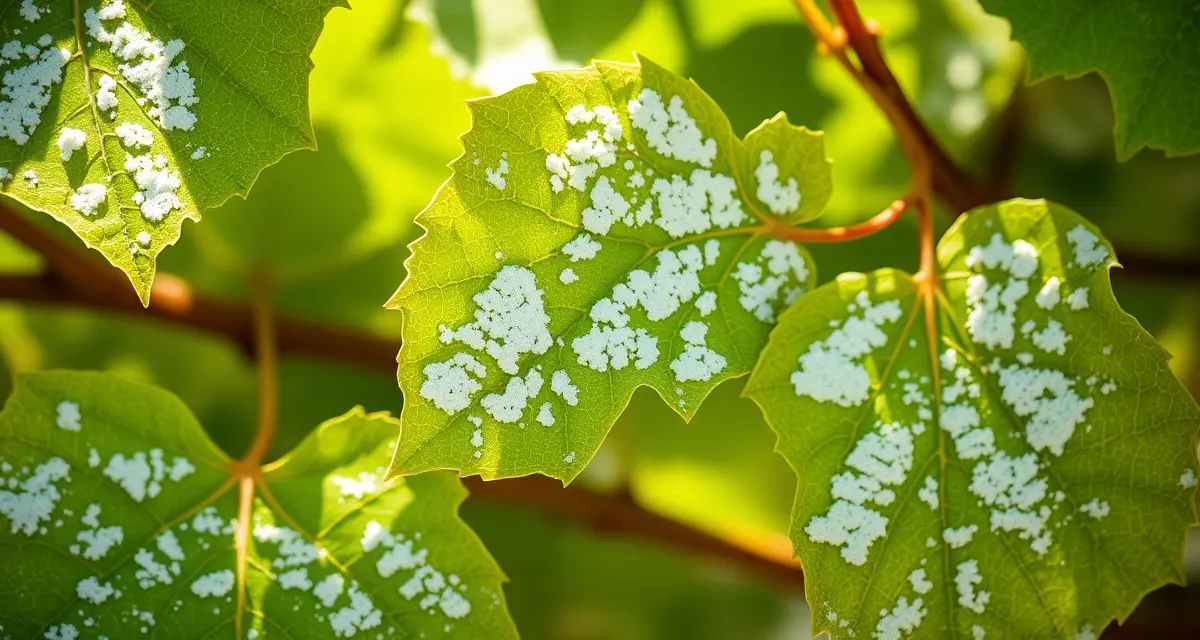
- Leaf lesions: Circular, white powdery colonies -- visible on upper and lower leaf surface
- Rachis infections: Brownish-black netting pattern on cluster stems -- indicates cluster exposure
Scout at minimum weekly from budbreak through veraison. Document what you find with VitisScribe's scout report template -- date, block, growth stage, incidence percentage, and severity rating. This gives you a baseline to track program effectiveness.
For the detailed flag shoot scouting protocol applicable to early-season detection, see the early-season powdery mildew detection guide.
Documentation for Powdery Mildew IPM
For compliance, organic certification, or winery buyer documentation, your powdery mildew IPM program needs to show:
- A clear spray history by block
- FRAC group rotation documentation
- Scouting records showing pest pressure assessments
- Weather data or degree-day records that justify spray decisions
- PHI documentation for any applications made close to harvest
VitisScribe connects all of this -- spray records, scout reports, weather data, and PHI calculations -- in a single block-level record.
Comparison: Managing Powdery Mildew Records With Different Tools
| Tool | FRAC Rotation Tracking | PHI Alerts | Scout Record Integration | Audit-Ready PDF |
|---|---|---|---|---|
| VitisScribe | Yes -- per block | Yes -- automated | Yes | Yes -- one tap |
| Spreadsheet | Manual | Manual | Separate file | Manual assembly |
| Vintrace | Cellar focus | No | No | Partial |
| AgCode | Partial | Partial | Limited | Partial |
| Paper journal | No | No | Separate notebook | Transcription required |
FAQ
How often should I spray for powdery mildew in my vineyard?
Spray intervals depend on disease pressure, temperature, and product. During bloom and fruit set on susceptible varieties like Chardonnay or Cabernet Sauvignon, a 7-10 day interval is common. Sulfur applications at 10-14 day intervals work in lower pressure periods. Extend to 14 days only in dry, hot conditions or with products rated for longer intervals. Never exceed label re-application intervals.
What are the most effective powdery mildew fungicides for vineyards?
Effectiveness depends on resistance history in your specific region. FRAC Group 3 (Rally, Inspire Super) and FRAC Group 7 (Fontelis, Luna) products provide good control when resistance hasn't developed. FRAC Group 11 (Abound, Flint) resistance is widespread in California -- limit these to 2 applications per season at most. Sulfur remains broadly effective for non-resistant populations and is the backbone of organic programs.
Does powdery mildew survive without moisture in California vineyards?
Yes -- this is what makes powdery mildew distinctly different from downy mildew. Erysiphe necator doesn't need free water to germinate. Spores germinate in high relative humidity (65-80%) and can cause infection during warm, dry weather. California's hot, dry summers are actually favorable for powdery mildew development despite the lack of rain. Never assume dry conditions mean no powdery mildew pressure.
What regional guides does this hub link to for variety- and location-specific powdery mildew programs?
This hub connects to a full set of region- and variety-specific guides: Napa Valley Cabernet Sauvignon powdery mildew program, Sonoma Chardonnay powdery mildew program, Willamette Valley Pinot Noir program, California spray schedule, New York Finger Lakes spray schedule, and Washington Columbia Valley spray schedule. Each region guide includes state-specific compliance requirements alongside the disease management program.
How does a vineyard manager integrate this hub's FRAC rotation principles with actual California DPR spray record requirements?
California DPR spray records require product name, EPA registration number, active ingredient, rate, acreage, application date and time, weather conditions, and applicator license number -- but they do not require FRAC group to be listed on the state compliance record. FRAC rotation tracking is a resistance management and sustainability certification requirement that runs parallel to DPR compliance. In practice, VitiScribe captures FRAC group at application entry alongside all required DPR fields, so the resistance management record and the DPR compliance record are built from the same entry. A PCA review or LODI Rules audit that asks for FRAC rotation history receives the same data that the DPR PUR report draws from.
What is Powdery Mildew Vineyard IPM: The Complete Hub?
[FAQ_ANSWER_PLACEHOLDER: This answer needs to be generated by AI with specific data, examples, and actionable advice relevant to Powdery Mildew Vineyard IPM: The Complete Hub. Target 50-150 words.]
How much does Powdery Mildew Vineyard IPM: The Complete Hub cost?
[FAQ_ANSWER_PLACEHOLDER: This answer needs to be generated by AI with specific data, examples, and actionable advice relevant to Powdery Mildew Vineyard IPM: The Complete Hub. Target 50-150 words.]
How does Powdery Mildew Vineyard IPM: The Complete Hub work?
[FAQ_ANSWER_PLACEHOLDER: This answer needs to be generated by AI with specific data, examples, and actionable advice relevant to Powdery Mildew Vineyard IPM: The Complete Hub. Target 50-150 words.]
Sources
- FRAC (Fungicide Resistance Action Committee)
- UC Cooperative Extension Viticulture
- UC Davis Plant Pathology
- California Sustainable Winegrowing Alliance
- American Vineyard Foundation
Get Started with VitiScribe
Effective powdery mildew IPM requires block-level FRAC rotation records that persist across seasons, scouting data linked to the spray decisions those observations drove, PHI calculations by block for multi-harvest operations, and state-specific compliance records that vary between California DPR, Oregon ODA, Washington WSDA, and New York DEC -- documentation complexity that no single generic spray log addresses. VitiScribe connects scouting, spray history, FRAC rotation, PHI management, and state compliance records in a single block-level system. Try VitiScribe free and build your first complete powdery mildew IPM record today.