Spray Log Compliance for Napa Green Certification: What the Program Requires
Napa Green certified vineyards sell fruit at a 14% premium over uncertified Napa County operations. That premium reflects the market's recognition that Napa Green is a serious, independently audited program, not a self-declaration. And that independent audit starts with your spray records.
Napa Green Land certification requires documented IPM practices and pesticide records covering your vineyard operation, and the documentation requirements have gotten more specific in recent certification cycles. If you're pursuing initial certification or maintaining your annual verification, your spray records need to be audit-ready on any given day.
TL;DR
- Napa Green annual verification reviews spray records, scouting records, and FRAC rotation documentation -- the most common reason growers receive a deficiency notice is missing required fields in spray records, not missing applications
- QoI resistance (FRAC Group 11, strobilurin products including azoxystrobin and trifloxystrobin) is confirmed in powdery mildew populations throughout Napa Valley; if Group 11 is still your primary mode of action, Napa Green auditors will flag this as a documented resistance management gap
- Scouting records are the part most growers underestimate -- spray records are the easy part; what's harder to produce retroactively is a season of dated scouting records with pest observations, threshold comparisons, and no-spray decision documentation for each block
- Retroactive record assembly from memory or scattered notes produces inconsistent documentation that doesn't hold up to auditor scrutiny; records maintained in real time throughout the season are what certification audits expect
- Napa Green auditors have increasingly focused on resistance management in recent certification cycles; consecutive same-FRAC-group applications without rotation are among the specific issues flagged in recent deficiency notices
- Initial Napa Green certification reviews the most recent complete growing season -- one full season of complete, consistent records is sufficient to apply; multi-season records strengthen renewal documentation
What Napa Green Land Certification Actually Audits
The Napa Green Land program is administered by the Napa Valley Vintners and the Napa County Farm Bureau. It covers environmental stewardship across your entire farming operation, but the pesticide and IPM documentation component is the one that most growers are least prepared for.
The annual verification process reviews your spray records, your IPM program documentation, and your supporting practices. Specifically, auditors look for:
Documented IPM program. You need to demonstrate that your spray decisions are driven by scouting observations and economic thresholds, not a calendar. This means scouting records with dates, block locations, pest populations, and the threshold you used to make your spray decision.
Pesticide record completeness. Your spray logs need to show product name, EPA registration number, application date, rate, treated acres, applicator name, and, for any restricted-use pesticides, the applicator's license number. Missing fields are the most common reason growers receive a deficiency notice.
FRAC/IRAC rotation documentation. Napa Green verifiers have increasingly focused on resistance management. If your spray records show repeated consecutive applications of the same FRAC group without rotation, expect questions.
Biological control and non-chemical practices. The Napa Green package isn't just about what you spray, it's about your whole farming approach. Records of beneficial insect releases, cover crop management, and physical pest management practices (netting, trunk wraps) round out the documentation.
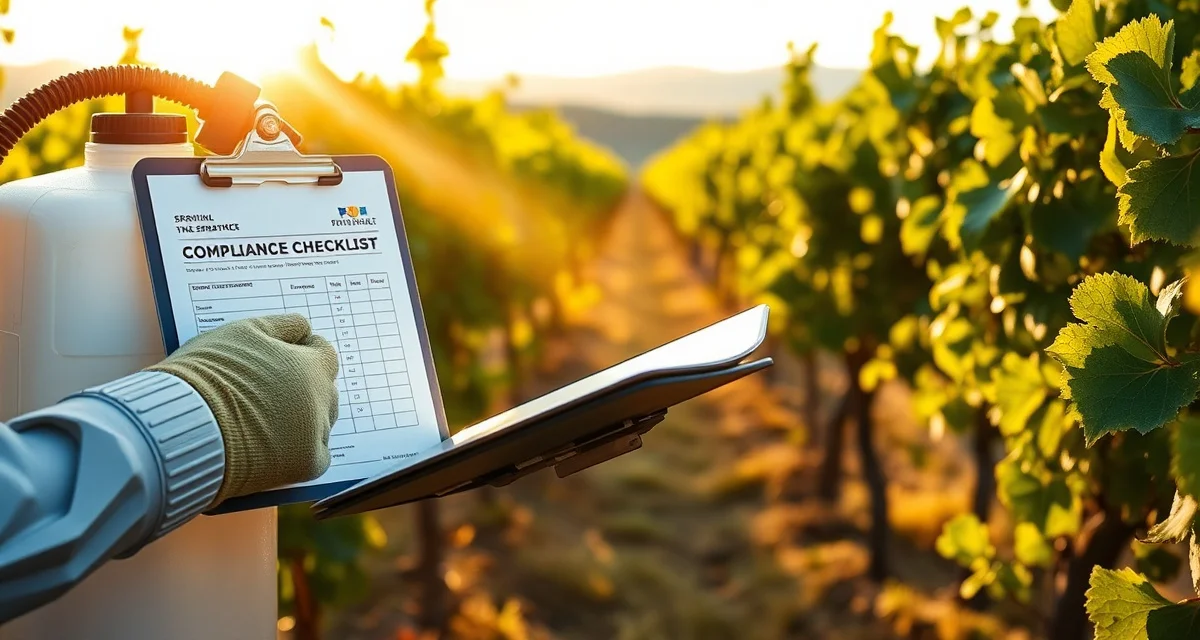
Napa Green verification packages include spray logs, scouting records, and biological control documentation, all of which need to be organized and accessible for the annual review.
For the broader California DPR compliance requirements that overlap with Napa Green documentation, see the California DPR spray record requirements guide.
Building Your Napa Green Spray Documentation
The most common mistake Napa Valley growers make with Napa Green documentation is waiting until the annual verification deadline to assemble their records. Retroactive assembly from memory or scattered notes produces inconsistent documentation that doesn't hold up to auditor scrutiny.
VitiScribe generates Napa Green spray reports automatically from records you've maintained throughout the season. When you log scouting observations and connect them to spray decisions in real time, the documentation builds itself. By the time your verification window opens, the complete package is already in the system.
The connection between spray log compliance for Napa programs and California DPR reporting means your records serve both purposes. California DPR compliance records and Napa Green documentation use overlapping fields, you're not maintaining two separate systems when VitiScribe handles both.
FRAC Rotation Requirements in Napa Green Context
Napa Green doesn't specify exact FRAC rotation protocols, but the program's IPM documentation requirements implicitly require you to demonstrate that you're actively managing fungicide resistance. That means your spray records need to show FRAC group diversity across the season, not just product names.
For powdery mildew management in Napa Valley Cabernet Sauvignon, the program that most Napa Green growers are primarily building documentation around, a compliant FRAC rotation looks like this:
- Early pre-bloom: FRAC Group 3 (DMI) or Group 7 (SDHI)
- Bloom through early fruit set: FRAC Group 11 (QoI, if still effective in your blocks) or Group U6 (cyflufenamid, Torino)
- Post-fruit-set: FRAC Group 13 (ametoctradin, Zampro) alternating with SDHI
- Veraison through harvest: FRAC Group 3 or Group M (multi-site, sulfur, bicarbonate)
Note that QoI resistance (FRAC Group 11, strobilurin products including azoxystrobin and trifloxystrobin) is confirmed in powdery mildew populations throughout Napa Valley. If you're still using QoI products as your primary mode of action, your program has a documented resistance management gap that a Napa Green auditor will flag.
VitiScribe tracks FRAC groups in your spray records and highlights consecutive same-group applications so you can correct rotation gaps before they appear in your audit documentation.
Scouting Records as the Heart of Napa Green IPM Documentation
The piece that most Napa Green applicants underestimate is scouting documentation. Spray records are the easy part, most growers have some version of those. What's harder to produce retroactively is a season of scouting records showing that your spray decisions were driven by actual pest observations in specific blocks.
Napa Green auditors want to see dated scouting records for each block, population counts or incidence assessments, the threshold you used to make your spray decision, and notes on pest management practices other than spraying.
VitiScribe's scouting module captures this data in the field during your regular vineyard walks. Voice-to-text entry means your PCA or crew lead can log observations without stopping to type. Photos attached to scouting records provide visual documentation that supports your population count assessments.
How Long Your Records Need to Cover
Napa Green annual verification typically reviews the most recent growing season. However, if you're applying for initial certification, you'll need records covering the most recent complete season. If you're renewing, auditors may look back at multiple seasons to verify consistency in your IPM approach.
For this reason, VitiScribe's long-term record storage matters. Records from previous seasons are searchable and exportable, so if a verifier asks about your program three years ago, you're not relying on paper files.
Frequently Asked Questions
What spray records does Napa Green require for annual certification?
Napa Green Land certification requires complete pesticide application records for all blocks in your operation, including product name, EPA registration number, application date, rate per acre, treated acres, and applicator name. For restricted-use pesticide applications, the applicator's license number is also required. Beyond spray records, Napa Green requires scouting documentation showing pest observations and threshold-based spray justifications, and records of biological control inputs or non-chemical IPM practices. FRAC rotation documentation demonstrating resistance management is reviewed with increasing scrutiny in recent verification cycles.
How does VitiScribe create a Napa Green documentation package?
VitiScribe builds your Napa Green documentation automatically throughout the growing season as you log spray records and scouting observations. When your annual verification window opens, you run a Napa Green package export from the reporting section. The export includes your spray logs formatted with all required fields, scouting records cross-referenced to spray events by block, biological control inputs, and any other IPM activities you've logged. The package is formatted for auditor review, not just internal reference, and can be shared as a PDF or secure link directly with your Napa Green verifier.
Can I apply for Napa Green certification if I only have one season of VitiScribe records?
Yes. Initial Napa Green certification reviews the most recent complete growing season, so one full season of VitiScribe records is sufficient to apply. The more important factor is that your records from that season are complete, dated scouting records with pest observations, spray logs with all required fields, and documentation of your IPM practices including non-chemical interventions. Starting VitiScribe at the beginning of your season and maintaining records consistently gives you a complete first-year documentation package. If you're applying mid-season or with incomplete records from earlier in the year, you may need to supplement with additional documentation.
When a Napa Green auditor flags consecutive FRAC Group 3 applications in a prior season's records, how should the vineyard manager document the explanation and the correction made in the subsequent season?
The response to a deficiency notice for FRAC rotation gaps should include two parts: the explanation for the prior season's deviation and the documented correction in the current program. For the explanation, the block program notes for the season in question should be reviewed for any contemporaneous note explaining why the rotation deviated -- supply constraints, label restrictions, pest pressure timing that limited alternatives. For the correction, the current season's spray records showing the corrected rotation should be the evidence: the FRAC group sequence for the current season demonstrating that the consecutive same-group pattern was not repeated. A corrected program with a brief written explanation of the prior deviation satisfies a Napa Green deficiency notice in most circumstances; a second consecutive year with the same rotation gap would be a more serious concern.
For a Napa Green certified operation that is also pursuing SIP Certified status simultaneously, how should records be structured to satisfy both programs' IPM documentation requirements with a single recordkeeping system?
Napa Green and SIP Certified have overlapping but not identical documentation requirements. Both require complete spray records with pest targets, FRAC rotation documentation, and scouting records with threshold-based decisions. SIP Certified adds a 3-year lookback requirement that Napa Green's annual review typically does not, and SIP requires more explicit natural enemy conservation documentation. The practical approach is to design the record structure to satisfy the more demanding requirement -- SIP's 3-year lookback and natural enemy documentation -- which automatically satisfies Napa Green's requirements as well. VitiScribe's scouting module includes a natural enemy observation field that captures predatory insect activity alongside pest counts, creating the SIP-required documentation in the same entry that supports Napa Green's IPM scouting requirement.
What is Spray Log Compliance for Napa Green Certification: What the Program Requires?
[FAQ_ANSWER_PLACEHOLDER: This answer needs to be generated by AI with specific data, examples, and actionable advice relevant to Spray Log Compliance for Napa Green Certification: What the Program Requires. Target 50-150 words.]
How much does Spray Log Compliance for Napa Green Certification: What the Program Requires cost?
[FAQ_ANSWER_PLACEHOLDER: This answer needs to be generated by AI with specific data, examples, and actionable advice relevant to Spray Log Compliance for Napa Green Certification: What the Program Requires. Target 50-150 words.]
How does Spray Log Compliance for Napa Green Certification: What the Program Requires work?
[FAQ_ANSWER_PLACEHOLDER: This answer needs to be generated by AI with specific data, examples, and actionable advice relevant to Spray Log Compliance for Napa Green Certification: What the Program Requires. Target 50-150 words.]
What are the benefits of Spray Log Compliance for Napa Green Certification: What the Program Requires?
[FAQ_ANSWER_PLACEHOLDER: This answer needs to be generated by AI with specific data, examples, and actionable advice relevant to Spray Log Compliance for Napa Green Certification: What the Program Requires. Target 50-150 words.]
Who needs Spray Log Compliance for Napa Green Certification: What the Program Requires?
[FAQ_ANSWER_PLACEHOLDER: This answer needs to be generated by AI with specific data, examples, and actionable advice relevant to Spray Log Compliance for Napa Green Certification: What the Program Requires. Target 50-150 words.]
How long does Spray Log Compliance for Napa Green Certification: What the Program Requires take?
[FAQ_ANSWER_PLACEHOLDER: This answer needs to be generated by AI with specific data, examples, and actionable advice relevant to Spray Log Compliance for Napa Green Certification: What the Program Requires. Target 50-150 words.]
Related Articles
- Organic Vineyard Spray Records: Documentation for Certification Compliance
- Spray Logs for Organic Wine Certification: NOP, CCOF, and California Certified
- Vineyard Spray Program Management: Plan, Log, and Comply in One Place
Sources
- Napa Valley Vintners
- Napa County Farm Bureau
- California Department of Pesticide Regulation (CDPR)
- UC Cooperative Extension Viticulture
- FRAC (Fungicide Resistance Action Committee)
Get Started with VitiScribe
Napa Green deficiency notices most commonly cite missing required fields in spray records and absent scouting documentation -- both of which result from records assembled after the season ends rather than maintained in real time. VitiScribe builds your Napa Green package automatically as you enter spray records and scouting observations throughout the season, tracks FRAC rotation with alerts before consecutive same-group applications accumulate, and exports the complete documentation package formatted for Napa Green verifier review. Try VitiScribe free and start building your Napa Green documentation package from today's first spray record.