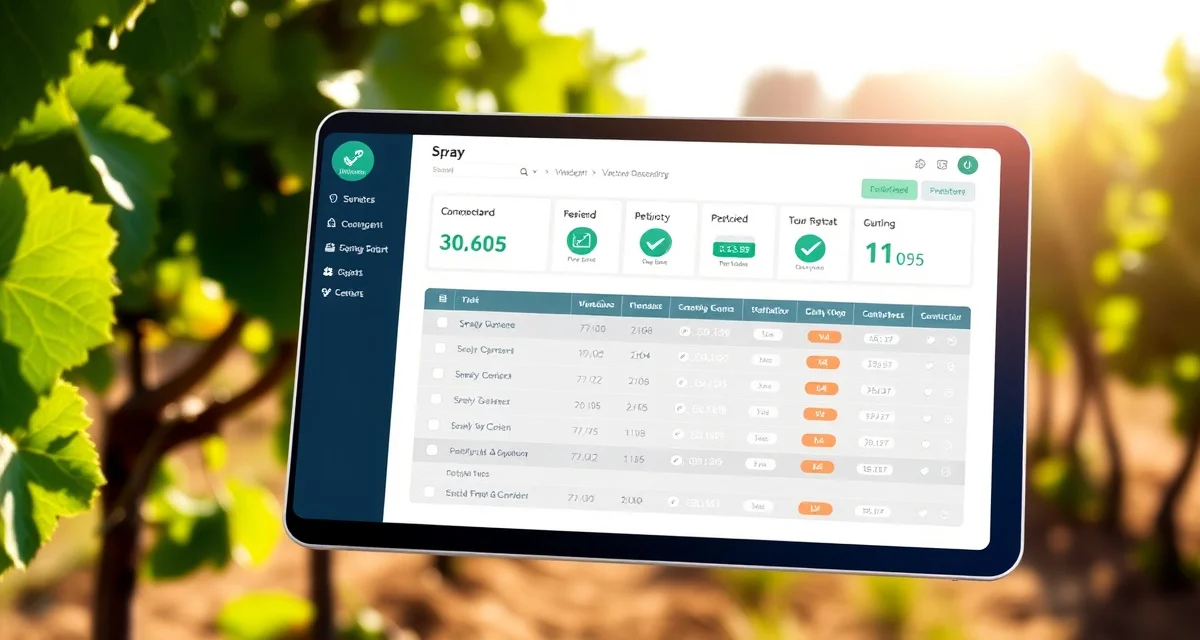
Spray Record Error Prevention: How VitiScribe Eliminates the Most Common Mistakes
Incomplete fields are cited in 61% of all California vineyard pesticide record violations. Not wrong information incomplete information. Missing fields on records that were otherwise accurate descriptions of compliant applications.
The person who made the application knew what they sprayed. They knew who applied it. They knew when. But they left the license number field blank, or forgot to enter the REI, or wrote the product name without the EPA registration number. And now that compliant application is a citation.
Paper records have no defense against this. You can design a better form. You can train people better. But you can't force a person filling out a paper form to complete every field correctly, every time, under field conditions, for every application of every season.
VitiScribe validates every field before a record can be saved. Here are the seven most common vineyard spray record errors that trigger audits, and exactly how the validation rules prevent each one.
TL;DR
- Incomplete fields account for 61% of all California vineyard pesticide record violations -- the applications were compliant, but missing fields on the record are violations regardless
- The seven most common errors: missing applicator license number, missing PHI, missing EPA registration number, block name only without numeric acreage, REI not documented, discrepancy between application records and pesticide use reports, and target pest not specified
- Paper forms cannot enforce field completion; VitiScribe validates every required field before a record can be saved, catching errors at entry rather than at inspection
- Applicator license numbers and EPA registration numbers auto-populate from saved profiles and the product database -- the most commonly missing fields are eliminated before you can skip them
- PHI and REI both populate automatically when a product is selected; neither field requires manual lookup or entry, so neither can be accidentally left blank
- Pesticide use reports generated directly from application record data eliminate the discrepancy errors that occur when reports are re-entered from logs by a different person
Error 1: Missing or Incomplete Applicator License Number
Why it happens: The applicator knows their license number exists. They don't remember it off the top of their head. The form has a field for it, but it's optional-feeling. They fill in their name and move on.
Why it matters: California requires the applicator license number on every commercial application record. The number, not just the name. An inspector cross-references the license number against the state database to verify it was valid on the date of application. Without the number, no verification is possible and the record is incomplete.
How VitiScribe prevents it: Applicators are selected from saved profiles that include their license number. When you choose an applicator, their QAL or QAC number populates automatically. The field can't be blank because it's not typed manually it comes from the profile. The only way to have a blank license number is to have an incomplete applicator profile, and the system flags incomplete profiles before they can be used.
Error 2: Missing Pre-Harvest Interval
Why it happens: The applicator knows the PHI from memory. It's 14 days, same as it always is for this product. No need to write it down everyone knows it. Except the inspector doesn't know you knew it, and a record without PHI documentation is an incomplete record.
Why it matters: PHI documentation is required. It's also the field auditors use to verify that the application wasn't made inside the PHI window for the block's harvest date. Without the PHI on the record, the auditor can't verify compliance and must assume potential non-compliance.
How VitiScribe prevents it: PHI is pulled from the product database the moment you select a product. It populates automatically on the application record. You don't enter it manually. You can't accidentally forget to enter it because the field fills before you reach it.
Error 3: Missing or Incorrect EPA Registration Number
Why it happens: The product name is on the form. Everyone knows what Quintec is. The EPA registration number is a 9-digit string that nobody memorizes. The name field gets filled in; the registration number field gets skipped.
Why it matters: California DPR requires the EPA registration number because it uniquely identifies the specific product formulation, not just the trade name. Products can have the same trade name with different formulations and registrations. The registration number is what auditors use to verify label compliance.
How VitiScribe prevents it: Products are selected from a database where the EPA registration number is stored. When you select a product by trade name, the registration number populates automatically. No typing, no memorization, no blank fields.
Error 4: Acreage Listed as Block Name Only
Why it happens: "Block 6 West" communicates exactly where you sprayed to anyone who knows your vineyard. The form asks for area treated, and the block name feels like enough.
Why it matters: California DPR requires the number of acres treated as a numeric entry. "Block 6 West" is not an acreage. It's a location identifier. Inspectors need the numeric acreage to verify application rates and cross-reference pesticide use reports.
How VitiScribe prevents it: Block acreage is stored in the block profile. When you select a block for an application, the acreage pulls from the block data automatically. The location name and the numeric acreage both appear on the record without manual entry.
Error 5: REI Not Documented
Why it happens: REI is often treated as a worker safety issue rather than a record-keeping issue. The spray manager knows the REI and handles field notification separately. The application record gets filled out without including the REI because it seems like a worker safety detail, not a compliance record detail.
Why it matters: California pesticide records must include the REI for the applied product. The REI documentation on the record is also the baseline for demonstrating worker protection compliance if a Cal/OSHA investigation occurs.
How VitiScribe prevents it: REI is pulled from the product database along with PHI when a product is selected. Both fields populate automatically on every application record. REI documentation is never separate from the application record because they're generated together.
Error 6: Discrepancy Between Application Records and Pesticide Use Reports
Why it happens: Application records and pesticide use reports are created in separate processes. The applicator fills out a log. Someone else enters data for the PUR filing. Rates, dates, and product names get transcribed slightly differently. The discrepancy is small and unintentional.
Why it matters: CDFA and DPR cross-reference application records against filed pesticide use reports. Any discrepancy even a minor one in application rate triggers questions. What was actually applied? Why don't the records match? Is there an unrecorded application hidden in the discrepancy?
How VitiScribe prevents it: Pesticide use reports are generated directly from the same application record data. There's no separate data entry process that can introduce discrepancies. The report contains exactly what the record says, because it comes from the same underlying data.
Error 7: Targeted Pest Not Specified
Why it happens: "Spray" is the action. What you sprayed is on the record. Why you sprayed which specific pest you were targeting often gets skipped because it seems obvious. You were spraying powdery mildew fungicide for powdery mildew. Isn't that enough?
Why it matters: California pesticide use records require the target pest or disease to be documented. This field matters both for compliance and for IPM documentation the pest justification connects your application to the scouting data that supported the spray decision. Without a pest target, the application lacks documented justification.
How VitiScribe prevents it: The target pest field is a required field in VitiScribe. It has a dropdown populated from common wine grape pest targets so entry is fast. The field can't be left blank because a record without a target pest can't be saved.
All seven of these errors are preventable. Not by being more careful care doesn't scale reliably across a full spray season but by using a system that validates before saving rather than hoping for completeness after the fact.
Validation rules catch missing license numbers, incorrect rates, and expired registrations in real time. That's what turns a spray log from a compliance liability into a compliance asset.
For the self-audit framework that catches errors that slip through before an inspector does, see the spray log compliance verification guide.
Frequently Asked Questions
What are the most common spray record errors that trigger California DPR violations?
The seven most common errors are: missing applicator license number, missing pre-harvest interval documentation, missing or incorrect EPA registration number, site identification without numeric acreage, REI not documented, discrepancies between application records and pesticide use reports, and target pest not specified. Together these account for the majority of the 61% of California vineyard violations that stem from incomplete fields rather than incorrect applications. All seven are prevented by VitiScribe's field-level validation, which requires complete records before any entry can be saved.
How does VitiScribe prevent spray record compliance errors before they happen?
VitiScribe prevents compliance errors by auto-populating required fields from stored data -- applicator license numbers from applicator profiles, EPA registration numbers from the product database, PHI and REI from product label data, and block acreage from block profiles. Fields that must be manually entered (target pest, application method, weather conditions) are required for record completion. No record can be saved with a missing required field. The validation fires at entry, before the record is saved and before any reporting cycle could expose the gap to an inspector.
Can a vineyard operator correct a spray record error after the fact?
Records can be corrected after initial entry in VitiScribe, and corrections are timestamped with the date and time of the edit. The original entry and the correction are both preserved in the record history. For California DPR compliance, a correction made to a record before submission to the county agricultural commissioner is treated differently than a correction discovered during an inspection; proactive correction before filing is the favorable outcome. Corrections to records that have already been filed with the county should be accompanied by an amended report to the county, and VitiScribe's amended report generation function supports this workflow.
For a vineyard with three applicators -- one QAL holder and two crew members applying under supervision -- how does VitiScribe handle the difference between supervisor and applicator on a given spray record?
VitiScribe supports both the supervising QAL holder and the applying crew member as distinct record fields on each application. When an application is logged by a supervised crew member, the record includes the crew member's name as applicator and the QAL holder's name and license number as supervisor. Both entries are saved to the applicator profile library for that operation. This matches California's requirement that the applying individual be identified alongside the QAL or PCA overseeing the application. If the QAL holder is both supervising and personally applying the material, both fields point to the same person. The distinction matters for inspectors reviewing whether a QAC-only licensed crew member was operating under valid QAL supervision -- the record itself confirms the supervision arrangement without requiring a separate log.
What is Spray Record Error Prevention: How VitiScribe Eliminates the Most Common Mistakes?
[FAQ_ANSWER_PLACEHOLDER: This answer needs to be generated by AI with specific data, examples, and actionable advice relevant to Spray Record Error Prevention: How VitiScribe Eliminates the Most Common Mistakes. Target 50-150 words.]
How much does Spray Record Error Prevention: How VitiScribe Eliminates the Most Common Mistakes cost?
[FAQ_ANSWER_PLACEHOLDER: This answer needs to be generated by AI with specific data, examples, and actionable advice relevant to Spray Record Error Prevention: How VitiScribe Eliminates the Most Common Mistakes. Target 50-150 words.]
How does Spray Record Error Prevention: How VitiScribe Eliminates the Most Common Mistakes work?
[FAQ_ANSWER_PLACEHOLDER: This answer needs to be generated by AI with specific data, examples, and actionable advice relevant to Spray Record Error Prevention: How VitiScribe Eliminates the Most Common Mistakes. Target 50-150 words.]
What are the benefits of Spray Record Error Prevention: How VitiScribe Eliminates the Most Common Mistakes?
[FAQ_ANSWER_PLACEHOLDER: This answer needs to be generated by AI with specific data, examples, and actionable advice relevant to Spray Record Error Prevention: How VitiScribe Eliminates the Most Common Mistakes. Target 50-150 words.]
Who needs Spray Record Error Prevention: How VitiScribe Eliminates the Most Common Mistakes?
[FAQ_ANSWER_PLACEHOLDER: This answer needs to be generated by AI with specific data, examples, and actionable advice relevant to Spray Record Error Prevention: How VitiScribe Eliminates the Most Common Mistakes. Target 50-150 words.]
How long does Spray Record Error Prevention: How VitiScribe Eliminates the Most Common Mistakes take?
[FAQ_ANSWER_PLACEHOLDER: This answer needs to be generated by AI with specific data, examples, and actionable advice relevant to Spray Record Error Prevention: How VitiScribe Eliminates the Most Common Mistakes. Target 50-150 words.]
What should I look for when choosing Spray Record Error Prevention: How VitiScribe Eliminates the Most Common Mistakes?
[FAQ_ANSWER_PLACEHOLDER: This answer needs to be generated by AI with specific data, examples, and actionable advice relevant to Spray Record Error Prevention: How VitiScribe Eliminates the Most Common Mistakes. Target 50-150 words.]
Related Articles
- Vineyard Spray Log API: Connect VitiScribe to Your Existing Farm Tech Stack
- Common Vineyard Spray Log Errors That Cause Audit Failures
- Vineyard Spray Log Mobile App: Record Applications From the Tractor Seat
Sources
- California Department of Pesticide Regulation (CDPR)
- County Agricultural Commissioners (California)
- Cal/OSHA
- UC Cooperative Extension Viticulture
- Wine Institute
Get Started with VitiScribe
The 61% of California vineyard violations that come from missing fields are not the result of non-compliant applications -- they're the result of paper forms and manual entry that can't enforce completeness at the moment of data entry. VitiScribe's field-level validation requires every required field to be present before a record saves: applicator license numbers, EPA registration numbers, PHI, REI, numeric acreage, and target pest all auto-populate or are enforced at entry. Try VitiScribe free and enter your first error-proof spray record today.