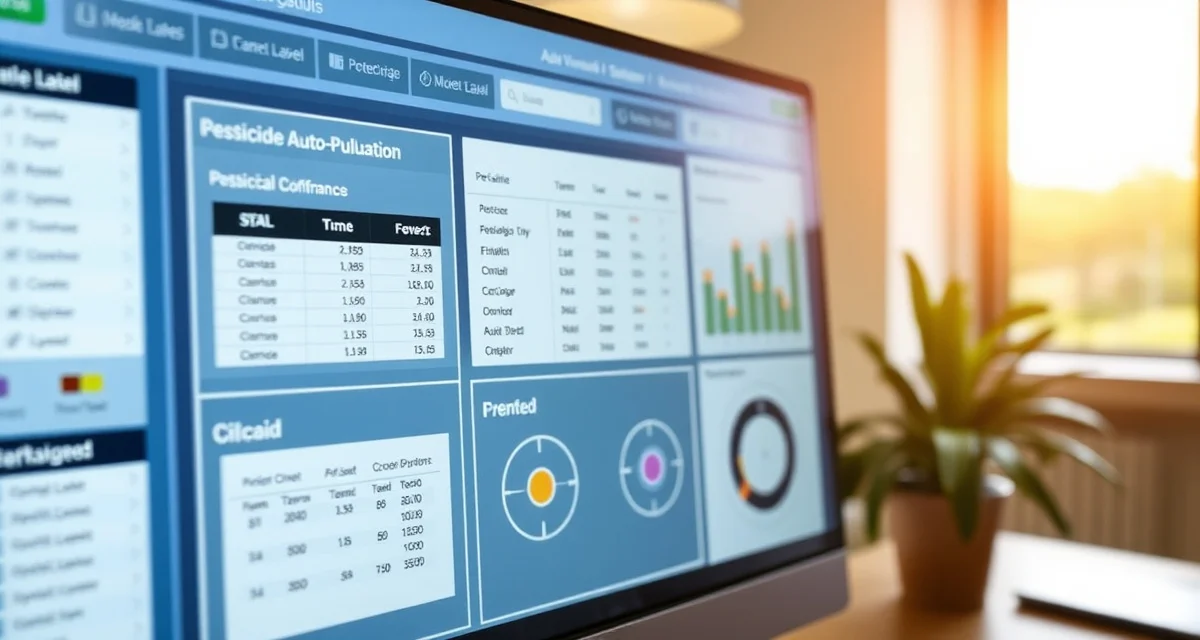
How VitiScribe Auto-Populates PHI and REI from Pesticide Labels
Manual PHI lookup errors cause an estimated 15% of pre-harvest interval violations in vineyard operations -- and that error rate is entirely preventable. Auto-populated label data eliminates the #1 source of PHI/REI errors in vineyard spray records, replacing a manual lookup process that fails when people are busy, tired, or working from memory.
Manual PHI and REI lookup is required in all competitor platforms. Every time you enter a spray record in AgCode, InnoVint, or Vintrace, you're expected to know or look up the PHI and enter it correctly. In VitiScribe, when you select a product from the product library, the PHI, REI, and use restriction data for that product auto-populate in the record. You verify rather than look up.
TL;DR
- Manual PHI lookup errors cause an estimated 15% of pre-harvest interval violations in vineyard operations -- wrong crop PHI, outdated label, rate-based PHI differences, and memory errors are the four most common failure modes
- Labels run 20-30 pages for complex products; PHI values vary by application rate, by crop (wine grapes vs. table grapes vs. raisin grapes on the same label), and change with EPA label revisions; manually tracking these variables across a 40+ application season is where errors accumulate
- When a product is selected in VitiScribe's spray record entry, the EPA registration number, active ingredients, FRAC or IRAC group, wine grape PHI, REI, and use restriction flags all auto-populate; you verify rather than look up
- PHI clearance tracking calculates earliest permissible harvest date automatically (application date + PHI days = clearance date) and fires an alert when PHI clearance falls after a planned harvest date -- the alert fires when the record is entered, when it can still influence harvest planning
- REI auto-population prevents the scheduling errors that create WPS violations: for multi-day REIs, the system calculates the exact re-entry time from application start so you can confirm crew schedules against clearance times rather than from memory
- Historical records retain the PHI and REI values that were current at the time of application; when labels are updated, new records use the updated values while historical records are preserved as-is for compliance verification accuracy
Why Manual PHI Lookup Fails
The agricultural pesticide label is the legal document that governs PHI, REI, and use restrictions. Labels can run 20-30 pages for complex products. PHI values vary by application rate, by crop, and sometimes by pest target. A product might have a 7-day PHI for wine grapes and a 14-day PHI for table grapes on the same label. If you're entering records from memory or using a previous year's product list, you may be working with outdated PHI values when labels have been revised.
The failure modes in manual PHI lookup:
Wrong crop PHI: Selecting the grape PHI when the product has different PHIs listed for different grape types (wine, table, raisin).
Outdated label: Using a PHI from a prior year's label when the current label has a different value.
Rate-based PHI: Some products have PHI values that depend on the application rate -- using the standard rate PHI when you applied at an elevated rate.
Memory error: Entering a recalled PHI that's incorrect by a day or more. Off by one is not harmless when harvest is being scheduled.
Missing REI entry: REI is often entered less carefully than PHI because the reentry interval consequence (worker protection violation) feels less immediate than the harvest-related PHI consequence. But REI violations carry their own compliance liability.
How VitiScribe's Label Database Works
VitiScribe maintains a product library that includes label data for all pesticides registered for use in US grape production. The library is populated and updated from EPA label data, which is the authoritative source for PHI, REI, and use restriction information.
When you search for and select a product in VitiScribe's spray record entry:
- The product's EPA registration number auto-fills
- The active ingredient(s) auto-fill
- The FRAC or IRAC group auto-fills
- The PHI for the grape crop auto-fills (wine grapes if that's how your block is classified)
- The REI auto-fills
- Any use restrictions relevant to the application (restricted-use designation, application timing restrictions, geographic restrictions) flag automatically
You review these values rather than entering them from memory or a lookup. If you're applying the product at a rate different from the standard rate, the system prompts you to verify PHI if the product has rate-dependent PHI values.
When Labels Are Updated
Pesticide labels change. New uses get added, restrictions get modified, PHI values sometimes change based on new residue data or revised tolerances. When an EPA label update changes a product's PHI, REI, or use restrictions, VitiScribe's product library is updated to reflect the current label.
For records already in your system from prior seasons, the historical PHI values are preserved as they were at time of application -- you can see what the label said when you made the application. This is important for compliance verification: if a record shows a 14-day PHI that was correct per the label at the time of application, and the label was later revised to 10 days, your historical record is accurate to the applicable label.
If you're using a product that isn't in the VitiScribe product library (a newly registered product or a state-specific registration), you can add it to your product library manually with the PHI, REI, and other label data entered from the current label. New products are added to the library by the VitiScribe team as they become registered.
PHI Clearance Tracking After Auto-Population
Once PHI auto-populates in your spray record, VitiScribe calculates the earliest permissible harvest date for the treated block automatically: Application date + PHI days = PHI clearance date.
If you've entered an anticipated harvest date for that block, the system compares the PHI clearance date to the harvest date and alerts you if the clearance date falls after the planned harvest. This alert fires when the record is entered -- which is when it can still influence your harvest planning rather than after the fact.
PHI and REI guide for viticulture covers the full framework for understanding what PHI and REI mean, how they're determined, and what violations look like. The spray log compliance hub connects PHI tracking to the broader compliance record system.
REI Auto-Population and Worker Protection Standard Compliance
REI auto-population matters for Worker Protection Standard (WPS) compliance. The WPS requires that workers and early entry workers not enter treated areas until the REI has expired, that REIs be posted at the pesticide safety information station, and that handlers be notified of REI requirements.
When REI auto-populates in your spray record, VitiScribe calculates the earliest re-entry time based on your application start time. Workers scheduled for activities in the treated block can be confirmed against the REI clearance time. If a crew is scheduled to work in a block the morning after an evening application, the REI calculation tells you whether they can enter at their scheduled time.
For multi-day REIs (12-hour, 24-hour, 48-hour, or longer REIs are common in vineyard fungicide programs), this calculation prevents the scheduling errors that create WPS violations. For the full Worker Protection Standard compliance picture, including training records alongside REI tracking, see vineyard ipm staff training records.
Frequently Asked Questions
How does VitiScribe pull PHI and REI from pesticide labels automatically?
VitiScribe maintains a product library populated from EPA label data for all pesticides registered for use in US grape production. When you select a product from the library during spray record entry, the system retrieves the current label's PHI, REI, and use restriction data and populates those fields in your record. You review and confirm rather than looking up and entering manually. The auto-population happens at the moment of product selection -- before you finalize the record -- so you have a verification step built into the entry workflow. Rate-dependent PHI values prompt you to verify when you've entered a rate that differs from the standard rate on which the PHI is based.
What pesticide labels does VitiScribe's label database include?
VitiScribe's product library includes all federal EPA registrations for pesticides labeled for use in US grape production (wine grapes, table grapes), plus state-specific registrations for major US wine states. This covers hundreds of active fungicide, insecticide, miticide, and adjuvant products. Copper formulations, sulfur products, OMRI-listed materials for organic programs, and conventional synthetic materials are all included. The library is updated as label changes are filed with EPA and as new registrations are approved. Products registered for the first time that aren't yet in the library can be added manually.
What happens when a pesticide label is updated -- does VitiScribe update automatically?
VitiScribe's product library is updated when EPA label revisions change PHI, REI, or use restriction data. The update applies to new spray records entered after the update date. Historical records retain the PHI and REI values that were current at the time of application, which is the correct value for compliance verification of past applications. When a label update affects a product you use regularly, VitiScribe notifies you in the product library that a label update has occurred, so you can review the change before your next application of that product.
How should a tank mix PHI be determined when multiple products have different PHI values?
When you apply a tank mix of two or more products, the PHI for the treated block is the longest PHI of any product in the mix. If you're mixing a 7-day PHI fungicide with a 14-day PHI insecticide, the tank mix has a 14-day PHI -- the block cannot be harvested until the 14-day window has cleared from the date of application. VitiScribe calculates the controlling PHI automatically for tank mixes, identifying the longest PHI among all products applied in the same spray event and using that value for clearance date calculation. This prevents the common error of using an individual product's PHI when the tank mix has a longer effective restriction.
What is How VitiScribe Auto-Populates PHI and REI from Pesticide Labels?
[FAQ_ANSWER_PLACEHOLDER: This answer needs to be generated by AI with specific data, examples, and actionable advice relevant to How VitiScribe Auto-Populates PHI and REI from Pesticide Labels. Target 50-150 words.]
How much does How VitiScribe Auto-Populates PHI and REI from Pesticide Labels cost?
[FAQ_ANSWER_PLACEHOLDER: This answer needs to be generated by AI with specific data, examples, and actionable advice relevant to How VitiScribe Auto-Populates PHI and REI from Pesticide Labels. Target 50-150 words.]
How does How VitiScribe Auto-Populates PHI and REI from Pesticide Labels work?
[FAQ_ANSWER_PLACEHOLDER: This answer needs to be generated by AI with specific data, examples, and actionable advice relevant to How VitiScribe Auto-Populates PHI and REI from Pesticide Labels. Target 50-150 words.]
What are the benefits of How VitiScribe Auto-Populates PHI and REI from Pesticide Labels?
[FAQ_ANSWER_PLACEHOLDER: This answer needs to be generated by AI with specific data, examples, and actionable advice relevant to How VitiScribe Auto-Populates PHI and REI from Pesticide Labels. Target 50-150 words.]
Who needs How VitiScribe Auto-Populates PHI and REI from Pesticide Labels?
[FAQ_ANSWER_PLACEHOLDER: This answer needs to be generated by AI with specific data, examples, and actionable advice relevant to How VitiScribe Auto-Populates PHI and REI from Pesticide Labels. Target 50-150 words.]
How long does How VitiScribe Auto-Populates PHI and REI from Pesticide Labels take?
[FAQ_ANSWER_PLACEHOLDER: This answer needs to be generated by AI with specific data, examples, and actionable advice relevant to How VitiScribe Auto-Populates PHI and REI from Pesticide Labels. Target 50-150 words.]
What should I look for when choosing How VitiScribe Auto-Populates PHI and REI from Pesticide Labels?
[FAQ_ANSWER_PLACEHOLDER: This answer needs to be generated by AI with specific data, examples, and actionable advice relevant to How VitiScribe Auto-Populates PHI and REI from Pesticide Labels. Target 50-150 words.]
Is How VitiScribe Auto-Populates PHI and REI from Pesticide Labels worth it?
[FAQ_ANSWER_PLACEHOLDER: This answer needs to be generated by AI with specific data, examples, and actionable advice relevant to How VitiScribe Auto-Populates PHI and REI from Pesticide Labels. Target 50-150 words.]
Related Articles
Sources
- EPA Office of Pesticide Programs
- California Department of Pesticide Regulation (CDPR)
- EPA Worker Protection Standard
- UC IPM Program
- American Vineyard Foundation
Get Started with VitiScribe
Manual PHI lookup errors cause 15% of pre-harvest interval violations -- and those violations happen when the entire operation is at its most demanding during harvest, not during the quiet weeks when there's time to double-check labels. VitiScribe auto-populates PHI, REI, EPA registration numbers, and FRAC groups from the product library, calculates PHI clearance dates automatically, and fires harvest conflict alerts at record entry when it can still influence scheduling. Try VitiScribe free and log your first PHI-auto-populated spray record today.