Vineyard management cost per acre: what you'll actually spend
TL;DR
- Vineyard management runs $2,000 to $5,000 per acre per year across most U.S.
- regions.
- High-cost areas like Napa Valley push $6,000 to $8,000 or more.
- Labor eats 50 to 65 percent of that.
- The spread is wide because trellis system, irrigation, variety, and your choice between a contract crew and in-house staff each move the number hard.
What does vineyard management actually cost per acre?
The honest answer is a range, not a number. UC Davis Cooperative Extension publishes cost studies by region and variety, and even inside a single appellation the per-acre figure can double depending on your trellis system, irrigation setup, mechanization level, and how much hand labor your market demands. [1]
Most U.S. commercial vineyards land between $2,000 and $5,000 per acre in total annual operating cost. California's Central Valley and Washington's Columbia Basin stay toward the low end. Napa Valley, the Sonoma Coast, and the Willamette Valley routinely clear $5,000. Premium Pinot Noir blocks on steep Oregon or coastal California slopes can hit $8,000 to $10,000 per acre once you add canopy management, leaf pulling, and multiple passes of hand sorting in the field. [1][2]
Those figures cover production costs: labor, materials, equipment, irrigation water, pest management, and the management fee itself if you hire a company. They leave out land cost, debt service, depreciation on permanent infrastructure, and winery processing. Keep that line in mind every time you see a single-number headline.
WSU Extension runs its own cost-of-production budgets for Washington varieties including Cabernet Sauvignon, Riesling, and Concord. Their recent data puts established Columbia Valley Cabernet at roughly $2,800 to $3,400 per acre annually for direct operating costs, with machine-harvestable blocks at the low end and hand-harvested blocks higher. [2]
How do vineyard costs break down by category?
Labor is the biggest line item everywhere. It runs 50 to 65 percent of total annual operating cost in most hand-harvested vineyards, and the UC Davis studies show that pattern holding across varieties. [1] Even mechanized operations rarely drop labor below 35 percent.
Here's a representative breakdown for a hand-harvested California coastal vineyard running about $4,500 per acre:
| Cost category | Estimated % of total | Estimated $/acre |
|---|---|---|
| Labor (pruning, training, shoot positioning, leaf pulling, harvest) | 55% | $2,475 |
| Materials (fertilizers, pesticides, cover crop seed, stakes) | 12% | $540 |
| Equipment (tractor, sprayer, mowing, fuel) | 10% | $450 |
| Irrigation water and maintenance | 6% | $270 |
| Management fee or supervision | 8% | $360 |
| Crop insurance | 4% | $180 |
| Miscellaneous (legal, accounting allocation, scouting) | 5% | $225 |
Those percentages shift with mechanization. A machine-harvested San Joaquin Valley block might spend only 30 percent on labor and more on equipment depreciation and fuel. A sparkling-wine vineyard doing multiple selective passes can spend 70 percent on labor.
Materials costs are harder to generalize than labor. They ride on your pest pressure, soil health, and spray program philosophy. A block with heavy powdery mildew history in a warm interior climate might spend $300 per acre on fungicides alone. A dry-farmed coastal block with good airflow might spend $80. Neither number is wrong. They reflect different agronomic realities. [3]
How much does vineyard labor cost per acre by task?
Break labor down by task and planning gets real. Pruning is almost always the biggest single labor event. In spur-pruned, machine-harvested vineyards, a good crew prunes 0.3 to 0.5 acres per hour per worker. Cane-pruned varieties like Riesling or Pinot Noir go slower, often 0.15 to 0.25 acres per hour per worker. At $18 to $22 per hour for experienced vineyard labor (a range common across California, Oregon, and Washington through 2023 to 2024), pruning alone typically runs $200 to $600 per acre depending on vine density, training system, and how much brush you're pulling out. [4]
Shoot thinning, leaf pulling, and shoot positioning are secondary but they add up. Combined, they tack on another $150 to $400 per acre in a hand-managed block. Harvest labor in hand-picked blocks adds $300 to $800 per acre depending on yield, cluster weight, and whether you do a single pick or multiple selective passes.
A few tasks blindside new owners. Tying canes after pruning gets left out of first budgets constantly. Frost protection labor if you run wind machines or hand-move heaters. And the time cost of scouting, done properly, takes 1 to 2 hours per 5 to 10 acres per week through the growing season. Some operations bake scouting into the management fee. Others pay per acre or per visit separately.
Wage law drives the floor here. California's agricultural minimum wage reached $16 per hour in 2023 and keeps indexing upward. Oregon and Washington run their own schedules. The H-2A agricultural worker program stacks housing and transportation on top of the wage floor, which can lift your effective labor cost 30 to 50 percent per worker. In exchange, you get a legal, reliable crew. [4]
What do vineyard spray programs cost per acre?
Spray costs swing more than almost any other line item, so understand them before you budget. A basic conventional program in a low-pressure environment might cost $150 to $250 per acre in materials annually. A certified organic program in a high-pressure coastal environment can run $400 to $700 per acre or more, because approved materials like copper and sulfur are less systemic, need more frequent application, and some OMRI-listed products cost more per unit than their conventional equivalents.
Sprayer cost usually gets shared across the operation and allocated per acre. A good airblast sprayer costs $15,000 to $40,000 new. Amortize that over 10 to 15 years across 50-plus acres and the equipment line runs $30 to $80 per acre per year, which farm plans routinely lowball.
EPA's Worker Protection Standard requires you to keep spray records with the product name, EPA registration number, active ingredient, rate, date, time, location, and re-entry interval for every application. [5] Those records must be held for two years. If workers enter treated areas, you also provide training, post notices at the central display area, and keep personal protective equipment available. EPA's Worker Protection Standard requires pesticide safety training for all workers and handlers on covered establishments before they enter treated areas. The compliance cost is real: training, signage, and PPE add $50 to $150 per worker per year across a typical crew, and a violation caught in a state agriculture inspection can hit hard.
Managing spray records across multiple blocks is one of the first things that breaks in small operations. VitiScribe handles block-by-block spray logging with WPS fields built in, so your records stay audit-ready without a separate spreadsheet.
How does vineyard management cost differ by region?
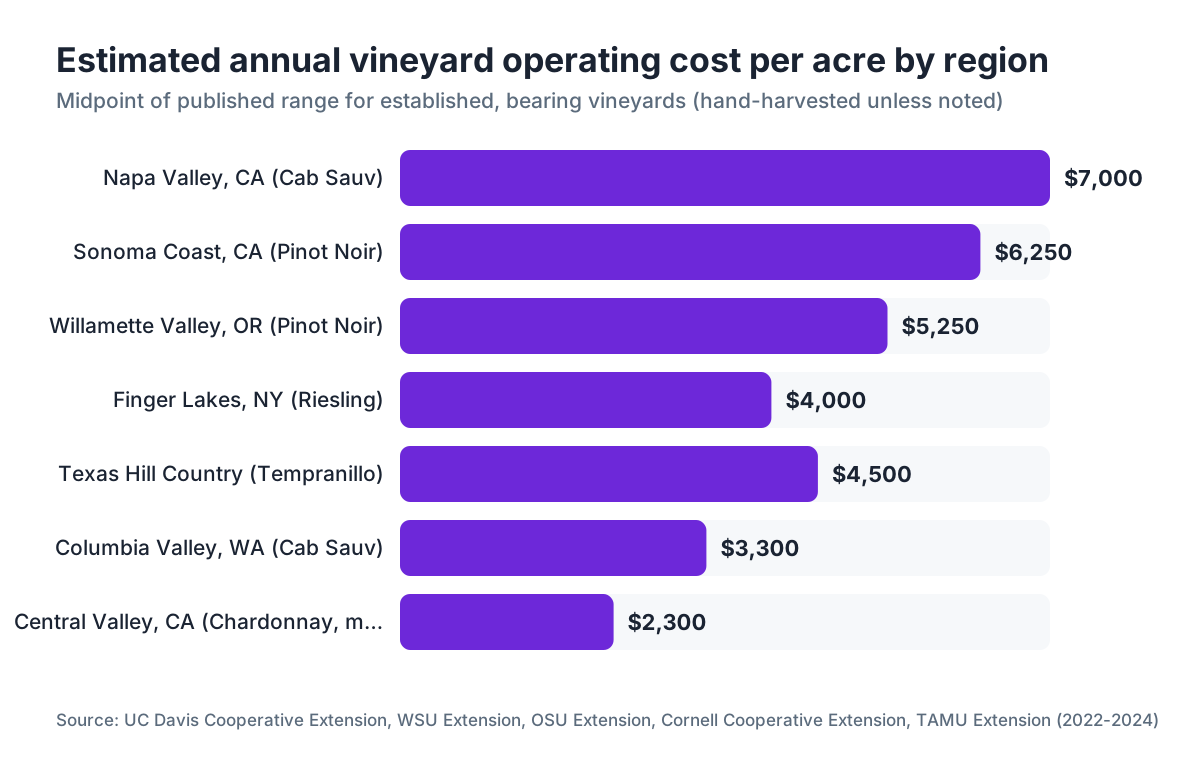
Region is probably the biggest single driver of the range. Here's a direct comparison using published extension budgets and industry data:
| Region | Variety (example) | Annual operating cost/acre (established) | Primary source |
|---|---|---|---|
| Napa Valley, CA | Cabernet Sauvignon | $5,500 - $8,500 | UC Davis CE [1] |
| Sonoma Coast, CA | Pinot Noir | $5,000 - $7,500 | UC Davis CE [1] |
| Central Valley, CA | Chardonnay (machine) | $1,800 - $2,800 | UC Davis CE [1] |
| Columbia Valley, WA | Cabernet Sauvignon | $2,800 - $3,800 | WSU Extension [2] |
| Willamette Valley, OR | Pinot Noir | $4,000 - $6,500 | OSU Extension [6] |
| Finger Lakes, NY | Riesling | $3,000 - $5,000 | Cornell Cooperative Extension [7] |
| Texas Hill Country | Tempranillo | $3,500 - $5,500 | TAMU Extension [8] |
These are operating costs only, no land, debt, or depreciation on permanent plantings. Land cost per acre runs from roughly $5,000 in parts of Texas or the Midwest to over $300,000 per acre in Napa, which is why total-cost-of-ownership math looks so different by region even when production costs sit close together.
Climate drives much of the pest pressure. The Pacific Northwest's dry summers cut fungal disease pressure hard compared to the humid East. Cornell Cooperative Extension reports that New York growers often carry higher disease management costs than West Coast counterparts because humid summers and susceptible vinifera varieties stack up. [7] Some eastern growers offset part of this with disease-resistant hybrid varieties, which can lower spray costs 40 to 60 percent versus vinifera. The tradeoff is market access and pricing.
Elevation and slope matter too. High-elevation or steep-slope vineyards, like those at Gervasi Vineyard in Ohio or steep sites in the Paso Robles wineries area, often carry higher per-acre costs because equipment operations slow down or stop entirely and hand labor replaces machines.
What does it cost to establish a vineyard from scratch?
Establishment cost is its own category, separate from annual operating cost, but it shapes the whole economic picture because it's the investment you amortize over the vineyard's productive life.
UC Davis Cooperative Extension puts total establishment cost through year three at $15,000 to $35,000 per acre for most California varieties, with the high end reflecting premium trellis systems, drip irrigation, deer fencing, and high vine density. [1] WSU Extension numbers for Washington run lower, typically $12,000 to $22,000 per acre through year three. [2]
What goes in: land clearing and prep, irrigation system installation, trellis posts and wire, vine material (certified virus-tested cuttings or grafted vines), planting labor, training labor across years one through three, lost revenue during the non-bearing period (usually three years before commercial yield), and interest on the capital you've deployed.
Grafted vines on phylloxera-resistant rootstock cost $3 to $6 per plant in most markets. At a typical density of 700 to 1,200 vines per acre, that's $2,100 to $7,200 per acre in plant material alone. High-density Burgundian-style planting at 2,000 to 3,000 vines per acre pushes plant material to $6,000 to $18,000 per acre before you set a single post.
Most lenders and farm planners use a 25-year productive life for a well-managed vinifera vineyard when they calculate depreciation, though many blocks produce for 40 to 60 years or longer. That single assumption moves your break-even analysis more than people expect.
How much do vineyard management companies charge?
If you own vineyard land but don't want to run operations yourself, a vineyard management company is the usual route. Fee structure varies by market and scope.
The two common models are a flat fee per acre per year and a percentage of gross revenue. Flat fees in California typically run $400 to $900 per acre per year for management oversight, separate from the direct costs of labor, materials, and equipment that pass through to you. Lower-cost regions like parts of Washington or New York see flat fees of $250 to $500 per acre. [2]
Percentage-of-revenue models show up less often in vineyards (they're more common in orchards), but some managers in high-value appellations use them. A 10 to 15 percent management fee on a block producing 3 tons per acre at $3,000 per ton runs $900 to $1,350 per acre in management fees alone, on top of direct costs.
What does the fee cover? Usually scheduling and supervising field operations, keeping spray records, scouting, coordinating harvest logistics, and reporting to the owner. It typically leaves out the actual crew cost, materials, and equipment rental. Read the contract line by line before you sign.
Small and mid-size operations often split the difference: hire a part-time vineyard consultant at $75 to $150 per hour for agronomic calls, then manage their own crew. That works if you have a reliable foreman. The management overhead lands back on the owner.
What are the biggest hidden costs in vineyard management?
Every experienced vineyard manager keeps a mental list of costs that ambushed them in year one. These surface most often.
Equipment downtime is underestimated almost universally. A tractor breakdown during pruning season, or a sprayer failure at 2 a.m. before a predicted rain, doesn't just cost repair money. It costs the window. Deferred sprays mean disease. Deferred pruning means crew overtime. Budget 5 to 10 percent of equipment value per year for maintenance and repairs, and hold a contingency for the failures you can't schedule.
Water cost is climbing across the West. In California's major wine regions, district costs have risen sharply over the past decade, and drought-year surcharges or curtailments pile on unexpected costs. Some growers in the South Coast Winery area of Southern California pay $400 to $800 per acre-foot for imported water, and even efficient drip-irrigated vineyards use 1 to 2 acre-feet per acre annually in dry climates. [9]
Crop insurance premiums get underbudgeted constantly. The USDA Risk Management Agency covers grapes under several policies, including Actual Production History and Whole-Farm Revenue Protection. Premiums vary by county and coverage level but commonly run $100 to $300 per acre for wine grapes in California. [10] Many lenders require it. If you've never filed a claim, the premium feels like dead money. Talk to any grower who lost 40 percent of a crop to a late frost and you'll hear the other side.
Compliance recordkeeping is a real labor cost that rarely shows up in extension budgets. WPS spray records, pesticide use reports (required in California and some other states), water reporting, and labor documentation together take 2 to 5 hours per week for a 30-acre operation. That's $2,000 to $6,000 per year in management time, before you count the cost of a violation. VitiScribe cuts that time, but even a well-built spreadsheet system takes work to keep current.
How does vine age affect cost per acre?
Young vines cost more to manage per unit of output. Not always more per acre in absolute dollars, but certainly per ton and per dollar of revenue. In years one through three, you spend on training labor, replacement plants, and all the fixed costs of irrigation and trellis maintenance while commercial yield sits at zero. Establishment-phase labor often runs $800 to $1,500 per acre per year on training alone, depending on how hard you push vine development.
Once vines reach full bearing (typically year four or five for most vinifera), per-acre labor costs settle. Old vines, defined loosely as 25 years or older, can actually cost less to manage in some ways. They tend toward lower vigor, need less aggressive canopy work, and in dry-farmed situations may skip irrigation labor entirely. But lower yields drive cost per ton up, which matters for your revenue math even when the per-acre spend looks flat.
Replanting is where vine-age economics turn genuinely hard. A replant on a productive 20-year-old block costs $15,000 to $30,000 per acre upfront and takes three years to return to commercial production. Holding an aging block with declining production for another decade costs less annually but generates less revenue. Nobody has a clean model for this call. The right answer depends on your land cost, capital availability, and whether the market for your variety is growing or shrinking.
How can you reduce vineyard management cost without cutting quality?
Mechanization is the strongest lever for most operations above about 20 acres. Mechanical pruning (hedging plus detail pruning) can cut pruning labor cost 30 to 50 percent versus fully hand-pruned blocks. Mechanical leafing on the fruiting zone drops shoot positioning and leafing labor. Mechanical harvest, where your variety and market allow it, wipes out harvest labor almost entirely.
The counterargument is real. Mechanization needs capital, works best on flat ground, and doesn't fit every variety or wine style. Premium Pinot Noir growers hand-harvest for a reason. But for producers making large-volume wine where labor cost threatens margin directly, mechanization is a survival question, not a preference.
Cover crop management splits sharply on cost. A purchased seed mix applied by a contractor runs $150 to $300 per acre to establish. Mowing every 3 to 4 weeks through the season adds tractor time. Some growers in low-rainfall regions skip cover crops in alternate rows and disk instead, saving water and mowing cost. Others swear by permanent swards for soil biology and erosion control. The agronomic debate is real. So is the cost gap.
Scouting and early intervention cut spray costs over time. A block scouted weekly and treated at the first sign of mildew usually spends less on fungicides than one sprayed on a calendar regardless of pressure. Extension programs at UC Davis, Cornell, and WSU all publish integrated pest management guidelines that back this approach. [1][2][7]
Record quality pays back sideways. When you can see which blocks historically need three fungicide passes versus five, or which rows always lag on nutrition, you stop treating every acre the same. That block-level visibility takes consistent recordkeeping, whether you run a paper spray log, a spreadsheet, or dedicated software.
What should a vineyard management budget template include?
A solid annual budget for an established block covers these categories at minimum. Exact line items vary, but if any category is missing entirely, you're probably underestimating your costs.
Labor: prune, tie and train, shoot thin, leaf pull, shoot position, irrigation system checks, harvest, end-of-season cleanup. Break each task out by estimated hours per acre and wage rate, not one lump sum.
Materials: fertilizers (nitrogen, micronutrients, foliar inputs), pesticides (fungicides, insecticides, herbicides, any organic inputs), cover crop seed, trellis repair parts (wire, staples, clips), irrigation components (emitters, filters, fittings that fail every year).
Equipment: fuel, oil, filters, scheduled maintenance, repairs and contingency (budget 8 to 10 percent of equipment book value per year), rental for tasks where you use a contractor's machine.
Water: district assessment or pumping cost, water use fees if they apply, filter and drip tape replacement.
Management and overhead: your management fee or salary allocation, scouting, crop insurance premium, pesticide use reporting fees (California growers pay a county mill fee on pesticide purchases), WPS compliance training.
Harvest: picking bins, transportation if you sell to a third-party winery, any field sorting labor.
Contingency: 5 to 10 percent of total budget. Frost, hail, disease outbreaks, and equipment failures happen. A budget with no contingency isn't a budget. It's a wish.
Cornell Cooperative Extension's farm budgeting resources include templates for New York wine grapes that adapt well to other regions once you adjust for local wage rates and input costs. [7] UC Davis publishes California-specific cost study spreadsheets you can download and modify. [1] Both are worth your time even if you farm in a different state.
Frequently asked questions
How much does it cost to manage a vineyard per acre in California?
In California, established vineyard operating costs range from about $1,800 to $2,800 per acre in the Central Valley for machine-harvested blocks, up to $5,500 to $8,500 per acre in Napa Valley for hand-harvested Cabernet Sauvignon. UC Davis Cooperative Extension publishes detailed cost studies by variety and region that are the most reliable source for California figures. Labor makes up 50 to 65 percent of total cost in hand-harvested blocks.
What percentage of vineyard cost is labor?
In most hand-harvested commercial vineyards, labor runs 50 to 65 percent of total annual operating cost. Mechanized operations can bring that below 35 percent, but equipment depreciation and fuel rise to fill the gap. Pruning is typically the single largest labor event, followed by harvest. UC Davis cost studies show labor as the dominant category across California wine grape varieties.
How much does it cost to plant a vineyard per acre?
Total establishment cost through year three typically runs $15,000 to $35,000 per acre in California and $12,000 to $22,000 in Washington, per UC Davis and WSU Extension budgets. That covers site prep, irrigation, trellis, vine material (grafted vines cost $3 to $6 each), planting and training labor, and three years without commercial yield. High-density plantings push toward the top of that range.
What does a vineyard management company charge?
Most vineyard management companies charge a flat fee of $400 to $900 per acre per year in California, plus pass-through costs for labor, materials, and equipment. Lower-cost regions may see fees of $250 to $500 per acre. The fee covers supervision, scheduling, spray recordkeeping, scouting, and harvest coordination. It does not typically include the crew or inputs themselves.
How much does a vineyard spray program cost per acre?
A conventional spray program in a low-to-moderate pressure environment costs roughly $150 to $250 per acre in materials annually. A certified organic program in a high-pressure coastal environment can run $400 to $700 per acre or more. Sprayer depreciation adds another $30 to $80 per acre depending on equipment value and acreage. Disease pressure, local climate, and program philosophy drive the wide range.
What spray records does the EPA require vineyards to keep?
Under EPA's Worker Protection Standard, vineyards must record every pesticide application including product name, EPA registration number, active ingredient, rate, date, time, treated location, and re-entry interval. Records must be kept for at least two years. California also requires annual pesticide use reports filed with the county agricultural commissioner. Non-compliance can bring significant fines from state departments of agriculture.
How long does it take for a new vineyard to become profitable?
Most vineyard operations don't generate positive cash flow until year four or five at the earliest, when vines first reach full commercial yield. Breaking even on total investment including establishment costs often takes 10 to 15 years depending on land cost, wine grape prices, and financing. High land-cost regions like Napa push the break-even point further out even when per-acre revenues are high.
Does vine age affect management cost per acre?
Yes, though not always the way people expect. Young vines in years one through three cost $800 to $1,500 per acre in training labor alone with no commercial revenue. Old vines (25 years or more) tend to run lower vigor, which can cut canopy management labor, but their lower yields drive cost per ton up. Full-bearing vines in years four through roughly 20 hold the most favorable cost-to-output ratio.
What is the average cost of irrigating a vineyard per acre?
Irrigation costs swing widely by water source and region. In California wine regions, district costs plus pumping can run $200 to $600 per acre annually. Southern California imported water can cost $400 to $800 per acre-foot, and dry-climate vineyards use 1 to 2 acre-feet per acre per season. Drip system maintenance adds $50 to $150 per acre for emitter and filter replacement each year.
How does vineyard cost per acre compare between Washington and California?
Washington's Columbia Valley typically runs $2,800 to $3,800 per acre for established Cabernet Sauvignon, per WSU Extension budgets. California's comparable premium regions run $5,500 to $8,500 per acre. Washington's lower costs reflect cheaper land, less expensive water from Columbia River irrigation districts, and lower average wage rates, though the gap has narrowed as Washington wages rose.
What crop insurance options exist for vineyards?
USDA Risk Management Agency offers several policies for wine grapes, including Actual Production History coverage and Whole-Farm Revenue Protection. Premiums typically run $100 to $300 per acre in California depending on county, variety, and coverage level. Coverage protects against yield losses from frost, hail, disease, and other perils. Many agricultural lenders require crop insurance as a loan condition.
How much does mechanical harvesting save compared to hand harvesting?
Hand harvest in California typically costs $300 to $800 per acre in labor, depending on yield, cluster weight, and number of passes. Mechanical harvest costs roughly $80 to $200 per acre including contractor fees or equipment amortization. The savings are real and can decide margin for high-volume producers, but machine harvest is unsuitable for steep terrain, some varieties, and wines needing selective picking of botrytized or overripe clusters.
What are the biggest cost differences between organic and conventional vineyard management?
Organic certification adds cost mainly through higher-priced approved inputs, more frequent spray passes (because organic materials are less systemic), and the three-year transition when you pay organic costs but can't sell organic fruit at a premium. Spray material costs can run 30 to 80 percent higher in an organic program. Some operations offset part of that with lower fertilizer costs when cover crops and compost replace synthetic nitrogen.
Sources
- UC Davis Cooperative Extension, Sample Costs to Establish a Vineyard and Produce Wine Grapes: UC Davis CE publishes detailed cost-of-production studies by California region and variety, showing annual operating costs ranging from under $2,000/acre in the Central Valley to over $8,000/acre in Napa Valley for hand-harvested Cabernet Sauvignon.
- Washington State University Extension, Wine Grape Cost of Production: WSU Extension publishes cost-of-production budgets for established Columbia Valley Cabernet Sauvignon at approximately $2,800 to $3,400 per acre annually for direct operating costs.
- UC Statewide Integrated Pest Management Program, Grape Pest Management Guidelines: UC ANR IPM guidelines document the range of fungicide inputs for powdery mildew and other diseases in California vineyards.
- U.S. EPA, Agricultural Worker Protection Standard (WPS): EPA Worker Protection Standard requires that pesticide application records including product name, EPA registration number, active ingredient, rate, date, time, location, and re-entry interval be maintained for two years, and requires pesticide safety training for workers and handlers before entry to treated areas.
- Oregon State University Extension Service, Winegrape Production: OSU Extension data indicates annual operating costs for established Pinot Noir in the Willamette Valley typically run $4,000 to $6,500 per acre.
- Cornell Cooperative Extension, Finger Lakes Grape Production Guide and Farm Budgets: Cornell Cooperative Extension notes that New York growers face higher disease management costs than West Coast counterparts due to humid summers and susceptible vinifera varieties; Finger Lakes production costs typically run $3,000 to $5,000 per acre.
- Texas A&M AgriLife Extension, Texas Winegrape Production: TAMU Extension data supports estimated annual production costs of $3,500 to $5,500 per acre for established vineyards in the Texas Hill Country.
- California Department of Water Resources, Agricultural Water Use Efficiency: Water district assessments and imported water costs in Southern California can reach $400 to $800 per acre-foot; efficient drip-irrigated vineyards in dry climates use 1 to 2 acre-feet per acre annually.
- USDA Risk Management Agency, Federal Crop Insurance for Grapes: USDA RMA offers Actual Production History and Whole-Farm Revenue Protection policies for wine grapes; premiums commonly run $100 to $300 per acre in California depending on county and coverage level.
- USDA National Agricultural Statistics Service, Grape Production: NASS tracks U.S. bearing vineyard acreage and production by state, providing context for regional scale and industry economics.
Last updated 2026-07-10