Vineyard Management Software for Finger Lakes Vineyards
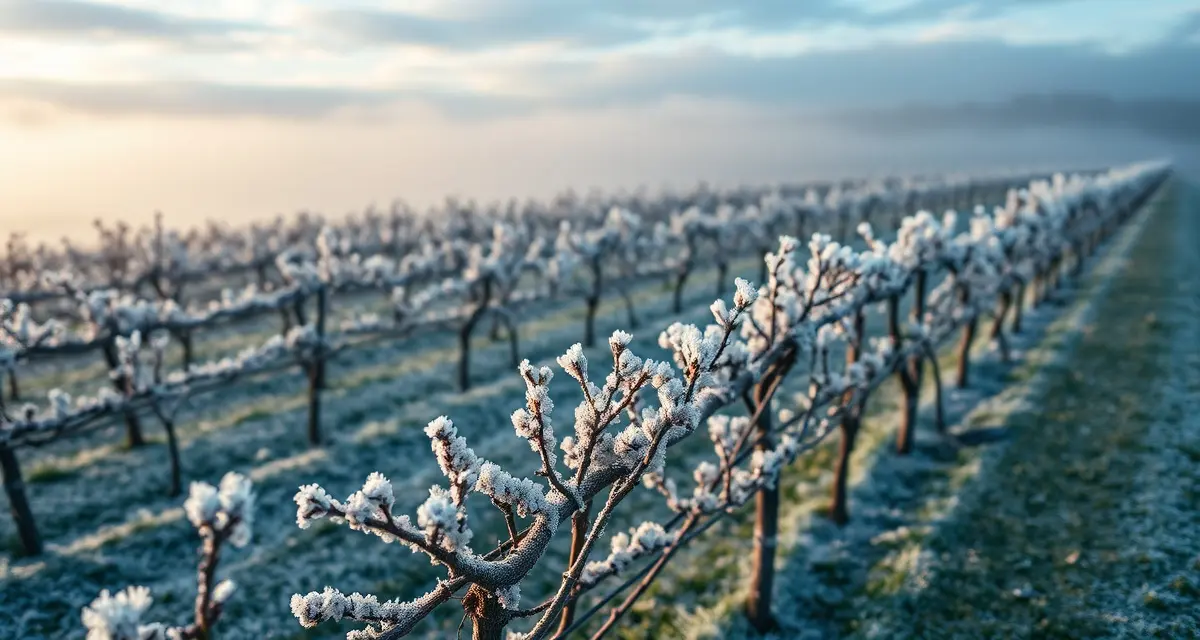
The Finger Lakes is one of the most challenging commercial wine grape production environments in North America. A short growing season, cold winters capable of killing Vitis vinifera canes and buds, a spring frost window that extends into late May in many lake-adjacent sites, and humid summers that generate substantial disease pressure all operate simultaneously. The growers who succeed here are technically sophisticated and operate with tight margins on timing across every management decision. Record keeping is not optional; it's how you know whether your program is working.
Riesling in a Cold Climate
Riesling is the Finger Lakes' benchmark variety and one of the most cold-tolerant Vitis vinifera cultivars grown commercially. Even so, cold hardiness in Riesling is not unlimited. Bud damage begins at temperatures below approximately -5°F to -10°F depending on acclimation status, and vine killing at the bud and cane level occurs at temperatures below -15°F in most situations. The winters of 2014, 2015, and 2019 tested cold hardiness limits in the region significantly.
Tracking cold hardiness status through winter requires regular bud sampling and kill assessments following significant cold events. The protocol involves cutting cane sections, sampling buds, examining cross-sections under magnification for primary, secondary, and tertiary bud damage, and recording the percentage of bud death by block and variety. This data drives pruning decisions in spring: higher bud mortality requires leaving more nodes during pruning to ensure adequate shoot count for the season.
Recording bud damage assessments by block in VitisScribe alongside winter low temperature data from your on-site weather station builds a multi-year picture of which blocks are most vulnerable to cold injury and how your varieties perform across the range of winter conditions the region delivers.
Lake Effect Weather and Spray Timing
The Finger Lakes generate lake-effect weather patterns that affect spray timing in both directions. West-facing slopes of Seneca, Cayuga, and Keuka Lakes receive lake-effect snow in winter that moderates temperatures and reduces cold injury risk. During the growing season, the lakes create temperature moderation that extends the season, but they also contribute to fog, high humidity, and extended wet periods that favor fungal disease.
Downy mildew (Plasmopara viticola) and Botrytis are the primary disease management targets in the Finger Lakes. Black rot (Guignardia bidwellii) is a significant concern in warmer, wetter blocks and varieties that are highly susceptible, including most Vitis vinifera. Spray programs typically run 10 to 15 applications per season, with critical timing from pre-bloom through bunch closure.
Weather station data from on-site instruments is more reliable than regional station data for spray timing decisions in the Finger Lakes because lake-effect patterns create significant local variation in rainfall, fog duration, and leaf wetness. A station at the vineyard tells you whether your site received the 0.4 inches that fell in Geneva yesterday or whether the lake provided a buffer.
Cornell Research Integration
Cornell Cooperative Extension and the New York State Agricultural Experiment Station in Geneva are the primary research and extension resources for Finger Lakes viticulture. The NEWA (Network for Environment and Weather Applications) system, developed at Cornell, provides IPM decision support tools including disease forecasting models for downy mildew, Botrytis, and powdery mildew that are calibrated to New York conditions.
Growers who integrate NEWA data with their spray records over multiple seasons can evaluate whether their program is appropriately timed relative to model-predicted infection events. A season where downy mildew pressure was high according to NEWA models but disease incidence in your blocks was low validates your spray timing. A season where pressure was moderate but you still had disease suggests your program needs adjustment.
Cold Hardiness Variety Tracking
A growing number of Finger Lakes growers are planting cold-hardy hybrid varieties alongside or instead of Vitis vinifera in sites where winter cold is a limiting factor. Marquette, Frontenac, La Crescent, and Riesling selections with improved cold hardiness are commercially available and have different disease susceptibility profiles, different spray program requirements, and different phenology than standard Vitis vinifera.
Maintaining separate block records by variety and type, with variety-specific spray programs and phenology tracking, handles these differences cleanly in VitisScribe. The hybrid blocks may need fewer fungicide applications per season than adjacent Riesling blocks, and they have different REI and PHI profiles for the products applied.
New York Agricultural Regulations
New York Department of Agriculture and Markets administers pesticide regulation at the state level alongside the DEC (Department of Environmental Conservation). Commercial pesticide applicators must hold a New York State DEC commercial pesticide applicator certification. Private applicators applying on their own land need a private applicator certificate.
New York does not operate a California-style monthly reporting system for pesticide use. Records must be kept for two years and are subject to inspection by DEC. Required fields follow federal standards for restricted use pesticides: product name, EPA registration number, date, location, applicator certification number, pest treated, rate, and area treated.
For growers selling fruit to licensed New York wineries or operating as a licensed farm winery under the New York State Liquor Authority, production and sourcing records have separate requirements that overlap with vineyard operational records. VitisScribe's block-level harvest documentation supports NYSLA production record requirements.
For related content, see our guides on PHI and REI compliance and harvest planning and logistics. New York growers may also want to review our article on New York DEC vineyard pesticide records.
FAQ
What is Vineyard Management Software for Finger Lakes Vineyards?
[FAQ_ANSWER_PLACEHOLDER: This answer needs to be generated by AI with specific data, examples, and actionable advice relevant to Vineyard Management Software for Finger Lakes Vineyards. Target 50-150 words.]
How much does Vineyard Management Software for Finger Lakes Vineyards cost?
[FAQ_ANSWER_PLACEHOLDER: This answer needs to be generated by AI with specific data, examples, and actionable advice relevant to Vineyard Management Software for Finger Lakes Vineyards. Target 50-150 words.]
How does Vineyard Management Software for Finger Lakes Vineyards work?
[FAQ_ANSWER_PLACEHOLDER: This answer needs to be generated by AI with specific data, examples, and actionable advice relevant to Vineyard Management Software for Finger Lakes Vineyards. Target 50-150 words.]
What are the benefits of Vineyard Management Software for Finger Lakes Vineyards?
[FAQ_ANSWER_PLACEHOLDER: This answer needs to be generated by AI with specific data, examples, and actionable advice relevant to Vineyard Management Software for Finger Lakes Vineyards. Target 50-150 words.]
Who needs Vineyard Management Software for Finger Lakes Vineyards?
[FAQ_ANSWER_PLACEHOLDER: This answer needs to be generated by AI with specific data, examples, and actionable advice relevant to Vineyard Management Software for Finger Lakes Vineyards. Target 50-150 words.]
How long does Vineyard Management Software for Finger Lakes Vineyards take?
[FAQ_ANSWER_PLACEHOLDER: This answer needs to be generated by AI with specific data, examples, and actionable advice relevant to Vineyard Management Software for Finger Lakes Vineyards. Target 50-150 words.]
What should I look for when choosing Vineyard Management Software for Finger Lakes Vineyards?
[FAQ_ANSWER_PLACEHOLDER: This answer needs to be generated by AI with specific data, examples, and actionable advice relevant to Vineyard Management Software for Finger Lakes Vineyards. Target 50-150 words.]
Is Vineyard Management Software for Finger Lakes Vineyards worth it?
[FAQ_ANSWER_PLACEHOLDER: This answer needs to be generated by AI with specific data, examples, and actionable advice relevant to Vineyard Management Software for Finger Lakes Vineyards. Target 50-150 words.]