What is a vineyard? A complete guide for growers and managers
TL;DR
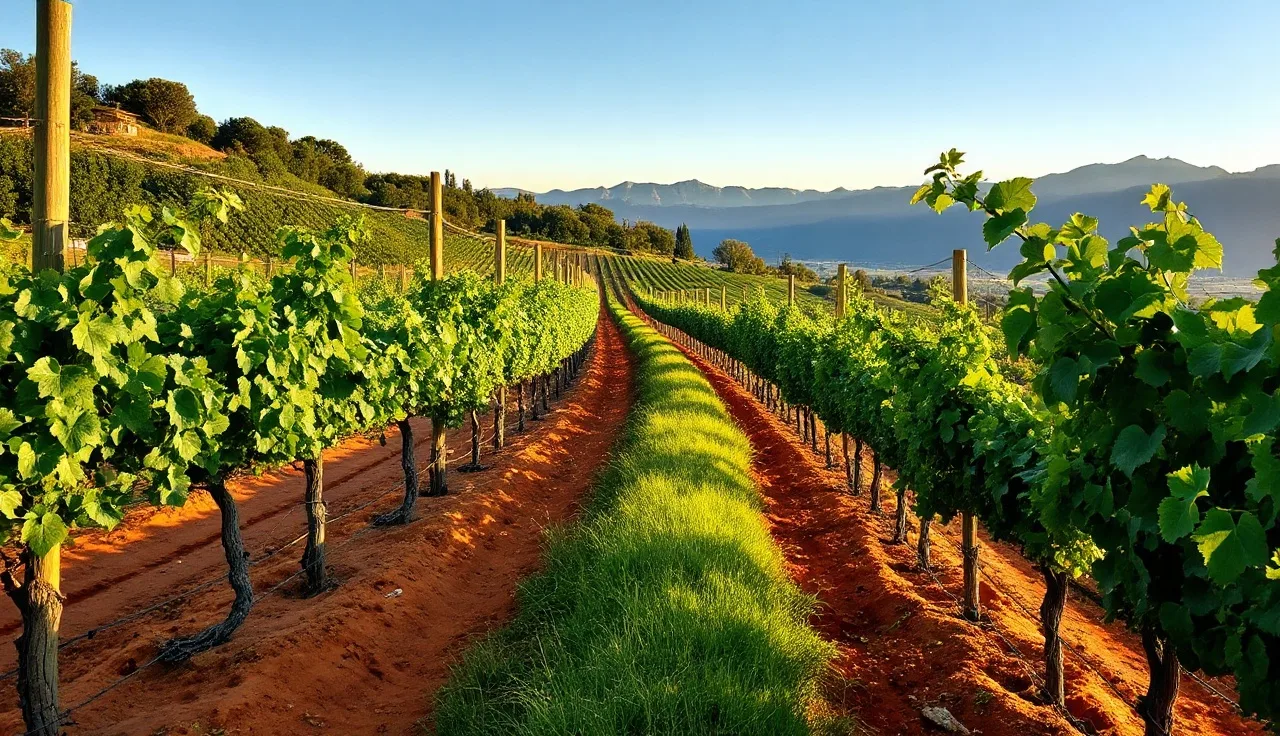
- A vineyard is a parcel of land planted to grapevines and managed to produce fruit, usually for wine, table grapes, or raisins.
- Size runs from under one acre to thousands.
- Every commercial vineyard is a year-round field operation: pruning, canopy work, pest and disease control, irrigation, and compliance with state and federal pesticide rules.
What is a vineyard, exactly?
A vineyard is a planting of grapevines, genus Vitis, grown on a defined parcel to produce fruit. That fruit goes somewhere: wine, table grapes, raisins, juice, or dried fruit. The word comes from the Old French vigne, rooted in the Latin vinea, a place of vines. Simple enough.
What separates a vineyard from a garden with grapevines is intent and scale. Vineyards get planted in rows, trained to a trellis or stake, pruned to a set structure every dormant season, and run on a formal input program that tracks water, nutrition, pest pressure, and every spray. A homeowner with six vines on an arbor has grapes. A manager with 40 acres of Cabernet Sauvignon in a named AVA has a vineyard.
The legal line sits in different places depending on where you are. California treats any commercial grape planting as an agricultural operation subject to pesticide use reporting, no matter the acreage [1]. At the federal level, USDA's National Agricultural Statistics Service counts a vineyard in its Census of Agriculture as any operation that harvested grapes on one or more acres [2].
Vineyards grow on every continent except Antarctica. The global planted area of wine grapes was about 7.3 million hectares in 2022, according to the International Organisation of Vine and Wine [3]. California holds roughly 80 to 85 percent of U.S. wine grape acreage, but Washington, Oregon, New York, Texas, Virginia, and nearly every other state have commercial vineyard industries of their own.
The word gets used loosely. You'll hear "the vineyard" for a specific estate or brand, "the vineyards" for the blocks out in the field, and "vineyard" as an adjective bolted to a dozen nouns. For field operations and compliance, the working definition is the one that matters: a vineyard is any commercial planting of grapevines under active management.
What are the main types of vineyards?
Vineyards are not one business. The type sets almost everything about how you run the place.
Wine grape vineyards are the most common commercial type in the U.S. They're planted to specific Vitis vinifera varieties (Chardonnay, Merlot, Cabernet Sauvignon, Pinot Noir, and dozens more) or, in colder climates, to American or hybrid varieties like Concord, Niagara, or Marquette. The fruit either sells to a winery under contract or a spot deal, or the grower makes wine on-site as a grower-producer or estate operation.
Table grape vineyards grow fruit for the fresh market. California's San Joaquin Valley dominates U.S. table grape production, with varieties like Thompson Seedless, Crimson Seedless, and Autumn King. The management logic flips here. Cosmetic appearance matters more than chemistry, canopy work aims for large uniform clusters, and the picking window is tight.
Raisin vineyards sit almost entirely in the San Joaquin Valley too. Thompson Seedless dried on paper is the traditional method, though tray-dried and dried-on-vine systems exist. Pest thresholds and spray timing get calibrated differently because the drying process changes the residue risk profile.
Estate vineyards are owned or controlled by the winery that makes the wine. Non-estate or custom vineyards are farmed by a management company or independent grower who sells fruit to one or more buyers. The distinction drives label claims: under TTB rules, an "estate bottled" wine requires that the winery and vineyard sit in the same AVA and that the winery control the viticulture [4].
Destination properties, places like Gervasi Vineyard or Allegretto Vineyard Resort, run as hospitality businesses where the vineyard is both a production site and a guest experience. That double role adds a compliance layer, because workers and the public can both be on the ground during a spray. That has direct consequences for Worker Protection Standard re-entry intervals.
Urban and peri-urban vineyards are a growing category. Operations like City Winery source from partner vineyards instead of farming their own ground, which splits the winemaking brand from the field operation entirely. Different model than traditional estate farming, and more common every year.
How does a vineyard actually work, season by season?
A vineyard is a 12-month job with no real off-season. The field tasks change with the vine's growth stages. The paperwork never stops.
Dormant season, roughly November through February in most of California, Oregon, and Washington, is when you prune. Pruning sets the framework for the whole growing year. Spur, cane, Guyot, VSP, head-trained, gobelet: the system depends on variety, climate, and target yield. After pruning comes brush removal and, in many vineyards, the first dormant spray, usually a copper or oil application to knock back fungal inoculum and mite eggs [5].
Budbreak through bloom, March through June, is the highest-risk stretch for disease. Powdery mildew (Erysiphe necator) and downy mildew (Plasmopara viticola) both do their worst damage in this window. Spray programs run on tight intervals, often 7 to 14 days depending on weather model outputs, and every application has to be recorded. A spray record has to capture the product, EPA registration number, rate, total volume, acreage treated, and date at minimum. California requires pesticide use reports filed with the county agricultural commissioner every month [1]. Most other wine grape states run something similar.
Fruit set through veraison, June through August, shifts the work toward the canopy. Shoot positioning, leaf removal around the fruit zone, and hedging all change disease pressure and fruit quality. Irrigation scheduling gets serious here. Regulated deficit irrigation, used widely across California's North Coast and Central Valley, stresses vines on purpose after fruit set to hold vine vigor down and sharpen fruit chemistry. WSU Extension has published heavily on this for Pacific Northwest conditions [6].
Harvest runs August through November depending on variety and region, and it's the obvious peak. The compliance work around it is its own chapter. Pre-harvest intervals (PHIs) for every registered pesticide have to be respected, which means going back through your spray records and counting days from last application to planned harvest date, block by block. Get this wrong and it isn't abstract. PHI violations can mean rejected loads, destroyed fruit, and regulatory action.
Post-harvest, October into dormancy, is the window for soil work, cover crop establishment, and nutrient applications. It's also when most managers reconcile the year's records, making sure spray logs, water reports, and any organic certification paperwork are closed out before the calendar rolls over.
What regulations apply to vineyard operations?
Vineyards carry more regulation than most people outside the industry expect. Here's the honest landscape.
The EPA Worker Protection Standard (WPS) is the base federal rule for any vineyard using pesticides, which is essentially every commercial vineyard. WPS got a major revision in 2015, with most requirements taking effect in 2017. It requires that workers and handlers get pesticide safety training before working in a treated area, that the vineyard post application information at a central location, and that re-entry intervals (REIs) be strictly observed [7]. The 2015 revision raised the minimum age for pesticide handlers from 16 to 18 in certain situations and strengthened anti-retaliation protections.
California layers its own Department of Pesticide Regulation (CDPR) requirements on top of federal WPS. Pesticide use reports (PURs) go to county agricultural commissioners within a set window after each month of use. The state keeps one of the most detailed pesticide use databases anywhere, and it's publicly searchable. That matters beyond compliance, because buyers increasingly audit supplier spray records against it.
Organic certification under the USDA National Organic Program (NOP) bars most synthetic pesticides and fertilizers, with the allowed list set by the National Organic Standards Board. Certified organic vineyards can use copper-based fungicides (within the annual per-acre rate cap), sulfur, mineral oils, and biological agents, among others. The transition period is 36 months from the last prohibited substance application before certification comes through [8].
Sustainability programs, including California Sustainable Winegrowing Alliance (CSWA), LIVE (Oregon and Washington), and Lodi Rules, aren't legally required. They've become a de facto requirement for selling fruit to many large wineries and retailers anyway. They're not organic, but they do demand documented pest management records, worker welfare records, and water management records.
Water rights and groundwater rules are turning into a real operational headache, particularly in California, where the Sustainable Groundwater Management Act (SGMA) is tightening pumping in critically overdrafted basins. Vineyards in affected basins may face mandatory meters, reporting, or outright curtailments through the 2030s.
Keeping all this paperwork straight at scale is genuinely hard. Tools like VitiScribe exist to hold spray logs, PHI tracking, worker protection documentation, and compliance reporting in one place, which counts when you're running multiple blocks across an AVA.
What are the key growing regions and what makes each one different?
Geography sets the terms in viticulture. Temperature, rainfall, soil type, aspect, and elevation drive what you can grow, when you pick, and what your pest and disease pressure looks like.
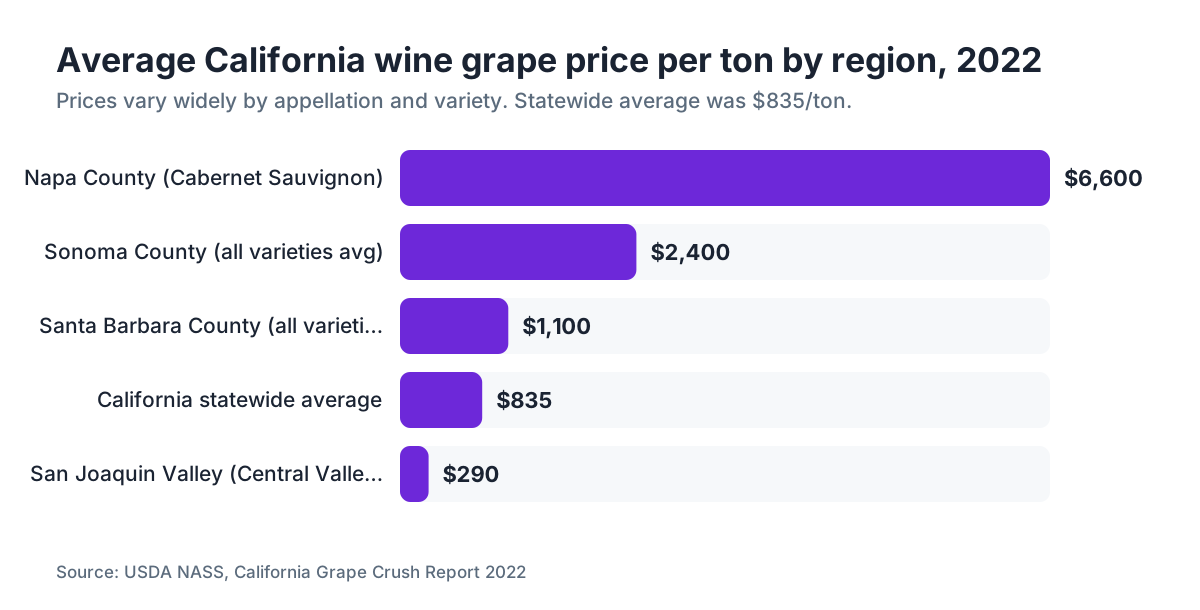
Napa Valley is probably the most recognized American wine region, planted mostly to Cabernet Sauvignon and Merlot on the valley floor and hillsides. The Mediterranean climate means almost no summer rain, which keeps disease pressure low but puts enormous weight on irrigation management. Napa Cabernet averaged around $6,600 per ton in the 2022 USDA crush report [9].
Sonoma County has more climate range than most regions its size. The Petaluma Gap and Sonoma Coast run cool enough for Pinot Noir and Chardonnay, while Alexander Valley runs warm enough for Cabernet. That spread means pest and disease programs vary wildly inside a single county.
Paso Robles, in San Luis Obispo County, has grown hard in planted acreage over the last 20 years. Paso Robles wineries like DAOU (see also DAOU Vineyards and Wines) put the region on the national map for Bordeaux-style reds. The east side has calcareous soils and big diurnal swings. The west side has more marine influence and cooler nights.
Washington State's Columbia Valley is the other major American wine grape region. Yakima Valley, Red Mountain, Horse Heaven Hills, and Walla Walla are all sub-AVAs within or next to Columbia Valley. The desert climate means very low disease pressure and heavy reliance on irrigation from the Yakima and Columbia River systems. WSU Extension's viticulture program at Prosser has driven the research here for decades [6].
New York, and the Finger Lakes in particular, has become one of the most serious cool-climate regions in the country for Riesling and increasingly for Pinot Noir. Cornell's New York State Agricultural Experiment Station in Geneva anchors the research, with strong work on cold-hardy varieties and disease-resistant breeding [10].
Smaller but notable regions include Virginia (especially around Charlottesville), Texas Hill Country, and Oregon's Willamette Valley. Each has its own regulatory setup, dominant varieties, and seasonal calendar.
Destination properties sit across many of these regions. Ponte Winery and South Coast Winery operate in Southern California's Temecula Valley, warm enough to ripen Bordeaux varieties yet close enough to the Pacific for cool nights.
How much does it cost to plant and operate a vineyard?
This is where a lot of aspiring owners get an education. The numbers are not small.
Establishing a new vineyard in California's North Coast (Napa, Sonoma) ran between $35,000 and $60,000 per acre in the most recent UC Davis cost studies, covering land clearing, soil prep, trellis, vines, planting, and three to four years of establishment care before the first commercial harvest [11]. San Joaquin Valley wine grape establishment runs lower, roughly $8,000 to $15,000 per acre, because land, labor, and trellis inputs all cost less. These figures move with inflation and input prices, so treat them as ranges.
Annual operating costs for a mature North Coast wine grape vineyard ran between $5,000 and $10,000 per acre in the same UC Davis studies [11]. Labor dominates, usually 50 to 60 percent of the total. Pruning alone can eat 20 percent of the annual labor budget.
The math only works if fruit price covers costs and leaves margin. USDA's National Agricultural Statistics Service tracks annual crush prices by region and variety. In California, the average price per ton across all wine grapes was about $835 in 2022, and that average hides enormous spread. Napa Cabernet at $6,600 a ton is a different business than Central Valley Chardonnay under $300 a ton [9].
Nobody should expect a fast return. Vines take three to four years to reach commercial production. Full production usually lands in years five through seven and beyond. The industry rule of thumb: you won't recover establishment costs until year seven to ten even in good conditions. That's not a scare tactic. That's how perennial crop farming works.
For historic properties and destination experiences, the economics reach past fruit sales. Renault Winery in New Jersey, one of the oldest continuously operating wineries in the U.S., is a good example of an operation where hospitality, events, and tourism run into the revenue model alongside fruit.
What is the vine-to-wine connection, and does an estate need both?
A vineyard and a winery are legally and physically separate operations, even sitting on the same property. The vineyard is the agricultural side. The winery is the manufacturing and bonded facility side, regulated by the Alcohol and Tobacco Tax and Trade Bureau (TTB) at the federal level and by state alcohol control boards at the state level [4].
You can own a vineyard without making wine. You can make wine without owning a vineyard. Plenty of growers farm fruit and sell to multiple wineries with no winery license at all. Plenty of urban brands source every ton from contract growers. Pairing the two under one roof is common, not required.
When a winery does own its vineyards, it can make certain label claims. "Estate bottled" is the strictest: TTB rules require that 100 percent of the wine come from grapes grown on vineyards owned or controlled by the winery, within the same appellation where the winery sits, and that the winery crush, ferment, finish, age, and bottle the wine [4]. "Estate vineyard" on a label signals exactly this kind of integrated operation.
For managers of these integrated operations, the compliance picture is layered. You're keeping TTB bonded winery records on one side and county PUR filings on the other, with the vineyard in the middle generating the agricultural data that feeds both.
What's the difference between a vineyard and a winery, a farm winery, and a tasting room?
These terms get mixed up constantly, and it causes real confusion in compliance work.
A vineyard is the agricultural planting. It produces fruit. It may or may not have any winemaking infrastructure on site.
A winery is the bonded wine premises registered with TTB, where wine is produced, aged, or stored. A winery keeps specific production records and holds a federal Basic Permit or Bonded Winery registration. State licensing requirements vary a lot.
A farm winery is a category defined by state law, not federal law, and it changes state to state. Most farm winery licenses allow direct-to-consumer sales, on-site tastings, and sometimes retail, in exchange for a required percentage of grapes from in-state or on-site sources. Virginia's farm winery framework, for example, sets in-state fruit thresholds by farm classification, with a common threshold at 51 percent Virginia-grown fruit under state law. New York's farm winery license carries similar in-state sourcing rules [10].
A tasting room is the retail and hospitality space. It can attach to the winery, sit in a separate building, or run off-site in an urban location. City Winery Chicago and City Winery Atlanta are urban tasting and production spaces that operate independently of any farming operation.
The practical point for compliance: each layer has its own record-keeping, and the records don't talk to each other by default. Spray records live in the vineyard. Production records live in the winery. TTB excise tax records live with the bonded premises. Keeping these synced is where a lot of small operations get burned at audit time.
What research and extension resources are available to vineyard operators?
The academic and extension infrastructure for U.S. viticulture is genuinely strong. These are the institutions doing the real work, and most of what they publish is free.
UC Davis Department of Viticulture and Enology is the flagship American program. Its farm advisors and cooperative extension specialists publish cost-of-production studies, pest management guidelines, irrigation research, and variety trial data. The UC IPM (Integrated Pest Management) program keeps a vineyard pest management database that's probably the single most useful free reference for California spray programs [5]. UC Davis viticulture extension lives at ucanr.edu.
Cornell University's viticulture program, based at the New York State Agricultural Experiment Station in Geneva, leads research on cold-climate varieties, canopy systems, and vine diseases. Its work on Concord and Labrusca varieties for the Finger Lakes is foundational [10].
Washington State University's viticulture and enology program at the Irrigated Agriculture Research and Extension Center in Prosser is the primary institution for Columbia Valley research. Its work on water management, soil health, and cold hardiness applies straight across the Pacific Northwest [6].
Virginia Tech runs viticulture extension for the Mid-Atlantic, and Penn State serves Pennsylvania and its neighbors. Almost every major wine grape state now has at least one university extension specialist dedicated to viticulture.
For pesticide compliance specifically, EPA's WPS resources sit at epa.gov, and the National Pesticide Information Center (npic.orst.edu) runs a free consultation hotline staffed by toxicologists and pesticide specialists.
Field records are where even experienced managers fall behind. VitiScribe was built for exactly this: spray logs, PHI calculations, WPS documentation, and block-level production records in one system. For a small operation handling compliance solo, a tool like that pays for itself the first time a buyer asks for an audit.
What is 'the vineyard' as a destination or brand, vs. the agricultural operation?
"The vineyard" in popular usage usually means a destination: a tasting room, a resort, an event venue. The agricultural reality underneath the brand is often more complex and less photogenic than the marketing.
Operations like Mountain Winery in the Santa Cruz Mountains or Arrington Vineyards in Tennessee run as much in the hospitality and events space as in fruit production. Arrington Vineyards, founded in 2007 outside Nashville, is one of the most visited wineries in the Southeast, with a busy events calendar and a strong tasting room alongside its estate blocks. It's a working vineyard, but the visitor experience drives the revenue.
That double role changes the operational rules. Worker protection gets harder when the public is on site during the growing season. Spray timing has to account for public access areas. Re-entry intervals must be posted and enforced even with visitors around. This is exactly the scenario the revised WPS was built to address more explicitly [7].
For buyers eyeing vineyards as investments or lifestyle properties, the gap between the destination brand and the farming operation is worth understanding clearly. The land, the vines, and the licenses are separate assets with different valuations, different operating risks, and different compliance requirements. A vineyard that reads like a weekend escape from the tasting room side needs a full-time field operation on the back side.
How do you keep vineyard records, and what does compliance actually look like day to day?
Compliance in a vineyard is mostly a records problem. The regulations themselves aren't hard to understand. The hard part is generating accurate, complete records in real time while you're pruning, irrigating, scouting, and harvesting.
The minimum records a California wine grape grower keeps: pesticide use reports filed monthly with the county ag commissioner, worker training records under WPS, water application records if operating under a groundwater management plan, and any certification records (organic, sustainability program). Washington and Oregon run similar requirements, with Oregon requiring pesticide use reports within 30 days of application for many agricultural operations under state pesticide use reporting law.
At its most basic, a spray record entry needs the date, the target crop and location (block ID or APN), the pest or disease treated, the product name and EPA registration number, the formulation, the application rate per acre, the total product used, the total acreage treated, the application method and equipment, the applicator's name and license number if applicable, and the REI and PHI for that product. Some states and certification programs want extra fields like wind speed, temperature, and adjuvants used.
Paper records are still legal and still common, especially on small operations. The problem is that paper doesn't calculate PHIs for you, doesn't flag an active re-entry interval, and doesn't spit out the formatted reports county commissioners and buyer auditors want. A single missed entry in a paper log can void a sustainability certification.
The honest advice is to pick a record-keeping system and stay consistent. Purpose-built platform or a well-organized spreadsheet, either can work. The discipline of logging applications the same day they happen is what separates growers who sail through audits from growers who spend two weeks rebuilding records out of chemical invoices and memory.
Frequently asked questions
What is a vineyard in simple terms?
A vineyard is a planted area of grapevines managed to produce fruit, most often for wine. It includes the land, the vines, and the trellis system, and it runs on a formal management program covering pruning, irrigation, pest control, and harvest. The word covers everything from a few backyard rows to thousands of commercial acres.
What are vineyards used for?
Most commercial vineyards in the U.S. grow wine grapes sold to a winery or crushed on-site. Table grape vineyards produce fresh fruit for retail. Raisin vineyards produce dried fruit. Some vineyards run mainly as destination or hospitality venues where the guest experience is the main revenue source, with fruit production as a secondary operation.
What is 'the vineyard' referring to when people use that phrase?
In common use, 'the vineyard' usually means a specific estate property or brand, often one with a tasting room or hospitality side. In field operations, 'the vineyard' or 'the vineyards' means the planted blocks out in the field, as distinct from the winery building. Context usually makes clear which meaning applies.
How many acres does a vineyard need to be commercial?
There's no universal legal minimum. The USDA Census of Agriculture counts any operation harvesting grapes on one or more acres. California requires pesticide use reporting for any commercial acreage regardless of size. In practice, most independent growers need at least 5 to 10 acres to cover fixed costs, though small estate vineyards of 2 to 4 acres exist, especially when attached to a direct-to-consumer winery.
What's the difference between a vineyard and a winery?
A vineyard is the agricultural planting: land, vines, and field operations. A winery is the bonded facility where wine is produced, regulated federally by TTB and at the state level by alcohol control authorities. They can share a property but stay legally and operationally separate. Many growers farm vineyards and sell fruit without any winery license at all.
What regulations apply to vineyard pesticide use?
At the federal level, the EPA Worker Protection Standard governs pesticide safety for agricultural workers and handlers. It requires training, re-entry interval compliance, and posting of application information. States add their own layers: California requires monthly pesticide use reports filed with the county agricultural commissioner. Oregon requires reports within 30 days of application. Every state with commercial viticulture runs some version of use reporting.
How long does it take a vineyard to produce commercial fruit?
Grapevines typically reach a first light commercial harvest in year three after planting, and full commercial production in years five through seven. Establishment costs accrue through those early years with no revenue. Most industry advisors use a seven-to-ten year window as the realistic timeframe to recover establishment costs, though that depends heavily on fruit prices and yield.
What is an estate vineyard vs. a non-estate vineyard?
Under TTB regulations, an estate vineyard is one owned or controlled by the winery, located in the same appellation as the winery, where the winery controls all viticulture. This status supports the 'estate bottled' label claim. A non-estate vineyard is owned by an independent grower who sells fruit under contract. Many excellent vineyards operate as non-estate grower parcels.
What are the biggest costs in running a vineyard?
Labor dominates, typically 50 to 60 percent of annual operating expenses. Pruning alone can run 15 to 20 percent of the labor budget. Establishment costs in California's North Coast run $35,000 to $60,000 per acre including trellis, plant material, and pre-production years, according to UC Davis cost studies. Annual operating costs for a mature North Coast vineyard run $5,000 to $10,000 per acre.
What extension programs support vineyard operators?
UC Davis is the flagship for California viticulture, with UC IPM publishing the primary pest management guidelines. Cornell University's Geneva station leads cold-climate variety and canopy research for the Northeast. WSU's Prosser center covers the Pacific Northwest, especially Columbia Valley irrigation and cold hardiness. Each program publishes free cost studies, spray guides, and variety trial data for its region.
What records does a vineyard have to keep?
At minimum: pesticide use reports (filed monthly in California), worker training records under the federal WPS, water use records if under a groundwater management plan, and any organic or sustainability certification documentation. Each spray application record must include date, block, product name, EPA registration number, rate, total volume, acreage, applicator, and the PHI and REI for the product used.
What is Arrington Vineyards?
Arrington Vineyards is an estate winery and vineyard outside Nashville, Tennessee, founded in 2007. It's one of the most visited wineries in the Southeast, running estate vineyard blocks alongside a large hospitality and events business. It's a working example of a destination vineyard model where tasting room and event revenue is intertwined with fruit production.
Can a vineyard be organic, and what does that require?
Yes. Organic vineyard certification under the USDA National Organic Program requires a 36-month transition period from the last prohibited substance application. Certified organic vineyards can use copper-based fungicides within allowed rates, sulfur, mineral oils, and biological agents. Synthetic pesticides, synthetic fertilizers, and GMO materials are prohibited. Annual inspection by an accredited certifier is required to keep certification.
What grape varieties are most commonly grown in U.S. vineyards?
In California, Chardonnay, Cabernet Sauvignon, and Merlot lead by acreage. Washington State runs heavy on Cabernet Sauvignon, Riesling, and Merlot. Oregon is known for Pinot Noir. New York's Finger Lakes produces Riesling and Concord. Cold-climate states grow hybrids like Marquette, Frontenac, and La Crescent, bred for winter hardiness. USDA NASS tracks planted acreage by variety annually.
Sources
- California Department of Pesticide Regulation, Pesticide Use Reporting: California requires pesticide use reports to be filed with the county agricultural commissioner monthly for all commercial agricultural operations
- USDA National Agricultural Statistics Service, Census of Agriculture: USDA NASS counts vineyards in the Census of Agriculture as any operation that harvested grapes on one or more acres
- International Organisation of Vine and Wine (OIV), World Vitiviniculture Report 2023: Global planted area of wine grapes was approximately 7.3 million hectares as of 2022
- UC IPM, UC Statewide Integrated Pest Management Program, Grapes: UC IPM publishes pesticide application guidelines, pest identification, and spray timing information for California wine grape vineyards
- Washington State University Extension, Viticulture and Enology: WSU Extension Prosser publishes irrigation management, cold hardiness, and variety research for Pacific Northwest wine grape vineyards
- US EPA, Worker Protection Standard for Agricultural Pesticides: The EPA Worker Protection Standard, revised in 2015 and effective 2017, requires pesticide safety training, REI compliance, and application information posting for agricultural workers and handlers
- USDA Agricultural Marketing Service, National Organic Program: USDA NOP requires a 36-month transition period from the last prohibited substance application before organic certification can be granted
- USDA National Agricultural Statistics Service, California Grape Crush Report 2022: Average price per ton across all California wine grapes was approximately $835 in 2022; Napa County Cabernet Sauvignon averaged approximately $6,600 per ton
- Cornell University New York State Agricultural Experiment Station, Viticulture Extension: Cornell NYSAES Geneva leads research on cold-hardy varieties, canopy management, and New York State viticulture, including Riesling and Pinot Noir for the Finger Lakes region
- UC Davis Department of Agricultural and Resource Economics, Sample Costs to Establish and Produce Wine Grapes: Establishment costs for a new vineyard in California's North Coast ran between $35,000 and $60,000 per acre; annual operating costs for a mature wine grape vineyard ran $5,000 to $10,000 per acre
Last updated 2026-07-09