Botrytis risk management at bunch closure in tight-clustered varieties
TL;DR
- Bunch closure (BBCH 77-79) is the single highest-risk window for Botrytis in tight-clustered varieties like Pinot Noir, Gewürztraminer, and Muscat.
- The berry skin is thin, the cluster architecture traps humidity, and any wound from insects or weather opens the door.
- A fungicide application timed to 50% bunch closure, paired with fruit-zone leaf removal, cuts season-end Botrytis incidence by 30 to 50 percent in high-pressure years.
Why is bunch closure the most dangerous Botrytis window?
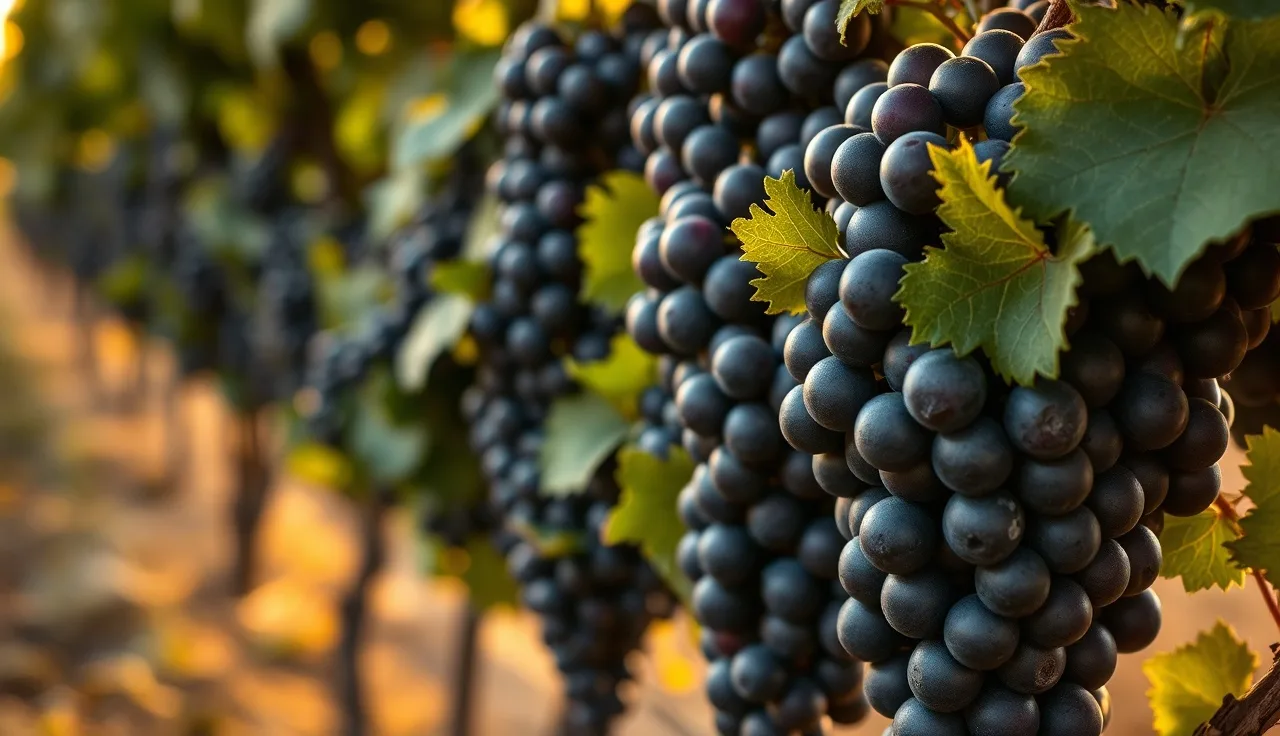
Bunch closure is when the berries in a cluster press tight against each other, usually around BBCH 77-79, and it's the moment a tight-clustered block is most likely to get away from you. Air movement through the cluster drops to near zero. Relative humidity inside the bunch stays high even when the outside air dries out. Any surface moisture lingers long enough for Botrytis cinerea spores to germinate. The fungus needs free moisture for only about 6 to 8 hours at 15 to 25°C to establish an infection on grape tissue. [1]
Tight-clustered varieties make this worse by design. Pinot Noir, Gewürztraminer, Muscat Blanc, dense Riesling clones, and Sangiovese can all develop cluster compactness ratings that essentially seal off the interior of the bunch. Cornell's viticulture team has documented that cluster compactness scores above 3 (on a 1 to 5 scale) are associated with measurably higher Botrytis incidence at harvest. [2] The berries physically push on each other, micro-cracking the skin, and that wound is exactly where B. cinerea walks in.
The window is narrow and it doesn't forgive. Once berries are 70 to 80 percent of final size and touching, you can't mechanically separate them. You're stuck with the architecture you grew. Everything before that point (canopy management, cluster thinning, early-season nutrition) was shaping your odds. At bunch closure itself your tools shrink to fungicide timing and scouting.
Nobody has clean predictive data on exactly how many hours of leaf wetness turn into a specific percent infection at this stage. The closest widely-used tool is the Botrytis Risk Model developed through Washington State University's extension network, which folds temperature, relative humidity, and leaf wetness hours into a daily risk index. [3] It's not a guarantee. Growers who use it will tell you it's just as good at telling you when not to spray, which saves money.
Which grape varieties are most vulnerable at bunch closure?
Variety decides most of it. Cluster compactness is largely genetic, and some varieties just pack tighter than others no matter how well you farm them.
Pinot Noir is the textbook case. The Burgundian clones (113, 115, 667, 777) all form dense cylindrical or conical clusters where berries touch by véraison, sometimes earlier. At bunch closure the cluster interior is cut off from airflow entirely. Pinot Noir also has thin skin, so there's less physical barrier to infection. [4]
Gewürztraminer forms extremely tight clusters, and the berries run slightly elliptical, so they wedge against each other with even less air space than a round-berried variety. Field observation lines up year after year: Gewürztraminer carries higher Botrytis pressure than an adjacent Riesling block under identical weather.
Muscat varieties, especially Muscat Blanc à Petits Grains, have the same trouble. The clusters are compact and the skin is thin and sugar-rich, which feeds both the fungus and the insects (mainly grape berry moth larvae) that punch the wounds it exploits.
Loose-clustered varieties carry dramatically lower risk. Some Zinfandel clones, Grenache, and Viognier never let berries press together enough to build the sealed microclimate. Farm both tight and loose varieties on limited spray capacity, and the tight ones get first priority every single time.
| Variety | Cluster compactness tendency | Relative Botrytis risk at bunch closure |
|---|---|---|
| Pinot Noir (clones 115, 667) | Very tight | High |
| Gewürztraminer | Very tight | High |
| Muscat Blanc | Tight | High |
| Riesling (compact clones) | Tight | Moderate-high |
| Chardonnay | Moderate | Moderate |
| Cabernet Sauvignon | Loose-moderate | Low-moderate |
| Grenache | Loose | Low |
| Viognier | Loose | Low |
What does the Botrytis disease cycle look like inside a tight cluster?
B. cinerea overwinters as sclerotia or mycelium on dormant wood, cane stubs, and mummified berries from the prior season. [1] In spring it produces conidiophores that release huge quantities of conidia into the air. These land on flower parts during bloom, where they set up latent infections that sit dormant in the receptacle tissue until conditions at bunch closure wake them up.
That latent pathway is the one that ambushes people. The cluster looks clean at bunch closure. No visible gray mold. Then a rain event at BBCH 79-81 delivers the moisture pulse, and within 72 hours you have sporulation spreading berry to berry through the compressed interior of the bunch. By the time you spot it from the tractor seat, it's already several berries deep.
The second pathway is direct: a fresh spore landing on a wound at or after bunch closure. Grape berry moth feeding, hail, spray phytotoxicity, and the physical pressure cracks all open entry points. That's why insect control and wound avoidance matter even when Botrytis is your only target.
Sporulation is the visible gray powdery stage, and it throws secondary conidia that jump to neighboring clusters. One infected cluster left on the vine can seed a whole run in humid weather. Pulling visibly infected clusters during canopy walks is real disease management. It's more than tidying up.
How should you time fungicide applications around bunch closure?
Spray at 50% bunch closure, roughly BBCH 77, if you only get one shot at this stage. That's the timing UC Davis Cooperative Extension calls the most effective single application here. [4] The logic is simple: you still get some spray into the cluster before it seals, and you're putting active ingredient on the berry surfaces before the worst of the risk arrives.
If your program allows two sprays in this window, Cornell recommends a second one 10 to 14 days after the first, assuming pressure stays up. [2] With tight-clustered varieties in wet years, skipping that second spray has cost growers real crop.
Timing against rain matters just as much. A pre-rain application 24 to 48 hours before the event beats a post-rain rescue spray almost every time. The fungicide needs contact time to absorb into tissue or set a protective barrier. Post-rain sprays are still worth doing if you blew the window, but lower your expectations.
Timing also has to fit EPA Worker Protection Standard rules under 40 CFR Part 170. [5] Restricted-entry intervals for Botrytis fungicides run from 4 hours (some FRAC 7 products used with enclosed-cab tractors) up to 48 hours for older chemistries. Check the specific label. The label is the law. You can't put a crew into a treated block before the REI expires, and that bites hard when you're also hedging and shoot-tipping around the same growth stage.
Which fungicide groups work best against Botrytis at this stage, and how do you manage resistance?
Botrytis cinerea builds fungicide resistance fast, and the reason is its biology. It produces millions of spores a season, has a short generation time, and has sat under fungicide pressure for decades in vineyards worldwide. Resistance to benzimidazoles (FRAC 1), dicarboximides (FRAC 2), and anilinopyrimidines (FRAC 9) is documented globally. [1]
The chemistry groups still pulling their weight:
- FRAC 7 (SDHI): boscalid (Endura), fluopyram (Luna Privilege). Effective, but resistance shows up in some California and Pacific Northwest populations. Cap it at two FRAC 7 sprays per season.
- FRAC 11 (QoI / strobilurins): weak on Botrytis alone, and resistance is widespread. Not a primary tool, though some pre-mixes carry one.
- FRAC 17 (phenylpyrroles): fludioxonil (Scholar, Cannonball). Strong activity, low resistance risk so far. A good pick for a bunch-closure spray.
- FRAC 9 (anilinopyrimidines): cyprodinil, often sold pre-mixed with fludioxonil as Switch (FRAC 9 + 17), which gives you two modes of action in one pass.
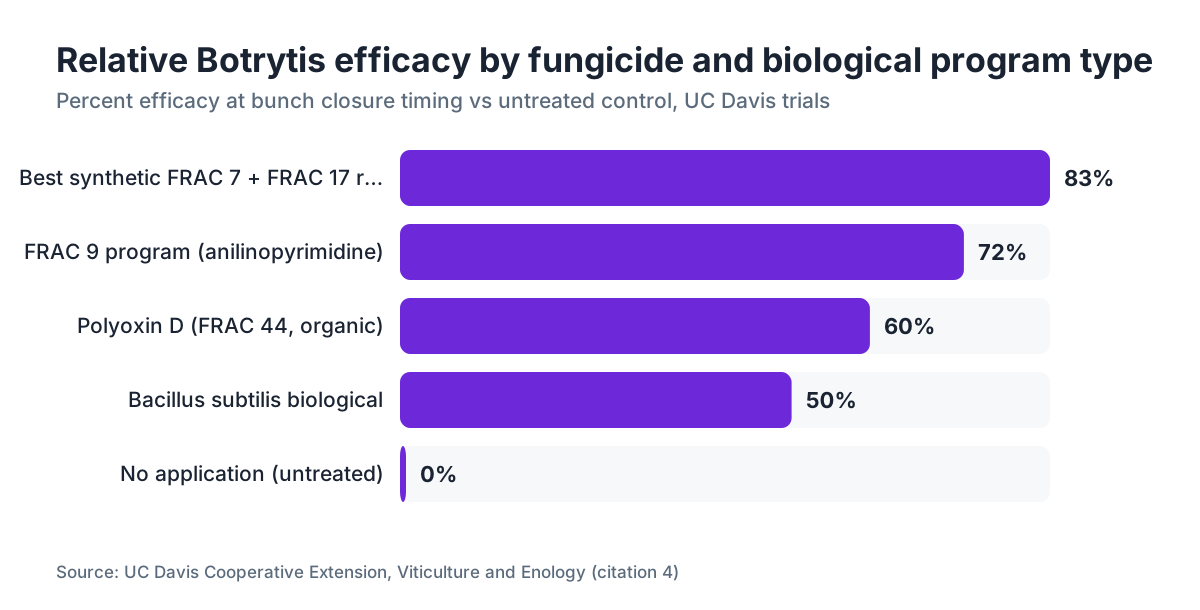
- FRAC 44 (polyoxins): polyoxin D (OSO, Ph-D). OMRI-listed for organic programs. Good efficacy in trials at correct timing, but more rain-sensitive than synthetics.
- Biologicals (Bacillus subtilis, Trichoderma): UC Davis trials show 40 to 60 percent efficacy in low-to-moderate pressure years against 70 to 85 percent for the best synthetic programs. [4] Useful in organic programs or as resistance-management tools, but no substitute for synthetic chemistry in a high-pressure year.
WSU's Pesticide Management Guide says to alternate FRAC groups every application at minimum, and never apply the same group more than twice per season. [3] The discipline is in the records: knowing which FRAC group you put down and when. Run that on paper across a complex program and it's easy to lose the thread. A spray records platform like VitiScribe can flag you before you double up on a resistance group.
| FRAC group | Example product | Resistance risk | Organic-approved? |
|---|---|---|---|
| FRAC 1 (benzimidazoles) | Topsin-M | High (avoid) | No |
| FRAC 2 (dicarboximides) | Iprodione | Moderate-high | No |
| FRAC 7 (SDHI) | Endura, Luna Privilege | Moderate | No |
| FRAC 9 (anilinopyrimidines) | Vangard | Moderate | No |
| FRAC 17 (phenylpyrroles) | Cannonball | Low | No |
| FRAC 44 (polyoxins) | OSO, Ph-D | Low | Yes |
| Biological (Bacillus) | Serenade Optimum | Very low | Yes |
What canopy management practices reduce Botrytis pressure before bunch closure?
Fungicide timing matters, but the canopy you've built by bunch closure decides how exposed the clusters are and how well any spray reaches them. You can't spray your way out of a wall of leaves.
Fruit-zone leaf removal is the single most effective cultural practice for Botrytis in tight-clustered varieties. Trials from Cornell, UC Davis, and WSU all show that pulling 2 to 4 leaves on the east or morning-sun side of the canopy cuts Botrytis at harvest by 30 to 50 percent in high-pressure years. [2] The mechanism is plain: better airflow dries the cluster surface faster after rain or dew, and sun exposure slows conidial germination.
When you pull matters almost as much as the pulling itself. Early leaf removal at or before flowering (BBCH 57-65) in Pinot Noir reduces cluster compactness itself, which is a different and larger benefit than airflow, and it's held up across Oregon and European trials. [10] Disrupting shoot growth during that window loosens the cluster architecture a little. Late leaf removal at bunch closure still helps disease control but does almost nothing to compactness, since that's already set in stone.
Shoot positioning and hedging move a lot of air. A hedged canopy with shoots vertical and spaced 8 to 12 per foot of cordon pushes air through the fruit zone far better than a sprawling mess. Obvious, and still the first thing that slips when spring crews are stretched thin.
Cluster thinning is drastic and it works. Dropping 20 to 30 percent of clusters in tight-clustered varieties eases crop load stress and opens airflow around what's left. In high-value Pinot Noir it's standard in premium programs. It costs, roughly 8 to 15 hours per acre for hand thinning, but the Botrytis payoff in a wet year can carry that number.
How do you scout for early Botrytis symptoms at and after bunch closure?
Early detection changes what you can still do about it. Once you see classic gray sporulation from the vine row, you're watching active spread, not catching it early.
At bunch closure, look for infected flower parts (brown, dried rachis tissue) left over from bloom. That's your first visible sign of latent bloom-stage infection, and it predicts higher risk for the current cluster. Brown rachis at BBCH 77 is a flag to tighten your spray interval and pull leaves now if you haven't.
Berry symptoms start as a water-soaked brown spot, usually on the shoulder where the berry contacts a neighbor or the rachis. It's small, maybe 2 to 4mm, and easy to miss unless you physically part the cluster shoulders. Train scouts to do exactly that. A 100-berry count through a block, pulling clusters open to check the interior, gives you a real read on incidence.
Weather scouting counts as much as your eyes. Track leaf wetness hours and overnight lows in each block. Three or more nights with 6-plus hours of leaf wetness and temperatures between 15 and 25°C is a signal to scout hard and consider spraying whether or not you see symptoms yet. The WSU Botrytis risk model puts numbers on that same instinct. [3]
Write down what you find. Incidence (percent of clusters with symptoms) and severity (percent of cluster area affected) on a simple scouting form give you season-over-season data that sharpens your timing calls over the years.
How do spray records and compliance documentation connect to Botrytis applications?
Every pesticide application in a commercial vineyard needs a written record. In California, Arizona, and most western states that means a completed Pesticide Use Report filed with the county agricultural commissioner, often within 7 days for restricted-use pesticides. [6] Federal rules under EPA WPS require a central posting of application information that workers and handlers can get to. [5]
For Botrytis specifically, the two things that most often trip up vineyard managers are REI calculations and re-entry records. Spray a FRAC 17 or FRAC 7 fungicide with a 12-hour REI, then send a hedging crew in the next morning, and somebody has to verify the interval has passed, log that verification, and document worker training. EPA WPS requires annual pesticide safety training for agricultural workers who work in treated areas. [5]
The USDA National Organic Program wants certified organic growers to document why each material went on, more than what went on. [7] For an OMRI-listed product like polyoxin D, you need IPM justification in the file: what scouting showed, what the weather was, why you chose that product. Your certifier will ask. Have the scouting records to back each decision.
Good records also catch resistance mistakes before they become a season pattern. Log by product, date, FRAC code, and rate, and you can look back and see whether FRAC 7 quietly went on three times in 30 days. Paper makes that hard to audit. A field records platform like VitiScribe helps here because it keeps the FRAC code tied to each application and shows the full season program on one screen.
Label requirements are federal law under FIFRA. An application that departs from the label (wrong rate, wrong crop, wrong PHI) is a federal violation. [8] Always check the pre-harvest interval against your planned pick date before you spray anything in the Botrytis window, which by definition is close to harvest in tight-clustered varieties.
What are realistic Botrytis loss thresholds and what does infection actually cost?
There's no single published economic threshold for Botrytis in wine grapes, because it swings so much by variety, price tier, and end use. But a few reference points hold up.
UC Davis extension research puts average Botrytis loss at 5 to 10 percent of marketable yield in a typical California season, climbing past 20 percent in susceptible varieties during wet years. [4] At $1,500 to $3,000 per ton for premium Pinot Noir, a 20 percent loss in a 4-ton-per-acre block is $1,200 to $2,400 per acre gone. A full Botrytis program from bunch closure through pre-harvest runs about $150 to $300 per acre in product and application. In a high-value block the math isn't close.
The less obvious cost is quality. Infected fruit that reaches the fermentor carries laccase, an oxidative enzyme that browns wine prematurely and is a headache to manage. It also knocks back native yeast and throws off-aromas. Winemakers call even 3 to 5 percent Botrytis-infected fruit in a Pinot Noir lot a serious problem. The yield numbers understate the real hit.
Growers selling under contract face a harder edge. Botrytis contamination above a threshold (commonly 5 percent by weight, though terms vary a lot) can trigger price penalties or outright rejection. Read your contract before harvest. It's one more reason to keep dated scouting records showing you managed the disease hard: they're your due-diligence file if a dispute lands.
How do organic and low-intervention programs handle Botrytis at bunch closure?
Organic Botrytis management at bunch closure is harder. Full stop. The best organic tools are weaker than the best synthetics, and the gap is widest in high-pressure years with wet, cool weather.
Still, organic programs can get acceptable results in moderate-pressure years with the right stack. Here's what actually works in the field:
First, canopy management has to be tighter than in a conventional program. Earlier and harder leaf removal, disciplined shoot thinning, consistent hedging, none of it optional. The biology doesn't care that you're organic: airflow and cluster exposure still rule.
Second, polyoxin D (Ph-D, OSO) is the most consistently effective OMRI-listed Botrytis fungicide in current use. UC Davis trials put it at 55 to 65 percent efficacy at correct timing and intervals. [4] Real, not great, but real.
Third, copper plus sulfur combinations have some suppressive effect, though most registrations don't label them for Botrytis specifically. Copper carries documented phytotoxicity risk at berry stage if you push the rate. Check the label.
Fourth, biologicals (Bacillus subtilis, Trichoderma asperellum) add efficacy on top of cultural practices. The evidence supports them as part of a stacked program, not as a standalone answer.
The honest word for growers farming Pinot Noir organically in wet regions: your risk is real and your toolbox is short. Pick clones and rootstocks that favor open canopy architecture, nail your leaf removal timing, and accept that a bad year will cost you fruit.
On records, every OMRI-listed application still needs documentation. USDA NOP requires records be kept for 5 years. [7] Your certifier can pull any of them at any time.
How should you prepare a Botrytis spray program plan before the season starts?
Pre-season planning isn't glamorous, but it heads off the panicked mid-season call to your chemical supplier where you learn the product you need is on backorder.
Start with a variety and block risk map. List every block, its dominant variety, cluster compactness rating if you've assessed it, and its Botrytis history from prior harvests. That tells you where the high-priority sprays land. It also tells you roughly how many acres of tight-clustered material you're managing, which scales straight to gallons of product.
Build your FRAC rotation before you order anything. Most programs from bunch closure through pre-harvest run 3 to 4 Botrytis applications. Map which FRAC group goes in each slot and make sure you're not repeating a group inside any 21-day window. Then order to the plan.
Check pre-harvest intervals against your historical pick dates. If you pull Pinot Noir the third week of September, any product with a 14-day PHI has to be down by early September at the latest. Map it backward from harvest, not forward from bunch closure.
Verify worker training records. EPA WPS requires agricultural workers to get pesticide safety training before working in treated areas. [5] Those records have to be on file. Onboarding seasonal crews in spring? This is part of the paperwork stack, not an afterthought.
For vineyard operations of any scale, having this plan written down and tied to your spray records from day one makes compliance audits easier and makes mid-season calls faster when the weather moves your intended spray window.
Frequently asked questions
When exactly is bunch closure in Pinot Noir, by BBCH scale?
Bunch closure in Pinot Noir usually falls between BBCH 77 (75% of berries at final size) and BBCH 79 (all berries at final size, cluster compact). In most California and Pacific Northwest vineyards that lands late June through early August depending on clone, elevation, and heat accumulation. Tracking BBCH phenology in your specific block, instead of leaning on calendar dates, gives you the most reliable spray-timing anchor.
How many hours of leaf wetness does Botrytis actually need to infect a grape berry?
At 15 to 25°C, B. cinerea conidia can germinate and penetrate susceptible grape tissue with as little as 6 to 8 continuous hours of free moisture on the surface. Below 10°C and above 30°C the risk drops sharply. This threshold underpins most weather-based risk models, including the WSU Botrytis Risk Model, which combines temperature and wetness hours into a daily risk index for spray-timing decisions.
Can you use a single fungicide product for all Botrytis applications at bunch closure?
No. Applying the same FRAC group repeatedly in a season selects for resistant B. cinerea strains fast. Resistance to multiple FRAC groups already exists in commercial vineyard populations globally. Resistance-management guidelines from WSU and Cornell require rotating FRAC groups each application, and most cap any single group at two applications per season. Check the label for specific resistance-management language, which is legally binding.
What is the pre-harvest interval for common Botrytis fungicides in wine grapes?
PHIs vary by product. Fludioxonil (Cannonball) has a 7-day PHI. Boscalid (Endura) is 7 days. Cyprodinil-fludioxonil (Switch) is 7 days. Fluopyram (Luna Privilege) is 7 days. Iprodione (Rovral) is 7 days for wine grapes. Always verify against the current product label, because registrations change. Applying inside the PHI is a FIFRA violation regardless of what you've heard from other growers.
Does early leaf removal actually reduce cluster compactness in Pinot Noir?
Yes, with proper timing. Leaf removal at or before flowering (BBCH 57-65) reduces cluster compactness scores in Pinot Noir across trials in Oregon, Germany, and New Zealand. The mechanism: disrupting the leaf-area-to-cluster relationship while cluster structure is still being set slightly lowers berry-set density. Leaf removal after bunch closure improves airflow but does almost nothing to compactness itself, since that's already fixed.
How do I calculate the restricted-entry interval start time after a fungicide application?
The REI clock starts when the application equipment leaves the treated area, not when you start spraying. Spray a block from 8 AM to 11 AM and the REI starts at 11 AM. For a 12-hour REI, re-entry is allowed after 11 PM that night, assuming all other conditions are met. Some products add a drying or ventilation period. The label specifies both the REI and any supplemental conditions. Keep your spray log entry timestamped to support the calculation.
Is Botrytis worse in drip-irrigated vineyards or overhead-irrigated vineyards?
Overhead or sprinkler irrigation creates leaf wetness events much like rain and sharply raises Botrytis risk in tight-clustered varieties. Drip irrigation delivers water below the canopy to the root zone and has far less effect on leaf and cluster surface wetness. Vineyards switching from overhead to drip often report measurable Botrytis reductions in susceptible varieties. It's one of the clearest links between irrigation choice and disease pressure in viticulture.
What spray volume and nozzle type achieves best cluster penetration at bunch closure?
Higher water volumes (100 to 150 gallons per acre for hand-gun or air-blast application) with air-blast set to push spray into the canopy beat low-volume mist for cluster penetration. Hollow-cone nozzles on air-blast sprayers aimed at the fruit zone outperform flat-fan nozzles for cluster contact. Cornell spray-technology research stresses that ground speed under 4 mph with fan airflow directed at cluster height improves deposition on interior cluster surfaces.
How do I manage Botrytis risk after a hail event at bunch closure?
Hail leaves wound sites on berries and rachis tissue that are among the highest-risk infection points for B. cinerea. Apply a Botrytis fungicide as soon as practical, ideally within 24 hours. Use a contact-mode product with good wound protection like fludioxonil rather than a systemic alone. Document the weather event, the date and time of application, and the product used. With severe damage, scout every 5 to 7 days for the next 3 weeks.
What records do organic growers need to keep for Botrytis spray applications?
USDA NOP requires organic growers to keep records of all inputs for 5 years, including product name, lot number where applicable, application date, rate, and the pest or disease justification. Your certifier will want to see a documented reason (scouting data, weather, disease history) behind each application. Records showing the product's OMRI status, the FRAC group, and the scouting observations that triggered the decision are the standard expectation.
Can you reduce Botrytis in tight-clustered varieties through rootstock or clone selection?
Yes, though the effect varies. Within Pinot Noir, clones 828 and Pommard tend to form slightly looser clusters than 115 or 667, one practical factor alongside ripening and yield. Some Chardonnay clones (Mendoza, Clone 4) run tighter than Old Wente selections. Rootstock has less direct effect on compactness than scion clone, though rootstocks that drive vigor indirectly change canopy density and the disease environment. This is a long-term tool, not an in-season fix.
How does nutrition management affect Botrytis susceptibility at bunch closure?
High nitrogen late in the season drives excessive shoot growth, dense canopies, and thinner berry skins, all of which raise Botrytis susceptibility. Moderate nitrogen applied early (pre-bloom) rather than in summer, plus attention to canopy density through shoot and leaf management, reduces the indirect risk from nutrition. Boron deficiency is sometimes tied to irregular berry set and looser rachis structure, but its link to Botrytis is secondary to canopy architecture effects.
What is the difference between Botrytis bunch rot and sour rot, and does it change management at bunch closure?
Botrytis bunch rot is caused solely by Botrytis cinerea and produces the classic gray mold and dried, shriveled berries. Sour rot is a complex of bacteria, yeasts, and Botrytis that produces vinegar-smelling, leaking berries, mostly in damaged clusters in warm, humid conditions near harvest. At bunch closure, Botrytis is the primary concern. Management overlaps (reduce wounding, keep canopy airflow up) but sour rot also needs insect control, particularly Drosophila species, which carry the bacterial and yeast components.
How far in advance should you apply a Botrytis fungicide before a rain event?
Applying 24 to 48 hours before rain gives most contact and translaminar fungicides time to dry and absorb into berry-skin tissue. Applications made 12 hours or less before rain have reduced efficacy because the active ingredient hasn't adhered or absorbed. Post-rain applications within 4 to 6 hours of the rain stopping still give meaningful protection by curbing secondary spread from active infections, but pre-rain timing wins consistently in disease-pressure trials.
Sources
- UC ANR Publication 3343, Grape Pest Management: B. cinerea requires 6-8 hours of free moisture at 15-25°C for infection; overwinters as sclerotia on dormant wood; resistance to FRAC 1, 2, and 9 is documented globally
- Cornell University College of Agriculture and Life Sciences, Grape and Wine viticulture program: Cluster compactness scores above 3 (1-5 scale) associated with higher Botrytis at harvest; second spray 10-14 days after first recommended; fruit-zone leaf removal cuts Botrytis 30-50% in high-pressure years
- Washington State University Extension, Viticulture and Enology: WSU Botrytis Risk Model integrates temperature, RH, and leaf wetness hours; FRAC group rotation recommended every application, no single group more than twice per season
- UC Davis Cooperative Extension, Viticulture and Enology: 50% bunch closure is most effective single-application timing; Botrytis reduces marketable yield 5-10% in typical California seasons, over 20% in wet years; OMRI-listed biologicals show 40-60% efficacy vs 70-85% for best synthetic programs; Polyoxin D at 55-65% efficacy in trials
- US EPA, Worker Protection Standard, 40 CFR Part 170: REI requirements for pesticide applications; annual pesticide safety training required for agricultural workers in pesticide-treated areas; central posting of application information required
- California Department of Pesticide Regulation, Pesticide Use Reporting: Completed Pesticide Use Reports required within 7 days for restricted-use pesticides in California; filing with county agricultural commissioner required
- USDA National Organic Program, 7 CFR Part 205: Organic growers must document why each material was used, more than what was applied; records must be maintained for 5 years
- US EPA, Federal Insecticide, Fungicide, and Rodenticide Act (FIFRA): Application deviating from pesticide label is a federal violation under FIFRA; label is legally binding including PHI and rate requirements
- Oregon State University Extension, Viticulture Program: Early leaf removal at or before flowering reduces cluster compactness in Pinot Noir; documented in Oregon and European trials
Last updated 2026-07-11