Acid injection documentation for drip system management in vineyards
TL;DR
- Acid injection into drip irrigation systems requires dated logs of injection rate, product used, water pH before and after, system flush time, and applicator name.
- California and most western states treat acidification as a pesticide-adjacent operation under WPS and state ag codes, meaning records must be kept three to five years and available for inspector review within 24 hours.
Why do vineyard drip systems need acid injection in the first place?
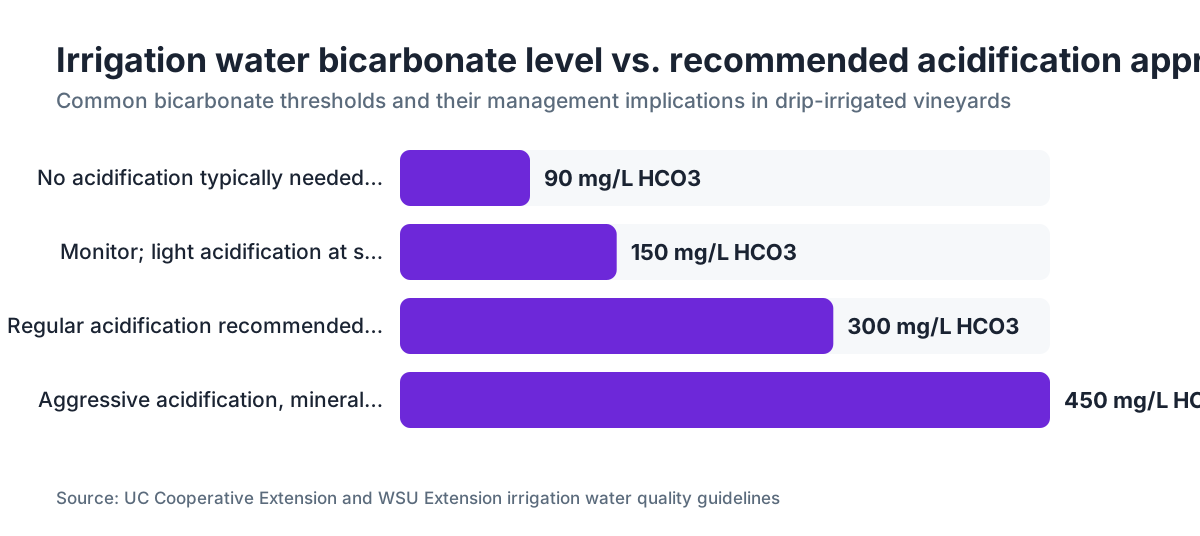
Hard water is the core problem. When irrigation water carries high bicarbonate levels, typically above 90 to 120 mg/L, the bicarbonate reacts with calcium and magnesium in the soil and inside drip emitters to form scale deposits [1]. Those deposits clog emitters over a season or two, and once a block has 15 to 20 percent emitter failure, vine-to-vine water distribution falls apart fast.
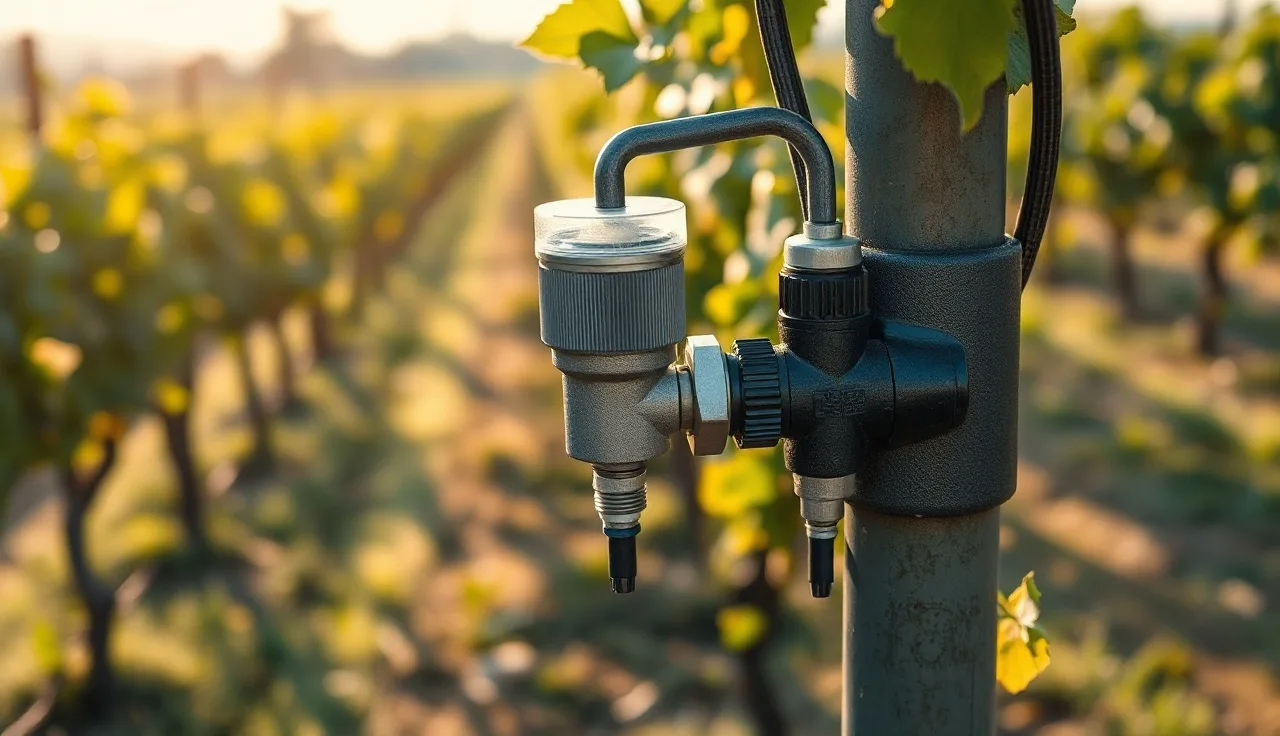
The fix is acidification: injecting a dilute acid, usually sulfuric, phosphoric, or citric, into the mainline to drop irrigation water pH from a typical field value of 7.5 to 8.5 down to a target of 6.0 to 6.5 at the emitter [2]. That range keeps calcium carbonate in solution instead of letting it precipitate inside the dripper.
Acid injection also dissolves light existing scale and can reopen partially clogged emitters without a chlorine flush. Phosphoric acid delivers a small dose of phosphorus to the root zone, which some growers in phosphorus-poor soils like, though the agronomic contribution is minor next to a real fertigation program.
Here is the catch. Acids are hazardous materials. They burn skin, damage eyes, and the concentrate stock solutions typically run 93 to 98 percent for sulfuric acid and 75 to 85 percent for phosphoric acid. That hazard is exactly why regulators and your own liability insurance want a paper trail.
What regulations govern acid injection record-keeping in vineyards?
Several layers apply, and they overlap in ways that confuse even experienced operators. Here is how they stack up.
At the federal level, the EPA Worker Protection Standard (WPS) under 40 CFR Part 170 covers agricultural pesticide applications. Sulfuric and phosphoric acids used purely for water treatment are generally not registered pesticides, so WPS does not directly mandate records for the injection event itself [3]. What WPS does cover is worker re-entry and notification if any acid product is also registered as a pesticide or doubles as a fertilizer-pesticide combination product. Check your product label. If it carries an EPA registration number, WPS records apply, full stop.
State rules run tighter. California's Department of Pesticide Regulation (CDPR) requires that any person who applies a pesticide, or handles certain hazardous materials in a commercial agricultural setting, keep written application records under California Food and Agricultural Code Section 12981 [4]. Even when an acid is not a registered pesticide, the county Agricultural Commissioner in many counties expects acidification logs as part of a water management plan, especially for operations enrolled in the Irrigated Lands Regulatory Program (ILRP) [8].
Washington State requires chemigation permits for any chemical injection into an irrigation system that could reach groundwater or surface water, administered through the Washington State Department of Agriculture (WSDA) [5]. Oregon has similar chemigation rules under ORS Chapter 633 [11].
Growers in the Lodi Rules, CCOF, or SIP certified programs face internal audit records for acid injection regardless of what state law says. The USDA National Organic Program requires certified producers to document every material applied to the field, including acidification agents, to verify no prohibited substances entered the system [10].
So here is the bottom line. Even in a state with no explicit chemigation statute, your pesticide applicator license, your crop insurance policy, and your buyer's food safety audit almost certainly require acidification logs. Three years is the minimum most programs accept. Five years is the standard that holds up in most legal or audit contexts.
What information must an acid injection log actually contain?
A compliant acid injection record needs, at minimum, these fields:
Date and time of injection. Include start and stop time so you can calculate total acid volume delivered.
Field or block ID. Match this to your vineyard map. If you're managing multiple zones on one header, log each zone separately.
Water source. Name the well, canal, or reservoir. This matters for groundwater reports and for troubleshooting if pH swings unexpectedly.
Acid product used. Full product name, manufacturer, and EPA or state registration number if one exists. For industrial-grade acids with no ag registration, log the SDS (Safety Data Sheet) document number.
Concentration of stock solution. Note what you received from the supplier, e.g., 98% H2SO4, and any dilution you made before loading the injection tank.
Injection rate. Record in milliliters per hour or gallons per hour at the injector, or as a ratio to flow rate (ppm is acceptable if you can back-calculate from system flow data).
Target and achieved pH. Log pH of source water before injection and pH measured at the distal end of the drip zone after the system has run for at least 10 to 15 minutes. Some county commissioners want pH logged at three points: source, header, and tail-end emitter.
System flush time. Record how long you ran clean water through the system after injection ended to purge residual acid from the lines.
Volume of water applied. Pull this from your flow meter reading. It lets you calculate actual acid loading per acre-inch, which matters for any groundwater reporting.
Applicator name and signature. The person physically present during injection.
Equipment calibration date. Note when the injector (Dosatron, peristaltic pump, Mazzei venturi, etc.) was last calibrated. This is the field most people skip and the first thing an auditor flags.
Optional but useful: weather at time of application (temperature affects pH meter accuracy), emitter count in zone, and any anomalies like pressure fluctuations or emitter blowouts during the run.
UC Cooperative Extension guidelines for irrigation management suggest keeping water quality test results alongside injection logs so anyone reviewing the record can see the baseline water chemistry that drove the acidification decision [2].
Which acids are commonly used, and does the choice affect what you need to document?
Yes, the acid you pick changes your documentation obligations, sometimes a lot.
| Acid | Common Form | Typical Target pH | EPA Reg. Number? | WPS Record Required? | Key Hazard Class |
|---|---|---|---|---|---|
| Sulfuric acid (H2SO4) | 98% industrial | 6.0 to 6.5 | Usually no | No (unless dual-labeled) | Corrosive, DOT Hazmat |
| Phosphoric acid (H3PO4) | 75 to 85% | 6.0 to 7.0 | Sometimes yes | Check label | Corrosive |
| Citric acid | Powder or 50% liquid | 5.5 to 6.5 | No | No | Mild irritant |
| Sulfamic acid | Powder | 5.5 to 6.5 | No | No | Irritant |
| Hydrochloric acid (HCl) | 31 to 36% | 6.0 to 6.5 | No | No | Corrosive, fume hazard |
Sulfuric acid is the cheapest per unit of acidification power and the most widely used in large California operations. The tradeoff is that it is a DOT Hazardous Material for transport, which means your supplier deliveries and your on-site storage require an SDS on file and may trigger hazmat communication requirements under OSHA's Hazard Communication Standard (29 CFR 1910.1200) [6]. Log your SDS version and the delivery date.
Phosphoric acid is safer to handle than sulfuric and is common in certified organic programs because it supplies phosphorus. Several phosphoric acid products carry EPA registration numbers as fertilizer-pesticides, which automatically triggers WPS record-keeping.
Citric acid is the gentlest option and increasingly popular in organic operations. It buffers pH less aggressively than mineral acids, so you may need higher doses for the same effect in high-bicarbonate water, which raises cost. No special transport or storage rules apply.
WSU Extension's irrigation management resources note that acid choice should match water bicarbonate load: for water above 300 mg/L bicarbonate, sulfuric or phosphoric acid is more practical than organic acids on a cost basis [9].
How do you measure and record pH correctly in the field?
A consumer pool test kit is not good enough for injection records. You need a calibrated digital pH meter with temperature compensation, and you need to document its calibration.
The standard field protocol: calibrate with fresh two-point buffer solution (pH 4.0 and pH 7.0 buffers, or 7.0 and 10.0 depending on your water's expected range) at the start of each injection event. Write the calibration result in your log, more than the word "calibrated." Most county commissioners and third-party auditors want to see the actual buffer verification reading.
In-line probes installed in the mainline are convenient but need more maintenance than hand meters. The electrode fouling rate in hard water is high; plan on cleaning and recalibrating weekly during active injection seasons. A continuous logger gives you a time-stamped record that is better evidence than a manual spot measurement, and some operations export those data straight to their irrigation management software.
Measure pH at two locations. First at the water source or injection header, second at a drip emitter at the far end of the longest run. The differential between those two readings tells you whether acid is distributing evenly. A bigger-than-expected pH drop at the tail end can mean the injection rate is too high or a leak is concentrating acid in one zone.
Log water temperature at the time of measurement. pH readings shift with temperature (roughly 0.01 pH units per degree Celsius), and if an auditor questions your field pH against a lab pH reading, your temperature record explains the gap.
How long do you need to keep acid injection records?
Three years is the federal floor under most agricultural chemical record-keeping frameworks. California Food and Agricultural Code Section 12981 sets a three-year retention period for pesticide application records [4]. The EPA's WPS record retention requirement is also three years [3].
Five years is the safer standard. Crop insurance claims, groundwater litigation, and food safety audits from major retail buyers (GAP and FSMA compliance) routinely ask for records going back further than three years. If you're operating under a Regional Water Quality Control Board order in California, the ILRP commonly requires five years of irrigation and chemical management records [8].
Store records so you can pull any given field's injection history within 24 hours. That is a real requirement. California county ag commissioners can show up for an inspection and demand record access on the spot. A binder per block-year works if your operation is small. For anything above 50 acres, a digital log that's searchable by field ID and date range is the practical choice. Tools like VitiScribe let you attach injection logs directly to the block record and export them for audit in a couple of minutes.
Back up digital records offsite or in cloud storage. A hard drive fire that wipes three years of records is not a defense in a compliance proceeding.
What does a properly completed acid injection log look like?
Here is a sample record layout that satisfies the documentation requirements above. Fill every field. A blank field is a gap an auditor will flag.
ACID INJECTION EVENT RECORD
Date: 2025-07-14 | Start time: 06:45 | End time: 09:30
Block / Field ID: Estate Block 4, Zone 2
Water source: Well 3 (permitted ID: W-0041)
Acid product: Sulfuric acid, 98% H2SO4, Univar Solutions
SDS on file: Yes, Version 3.2, dated 2024-01-10
EPA registration number: N/A (non-pesticidal use)
Stock concentration injected: Undiluted 98%
Injection rate: 45 mL/min via Dosatron D25RE2 injector
System flow rate at time of injection: 22 gal/min (measured, Seametrics flow meter)
Source water pH before injection: 8.1 at 64°F (calibrated Hanna HI98130, buffers 4.0 and 7.0 verified at 7.01 and 3.99)
Header pH during injection: 6.4
Distal emitter pH during injection: 6.6
Flush time after injection: 25 minutes at full flow
Total water volume applied: 33,000 gallons (flow meter read)
Acid volume delivered: estimated 0.85 gallons
Applicator: J. Morales (licensed PCO CA #B-12045)
Equipment last calibrated: Injector calibrated 2025-06-01, log in binder tab 6
Anomalies: None
Signature: ___________
That record runs about one page. Keep a printed copy in the block binder and a scanned copy in your digital system. If your county requires submission to the agricultural commissioner, some counties accept electronic submission through their online portal.
What are the worker safety requirements around acid injection?
This is the area most small vineyard operations under-document, and it is where OSHA and WPS penalties are most likely.
Under OSHA's Hazard Communication Standard (29 CFR 1910.1200), any employer with hazardous chemicals on site must keep a current SDS for each chemical, train workers on the hazards before they work near it, and provide appropriate personal protective equipment (PPE) [6]. For concentrated sulfuric or phosphoric acid, the required PPE typically includes chemical-splash goggles, a face shield, acid-resistant gloves (butyl or neoprene, not nitrile for concentrated H2SO4), and a chemical-resistant apron. Log PPE issuance in your worker safety records.
For any product with an EPA registration number, the WPS requires a central posting of pesticide application information workers can read without asking a supervisor, including what was applied, where, and when re-entry is safe [3]. The WPS as revised in 2015 also requires supervisor training records for anyone directing pesticide handling tasks. EPA's 2015 WPS revision states that "handlers must have specific pesticide safety training before they handle pesticides" (40 CFR 170.501).
Here is the practical version. Put together a one-page emergency response procedure for acid spills and post it at the chemical storage area and at the injection station. List the nearest emergency eyewash station. Log the date you reviewed this procedure with each worker who handles acid. That single dated, signed document closes a large share of the liability gap if there is an incident.
Cornell Cooperative Extension's agricultural safety resources recommend annual refresher training on chemigation hazards for any worker who operates injection equipment, even where state law does not require it [7].
How does acid injection documentation fit into your broader irrigation and fertigation records?
Acid injection logs should not live in a drawer by themselves. They belong inside an integrated water management record that includes:
- Annual water source testing (at minimum: pH, EC, bicarbonate, calcium, magnesium, sodium, chloride, boron). Run this every spring before the first injection of the season.
- Irrigation event logs (date, zone, run time, volume applied, pressure).
- Fertigation logs (product, rate, timing, applicator).
- Maintenance logs for the injection system (injector calibration, emitter flush events, filter clean-outs).
The water source test ties everything together. If your bicarbonate levels are documented at 250 mg/L and your injection logs show you're targeting pH 6.2, the records tell a coherent story: you understand your water chemistry, you're managing it proactively, and your dosing decisions are justified. That coherence is what satisfies a Biologically Integrated Farming Systems (BIFS) auditor or a wine buyer's sustainability questionnaire.
UC Davis Cooperative Extension recommends pairing irrigation water quality monitoring with nutrient management planning so acidification decisions are driven by data rather than habit [1]. That framing matters for compliance. "We always do it this way" is a weaker record than "water test on April 12 showed bicarbonate at 280 mg/L; adjusted injection protocol accordingly."
A vineyard management platform that stores water tests, injection logs, and fertigation records in one block history view makes audits far less painful. If you're building from scratch, set up your folders or software modules so everything for a given block in a given season is retrievable together, not spread across three binders and an email chain.
What are the most common documentation mistakes that create compliance problems?
Look at what extension services and regulatory agencies flag most often and the pattern is clear.
Missing pH readings at the distal end. Many operators log pH at the header and call it done. Regulators and auditors increasingly want proof that the delivered pH at the emitter actually hit the target. A header reading of 6.4 means nothing if the far end of a 1,200-foot run is still at pH 7.8.
No equipment calibration records. Your injection rate log is only as good as your injector's calibration. An uncalibrated Dosatron can drift 20 to 30 percent from its nominal setting. Log calibration dates and results every time.
Acid volumes estimated rather than measured. "About half a jug" is not a compliant record. Read your injection tank level before and after, or better, install a flow meter on the acid supply line. Exact volumes matter for groundwater loading calculations.
SDS not current. OSHA requires the most current version of each SDS. Suppliers update them periodically. Audit your SDS binder once a year against supplier websites.
Worker training not documented. Training someone verbally is not enough. Have workers sign a one-page acknowledgment form that names the chemical, the hazards, and the PPE required. Date it.
Records stored only in one place. A single physical binder that floods, burns, or gets lost kills your compliance defense. Redundant storage is not optional for a serious operation.
No chain of custody for acid deliveries. Keep supplier invoices or delivery receipts with your injection records. If a batch of acid is ever tied to a contamination event, you need to know exactly when it arrived and from which lot.
How does chemigation permitting affect your documentation requirements?
Chemigation is the technical term for injecting any chemical into an irrigation system, and several states have specific permit requirements that go beyond general pesticide record-keeping.
Washington State's chemigation rules (WAC 16-134) require a permit from WSDA before injecting any substance into an irrigation system that could reach state waters [5]. The permit application asks you to describe your backflow prevention equipment, your injection system design, and your emergency shut-off setup. Once permitted, you submit annual reports documenting each injection event to WSDA.
Oregon's chemigation statute (ORS Chapter 633) similarly requires a permit and gives inspection authority to the Oregon Department of Agriculture [11]. Colorado, Idaho, and Nebraska have comparable frameworks.
California has no statewide chemigation permit separate from its pesticide application licensing, but the State Water Resources Control Board's Irrigated Lands Regulatory Program effectively requires water management plans that include acidification practices for operations above certain acreage thresholds [8]. If you discharge irrigation tail-water, you may also trigger a waste discharge requirement that obligates you to document chemical inputs including acid.
Most western states require anti-siphon or backflow prevention devices on chemigation injection points as a condition of permitting. Log the type and installation date of your backflow preventer in your system records, and note the last inspection date. A failed backflow preventer that lets acid concentrate flow back into a shared water district main is a serious liability event, and "we don't have a record of when it was last checked" is the wrong answer when investigators arrive.
Not sure whether you need a chemigation permit in your state? Call your county extension office or state department of agriculture irrigation program. The answer takes about ten minutes to get, and the penalty for operating without a required permit can exceed $10,000 per event in some states.
How can you build a record-keeping routine that your crew will actually follow?
The best documentation system is the one that gets filled out in the field at the moment of injection, not reconstructed from memory a week later.
Keep the log form short and laminated, or on a weatherproof clipboard at the injection station. Every field should require a number or a checkmark, not a paragraph. Train your irrigation crew to fill it out as part of the injection startup sequence, not as a separate task once the pumps are off.
A paper form per event is fine for operations under 100 acres. It takes about three minutes to complete if the fields are well-designed. Stack the completed forms in a block-specific binder, scan them weekly, and you're done.
For larger operations, a mobile-first digital log is faster and kills the "I forgot to bring the binder" problem. Systems like VitiScribe let crew members log injection events from a phone, auto-stamp the timestamp, and attach a photo of the pH meter reading, which is better evidence than a hand-written number.
Schedule a quarterly review of your injection logs as part of your compliance calendar. Look for blocks where injection events are missing water source pH readings, injector calibration records older than 60 days, and SDS files that haven't been updated in over 12 months. Catching those gaps internally is dramatically cheaper than catching them in an audit.
WSU Extension's vineyard management resources recommend tying record review to irrigation system maintenance inspections so documentation and equipment checks happen on the same schedule [9]. That pairing makes operational sense. If you're already pulling filters and checking emitter performance, you're already in the field with the data you need to close out the log.
Frequently asked questions
Do I need to document acid injection if the acid is not a registered pesticide?
Yes, in most cases. Federal WPS record-keeping applies only to registered pesticides, but most western states require chemigation permits or water management records that cover acidification regardless of pesticide registration status. California, Washington, and Oregon all have frameworks that reach non-pesticidal acid injection. Your crop insurance and food safety audit program almost certainly require records too. Keep logs regardless and you avoid the question entirely.
What is the correct target pH for acid injection into a vineyard drip system?
The standard target is pH 6.0 to 6.5 at the distal emitter. Below 5.5 you risk accelerating corrosion of metal fittings and ferrules. Above 6.8, calcium carbonate can still precipitate in hard water. Measure at the tail end of the longest drip run, more than at the header, to confirm the target is being hit. UC Cooperative Extension guidelines for drip irrigation recommend this two-point measurement approach.
How often should you inject acid into a vineyard drip system?
That depends on water quality. In high-bicarbonate water (above 150 mg/L), many operators inject at every irrigation cycle. In moderate bicarbonate water (90 to 150 mg/L), injecting every second or third cycle is common. An annual water source test every spring sets your baseline. Emitter flow uniformity tests mid-season tell you whether your current schedule is working. Log each test result alongside your injection frequency decision.
What PPE does OSHA require when handling concentrated sulfuric acid in the vineyard?
OSHA's Hazard Communication Standard (29 CFR 1910.1200) requires employers to provide PPE appropriate to the SDS hazard rating. For 93-98% sulfuric acid that means chemical-splash goggles, a full face shield, acid-resistant gloves (butyl rubber or neoprene, not nitrile for concentrated H2SO4), and a chemical-resistant apron. Train workers before first contact with the chemical and document the training with a signed acknowledgment form.
How do I calibrate a Dosatron injector for acid injection, and what should I log?
Calibrate by measuring actual output volume against theoretical output at your operating water pressure. Collect the injector's output over a timed interval (typically one minute) into a graduated cylinder, then compare to the manufacturer's chart for that pressure setting. Log the date, the pressure during calibration, the theoretical rate, and the measured rate. Recalibrate whenever you change acid concentration, operating pressure, or after any injector disassembly.
Does the EPA Worker Protection Standard apply to acid injection in vineyards?
WPS under 40 CFR Part 170 applies if the acid product carries an EPA pesticide registration number. Many phosphoric acid products are dual-registered as fertilizer-pesticides and trigger WPS. Pure industrial acids used solely for pH adjustment without an EPA registration number fall outside WPS. Check your product label for an EPA registration number. If one is present, WPS application records, re-entry interval posting, and handler training requirements all apply.
What backflow prevention equipment is required for chemigation?
Most state chemigation rules and ASABE Standard S362.2 require a functional check valve between the injection point and the water source, a low-pressure drain, and an automatic injection line shutoff that activates if irrigation pump pressure drops. Washington State WAC 16-134 specifically lists these requirements for permitted chemigation systems. Log the device type, installation date, and last inspection date in your system records.
How long must I keep vineyard acid injection records in California?
California Food and Agricultural Code Section 12981 sets a three-year minimum for pesticide and agricultural chemical application records. The State Water Resources Control Board's Irrigated Lands Regulatory Program commonly requires five years for water management records. Food safety audit programs (FSMA, GAP) typically ask for records going back two to three years. Keep five years as your default to cover all overlapping requirements.
Can citric acid replace sulfuric acid for drip system acidification in an organic vineyard?
Yes. Citric acid is permitted in USDA-certified organic production and is listed as allowed by the National Organic Program for equipment cleaning. It is less corrosive than mineral acids and safer to handle. The trade-off is cost: citric acid is significantly more expensive per unit of pH reduction than sulfuric or phosphoric acid, especially in high-bicarbonate water above 200 mg/L. Document it exactly the same way: product name, rate, pH readings, flush time.
What water quality tests should I run before starting an acid injection program?
At minimum: pH, electrical conductivity (EC), bicarbonate (HCO3), total calcium, total magnesium, sodium, chloride, and boron. Run the test on your actual irrigation source water in spring before the first injection event. UC Davis Cooperative Extension recommends including an SAR (sodium adsorption ratio) calculation for operations in water-scarce regions. Keep the lab report with your injection records so your dosing decisions are traceable to measured water chemistry.
Do small vineyard operations under 10 acres need acid injection records?
Yes, if you are using a commercial acid product and employing workers, OSHA's hazard communication rules apply at any size. State chemigation permits in Washington and Oregon apply based on the injection method and water source, not acreage. Organic certification requires documentation at any scale. Even for a one-person family operation, a simple paper log costs nothing and protects you if a neighbor, water district, or insurer ever asks questions.
What is the difference between acidification and fertigation records?
Acidification records document a water chemistry correction: you're adjusting pH, not primarily delivering nutrients. Fertigation records document nutrient delivery with a rate tied to crop nutrition goals. The two can overlap (phosphoric acid adds phosphorus), but they serve different compliance functions. Treat them as separate log types even if the same injection event does both. Many audit programs review fertigation records under a nutrient management plan and acidification records under a water quality review.
How do I document an acid injection event if my injector failed mid-run?
Log it exactly as it happened: time of failure, estimated volume delivered before failure, pH readings at the point of failure, and the corrective action taken (shut off, resumed, aborted). Do not reconstruct a clean record. An honest record of equipment failure followed by corrective action is far better than a record that looks perfect but doesn't match your emitter uniformity data. Note the repair date and calibration check after repair.
Sources
- UC Cooperative Extension, Drip Irrigation Management and Water Quality: Bicarbonate levels above 90 to 120 mg/L promote calcium carbonate scale in drip emitters; UC Cooperative Extension recommends water source testing and pH management to prevent emitter clogging.
- UC Davis Cooperative Extension, Irrigation Water Quality Guidelines for Turfgrass and Landscape: Target pH range for drip irrigation water after acidification is 6.0 to 6.5 to keep calcium carbonate in solution.
- U.S. EPA, Worker Protection Standard (40 CFR Part 170): WPS requires pesticide application records retained for three years and requires handler training before pesticide handling; applies to products with an EPA registration number.
- California Department of Pesticide Regulation, Pesticide Application Record Requirements (California Food and Agricultural Code Section 12981): California Food and Agricultural Code Section 12981 requires agricultural chemical application records to be kept for three years and available for inspection.
- Washington State Department of Agriculture, Chemigation Rules (WAC 16-134): Washington State requires chemigation permits for injection of chemicals into irrigation systems and mandates backflow prevention devices, annual reporting, and record-keeping.
- U.S. OSHA, Hazard Communication Standard (29 CFR 1910.1200): OSHA's Hazard Communication Standard requires employers to keep a current SDS for each hazardous chemical, train workers before exposure, and provide appropriate PPE.
- Cornell Cooperative Extension, Agricultural Safety and Health Program: Cornell Cooperative Extension recommends annual refresher training on chemigation hazards for workers who operate injection equipment.
- California State Water Resources Control Board, Irrigated Lands Regulatory Program: California's ILRP requires water management plans that include acidification practices and typically requires five years of irrigation and chemical management records for enrolled operations.
- WSU Extension, Irrigation Water Management in Pacific Northwest Vineyards: WSU Extension notes that for water above 300 mg/L bicarbonate, mineral acids are more cost-effective than organic acids; recommends tying record review to irrigation system maintenance inspections.
- USDA Agricultural Marketing Service, National Organic Program (7 CFR Part 205): USDA National Organic Program requires certified organic producers to document every material applied to the field, including acidification agents, to verify no prohibited substances were used.
- Oregon Department of Agriculture, Chemigation Program (ORS Chapter 633): Oregon's ORS Chapter 633 requires chemigation permits and places inspection authority with the Oregon Department of Agriculture for chemical injection into irrigation systems.
- ASABE Standard S362.2, Design, Installation, and Performance of Chemigation Systems: ASABE S362.2 specifies that chemigation systems require a check valve between injection point and water source, a low-pressure drain, and an automatic injection shutoff tied to irrigation pump pressure.
Last updated 2026-07-10