CDFA nursery stock inspection requirements for new vineyard plantings
TL;DR
- California law requires every grapevine sold or moved in the state to be inspected and certified under CDFA's nursery program.
- Vines must carry a valid nursery stock certificate, meet Pierce's Disease and virus-indexing standards, and come from a registered nursery.
- Out-of-state material needs a phytosanitary certificate.
- Skip any step and you risk quarantine, a destruction order, and civil penalties.
What does CDFA actually require before you plant new vines?
Before a single vine goes in the ground, California Food and Agricultural Code sections 6721-6725 require that all nursery stock, grapevines included, be inspected by CDFA or a licensed county agricultural commissioner before it's sold or planted. [1] The nursery you buy from must hold a valid California Nursery Stock Certificate for each lot of vines you receive. No certificate, no legal planting.
Every shipment of dormant cuttings, rooted vines, or grafted plants should show up with a nursery stock certificate tag attached to the lot. Buying vines from Oregon, Washington, or any other state adds a step: a phytosanitary certificate from the state of origin has to travel with the material before it can cross into California. CDFA's Plant Health and Pest Prevention Services division enforces all of this at border stations and through routine nursery inspections. [2]
The nursery has to register with CDFA every year. Lapsed registrations happen more than you'd expect, especially with small boutique propagators who forget the renewal. Ask your nursery for their current registration number and verify it with CDFA before you commit to a large order. That one phone call has saved more than a few growers from taking delivery of non-compliant wood.
There's a second layer for virus-tested foundation stock. California's Grapevine Registration and Certification program, run jointly by CDFA and UC Davis Foundation Plant Services, sets the standards for virus testing of foundation mother vines. [3] Vines propagated from GR&C-registered sources carry a higher-tier certification mark. The law doesn't force you to use GR&C material in every block. Most serious growers use it anyway, for clean-plant reasons that show up three years down the road.
What is the California Grapevine Registration and Certification program?
The Grapevine Registration and Certification program, GR&C for short, is California's main tool for keeping expensive viruses out of new plantings. It runs on three tiers: Foundation, Registered, and Certified. [3]
Foundation vines live at UC Davis Foundation Plant Services. They get tested for a defined list of viruses, including grapevine leafroll-associated viruses (GLRaV-1 through GLRaV-9) and grapevine fanleaf virus (GFLV), and they're held in protected screenhouses. Registered nurseries propagate from Foundation stock under CDFA oversight. Certified vines are the finished product a commercial nursery sells you, propagated from Registered stock.
Each tier requires annual CDFA field inspection and its own paperwork. When a Registered block tests positive for a listed pathogen, the block gets decertified and nothing from it can be sold as GR&C stock. The full list of tested pathogens and the inspection protocols sit in the California Code of Regulations, Title 3, Division 3, Chapter 9. [10]
GR&C-certified vines cost more, sometimes a lot more per vine. Here's the math that settles it: the cost of ripping out a block that develops leafroll three years after planting dwarfs whatever you saved on cheaper wood. University of California research has put yield losses from GLRaV-3 infection at 20 to 40 percent in red varieties in some California trials. [4] That range alone answers the cost-benefit question for most growers.
What paperwork should you receive with every vine shipment?
Three categories of documents should arrive with every vine shipment, and you should keep all of them. The nursery stock certificate proves the nursery is registered and the lot passed inspection. The GR&C tag proves the vines came from virus-tested stock. The bill of lading pins down what you actually bought.
| Document | Issued by | What it proves |
|---|---|---|
| Nursery Stock Certificate | CDFA or county ag commissioner | Nursery is registered; lot passed inspection |
| GR&C Certification Tag | CDFA / UC Davis FPS | Propagated from virus-tested Foundation or Registered stock |
| Phytosanitary Certificate | State of origin (out-of-state shipments) | Material inspected in origin state, free of listed pests |
| Bill of Lading / Invoice | Nursery | Variety, rootstock, quantity, source block |
The nursery stock certificate tag has to physically travel with the shipment. CDFA inspectors can stop and quarantine any lot that shows up without one. If tags arrive detached or damaged, call CDFA Plant Health and Pest Prevention Services in Sacramento before you plant anything.
Keep all of this for at least three years, longer if you can. If your vineyard ever lands in a Pierce's Disease or virus survey, or if you sell the property, clean sourcing records earn their keep. Some county agricultural commissioners ask to see your nursery certificates during routine farm inspections.
A digital copy is fine for your working files. California has no electronic certificate system that replaces the physical tag, so don't throw the tag away after you scan it. Photograph the tags when they arrive and file them with your planting records.
How does Pierce's Disease change the inspection rules?
Pierce's Disease adds a regulatory layer right on top of the standard nursery rules. The disease comes from the bacterium Xylella fastidiosa, spread mostly by the glassy-winged sharpshooter (GWSS), and CDFA's Pierce's Disease/GWSS program requires nursery stock moved out of or within GWSS-established counties to be inspected for GWSS eggs and nymphs before it ships. [5]
Buy vines from a Southern California nursery and plant them up north, or the reverse, and that movement restriction is in play. The nursery has to get the lot inspected by a county agricultural commissioner within a set window before shipping, generally no more than 21 days before movement under the GWSS quarantine regulations.
The established GWSS quarantine counties are listed in California Code of Regulations Title 3, Section 3800, and CDFA revises the list as new detections turn up. [5] Check the current list every single time you source material. A nursery that sat outside the quarantine zone last year can be inside it this year.
Some nurseries handle this without being asked and drop the GWSS inspection certificate into every shipment no matter the destination. That's the mark of a well-run operation. If yours doesn't mention it, ask directly.
What happens if non-certified stock is planted, and what are the penalties?
CDFA has real enforcement teeth. Under California Food and Agricultural Code section 5761 and related provisions, plant nursery stock without a valid certificate and you can face civil penalties, a destruction order for the planted material, and quarantine of the whole block. [1] Destruction orders aren't common, but they happen, and CDFA won't reimburse you for lost vines or establishment costs.
The likelier risk is getting caught during a routine county inspection or a disease survey. If an inspector finds vines with no documentation, the burden lands on you to produce the nursery certificates. Can't produce them? The lot can go under hold.
Vineyards in regulated pest areas carry more exposure. CDFA and county commissioners run active surveys in Pierce's Disease hotspots, and non-compliant stock in those zones draws attention fast.
Inherit a vineyard or buy a property with vines of unknown origin, and you're generally off the hook for retroactive certification of the established plants. Every new planting or replant you do from that point forward has to meet current standards. Document your sourcing from day one.
How do out-of-state vine purchases and imports work?
Buying vines from Oregon, Washington, New York, or anywhere else requires a phytosanitary certificate from that state's department of agriculture. The certificate travels with the shipment and attests the material was inspected and found free of the quarantine pests listed in California's regulations. [2]
California border protection stations inspect incoming agricultural shipments. A truck hauling nursery stock without a phytosanitary certificate can get turned back or held. The delays run long and the vine planting window is narrow, so sort the documentation well before that window opens.
Vines from Canada or any other country need USDA APHIS permits and phytosanitary certificates from the country of origin on top of California's requirements. [6] Bringing in bareroot vines from Europe, Chile, or New Zealand pulls in USDA inspection, fumigation in some cases, and CDFA acceptance at the border. The paperwork timeline for international imports can run three to six months. Plan around it.
WSU Extension keeps a useful overview of interstate movement requirements for plant material that covers Pacific Northwest nurseries shipping into California. Send it to your supplier if they don't already know California's rules cold. [7]
What do you need to know about UC Davis Foundation Plant Services?
UC Davis Foundation Plant Services (FPS) maintains the foundation-level grapevine stock for California's GR&C program. It's a university-run, CDFA-accredited operation, and it has been the backbone of clean-plant viticulture in the state since the 1950s. [3]
FPS holds a collection of several hundred grapevine accessions, covering nearly every commercial variety grown in California. Foundation vines get tested using ELISA, RT-PCR, and biological indexing for the full list of viruses in the GR&C standards. New accessions move through a multi-year testing and quarantine process before FPS releases them to Registered nurseries.
You can search the FPS catalog online to confirm the variety and clone you want exists in clean-plant form. If your clone isn't in the FPS collection, there's a path for submitting material for testing and possible accession. The timeline is long and the testing is unforgiving.
Planning a new block at Ponte Winery scale or larger? Confirm FPS availability of your target clones before you lock in the varietal plan. Nursery wait lists for popular clones from GR&C stock can run two to four years, and finding that out after you've committed to a design is a bad week.
How should you keep nursery stock records to stay compliant long-term?
CDFA doesn't dictate a format for storing your nursery documentation. The rule is simpler than that: the records have to be producible on request. County agricultural commissioners can inspect farm records tied to plant material sourcing.
At a minimum, your files should carry the nursery name, registration number, and address; the invoice or bill of lading showing variety, rootstock, clone, and quantity; the nursery stock certificate number and date; the GR&C tier and lot number if it applies; and for out-of-state shipments, the phytosanitary certificate number and issuing agency.
Organize these by block. It's the arrangement that pays off operationally. When a disease problem shows up in a specific block five years from now, you want to pull one file and know exactly where every vine in that block came from.
This is where a vineyard record system earns its cost. VitiScribe, for one, lets you attach scanned certificates straight to block-level planting records, so the sourcing documentation lives with the variety, rootstock, and planting date instead of in a manila folder that vanishes during a move. It isn't glamorous work. Good compliance recordkeeping still saves real time during audits and inspections.
Cornell Cooperative Extension has published guidance on vineyard recordkeeping that holds up outside New York, especially the frameworks for linking field operations to compliance documentation. [8]
Does the EPA Worker Protection Standard affect vine planting operations?
The EPA Worker Protection Standard (WPS) covers agricultural workers and handler activities, and that includes crews who handle and plant nursery stock treated with pesticides at the nursery. [9] If your vines arrive pre-treated, say with a systemic insecticide the nursery applied as a drench before shipping, the nursery has to hand over information about that treatment.
Under WPS, agricultural employers must give workers specific information about pesticide applications, restricted-entry intervals, and safety data. If your planting crew is handling treated nursery stock, you need the pesticide application details from the nursery and you have to pass them to workers per WPS.
A lot of growers miss this one. The nursery's responsibility ends the moment it ships the treatment information. Your responsibility to your crew starts the moment that treated material rolls onto your property.
For most bareroot dormant vine shipments, the pesticide angle is minimal. Containerized vines are different, especially ones treated for phylloxera or root pests. Ask the nursery exactly what was applied, at what rate, and when. Get it in writing.
What's the inspection timeline, and when should you start the process?
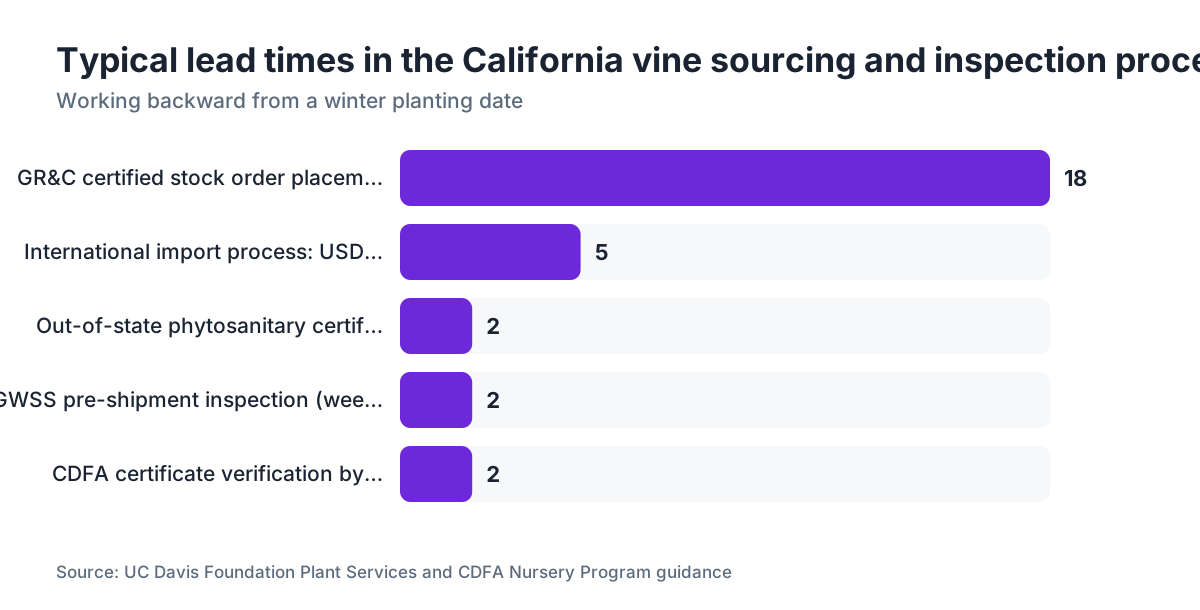
Start earlier than you think you need to. The honest truth is that most certification delays don't come from CDFA. They come from growers who start three months out and discover the nursery is sold out of their target clone or that the lot they wanted hasn't been inspected yet.
For dormant bareroot vines, the California planting window in most regions runs December through March. Work backward from there. Nurseries typically book certified stock orders 12 to 24 months ahead for popular GR&C clones. [3] Want to plant in winter 2026? You should be placing orders and confirming certification status by early 2025 at the latest.
Out-of-state orders add the phytosanitary inspection timeline in the origin state, which varies but usually runs one to three weeks from the nursery's request. Then stack California border entry processing on top.
County agricultural commissioner inspections for GWSS-regulated shipments have to be scheduled in advance with the nursery's county. Don't assume the nursery handles this automatically, even the ones that usually do. Confirm it for your specific order.
The table below lays out realistic lead times for each step. These are general ranges. Actual timing shifts with county and nursery workload.
| Step | Typical Lead Time |
|---|---|
| Nursery order placement for GR&C stock | 12-24 months before planting |
| Nursery CDFA annual inspection renewal | Completed by nursery; verify before order |
| GWSS pre-shipment inspection | 1-3 weeks before ship date |
| Out-of-state phytosanitary certificate | 1-3 weeks from nursery request |
| International import (USDA + CDFA) | 3-6 months or more |
| Certificate verification at CDFA | 1-2 business days by phone/email |
Where can you verify nursery registration and certification status?
CDFA keeps a searchable database of licensed nurseries on its website. Look up a nursery by name or license number and confirm the license is current. [2] It's a two-minute check that should run before every order, no exceptions.
For GR&C certification status, UC Davis Foundation Plant Services tracks which nurseries are registered to propagate from its foundation blocks and which clones are available in each tier. Contact FPS directly at (530) 752-3590 or through the FPS website to verify a specific lot's status. [3]
County agricultural commissioners also keep records of inspections done in their county. If a nursery sits in your county, the local commissioner's office can confirm recent inspection history.
For interstate shipments, call the origin state's department of agriculture to verify the phytosanitary certificate numbers are valid and the issuing inspector is authorized. You'll rarely need to. When something about a certificate looks off, though, the verification call takes ten minutes and can head off a quarantine.
Setting up a new vineyard from scratch? Build a short checklist of these verification steps into your pre-plant protocol. It's worth the hour it takes to write.
Are there special rules for heirloom or own-rooted vines?
Own-rooted vines propagated from cuttings taken on your own property, replanted on that same property, sit in a gray area of California nursery law. The nursery stock provisions in the Food and Agricultural Code apply to sales and movement of nursery stock, not to on-farm propagation for your own use on the same ground. [1]
Move cuttings from one property to another, even to a second property you own, or give or sell cuttings to another grower, and the material becomes nursery stock subject to certification. CDFA has enforced this, particularly with heirloom Italian and Spanish varieties that pass informally among growers.
The virus risk with heirloom material is real, and it's usually worse than growers assume. Most old-vine material in California carries some level of virus infection, often several viruses at once. University of California extension work and FPS have written about the problem of legacy virus loads in heritage varieties. [4] If you want to save heirloom material and clean it up, FPS accepts submissions for virus elimination through thermotherapy and meristem culture. The process is expensive and takes years.
The practical rule fits on an index card. If it leaves your property, it needs a certificate. If it's infected with listed pathogens and you're moving it into a county with an active clean-plant program, you're building liability for yourself and a disease risk for your neighbors.
Frequently asked questions
Does every grapevine I buy in California need a CDFA nursery certificate?
Yes. California Food and Agricultural Code sections 6721-6725 require all nursery stock, grapevines included, to be accompanied by a valid California Nursery Stock Certificate at the point of sale and delivery. The only exception is on-farm propagation from your own mother vines, replanted on the same property with no sale or movement. Buy vines from any registered nursery and the certificate is mandatory.
What is the difference between GR&C Certified and standard nursery-certified vines?
Standard nursery certification confirms the nursery is registered and the lot passed a pest and disease inspection at the time of sale. GR&C Certified means the vines came from Foundation or Registered stock at UC Davis FPS, tested negative for a specific list of viruses, and were tracked through a tiered chain of custody. GR&C is a higher plant-health standard, well beyond basic regulatory compliance.
How long do I need to keep nursery stock paperwork?
California doesn't set a mandatory retention period for nursery stock certificates in the vineyard context, but county agricultural commissioners and CDFA pest program staff can request records during inspections. Three years is a reasonable floor; five years is better. Tying retention to your block's productive life is safer still, since disease investigations sometimes reach back further than three years.
Can I bring grapevine cuttings into California from France or Italy?
Importing vines from Europe requires a USDA APHIS import permit, a phytosanitary certificate from the country of origin, and CDFA acceptance at the California border. European vines also typically need post-entry quarantine and testing at a USDA-approved facility. The process runs six months to over a year and is expensive. Most growers source European clones through UC Davis FPS, which has already run hundreds of accessions through import and testing.
What pests does CDFA look for during nursery stock inspections?
CDFA inspectors check for quarantine pests including glassy-winged sharpshooter eggs and nymphs, grape phylloxera, various mealybug species that vector grapevine leafroll viruses, and other listed pests per the California Plant Quarantine Manual. For GR&C-tier inspections, the focus shifts to systemic pathogens including grapevine leafroll viruses, fanleaf virus, rupestris stem pitting, and related agents. [11]
Which California counties have GWSS quarantines affecting vine movement?
The glassy-winged sharpshooter quarantine zone is listed in California Code of Regulations Title 3, Section 3800, and CDFA updates the list as new detections occur. In recent years it has included most Southern California counties and parts of the Central Valley. Always check the current CDFA GWSS program page before ordering vines from or shipping vines into any California county, because the boundaries move.
Does my nursery handle the CDFA inspection, or do I need to do anything?
The nursery maintains its registration, schedules and passes annual CDFA inspections, and ships each lot with the required certificates. Your job is to verify the registration is current before you order, confirm the shipment arrives with the correct documentation, and retain those records. Don't assume the paperwork is right just because the nursery is reputable. Errors happen, and you're the one planting.
What should I do if my vine shipment arrives without a nursery certificate?
Don't plant. Contact the nursery immediately and request the certificate. If the nursery can't produce it, call your county agricultural commissioner. Planting without a valid certificate exposes you to enforcement action, including destruction orders. The problem is almost always an administrative error the nursery can fix fast, but the fix has to happen before vines go in the ground.
Are container-grown vines inspected differently from bareroot vines?
The same certificate requirements apply to both. Container vines carry growing media, though, which can harbor soil-dwelling pests including phylloxera and nematodes, so CDFA inspectors pay attention to media type and sourcing. Some counties add rules about potting media movement. Bareroot vines shipped during dormancy have a simpler inspection profile because there's no media and pest populations are lower.
Can I use my own cuttings to replant dead vines in an established block?
If you're taking cuttings from vines on your own property and replanting them on the same property, California nursery stock law generally doesn't apply because no sale or movement is happening. But if that block has known virus issues, you're propagating and spreading the disease. Practically, replanting with certified material from a GR&C nursery is better for long-term block health, even when using your own cuttings is technically legal.
What role does the county agricultural commissioner play in nursery inspections?
County agricultural commissioners hold inspection authority delegated from CDFA and run routine nursery inspections in their counties. They're also the local contact for GWSS pre-shipment inspections and can place holds on non-compliant nursery lots. For growers, the county commissioner is the first call when a question comes up about a specific shipment or when you need to report a problem with received plant material.
Does the EPA Worker Protection Standard apply when planting nursery stock?
WPS applies if the nursery stock was treated with pesticides before shipping. Workers handling treated vines are covered by WPS requirements for information about pesticide exposure, restricted-entry intervals, and safety data. Growers have to get the pesticide treatment information from the nursery and pass it to workers before planting starts. Most bareroot dormant stock is untreated, but containerized vines are sometimes treated with systemic insecticides.
How do I find out if a specific clone I want is available in GR&C-certified form?
UC Davis Foundation Plant Services keeps a searchable catalog of foundation accessions. Contact FPS directly at (530) 752-3590 or visit the FPS website to check availability by variety and clone number. If the clone you want isn't in the FPS collection, you can ask about the submission process, though getting new material through testing and into the program typically takes three to five years.
Sources
- California Legislative Information, Food and Agricultural Code Sections 6721-6725 (Nursery) and Section 5761 (Enforcement): All nursery stock sold or moved in California must be accompanied by a valid nursery stock certificate; violations subject to civil penalties and destruction orders
- CDFA Plant Health and Pest Prevention Services, Nursery Program: CDFA maintains a searchable database of licensed nurseries and enforces nursery stock certificate requirements at state border stations
- UC Davis Foundation Plant Services, Grapevine Registration and Certification Program: The GR&C program has three tiers (Foundation, Registered, Certified) maintained by UC Davis FPS under CDFA oversight; nursery wait lists for popular GR&C clones can run two to four years
- University of California Agriculture and Natural Resources, Grapevine Leafroll Disease in California Vineyards: University of California research has documented yield losses from GLRaV-3 infection at 20 to 40 percent in red varieties in some California trials
- CDFA Pierce's Disease and Glassy-winged Sharpshooter Program: CDFA requires nursery stock moved out of or within GWSS-established counties to be inspected for GWSS eggs and nymphs; quarantine county list is updated as new detections occur
- Washington State University Extension, Plant Material Movement Requirements: WSU Extension provides guidance on interstate movement requirements for plant material relevant to Pacific Northwest nurseries shipping into California
- Cornell Cooperative Extension, Vineyard Recordkeeping and Compliance: Cornell Cooperative Extension has published frameworks for linking vineyard field operations to compliance documentation
- EPA Worker Protection Standard (40 CFR Part 170): The EPA Worker Protection Standard requires agricultural employers to provide workers with pesticide application information when handling treated nursery stock, including grapevines
- California Code of Regulations, Title 3, Division 3, Chapter 9, Grapevine Registration and Certification: Full list of tested pathogens and GR&C inspection protocols published in California Code of Regulations Title 3
- CDFA, Pest Exclusion Program, California Plant Quarantine Manual: CDFA inspectors check for quarantine pests including glassy-winged sharpshooter, grape phylloxera, and mealybug species during nursery stock inspections
Last updated 2026-07-10