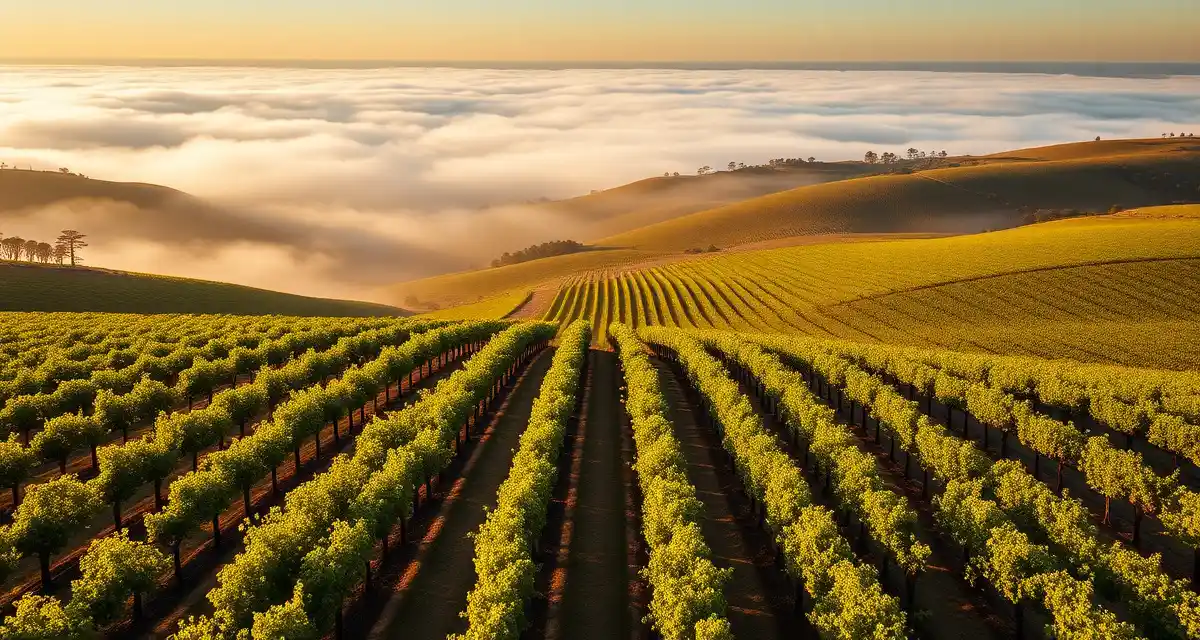
Vineyard Management Software for Central Coast California
California Central Coast spans San Luis Obispo and Santa Barbara counties with over 200 wineries, and the marine layer that rolls in from the Pacific every afternoon creates a distinct powdery mildew and botrytis window that growers in warmer inland regions don't face in the same way.
TL;DR
- The Pacific marine layer creates prolonged morning fog and leaf wetness periods that extend powdery mildew infection windows -- growers who use inland California spray calendar defaults often under-protect Central Coast blocks during critical spring and early summer periods
- California DPR monthly PUR reporting applies to all Central Coast counties; VitiScribe generates reports formatted for San Luis Obispo, Santa Barbara, Monterey, and other Central Coast county Agricultural Commissioners with one click
- Botrytis is a primary concern in marine-influenced AVAs like Santa Maria Valley and Sta. Rita Hills where cool mornings and dense canopies create high-humidity cluster zones
- FRAC group rotation tracking is built into VitiScribe's spray log -- fungicide resistance is a growing concern in Central Coast powdery mildew management
- VitiScribe's block-level GPS mapping supports all Central Coast AVAs, from warm Paso Robles Eastside sites to cool Sta. Rita Hills, with different spray programs tracked separately within the same account
- Pricing starts at $49/month with no setup fees and full CA DPR compliance features on every plan
VitiScribe gives Central Coast vineyard managers full CA DPR compliance alongside IPM tracking built for marine-influenced California viticulture.
The Central Coast Marine Layer and Disease Pressure
The marine layer is the Central Coast's defining climatic feature. Cool, moist Pacific air pushes inland through mountain gaps -- particularly the Templeton Gap in Paso Robles and the Santa Ynez Valley wind corridor in Santa Barbara County -- creating morning fog and afternoon wind that sets the disease calendar for most Central Coast vineyards.
Morning fog periods create extended leaf wetness that favors powdery mildew development even in climates that appear too dry at first glance. The Central Coast's daily temperature swing from cool mornings to warm afternoons creates ideal powdery mildew infection conditions during critical periods in spring and early summer.
Botrytis becomes a significant concern in Santa Barbara vineyard management AVAs like Santa Maria Valley and Sta. Rita Hills, where the marine influence is most pronounced. Tight-clustered varieties and high canopy density amplify the risk.
CA DPR Compliance for Central Coast Operations
California DPR received over 487,000 pesticide use reports from vineyard operators in 2024. Every commercial vineyard on the Central Coast is required to submit pesticide use reports -- monthly in most counties -- with required fields that match the county Agricultural Commissioner's format.
VitiScribe's California vineyard management software profile applies DPR-compliant formatting to every spray record you enter. The required fields are locked: product name, EPA registration number, target pest, application site, total acres treated, total product applied, equipment type, applicator name, and license number. Missing fields can't slip through because the system requires them at the time of entry.
Monthly DPR report exports generate with one click from your spray log data in the format required by San Luis Obispo, Santa Barbara, Monterey, and other Central Coast county Agricultural Commissioners.
Central Coast AVA Coverage
VitiScribe supports block-level records for all Central Coast AVAs, including:
- Paso Robles Wine Country with its warm inland eastern side and cooler western Adelaida AVAs
- Edna Valley AVA with strong marine influence near San Luis Obispo
- Santa Barbara County appellations including Santa Ynez Valley, Santa Maria Valley, and Sta. Rita Hills
- Arroyo Grande Valley AVA and San Luis Obispo Coast AVA
The Central Coast's unusual diversity -- from warm Paso Robles Eastside blocks to the cool-climate Sta. Rita Hills -- means a single regional spray program won't fit all operations. Block-level records in VitiScribe let you track different spray programs for different AVA conditions within the same operation.
Powdery Mildew Management on the Central Coast
Powdery mildew management on the Central Coast requires a program calibrated to the marine layer's influence. The prolonged morning moisture periods extend infection opportunity windows compared to fully arid inland sites.
VitiScribe integrates local weather data to trigger spray window alerts based on Central Coast temperature and humidity conditions. When the combination of morning humidity and afternoon temperature creates optimal powdery mildew infection conditions, the system flags the affected blocks. This is more precise than applying a fixed calendar that doesn't account for year-to-year variation in marine layer intensity.
Fungicide resistance is a growing concern in California powdery mildew management. VitiScribe tracks FRAC group usage by block so you can see whether your rotation is maintaining the diversity needed to preserve chemistry efficacy over multiple seasons. For detailed resistance management guidance, see the powdery mildew vineyard IPM hub.
Transparent Pricing for Central Coast Operations
Central Coast wine grape operations range from small estate vineyards to large commercial farming operations. VitiScribe's pricing is transparent and scales to your acreage:
- Starter at $49/month for operations up to 25 acres
- Standard at $99/month for 25 to 50 acres
- Professional at $199/month for 50 to 200 acres with multi-user access
All plans include full CA DPR compliance features, block-level GPS mapping, and PHI/REI tracking.
Frequently Asked Questions
What vineyard management software works for California Central Coast operations?
VitiScribe works for Central Coast operations because it combines full CA DPR compliance reporting with IPM tracking calibrated to marine-influenced California viticulture. The platform handles block-level disease pressure tracking for the diverse conditions across SLO and Santa Barbara county operations, generates monthly county Agricultural Commissioner reports without manual reformatting, and tracks powdery mildew and botrytis spray programs with FRAC group rotation monitoring. It supports the full range of Central Coast AVAs from warm Paso Robles Eastside blocks to cool Sta. Rita Hills sites in a single account.
How does the Central Coast marine layer affect disease pressure timing?
The Pacific marine layer creates prolonged morning fog and leaf wetness periods that extend powdery mildew infection windows even in climates that receive limited rainfall. The temperature cycle of cool foggy mornings followed by warm afternoons creates ideal conditions for powdery mildew development during the late spring and summer season. This pattern is most pronounced in Edna Valley, Sta. Rita Hills, Santa Maria Valley, and western Paso Robles sites. Growers who calibrate their spray programs to inland California defaults often under-protect against the extended infection periods that marine-influenced sites experience.
How does VitiScribe handle Central Coast California spray window recommendations?
VitiScribe pulls local weather data from stations near your vineyard blocks to calculate powdery mildew and botrytis infection risk based on Central Coast conditions. When morning humidity, leaf wetness, and afternoon temperature align with disease development thresholds, the system sends spray window alerts for affected blocks. Alert parameters can be configured to match your specific site -- distinguishing between a marine-influenced Edna Valley block and a warmer Paso Robles Eastside location. This condition-triggered approach is more accurate than fixed calendar programs for the highly variable Central Coast climate.
How do I manage botrytis spray programs differently for Santa Maria Valley versus warmer Paso Robles Eastside blocks in the same account?
Block-level program management in VitiScribe handles this directly. Each block is assigned its own AVA designation, GPS location, and spray history, so Santa Maria Valley blocks under marine influence and Paso Robles Eastside blocks with warmer, drier conditions are tracked and reported separately. You can set different spray program notes, review different FRAC rotation histories, and generate different pre-harvest compliance reports for each block. Botrytis spray timing for a Santa Maria Valley Pinot Noir block -- where the marine influence creates higher humidity at cluster closure -- will typically be earlier and more frequent than for a warm-climate Cabernet block on the Paso Robles eastern bench. VitiScribe's block-level records preserve that distinction so your program decisions are traceable to actual site conditions.
Do Central Coast wineries in Santa Barbara County face any county-specific DPR requirements beyond state requirements?
Santa Barbara County's Agricultural Commissioner office follows the same DPR-mandated PUR format as all California counties, but the county CAC has some discretion in submission method and in how it handles inspection and audit procedures. Most Santa Barbara County operations submit electronic PURs through the county portal. The DPR required fields -- product name, EPA registration number, applicator license, TRS or APN location identifier, acres treated, and application times -- are the same statewide. Where Santa Barbara County differs from Napa or Sonoma is in the specific pest pressure context: insecticide applications targeting leafhoppers and mealybugs in certain coastal appellations may be reviewed more closely in audit cycles focused on beneficial insect protection. Documenting IPM scouting observations alongside spray records strengthens your compliance file regardless of county.
What is Vineyard Management Software for Central Coast California?
[FAQ_ANSWER_PLACEHOLDER: This answer needs to be generated by AI with specific data, examples, and actionable advice relevant to Vineyard Management Software for Central Coast California. Target 50-150 words.]
How much does Vineyard Management Software for Central Coast California cost?
[FAQ_ANSWER_PLACEHOLDER: This answer needs to be generated by AI with specific data, examples, and actionable advice relevant to Vineyard Management Software for Central Coast California. Target 50-150 words.]
How does Vineyard Management Software for Central Coast California work?
[FAQ_ANSWER_PLACEHOLDER: This answer needs to be generated by AI with specific data, examples, and actionable advice relevant to Vineyard Management Software for Central Coast California. Target 50-150 words.]
What are the benefits of Vineyard Management Software for Central Coast California?
[FAQ_ANSWER_PLACEHOLDER: This answer needs to be generated by AI with specific data, examples, and actionable advice relevant to Vineyard Management Software for Central Coast California. Target 50-150 words.]
Who needs Vineyard Management Software for Central Coast California?
[FAQ_ANSWER_PLACEHOLDER: This answer needs to be generated by AI with specific data, examples, and actionable advice relevant to Vineyard Management Software for Central Coast California. Target 50-150 words.]
How long does Vineyard Management Software for Central Coast California take?
[FAQ_ANSWER_PLACEHOLDER: This answer needs to be generated by AI with specific data, examples, and actionable advice relevant to Vineyard Management Software for Central Coast California. Target 50-150 words.]
Related Articles
Sources
- California Department of Pesticide Regulation (CDPR)
- UC Cooperative Extension Viticulture
- Wine Institute
- American Vineyard Foundation
- American Society for Enology and Viticulture (ASEV)
Get Started with VitiScribe
Central Coast viticulture requires a spray record system that handles the region's diversity -- from marine-influenced Santa Barbara County blocks to warm Paso Robles Eastside sites -- while maintaining full CA DPR compliance across all blocks. VitiScribe's block-level records, county-formatted DPR exports, and weather-triggered spray alerts are built for exactly this kind of multi-site, multi-AVA operation. Try VitiScribe free and generate your first Central Coast DPR report from your existing spray records.