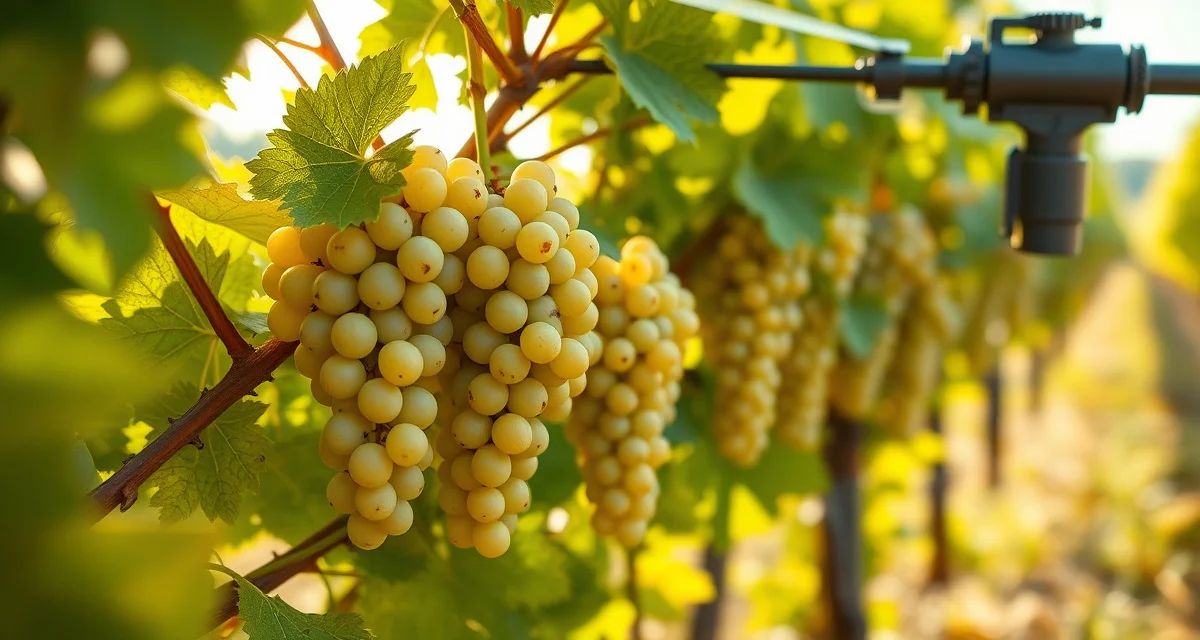
Chardonnay Vineyard Spray Program: IPM Guide
Chardonnay is considered highly susceptible to both powdery mildew and botrytis, making it one of the most demanding varieties to manage from a spray program perspective. Its tight cluster structure requires earlier botrytis interventions than many other varieties. That's the core difference between a Chardonnay program and a generic spray calendar, and getting that timing wrong is how you end up with 30% botrytis at harvest.
TL;DR
- Chardonnay is highly susceptible to both powdery mildew and botrytis -- it's among the most spray-intensive varieties in commercial wine production
- First botrytis application for Chardonnay should be at early bloom (10-30% cap fall), earlier than most other varieties -- Chardonnay's tight clusters trap dried flower parts that become the primary early-season botrytis infection site
- Powdery mildew program for Chardonnay must begin by the 3-4 leaf stage; missing the pre-bloom window in a high-susceptibility variety allows first-generation infections to establish before the highest-risk period
- In cool, humid regions like Oregon and Finger Lakes, include downy mildew products in the Chardonnay program through July
- Aggressive fruit zone leaf removal at fruit set reduces botrytis incidence in Chardonnay more reliably than adding a third late-season fungicide application
- Track PHI carefully by block; Chardonnay often harvests earlier than reds on the same property, compressing the late-season application window
Introduction
Chardonnay is planted across virtually every US wine region, from Napa's warm valleys to Willamette Valley's cool hills to Finger Lakes' cold-climate sites. The variety's disease susceptibility profile is consistent across regions, but the timing of your program needs to adjust based on your region's specific climate. Cool-climate Chardonnay in Oregon has a different disease pressure calendar than Napa Valley Chardonnay.
This guide covers Chardonnay's disease susceptibility, how to structure your spray program by growth stage, and the key timing adjustments that matter specifically for this variety.
Chardonnay Disease Susceptibility Profile
Powdery mildew: Highly susceptible. Chardonnay is among the most powdery mildew susceptible varieties in commercial production. Your pre-bloom program needs to be aggressive and on schedule. Missing applications during the flowering and fruit set window can lead to cluster infections that are impossible to recover from later in the season.
Botrytis: Highly susceptible. Chardonnay's tight cluster structure is the primary driver. Dense clusters trap humidity, limit air circulation, and create the persistent moisture that botrytis thrives in. This is the defining management challenge for Chardonnay, not just late in the season, but beginning at fruit set.
Downy mildew: Moderately susceptible. More notable in Oregon, Washington, and New York than in dry California regions. Include downy mildew products in Chardonnay programs in any region with wet spring conditions.
Step-by-Step Chardonnay Spray Program
Step 1: Dormant Season Planning
Review last season's block scouting records. Identify which blocks had early botrytis or powdery mildew. Plan your FRAC group rotation, Chardonnay's high disease pressure means you'll be cycling through more applications per season, and resistance management requires careful group tracking.
Step 2: Shoot Growth Through Pre-Bloom (April-May)
Start your powdery mildew program early.
- Begin at the 3-4 leaf stage (shoots 3-5 inches), no later
- Use your highest-efficacy FRAC groups during this pre-bloom window
- 10-14 day intervals based on growth rate and temperature
- Scout weekly for early powdery mildew symptoms on shoot tips
Step 3: Bloom Through Fruit Set (May-June)
The most critical period for both powdery mildew and botrytis.
- Tighten powdery mildew intervals to 7-10 days through bloom
- Botrytis first application: This is Chardonnay-specific. Apply your first botrytis fungicide at early bloom (10-30% cap fall). This is earlier than most other varieties. Chardonnay's tight clusters trap dried flower parts that serve as the initial botrytis infection site.
- Follow the first botrytis application with a second at full fruit set (berry touch)
- In cool, wet conditions, consider a third botrytis application at bunch closure
Step 4: Post-Fruit Set Through Veraison (June-August)
- Powdery mildew pressure typically decreases as shoot growth slows
- Can extend to 14-21 day intervals if scouting shows low pressure and conditions are dry
- Continue FRAC rotation, don't repeat same groups used heavily in spring
- In Oregon and wet regions: maintain tight intervals and include downy mildew products through July
Step 5: Veraison Through Harvest (August-October)
This is where Chardonnay programs diverge most substantially from late-harvest red varieties.
- Botrytis pre-harvest applications: Plan 1-2 applications in the pre-harvest window. For Chardonnay, this timing is tighter than for loose-cluster reds.
- Apply final botrytis application 7-10 days before harvest (check the specific label PHI for your product)
- Track PHI carefully, Chardonnay often harvests earlier than reds on the same property, compressing your late-season application window
- Canopy management history matters here: blocks with better fruit zone exposure have lower botrytis risk and may not need the additional pre-harvest application
What spray program works for organic Chardonnay? Organic Chardonnay is challenging given the high powdery mildew and botrytis susceptibility. Sulfur programs for powdery mildew need tight 7-day intervals in spring. Copper or biofungicides for botrytis provide partial protection. Aggressive canopy management, early leaf removal at fruit set, is the most important non-chemical botrytis management tool for organic Chardonnay.
Canopy Management and Chardonnay Botrytis
The connection between canopy management and botrytis risk is stronger for Chardonnay than almost any other variety. Aggressive fruit zone leaf removal at fruit set, removing 2-4 leaves from the cluster zone on the east or north side in California, substantially reduces botrytis incidence by improving airflow and reducing humidity in the cluster zone.
Operations that do thorough leaf removal at fruit set consistently report lower botrytis incidence, even in wet years. In some Chardonnay programs, good leaf removal reduces late-season botrytis applications from two to one.
For detailed botrytis management resources, see the botrytis vineyard IPM hub. For powdery mildew management timing, see the powdery mildew vineyard IPM hub.
Related Articles
FAQ
What are Chardonnay's key disease susceptibilities?
Chardonnay is highly susceptible to both powdery mildew and botrytis, making it one of the more demanding varieties to manage from a spray program perspective. Its tight cluster structure drives its elevated botrytis susceptibility, dense clusters trap humidity and create conditions favorable for botrytis development. Downy mildew susceptibility is moderate, and more notable in wet wine regions like Oregon and New York than in dry California conditions.
How do I adjust botrytis timing for Chardonnay's tight cluster structure?
For Chardonnay, begin botrytis applications at early bloom (10-30% cap fall), earlier than most other varieties. The dried flower parts trapped in tight clusters are the primary early-season botrytis infection site. Follow with a second application at fruit set. In cool, humid conditions or if clusters are especially tight, a third application at bunch closure may be warranted. This is substantially earlier than botrytis programs for loose-cluster varieties like Cabernet Sauvignon or Zinfandel.
What spray program is recommended for organic Chardonnay production?
Organic Chardonnay requires intensive programs given the variety's high susceptibility to both powdery mildew and botrytis. Sulfur-based materials applied on 7-day intervals are the backbone of organic powdery mildew management, avoid sulfur above 90°F. Copper-based materials provide partial botrytis suppression and help with downy mildew in wetter regions. Potassium bicarbonate materials offer supplemental powdery mildew activity. Aggressive fruit zone leaf removal at fruit set is the most effective non-chemical botrytis management tool. Certified organic programs for Chardonnay require more applications and more intensive canopy management than conventional programs.
How does Chardonnay botrytis management differ in cool-climate Oregon versus California?
In Oregon's Willamette Valley, Chardonnay programs face additional botrytis pressure from later and wetter harvest conditions compared to California's typical fall weather pattern. The same early-season botrytis timing applies -- first application at early bloom -- but the pre-harvest window often requires an additional application given the higher probability of late-season rain events. Oregon programs also need to incorporate downy mildew products alongside botrytis fungicides through July in most years, which adds to the FRAC rotation management challenge. Tracking these program differences at the block level is important if you manage Chardonnay in multiple regions, since the spray history and resistance management records will differ significantly between sites. For Oregon-specific compliance requirements, see the Oregon ODA pesticide record-keeping guide.
Should I document the reason for spray interval extensions in my Chardonnay records?
Yes. Extending a powdery mildew spray interval beyond 14 days in a high-susceptibility variety like Chardonnay is a program decision that deserves a note in the record. Documenting the scouting data that supported the decision -- low disease incidence, dry weather conditions, prior applications with good coverage -- demonstrates that the interval extension was based on monitoring rather than oversight. This matters for sustainable certification audits, which expect spray decisions to be informed by vineyard conditions rather than solely by the calendar. A brief note linking the scouting record to the spray interval decision is sufficient; VitiScribe's block-level record keeps scouting entries and spray events on the same timeline so the connection is visible in the block history.
What is Chardonnay Vineyard Spray Program: IPM Guide?
[FAQ_ANSWER_PLACEHOLDER: This answer needs to be generated by AI with specific data, examples, and actionable advice relevant to Chardonnay Vineyard Spray Program: IPM Guide. Target 50-150 words.]
How much does Chardonnay Vineyard Spray Program: IPM Guide cost?
[FAQ_ANSWER_PLACEHOLDER: This answer needs to be generated by AI with specific data, examples, and actionable advice relevant to Chardonnay Vineyard Spray Program: IPM Guide. Target 50-150 words.]
How does Chardonnay Vineyard Spray Program: IPM Guide work?
[FAQ_ANSWER_PLACEHOLDER: This answer needs to be generated by AI with specific data, examples, and actionable advice relevant to Chardonnay Vineyard Spray Program: IPM Guide. Target 50-150 words.]
Sources
- California Department of Pesticide Regulation (CDPR)
- UC Cooperative Extension Viticulture
- Oregon Department of Agriculture (ODA)
- American Vineyard Foundation
- American Society for Enology and Viticulture (ASEV)
Get Started with VitiScribe
Chardonnay's high disease susceptibility makes it one of the most spray-intensive varieties in commercial wine production, and the key to an efficient program is getting timing right -- especially the early botrytis application that many producers miss. Track your Chardonnay spray program by block in VitiScribe, where PHI is auto-calculated for every application and block-level pest pressure history lets you refine future programs based on what actually happened in each block. Try VitiScribe free and log your first Chardonnay spray event from the vineyard today.