What Is a Vineyard IPM Program?
True IPM programs reduce pesticide use by 20-40% compared to calendar-based spraying. That's not a marketing claim, it's the consistent finding from university extension research across multiple crops, including wine grapes. And yet most vineyard spray programs still operate on a calendar schedule rather than actual pest pressure thresholds.
An integrated pest management (IPM) program is a decision-making framework that uses monitoring data, economic thresholds, and multiple control tactics to manage pests in a way that's effective, economical, and minimizes pesticide use. In viticulture, this means basing spray decisions on what you're actually seeing in your blocks, not just what the calendar says.
TL;DR
- True IPM programs reduce pesticide use by 20-40% compared to calendar-based spraying -- the reduction comes from applying only when monitoring data confirms a threshold is reached or imminent, not from avoiding applications when they're needed
- The five core components of a vineyard IPM program are: regular pest monitoring, economic thresholds, multiple control tactics, resistance management through FRAC and IRAC rotation, and record keeping that links scouting observations to spray decisions
- QoI (strobilurin) resistance in powdery mildew is widespread in California as a direct consequence of heavy reliance on a single FRAC group without systematic rotation; effective IPM programs include a resistance management component from the first spray of the season
- Economic thresholds vary by pest, region, and variety; powdery mildew threshold is typically intervention before 1% infected shoots during the pre-bloom critical window; grape berry moth timing follows degree-day models from biofix
- Certified sustainable programs like Lodi Rules and SIP Certified require evidence of threshold-based decision making; organic certification requires documentation that non-chemical alternatives were considered before each application
- VitiScribe integrates block scouting records directly with spray records, creating the linked observation-to-decision chain that compliance auditors and sustainable certifiers look for in a documented IPM program
What Is Integrated Pest Management in Viticulture?
IPM in viticulture combines:
- Monitoring: Regular scouting of blocks to identify pest and disease presence and severity
- Economic thresholds: Decision points at which pest populations or disease pressure warrant intervention
- Multiple control tactics: Biological controls, cultural practices (like canopy management), and chemical controls as a last line, not a first response
- Record keeping: Documentation of scouting observations, spray decisions, and outcomes to improve future decisions
The key distinction from calendar-based spraying: IPM doesn't apply a pesticide just because it's a particular week of the season. It applies a pesticide when monitoring data indicates a threshold has been reached or is about to be reached.
Key Components of a Vineyard IPM Program
Pest Monitoring and Scouting
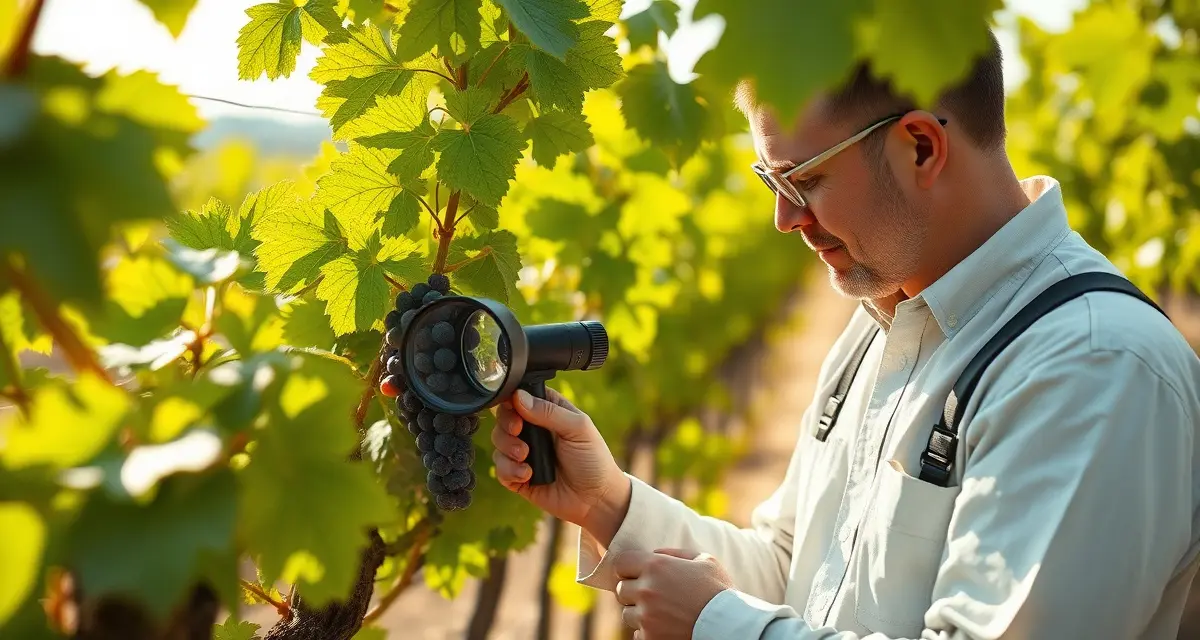
Regular block scouting is the foundation. Without current data on pest and disease pressure, you can't make threshold-based decisions, you're guessing. Monitoring should happen on a scheduled basis during the growing season, with more frequent visits during high-risk periods.
Scouting should cover the key vineyard pests in your region: powdery mildew, botrytis, downy mildew, grape berry moth, leafhoppers, mealybugs, spider mites, and others specific to your region and variety.
VitiScribe is designed around IPM first, not as a winery tool with IPM bolted on. Block scouting records are integrated directly with spray records, so your monitoring data informs your spray history and vice versa.
Economic Thresholds
An economic threshold is the pest or disease level at which the cost of intervention is justified by the damage prevented. Below the threshold, you don't spray. Above it, you do.
For powdery mildew, the commonly cited threshold is intervention before 1% of shoots show symptoms, ideally during the pre-bloom window when the vine is most susceptible and fungicide coverage is most effective. For grape berry moth, degree-day models help predict flight activity and egg-laying periods.
Thresholds vary by pest, region, variety, and intended management outcome (organic vs conventional). Your local UC Cooperative Extension, Oregon State Extension, WSU Extension, or Cornell Cooperative Extension should be your reference for region-specific threshold guidance.
Multiple Control Tactics
IPM doesn't mean avoiding pesticides. It means using them strategically alongside other approaches:
- Cultural controls: Canopy management to improve airflow and reduce botrytis risk; cover crop management to support beneficial insect populations
- Biological controls: Conservation of natural enemies (predatory insects, parasitic wasps) by timing spray applications to avoid peak beneficial activity
- Chemical controls: Targeted applications at economic thresholds, with FRAC/IRAC rotation to manage resistance
Resistance Management
An IPM program that rotates through the same fungicide or insecticide mode of action season after season will eventually fail. QoI (strobilurin) resistance in powdery mildew is widespread in California, the result of years of heavy reliance on a single FRAC group.
Effective IPM programs include a resistance management component: rotating FRAC and IRAC groups across the season so no single mode of action is applied repeatedly in sequence.
Record Keeping
IPM record keeping goes beyond spray logs. You need:
- Block scouting records with dates, observations, pest levels, and any threshold assessments
- Spray application records with product, rate, PHI, and rationale
- Season-to-season comparison data so you can see trends in pest pressure and program effectiveness
These records also serve as evidence of your IPM program for certifiers, auditors, and consultants reviewing your approach.
How Do I Start an IPM Program for My Vineyard?
Starting an IPM program doesn't have to be complicated. Here's a practical approach:
- Identify your key pests: What are the primary disease and insect pests in your region and on your varieties? Start your program around these.
- Set a scouting schedule: Commit to regular block visits, at minimum weekly during the growing season, more often during high-pressure periods.
- Learn the thresholds: For each key pest, know the action threshold for your region. Contact your local extension office for variety-specific guidance.
- Start keeping records: Document every scouting visit, what you saw, where, at what level. This data builds over seasons into genuinely useful pest pressure history.
- Adjust your spray program: Compare your current spray schedule against your threshold data. Where are you applying preventively without threshold justification? Can those applications wait for monitoring data?
For a complete overview of vineyard IPM principles, see the complete vineyard IPM guide. For block scouting documentation tools, see the block scouting template.
Related Articles
FAQ
What is integrated pest management in viticulture?
Integrated pest management (IPM) in viticulture is a decision-making approach to pest and disease control that uses monitoring data, economic thresholds, and multiple control tactics together. Instead of applying pesticides on a calendar schedule, IPM programs base spray decisions on actual pest presence and severity. Well-designed IPM programs typically reduce pesticide use and cost compared to calendar-based approaches while maintaining effective disease and pest control.
What are the key components of a vineyard IPM program?
The core components are: regular pest monitoring and block scouting, economic thresholds that define when intervention is warranted, multiple control tactics (cultural, biological, and chemical), resistance management through FRAC/IRAC group rotation, and record keeping that documents scouting observations alongside spray decisions. All five components are interconnected, monitoring data drives threshold decisions, which inform chemical timing, which feeds into resistance rotation planning.
How do I start an IPM program for my vineyard?
Start by identifying your key pests and diseases, establishing a regular scouting schedule, learning the action thresholds for your region and varieties, and beginning to document your observations. You don't need to redesign your entire spray program on day one. Start tracking what you're seeing in your blocks and comparing it against your current spray timing. Over one or two seasons, you'll have enough data to make meaningful threshold-based adjustments to your program.
How does an IPM record look different from a standard spray log?
A spray log records what was applied, when, to which block, at what rate -- the regulatory minimum. An IPM record includes those fields plus the scouting observation that justified the application: what pest or disease was observed, at what severity or count, at what vine growth stage, and how that observation compared to the applicable action threshold. For a no-spray decision, an IPM record includes the below-threshold observation and the explicit conclusion that intervention was not warranted. This linked documentation -- observation to decision to outcome -- is what distinguishes an IPM record from a calendar-based spray log for certifiers and auditors. For guidance on building complete pest identification records, see vineyard IPM pest id records.
What's the minimum scouting frequency for a viable IPM program?
The minimum for a defensible threshold-based program is weekly scouting of each block during the active growing season, with twice-weekly coverage during high-risk periods such as pre-bloom, bloom, and pre-harvest. Less frequent scouting means you're making threshold comparisons with data that may be 10-14 days old -- by which point a fast-developing powdery mildew situation can cross from below-threshold to established before you have current data to act on. Weekly scouting doesn't require elaborate field time; a systematic 20-30 minute walk through each block following a consistent observation protocol produces the data needed for threshold comparison. Consistency in timing and sampling method is more important than the length of each visit.
What is What Is a Vineyard IPM Program??
[FAQ_ANSWER_PLACEHOLDER: This answer needs to be generated by AI with specific data, examples, and actionable advice relevant to What Is a Vineyard IPM Program?. Target 50-150 words.]
How much does What Is a Vineyard IPM Program? cost?
[FAQ_ANSWER_PLACEHOLDER: This answer needs to be generated by AI with specific data, examples, and actionable advice relevant to What Is a Vineyard IPM Program?. Target 50-150 words.]
How does What Is a Vineyard IPM Program? work?
[FAQ_ANSWER_PLACEHOLDER: This answer needs to be generated by AI with specific data, examples, and actionable advice relevant to What Is a Vineyard IPM Program?. Target 50-150 words.]
IPM and Compliance
Some state certifications and programs require documented IPM programs. Certified sustainable programs like LODI Rules and SIP Certified require evidence of threshold-based decision making. Organic certification requires documentation that pesticide applications are justified by pest presence and that non-chemical alternatives were considered.
Even if you're not in a certification program, having documented scouting records that justify your spray decisions is good practice. An auditor reviewing your spray log is more likely to see a coherent, defensible program if your monitoring data tells the same story as your spray dates.
Sources
- UC IPM Program
- UC Cooperative Extension Viticulture
- FRAC (Fungicide Resistance Action Committee)
- Cornell Cooperative Extension
- American Vineyard Foundation
Get Started with VitiScribe
IPM programs reduce pesticide use by 20-40% when monitoring data and threshold comparisons actually drive spray decisions -- but that outcome requires documentation infrastructure that links what was found in the field to what was applied. VitiScribe integrates block scouting records with spray decisions and resistance management tracking, creating the linked IPM record that distinguishes a threshold-based program from a calendar-based one for certifiers and auditors. Try VitiScribe free and log your first scouting-linked spray record today.