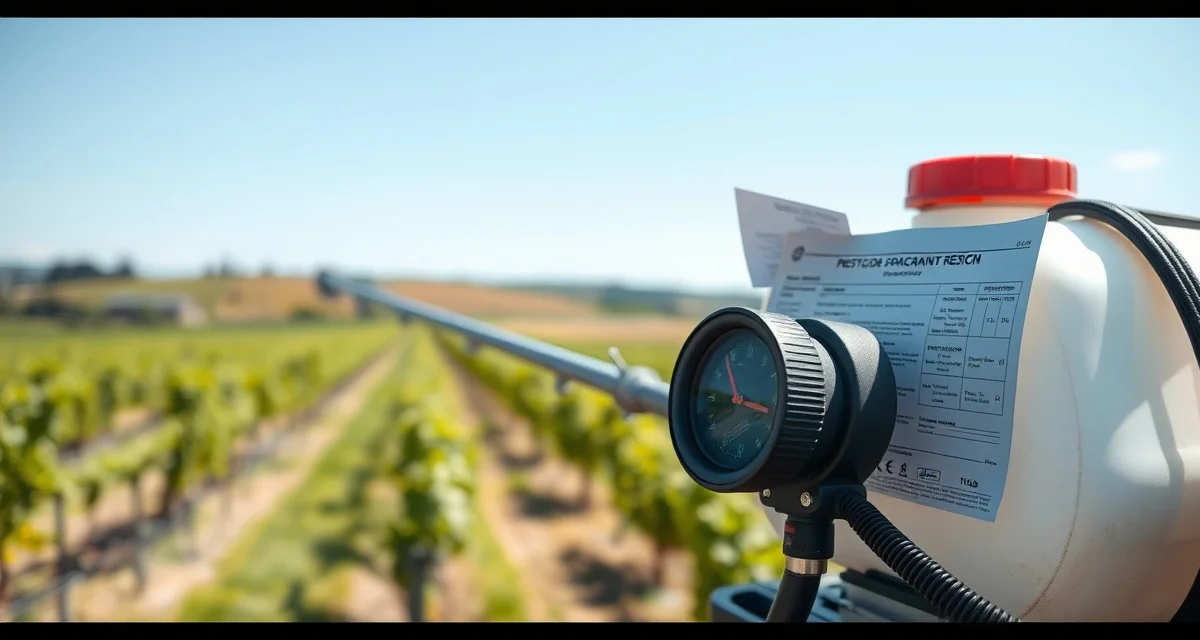
Vineyard Spray Records in the Willamette Valley: Oregon Compliance Requirements
Oregon ODA audited 14% more vineyard pesticide records in 2025 than in the previous year. That increase reflects growing enforcement attention on pesticide compliance in Oregon's wine regions, and it means that Willamette Valley growers who were coasting on informal record-keeping are getting a harder look.
Oregon's pesticide record requirements differ from California's in specific ways. A record formatted for California DPR submission won't pass an Oregon ODA inspection without modification. Understanding what Oregon specifically requires, and where the differences lie, is the foundation of compliant record-keeping in the Willamette Valley.
TL;DR
- Oregon ODA audited 14% more vineyard pesticide records in 2025 than the prior year -- Willamette Valley growers using California-formatted records or informal logging are increasingly receiving violation notices from inspectors who arrive unannounced
- Oregon requires buffer zone distance and sensitive site type documentation on spray records for applications near waterways, homes, and schools -- a routine requirement for most Willamette Valley blocks given the valley's drainage pattern, not an edge case
- Oregon applicator license numbers use Oregon DOA format and categories, not California's QAL/PCA/QAC structure; a California license number on an Oregon spray record does not satisfy Oregon's documentation requirement
- Oregon retains records for 2 years (vs California's 3); multi-state operations near the Oregon/California border should use the longer California standard for all records
- Willamette Valley operations running 8-12 powdery mildew applications plus comparable downy mildew and spotted wing Drosophila records generate 80-100 spray log entries per season -- one incomplete record in 80 is still a violation
- Water proximity is nearly universal in the Willamette Valley; buffer zone documentation is a routine record requirement for most operations, not a special-case field
Oregon vs California: Key Differences
California and Oregon share some common pesticide record-keeping requirements because both systems are built on the federal FIFRA framework. The differences matter:
Buffer zone documentation: Oregon's Pesticide Management Plan requires spray records to include buffer zone documentation for sensitive areas. If your blocks are near waterways, homes, or schools, the buffer distance and sensitive site type must be documented on the spray record. California requires buffer zone documentation for certain specific situations but not as broadly as Oregon.
Oregon license number format: Oregon's agricultural pesticide applicator licensing uses a different numbering system and category structure than California's QAL/PCA/QAC system. The license type and number on your Oregon spray records need to reflect Oregon DOA licensing categories, not California designations.
No 7-day county filing: California requires pesticide use records to be filed with the county agricultural commissioner within 7 days. Oregon doesn't have this same county-level filing structure. However, Oregon records must be available for ODA inspection on request, and inspectors can appear without advance notice.
Record retention: Oregon requires pesticide use records to be kept for at least 2 years from the date of application. California requires 3 years. Oregon growers operating near the California border or with multi-state operations should use the longer California standard to ensure consistency.
Pesticide Management Plan buffer zones: Oregon's Pesticide Management Plan establishes buffer zone requirements that are more formally integrated into pesticide application records than California's approach. Willamette Valley vineyards near streams, wetlands, or residential areas need to document buffer zone compliance on every application record for materials with buffer requirements.
For a side-by-side comparison of Oregon and California requirements, see the spray log format requirements by state guide.
What Oregon ODA Inspectors Look For
Oregon ODA pesticide inspectors review:
Complete application records: All required fields present, including Oregon-specific fields that California records may omit.
Buffer zone documentation: For blocks with sensitive site proximity, the buffer distance and site type documentation must be on the record.
Certified applicator compliance: Oregon applicators must hold valid Oregon Department of Agriculture pesticide applicator licenses. California licenses don't satisfy Oregon requirements.
Restricted material permit compliance: Oregon has its own restricted materials designations that may differ from California's RUP list. Some materials restricted in Oregon aren't restricted in California and vice versa.
Record availability: Records must be retrievable on request. If the inspector is in your vineyard and your records are only accessible from a desktop computer at your farmhouse, that's a practical compliance problem.
The Willamette Valley Disease Environment and Its Compliance Implications
Willamette Valley Pinot Noir programs often run 8-12 powdery mildew applications per season and may run comparable numbers for downy mildew. More applications mean more records, and more records mean more opportunities for individual record errors.
Operations running 80-100 spray log entries per season in the Willamette Valley are generating enough compliance documentation that manual record-keeping becomes genuinely risky. One incomplete record in 80 is still a violation.
Oregon's wet springs also mean that application timing decisions are often made quickly in response to weather breaks. Records created under time pressure in the field are more likely to have gaps than records created calmly in the office. Mobile-first spray logging that's completed in the field while the application is still fresh minimizes this risk.
ODA-Compliant Record Format
An Oregon-compliant spray record includes the California baseline fields plus:
- Oregon pesticide applicator license number in Oregon DOA format
- Buffer zone distance to nearest sensitive site (waterway, home, school) where applicable
- Sensitive site type (waterway, residential area, school, or other)
- Confirmation that buffer zone was maintained for products with buffer requirements
VitiScribe's Oregon ODA pesticide reporting workflow generates Oregon-formatted records automatically when your operation's state is set to Oregon. The buffer zone fields appear on every record entry. Oregon license number format is validated against Oregon DOA license structure.
The Willamette Valley vineyard management guide covers the full spectrum of compliance and IPM tools relevant to Willamette Valley operations.
Practical Implications for Willamette Valley Record-Keeping
A few practical points specific to Willamette Valley operations:
Downy mildew adds record volume. California operations rarely need to manage downy mildew seriously. Willamette Valley operations run concurrent powdery and downy mildew programs, nearly doubling the fungicide application count and therefore the record volume compared to a California-centric operation.
Spring wet weather creates application urgency. Records logged under weather-break urgency in April and May are more likely to have gaps. Real-time mobile logging during applications, rather than end-of-day reconstruction, reduces this risk.
Spotted wing Drosophila adds late-season complexity. SWD management from veraison through harvest adds insecticide applications that California operations don't typically manage. These records need the same Oregon ODA compliance as fungicide records.
Water proximity is nearly universal. The Willamette Valley's drainage pattern means that almost every vineyard operation is within proximity of some waterway or drainage feature. Buffer zone documentation isn't an edge case in the Willamette Valley. It's a routine record requirement for most operations.
Frequently Asked Questions
What are Oregon's pesticide record requirements for Willamette Valley vineyards?
Oregon ODA requires pesticide use records that include all standard application record fields plus Oregon-specific elements: buffer zone distance and type for applications near sensitive sites (waterways, homes, schools), Oregon DOA-formatted pesticide applicator license numbers, and compliance confirmation for products with buffer zone requirements under Oregon's Pesticide Management Plan. Records must be retained for at least 2 years and available for ODA inspection on request without advance notice.
How does VitiScribe format spray records for Oregon ODA submission?
When you set your operation's state to Oregon in VitiScribe, the platform applies Oregon ODA record formatting to every spray log entry. Buffer zone fields are included in every record. Oregon license number format is validated. The record output meets Oregon's specific field requirements, not California DPR formatting that would require modification for Oregon compliance.
Does Oregon require the same spray record fields as California?
Oregon and California share the federal FIFRA baseline requirements but differ on several state-specific fields. Oregon requires buffer zone documentation for sensitive site proximity that California doesn't mandate as broadly. California requires county agricultural commissioner filing within 7 days; Oregon doesn't have this county-level filing structure but requires records available for on-demand inspection. Oregon license numbers follow Oregon DOA categories, which differ from California's QAL/PCA structure.
For a Willamette Valley operation where spray applications cross an entire block that has both a section near a creek and a section that isn't in proximity to any sensitive site, how should buffer zone documentation reflect the mixed nature of the application?
When a single application event covers both proximity and non-proximity sections of a block, the buffer zone documentation should reflect the proximity sections specifically. The record should note the portion of the block that is within sensitive site proximity, the buffer distance maintained from the creek during that portion of the application, and confirmation that the label's buffer requirements were met for the creek-proximate section. If the entire block is logged as a single application event, the buffer documentation applies to the entire event -- there's no distinction made between sections within a single block record. For blocks where the creek-proximate section regularly creates buffer documentation complexity, creating two sub-block records (one for the proximity section and one for the non-proximity section) is a cleaner approach that allows each section's compliance documentation to be specific and accurate.
When an Oregon ODA inspector requests records for a specific spray event and the vineyard manager's records are in VitiScribe on a mobile device, what is the inspector's expectation for how those records are presented on-site?
Oregon ODA inspectors expect records to be accessible on demand, and a digital system that produces formatted records on a mobile device satisfies that requirement. The inspector may want to review the records on the screen, or may request a printout or PDF export on the spot. VitiScribe's mobile app allows you to generate a formatted compliance report for any date range and any blocks during an on-site visit, which can be displayed on screen or emailed to the inspector's address from the field. The key practical point is that "accessible on demand" means the records can be reviewed during the inspection, not later after you've had time to prepare them. If your records are in VitiScribe and you can display or send them within a few minutes of the inspector's request, that satisfies the availability standard.
What is Vineyard Spray Records in the Willamette Valley: Oregon Compliance Requirements?
[FAQ_ANSWER_PLACEHOLDER: This answer needs to be generated by AI with specific data, examples, and actionable advice relevant to Vineyard Spray Records in the Willamette Valley: Oregon Compliance Requirements. Target 50-150 words.]
How much does Vineyard Spray Records in the Willamette Valley: Oregon Compliance Requirements cost?
[FAQ_ANSWER_PLACEHOLDER: This answer needs to be generated by AI with specific data, examples, and actionable advice relevant to Vineyard Spray Records in the Willamette Valley: Oregon Compliance Requirements. Target 50-150 words.]
How does Vineyard Spray Records in the Willamette Valley: Oregon Compliance Requirements work?
[FAQ_ANSWER_PLACEHOLDER: This answer needs to be generated by AI with specific data, examples, and actionable advice relevant to Vineyard Spray Records in the Willamette Valley: Oregon Compliance Requirements. Target 50-150 words.]
What are the benefits of Vineyard Spray Records in the Willamette Valley: Oregon Compliance Requirements?
[FAQ_ANSWER_PLACEHOLDER: This answer needs to be generated by AI with specific data, examples, and actionable advice relevant to Vineyard Spray Records in the Willamette Valley: Oregon Compliance Requirements. Target 50-150 words.]
Who needs Vineyard Spray Records in the Willamette Valley: Oregon Compliance Requirements?
[FAQ_ANSWER_PLACEHOLDER: This answer needs to be generated by AI with specific data, examples, and actionable advice relevant to Vineyard Spray Records in the Willamette Valley: Oregon Compliance Requirements. Target 50-150 words.]
How long does Vineyard Spray Records in the Willamette Valley: Oregon Compliance Requirements take?
[FAQ_ANSWER_PLACEHOLDER: This answer needs to be generated by AI with specific data, examples, and actionable advice relevant to Vineyard Spray Records in the Willamette Valley: Oregon Compliance Requirements. Target 50-150 words.]
Related Articles
Sources
- Oregon Department of Agriculture (ODA)
- Oregon State University Extension
- UC Cooperative Extension Viticulture
- Willamette Valley Wineries Association
- American Vineyard Foundation
Get Started with VitiScribe
With Oregon ODA inspections up 14% in 2025 and Willamette Valley operations generating 80-100 spray records per season from concurrent powdery mildew, downy mildew, and SWD programs, one incomplete buffer zone field or incorrectly formatted applicator license number in 80 records is enough for a violation notice. VitiScribe's Oregon state profile applies ODA formatting automatically, requires buffer zone fields for proximity blocks based on your block setup data, and puts your complete spray record history on your mobile device for any unannounced inspection. Try VitiScribe free and configure your first Willamette Valley block today.