Documentation checklist for a sustainable viticulture third-party audit

TL;DR
- A sustainable viticulture third-party audit typically checks six document categories: pesticide application and spray records, water use logs, soil health records, worker safety and training documentation, integrated pest management (IPM) plans, and energy or waste tracking.
- Missing any one category can delay or fail certification.
- Most programs give 60 to 90 days to cure deficiencies before a re-audit.
What documents do auditors actually look for in a sustainable viticulture audit?
More than most vineyard managers expect the first time through. Third-party auditors working under programs like the California Sustainable Winegrowing Alliance (CSWA), Lodi Rules, LIVE (Low Input Viticulture and Enology), or SIP (Sustainability in Practice) are not there to watch your farming in real time. They verify that your written records tell a continuous, coherent story of how you managed the vineyard over the previous season or certification period.
Every program will want to see pesticide application records, an IPM plan or equivalent decision framework, water delivery or irrigation logs, soil and tissue test results, worker safety training documentation, and some evidence of farm plan review. Newer versions of most standards have added energy use, carbon or emissions tracking, and packaging or waste logs, though the depth required varies a lot by program. [1]
Here's the honest reality. Most first-time audit failures are not failures of farming practice. They're failures of recordkeeping. You can do everything right in the field and still get a corrective action request because the spray record is missing the applicator's name, or the water log doesn't match the well meter readings. Auditors are pattern matchers. They look for completeness, internal consistency, and chain of custody. A clean stack of organized records beats a perfect farming record that nobody wrote down.
Which certification programs require third-party audits and how do they differ?
Not every sustainable viticulture program uses a true independent third-party audit. Be specific about this before you build your documentation stack, because the answer changes how many years of records you need on hand.
Lodi Rules uses a third-party audit conducted by a CCOF-trained verifier. [2] SIP Certified requires an annual self-assessment plus a periodic third-party audit once you're certified. LIVE certification in the Pacific Northwest requires annual third-party audits. The California Sustainable Winegrowing Alliance's Certified California Sustainable Winegrowing (CCSW-Certified) program requires a third-party verification audit. USDA Organic is a separate standard, but many sustainable vineyards carry it alongside a sustainable viticulture certification, which means a second, parallel documentation trail.
The table below summarizes the main audit structures across common programs.
| Program | Audit Type | Frequency | Third-Party Body |
|---|---|---|---|
| Lodi Rules | Third-party field + record audit | Annual | CCOF or approved verifier |
| LIVE (OR/WA) | Third-party audit | Annual | LIVE-approved certifier |
| SIP Certified | Self-assessment + third-party | Periodic (varies) | SIP-approved auditor |
| CCSW-Certified (CSWA) | Third-party verification | At certification + renewal | Approved third party |
| USDA Organic | Third-party inspection | Annual | USDA-accredited certifier |
Knowing your program's cycle tells you how long your records need to span. A program with annual audits wants the full previous calendar or growing season. A program that audits at renewal might want two to three years of continuous records. [3]
What pesticide and spray records must be in the audit file?
Pesticide records generate more corrective actions than any other section. The California Department of Pesticide Regulation requires pesticide application records to be kept for at least three years, and most certification programs require you to produce at least one full season. [4]
Each spray record entry needs the date and time of application, the specific product name and EPA registration number, the active ingredient and formulation, the rate applied (per acre or per gallon of mix), the total volume applied, the target pest or disease, the field block or parcel, the total acreage treated, the applicator's name and (if required by state law) their license number, and the weather conditions at application time including wind speed and direction. The EPA Worker Protection Standard (WPS) also requires that restricted-entry intervals (REIs) be documented and that workers receive the Safety Data Sheet for each pesticide used. [5]
For sustainable certification, auditors also want the decision trail that justified the application. Did you hit an action threshold? Was there a scouting record or degree-day model output that triggered the spray? Programs like Lodi Rules score you on whether applications align with IPM principles, so a spray record with no matching scouting entry is a red flag. Some programs accept a brief field note. Others want a formal scouting log. Check your specific program's standard.
Keep your spray records in chronological order by block. Auditors go through them block by block. A system organized by date across the whole vineyard is harder to verify and wastes everyone's time.
What water use and irrigation records do auditors require?
Water documentation has grown from a minor checklist item into one of the most scrutinized sections of a modern sustainable viticulture audit, especially in California and the drier parts of Oregon and Washington. [6]
At minimum, auditors want irrigation logs that record the date, duration, system run time or flow rate, estimated volume applied per block, and the source (well, surface water diversion, municipal, or recycled water). If you pull from a permitted well or hold a water rights allocation, they may also want copies of those permits.
Better programs push you further. They want proof that your irrigation decisions were informed by something measurable: evapotranspiration (ET) data from a nearby CIMIS station (in California), soil moisture sensor readings, pressure bomb measurements, or at least a notes field explaining why you ran that block on that day. UC Cooperative Extension work on regulated deficit irrigation in wine grapes has documented that pressure bomb-based scheduling cuts applied water by 20 to 30 percent in some varieties while holding or improving fruit quality. [6] Showing that methodology in your records is real evidence of sustainable practice, not compliance theater.
Water source documentation is separate. If you use recycled water, you need the delivery records and, in most states, the recycled water use permit. If you draw from a stream or ditch, you need to show your diversion is within your water right. Keep these permits in a dedicated section of your audit binder, apart from the seasonal irrigation logs.
What soil health and fertility records should you have?
Soil records for a sustainable audit fall into three buckets: test results, amendment or fertilizer application records, and erosion or cover crop management notes.
Soil test results should cover pH, organic matter, macronutrients (N, P, K), and micronutrients where relevant. Most programs want results no older than three years, though some accept five for a baseline. Tissue test results (petiole or blade sampling at bloom and veraison) are expected in most programs, and they're the documentation that justifies your fertilizer applications. Cornell's viticulture program has published tissue sampling guidelines that audit standards reference widely. [7]
Amendment records follow the pesticide record format: date, product, rate, block, and applicator. If you use compost, you need the compost source documentation and, ideally, a certificate of analysis. Organic programs require that compost meets National Organic Program (NOP) standards. Sustainable programs vary, but knowing the source and composition of your inputs is a reasonable expectation in any certification.
Cover crop and erosion management documentation is often the most informal part of a farm's records, and auditors take it seriously anyway. A short seasonal log noting when rows were mowed, what species were seeded, and whether you saw any erosion events is usually enough. Photographs with GPS tags and dates help a lot here and tend to speed up the audit.
What worker safety and training documentation does the audit require?
This is the category most vineyard managers least enjoy building, and the one that carries real legal weight beyond certification. The EPA Worker Protection Standard (40 CFR Part 170) requires that agricultural workers and pesticide handlers receive specific safety training, have access to pesticide labeling, receive Safety Data Sheets, and that treated area notification requirements are met. [5] Certification auditors verify WPS compliance as a baseline. A failure here is a corrective action in every program I'm aware of.
The documentation you need includes signed training records showing each worker's name, the date of training, and the trainer's name and credentials; copies of the WPS safety poster posted at the central display area; written records of restricted-entry interval (REI) postings for each block where a pesticide was applied; evidence that Safety Data Sheets are accessible (binder or digital access both work in most programs); and records of any pesticide exposure incidents, even minor ones.
WSU Extension has published WPS compliance checklists that map directly onto what auditors look for. [8] Run through their checklist before your audit, not as a formality but as a genuine gap check.
Beyond WPS, many sustainable programs also ask for Heat Illness Prevention records (mandatory in California under Cal/OSHA), first aid kit inspection logs, and emergency contact postings. If you have a Hazard Communication program or a written Injury and Illness Prevention Program (IIPP), keep those in the binder too. Some auditors ask for them even when the program standard doesn't explicitly require them.
What does an IPM plan need to contain for audit purposes?
An Integrated Pest Management plan is not a marketing document. For audit purposes, it's a written protocol describing how you identify pest and disease pressure, how you set action thresholds, what your sequence of control options is (cultural and biological through chemical as a last step), and how you document decisions. Programs vary on how formal this needs to be. The key is that the plan is dated, site-specific, and actually matches what the spray records show you did.
At minimum, your IPM plan should name the key pests and diseases you manage (grape berry moth, powdery mildew, leafhoppers, botrytis, and so on, specific to your region), the monitoring methods you use (visual scouting, pheromone traps, degree-day models), your action thresholds, your registered materials organized by mode of action, and a resistance management rotation if you use any at-risk chemistry. [1]
Auditors cross-reference the IPM plan against your spray records. If your plan says you scout weekly for leafhoppers but you have no scouting logs, that's a gap. If your plan says you rotate modes of action for mildew control but your spray records show four straight applications of the same FRAC group, that's a problem. The plan and the records need to tell the same story.
UC Davis Cooperative Extension and the UC IPM program publish vineyard-specific IPM guidelines that are free and widely accepted as reference material. [9] Many auditors treat alignment with those guidelines as a reasonable proxy for sound IPM practice.
What energy, waste, and broader farm plan records do auditors want?
Newer versions of most sustainable viticulture standards have added sections on energy use, waste management, and broader farm planning. This is the area with the most variation across programs, so the specific requirements depend heavily on which certification you're pursuing.
For energy, auditors typically want utility bills or fuel purchase records for at least one full year, documentation of any energy efficiency improvements made during the period, and in some programs a completed energy use worksheet or benchmark score. CSWA's workbook includes a self-assessment for energy that counts as this record.
For waste, you need records of how you disposed of pesticide containers (participation in a pesticide container recycling program, for example), how you handled any hazardous waste (old chemicals, batteries, used oil), and what you did with pruning waste and pomace if you're an estate winery. A short written waste management plan plus receipts or logs showing proper disposal is usually enough.
Broader farm plan documentation includes a current vineyard map with block boundaries, vine varieties, rootstocks, and row orientation. Some programs want a written farm plan narrative describing your overall management philosophy. The NRCS (Natural Resources Conservation Service) has farm planning tools and will sometimes cost-share on conservation practice documentation that can pull double duty for your certification file. [10]
This is also where you'd keep any records of wildlife habitat improvements, riparian buffer management, or engagement with state or federal conservation programs. Not every program scores these categories heavily, but having the records organized when an auditor asks is always faster than scrambling.
How should you organize the physical or digital audit binder?
Organization is not secondary to content. An auditor with 20 vineyards on their schedule forms an impression of your operation within the first five minutes of opening your binder. A chaotic pile of documents, even complete ones, signals a farm that doesn't manage itself systematically. A clean, tabbed binder signals the opposite.
The structure I'd use follows the sections of whatever program standard you're working under. Tab one is your certification application or current certificate. Tab two is pesticide records by season and block. Tab three is water records. Tab four is soil and tissue tests. Tab five is worker safety (WPS training logs, REI records, SDS binder). Tab six is the IPM plan and scouting logs. Tab seven is energy and waste. Tab eight is farm maps and farm plan documents. Tab nine is any corrective actions from previous audits and the proof of how you addressed them.
Managing records digitally? The same structure applies in folder form. PDF everything. Name files with a consistent convention that includes the date and block identifier (for example, "2024-07-15_SprayRecord_BlockB3.pdf"). Auditors increasingly accept digital records, and some programs now run paperless audits through an online portal. The field-record and spray-log features in a tool like VitiScribe output the kind of dated, block-specific PDF records that drop cleanly into an audit binder without reformatting.
Store a backup copy offsite or in cloud storage. Losing your audit binder in a fire or flood is catastrophic for a multi-year certification.
What are the most common corrective actions and how can you prevent them?
Nobody in the certification world publishes a clean dataset on corrective action rates, so I'll be honest: the following is based on what program administrators and extension advisors have described publicly, not a formal study.
The most frequently cited gaps are pesticide records missing required fields (usually the applicator name, weather conditions, or EPA registration number), scouting logs that don't exist or don't match spray decisions, REI postings not documented, water records that show irrigation events but no volume or source, and soil or tissue tests older than the program allows.
Two preventable problems stand out. The first is the mid-season data gap. Records from April and May are usually solid because everyone is paying attention at season start. Records from August and September, when the crew is exhausted and harvest looms, often have missing entries. Build a weekly checklist habit, not an end-of-season cleanup habit. The second is the vendor documentation gap. If you use a custom application contractor, you're still responsible for making their records meet your certification standard. Get a copy of every spray ticket the same week it's applied. Don't wait for a year-end summary.
If you do get a corrective action, respond in writing within the program's window (typically 30 to 60 days) with a description of what you did to fix the gap and a copy of the corrected or newly created documentation. Programs generally don't fail you for honest gaps if you show a good-faith correction process. What gets certifications revoked is ignoring corrective actions or falsifying records.
How far back do records need to go and how long must you keep them?
The retention question has two separate answers: how far back the auditor asks records to cover, and how long you're legally or contractually required to keep them afterward.
For the audit window, most programs want records covering the most recent full growing season or calendar year. Lodi Rules and LIVE audits cover the previous 12 months. If you're seeking initial certification, you typically need at least one full season of records before you can be audited. Some programs want three years of records to show a trend, particularly for soil organic matter or water use. Check your specific standard.
For retention, California law requires pesticide use records to be kept for at least three years, and in many cases five. [4] The EPA WPS requires application-specific records (including the restricted-entry interval information provided to workers) to be kept for two years. [5] Most certification programs require you to retain records for the duration of your certification plus any subsequent audit period, which in practice means keeping records for at least three to five years after the fact.
The practical advice: never throw anything away within five years of the application date. Digital storage is cheap. Paper storage is manageable with a dated archive box system. The cost of reconstructing a lost record for an audit or a legal matter is orders of magnitude higher than the cost of a filing cabinet.
What should you do in the 60 days before an audit?
Sixty days out is not too early to start. It's the minimum lead time to catch meaningful gaps without panicking.
Start with a gap audit of your own. Pull every record category and check it against your program's standard checklist, line by line. Where records are missing, fill them in if you can still do it accurately. Where they genuinely don't exist, document why (weather prevented a planned scouting event, a contractor failed to provide a spray ticket, a meter was broken). Honesty about gaps beats an audit trail that looks artificially clean.
Next, check your personnel documentation. Make sure every worker who handled pesticides or worked in treated areas has a current training record on file. Re-post the WPS central display materials if they've faded or gone missing. Verify your SDS binder is complete for every product used this season.
Update your vineyard map if any blocks changed, any variety was replanted, or any new irrigation infrastructure went in. Auditors frequently compare the map to the spray records to make sure the acreages and block designations match.
Then do a physical walk of the farm with your checklist in hand. Look for signage, equipment calibration records, and any observable items the auditor might flag (fuel storage area, chemical storage room conditions, irrigation backflow prevention). A vineyard that looks managed matches the documentation far better than one that doesn't, and auditors absolutely notice.
Some growers in regions like Paso Robles wineries operate under AVA-specific sustainability expectations layered onto state requirements. If your wine region has extra expectations, factor those into your pre-audit review. VitiScribe's block-level record export can compress the time spent assembling a compliant binder from days to hours.
Frequently asked questions
Can I use digital records for a sustainable viticulture audit or do I need paper?
Most certification programs now accept digital records, and some run fully paperless audits through an online portal. The key requirements are that records are dated, tamper-evident, and can be exported or printed on demand. A shared Google Drive folder of PDFs meets most programs' standards. Check your specific program's record format policy before the audit cycle begins.
What happens if I fail a third-party sustainable viticulture audit?
A failed audit typically results in a list of corrective actions rather than immediate decertification. Most programs give 30 to 90 days to fix deficiencies and provide documentation of the fix. Repeated or uncorrected failures can lead to suspension or revocation. First-time gaps tied to recordkeeping are almost always curable if you respond promptly and honestly.
Do I need an IPM plan if I farm organically?
Yes. Organic certification under the USDA National Organic Program requires a written Organic System Plan that works as an IPM framework, describing how you prevent and manage pests using allowed materials in a defined decision sequence. If you also carry a sustainable viticulture certification alongside USDA Organic, you may need a separate or supplemental IPM document meeting that program's format.
How much does a third-party sustainable viticulture audit cost?
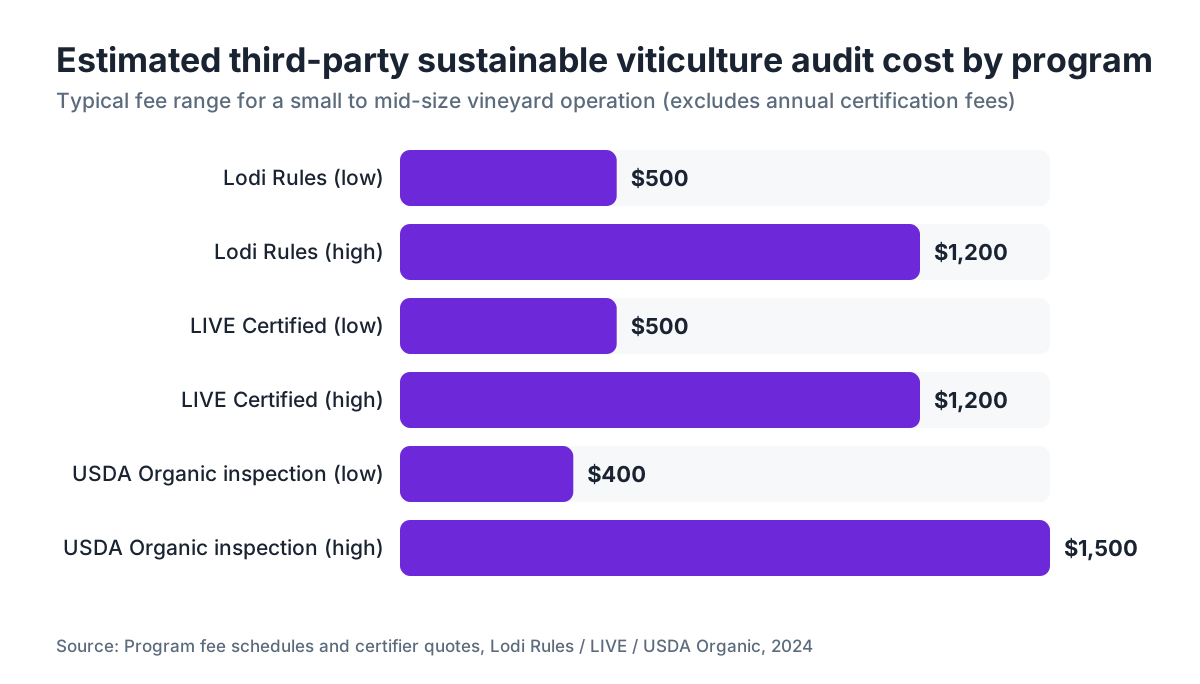
Costs vary by program and auditor. Lodi Rules audits run roughly $500 to $1,200 for a small to mid-size vineyard. LIVE certification fees are similar. USDA Organic inspection fees typically range from $400 to $1,500 depending on operation size and certifier. Most programs charge a separate annual certification fee on top of the audit fee. Call your certifier directly for a current quote.
What pesticide records does the EPA Worker Protection Standard require?
The EPA WPS (40 CFR Part 170) requires agricultural employers to post specific application information including the product name, active ingredient, EPA registration number, location and description of treated area, date and time of application, and the restricted-entry interval. These records must be kept for at least two years and made available to workers and their designated representatives on request.
Do auditors check water rights permits beyond irrigation logs?
In programs with strong water stewardship components, yes. Some auditors will ask to see documentation of your water source entitlement, particularly if you draw from a surface water diversion or a permitted well. Recycled water users typically need to show their recycled water use permit. Irrigation logs alone are not enough if your program's standard includes a water sourcing section.
How do I document scouting activity for an IPM audit?
A scouting log should record the date, the block or area scouted, what you were looking for, what you found (pest or disease pressure level, counts per leaf, trap catches, and so on), and the name of the scout. Photographs with GPS coordinates and timestamps add strong supporting evidence. The log should show a consistent monitoring frequency aligned with your IPM plan's stated monitoring schedule.
Are soil test results required every year for sustainable certification?
Most programs do not require annual soil tests. The typical expectation is results no older than three years, with some accepting five-year-old data for baseline nutrients. Annual tissue tests (petiole or blade) are more commonly required because they reflect the current season's nutrient status. Check your program's specific frequency requirement in the standard document.
What worker training records does a sustainable viticulture auditor look for?
Auditors want signed attendance sheets showing each worker's name, training date, and the trainer's name. The training must cover WPS rights and protections, pesticide safety, emergency procedures, and how to access the central display information. Training must be completed before workers enter treated areas during an REI, and records must be retained for at least two years per EPA WPS requirements.
Does cover cropping need to be documented for audit purposes?
Yes, though the detail required varies by program. Most programs want at least a brief seasonal log noting seeding dates, species mix, and mowing or tillage events. Some also ask for photographs or a map showing which rows carry living cover. Cover cropping records support scoring in soil health and erosion prevention sections and can offset lower scores elsewhere in the assessment.
How long do California vineyard pesticide records have to be kept?
California law requires pesticide application records to be maintained for a minimum of three years from the date of application, and county agricultural commissioners may inspect them at any time during that period. Many growers keep records for five years to cover both state requirements and the multi-year windows that certification programs sometimes request during audits or renewals.
Can a vineyard manager prepare for a sustainable viticulture audit without hiring a consultant?
Yes, and most small to mid-size operations do. Your certification program's self-assessment workbook is the best starting tool. UC Cooperative Extension, WSU Extension, and Cornell Cooperative Extension all publish free vineyard sustainability guides and record-keeping templates. Running a mock audit against your own records six to eight weeks before the actual audit date is the single most effective preparation step.
Sources
- California Sustainable Winegrowing Alliance, Sustainable Winegrowing Program workbook overview: CSWA program requires documentation across pesticide use, water, soil, energy, and waste categories for third-party verification.
- Lodi Winegrape Commission, Lodi Rules certification program: Lodi Rules uses a CCOF-trained third-party verifier for annual field and record audits.
- LIVE Certification, program standards and audit requirements: LIVE requires annual third-party audits covering the full prior growing season's records.
- California Department of Pesticide Regulation, pesticide use reporting requirements: California law requires pesticide application records to be retained for at least three years.
- U.S. EPA, Worker Protection Standard (40 CFR Part 170): EPA WPS requires training records, REI posting documentation, and SDS access records kept for at least two years.
- UC Cooperative Extension, regulated deficit irrigation in wine grapes research: UC Cooperative Extension research documented 20 to 30 percent reductions in applied water using pressure bomb-based irrigation scheduling.
- Cornell University Cooperative Extension, viticulture petiole and tissue sampling guidelines: Cornell viticulture program publishes tissue sampling timing and interpretation guidelines widely referenced in audit standards.
- Washington State University Extension, WPS compliance resources for agricultural employers: WSU Extension publishes WPS compliance checklists covering the documentation categories auditors review.
- UC IPM Program, UC Davis, grape pest management guidelines: UC IPM provides vineyard-specific integrated pest management guidelines used as reference material by auditors.
- USDA Agricultural Marketing Service, National Organic Program standards: USDA NOP requires a written Organic System Plan functioning as an IPM framework and specifying allowed materials.
- SIP Certified, Sustainability in Practice certification standards: SIP requires a periodic third-party audit in addition to annual self-assessment for continued certification.
Last updated 2026-07-11