How to build a harvest yield history database by vineyard block

TL;DR
- A block-level yield database records harvest weight, vine count, and quality notes for every distinct block each season.
- You need at least five consistent fields per block entry, a stable block ID system, and three to five seasons of data before the numbers get useful for pruning targets, crop insurance, and appraiser conversations.
- A spreadsheet works fine to start.
- Structured software matters once you pass about 20 blocks.
Why does tracking yield by vineyard block actually matter?
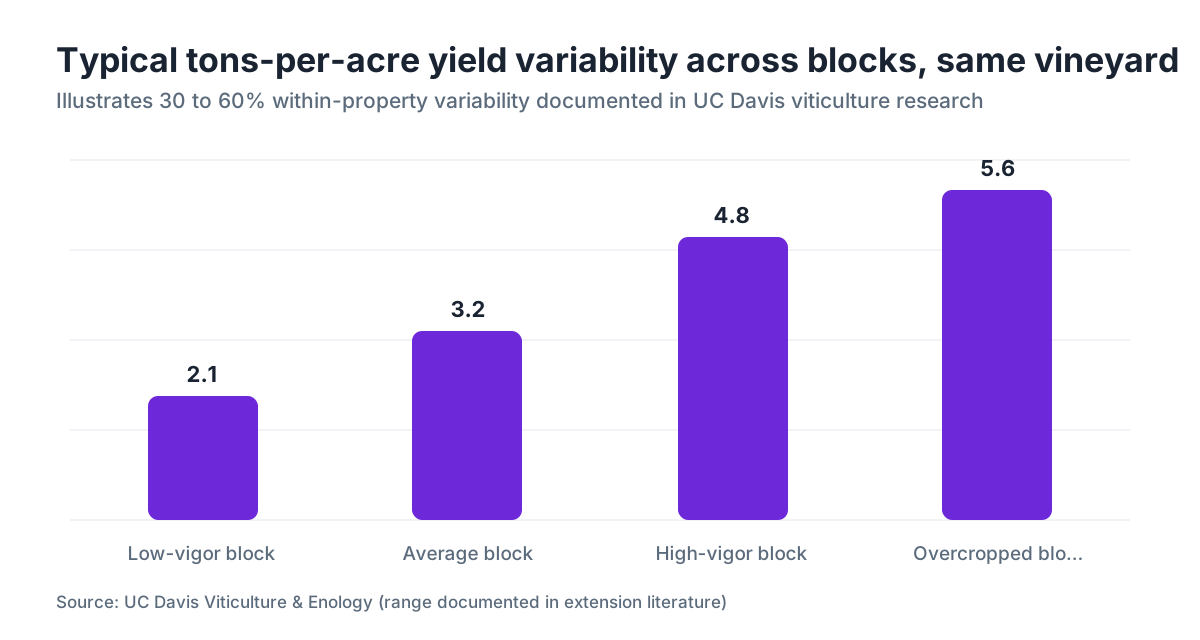
A single tons-per-acre number for your whole property is almost useless. It hides everything. Block A might average 2.1 tons while Block C runs 4.8, and if you only see the blended average, you'll never know which blocks drive your best Brix or which ones are chronically overcropped.
Wine grape yield swings hard within a single vineyard. UC Davis viticulture research has documented yield variability of 30 to 60 percent between blocks on the same property, driven by rootstock, clone, aspect, soil depth, and vine age [1]. That variability has real dollar consequences. If you sell fruit, buyers increasingly want block-level data to verify consistency. If you make estate wine, your winemaker needs to know which blocks are ready first and which ones historically straggle.
There's a compliance angle too. Crop insurance underwriters for USDA Risk Management Agency programs require documented actual production history (APH) at the unit level to calculate coverage [2]. Without clean historical records, you're stuck with transitional yields, which are almost always lower than your real average and cost you money in a bad year.
Block yield history feeds labor budgeting too. Picking crews, bin counts, cold storage timing, and sorting line scheduling all depend on a reasonable forecast. A five-year rolling average by block is the most reliable forecast tool most growers have.
What fields should every block yield record include?
Keep the field list short enough that you'll actually fill it in during the chaos of harvest. Here's what matters, organized by priority.
Required every year, every block:
- Block ID (a stable, unique code, not a name that might change)
- Harvest date
- Gross weight harvested (tons or pounds, be consistent)
- Net weight if you're deducting MOG or juice loss
- Acres in production that season (note any missing vines or replants)
- Tons per acre (calculated field)
- Brix at harvest
- Variety and clone if you have mixed blocks
Strongly recommended:
- Crop load index (yield in pounds divided by pruning weight in pounds, sometimes called the Ravaz Index) [3]
- pH and TA at harvest
- Disease pressure rating for that season (1-5 scale works fine)
- Water status notes (irrigated vs. dry-farmed, any stress events)
- Who picked (crew, machine, date range if spread across days)
Skip unless you have the time:
Detailed berry weight, cluster count per vine, and canopy scores are great for research, but most operations won't maintain them through a multi-week harvest push. Add them later, once the core system runs.
The crop load index deserves special attention. Cornell's viticulture program recommends a Ravaz Index between 5 and 10 for most wine grape varieties as a sign the vine is in reasonable balance [3]. If your block hits 4.8 tons per acre but your pruning weights are very low, that high Ravaz score is an early warning you're overcropping, and the yield history is what lets you see that trend across years.
| Field | Format | Notes |
|---|---|---|
| Block ID | Text code (e.g., CRN-01) | Never change this once set |
| Harvest date | YYYY-MM-DD | ISO format avoids ambiguity |
| Gross weight | Numeric, tons | Match to scale tickets |
| Acres in production | Numeric, 2 decimals | Adjust for replants |
| Tons per acre | Calculated | Gross ÷ Acres |
| Brix | Numeric, 1 decimal | Average of field samples |
| Ravaz Index | Calculated | Yield lbs ÷ Pruning wt lbs |
| Disease pressure | 1 to 5 integer | Define your scale, stick to it |
How do you set up a consistent block ID system?
Most growers get this part wrong, and it's the hardest to fix later. Block IDs need to be stable, short, and clear enough that anyone on your team can look at a tag or a scale ticket and know which block it means.
A three-to-five character prefix for the ranch or vineyard name, followed by a two-digit number, works well. A vineyard called "Crown Ranch" might have blocks CRN-01 through CRN-14. If you run multiple ranches, keep the prefix unique across all of them.
Define a block as a unit that shares a single variety, rootstock, row orientation, and irrigation circuit. If any of those changes within a contiguous area, that's a new block. This matters because yield differences between rootstocks can hit 20 to 40 percent on the same soil type [1], so lumping them together destroys the signal.
Map every block with GPS boundary polygons and link those polygons to the block ID. You don't need expensive software. Google My Maps (free) lets you draw polygons, label them with your block ID, and export to KML. WSU Extension's precision viticulture resources walk through basic block mapping approaches that don't require GIS expertise [4].
Once you assign a block ID, never reuse it, even if you pull out that block and replant. Create a new ID for the replanted block and mark the old one retired with the date. This keeps your historical data clean and avoids confusion when a block goes from old-vine Zinfandel to young Grenache and the yield profile changes completely.
For small operations (under 30 blocks), a master block map printed, laminated, and posted in the winery, barn, and tractor shed is worth doing. People use what they can see.
Spreadsheet vs. database software: which should you start with?
Start with a spreadsheet if you have fewer than 20 blocks and one person entering data. A well-structured Google Sheet or Excel file with one row per block per year is genuinely enough for the first three to four seasons. The goal early on is building the habit of capturing data, not building perfect infrastructure.
Here's the minimum spreadsheet structure that works: one "Blocks" tab as a reference table (Block ID, variety, acres, rootstock, plant year), one "Harvests" tab with one row per block per harvest year, and one "Summary" tab with AVERAGEIFS formulas pulling five-year rolling averages by block.
The problems start when you pass about 20 blocks, add multiple team members entering data, or want to cross-reference yield records against spray records, irrigation logs, or scouting notes. At that point a spreadsheet gets fragile. Data entry errors compound, version control gets messy, and generating reports for a crop insurance audit or a buyer's due diligence request takes hours instead of minutes.
Record-keeping platforms built for vineyard operations, including tools like VitiScribe, let you attach harvest records to a block-level map, link yield data to the same block's spray and scouting records, and export formatted reports without rebuilding pivot tables every time. If you already manage compliance records digitally, adding yield history to the same system is the obvious move.
WSU Extension's farm record-keeping guides emphasize that the format matters less than the consistency: growers who switch systems mid-stream lose years of continuity and often find the old data wasn't structured to import cleanly [10]. Whatever you choose, commit to it for at least five seasons.
How do you collect yield data accurately at harvest without slowing down the crew?
The scale ticket is your primary source document. Every load should have a scale ticket with the date, the block or lot code, the truck or bin number, and the gross and tare weights. If your winery or custom crush facility weighs the fruit, get a copy of every ticket, more than the summary invoice. Discrepancies between field tally sheets and scale summaries happen, and you want the ticket-level detail to settle them.
For machine-harvested blocks, most modern harvesters log GPS track and weight estimates internally. Don't trust the onboard weight sensor as your official record. Use it as a field check against scale tickets, not a replacement.
If you're harvesting multiple blocks on the same day, the single biggest source of data error is bins getting mixed before weighing. Label bins at the point of fill, not after. A piece of flagging tape with a Sharpie-written block ID takes five seconds and saves a lot of headaches.
Some growers keep a simple paper tally sheet at the block during picking, tracking number of bins by bin type, then reconcile against scale tickets in the evening. This two-source approach catches errors before they become permanent record problems.
For Brix, sample from multiple locations within the block on the day of pick. UC Davis viticulture recommendations suggest a minimum of 100 berries from 25 or more vines across the block for a representative sample [1]. Wide variation in Brix across a block is itself a data point worth recording.
How many years of data do you need before the numbers are useful?
Three years is the floor before you can see a pattern. Five years gives you something you can act on with reasonable confidence. Seven to ten years starts showing how each block responds to different vintage conditions, drought years, heat events, and rain at harvest.
The USDA Risk Management Agency requires a minimum of four years of actual production history records to calculate an APH yield for crop insurance, though it uses up to ten years when available [2]. That's a reasonable benchmark for your own planning too.
The first two years of data are mostly about calibrating your measurement process. You'll find inconsistencies in how scale tickets got assigned to blocks, figure out how to handle partial-year harvests from young vines, and deal with years where a block was dropped entirely due to disease or a buyer cancellation. Document all of it in a notes field so future you understands why 2021 looks weird.
From year three onward, start looking at the coefficient of variation (CV) for each block. High CV means the block is inconsistent year to year, which could reflect irrigation management issues, frost risk, or variety sensitivity to vintage. Low CV is a block you can budget around confidently. Nobody has perfect data on what counts as a "normal" CV for wine grape blocks, but informal benchmarks from extension literature suggest CVs above 25 percent for a block warrant investigation [8].
How do you account for unusual seasons, replants, and missing data?
Every database has dirty data, and yield databases are especially prone to it. The fix is documenting exceptions rather than pretending they don't exist.
Create a notes or flags field on every harvest record. Use it for:
- Frost events that reduced crop before harvest
- Disease-driven early picks that hit yield and quality
- Green drop or crop thinning done on purpose
- Young vine adjustment years (vines under four years are often not at full bearing and shouldn't be averaged with mature vine data)
- Missing data (no pick because fruit was sold on the vine and weighed at the winery without block separation, for example)
For replanted blocks, create a new block ID and start a fresh data series. Keep the retired block's history linked in your reference table so you don't lose the old data, but don't average old-vine and young-vine yields together.
For missing data years, don't interpolate or estimate. Leave the record blank and note why. Using estimated data in a crop insurance APH calculation is specifically prohibited under USDA RMA rules [2], and getting caught doing it has serious consequences. Blank is honest. Fabricated is not.
If you acquired a vineyard and inherited records from the prior owner, treat those records with caution. Block definitions may differ, scale ticket practices may differ, and variety IDs may carry errors. Flag that data with a "prior ownership" note and weight it less heavily in your own planning until you've validated it against a few years of your own records.
How do you use block yield history to set pruning targets and crop load goals?
This is where the database pays back the effort. Once you have three-plus years of yield data alongside pruning weights, you can set evidence-based bud counts for each block.
The basic calculation is straightforward. If your five-year average yield for Block CRN-04 is 3.2 tons per acre and your target is to hold it at 3.0 tons, you back-calculate from average cluster weight and clusters per shoot to reach a bud count per vine that supports that target. Cornell's viticulture program publishes detailed worksheets for this calculation, grounding it in the block's own historical data rather than generic regional benchmarks [3].
The practical pruning workflow looks like this:
- Pull the block's five-year average yield and Ravaz Index from your database
- Look at last year's pruning weight for that block
- Calculate the target pruning weight that would achieve your desired Ravaz Index at your target yield
- Set bud count accordingly, adjusting for vine spacing and shoot density targets
Blocks that chronically blow past your crop target despite pruning adjustments are signaling something else. Maybe rootstock vigor that needs canopy work, or irrigation that's too aggressive. The yield history makes that conversation with your viticulture consultant concrete instead of anecdotal.
WSU Extension's research on precision viticulture recommends linking yield maps to management zone boundaries so pruning prescriptions can vary within a block where the data supports it [4]. That's advanced, but even at the whole-block level, a clean yield history makes pruning decisions far less arbitrary.
Can block yield records help with crop insurance and regulatory compliance?
Yes, and this is one of the clearest financial returns on keeping good records. USDA's Federal Crop Insurance program for wine grapes, administered through RMA and available in most major wine grape producing counties in California, Oregon, Washington, and New York, calculates coverage based on your APH [9]. Growers with documented APH yields consistently get higher coverage amounts than those relying on transitional (county average) yields.
USDA RMA guidance states that the APH yield is calculated by averaging the actual yields from the applicable database years, and requires that yields be documented by practice, type, and, in the case of grapes, often by variety [2]. Clean block records that tie to scale tickets and stay consistent year over year satisfy this requirement.
For organic or transitioning vineyards, the EPA Worker Protection Standard (WPS) requires maintaining pesticide application records that tie to specific treated areas [5]. That's a spray record requirement rather than a yield record requirement, but the block ID system you build for yield tracking is the same one you need for WPS compliance. One block ID system that works across both record types beats two parallel systems that don't talk to each other.
Some states add reporting requirements. California's Grape Crush Report, administered by USDA National Agricultural Statistics Service (NASS), asks growers and wineries to report crushed tonnage by variety and county each year [6]. Having your block yield records organized means that report takes minutes instead of an afternoon of reconstructing numbers from memory.
What does a practical multi-year block yield report actually look like?
Here's a realistic example of what five years of data for three blocks might look like, and what you can read from it.
| Block | 2020 T/A | 2021 T/A | 2022 T/A | 2023 T/A | 2024 T/A | 5yr Avg | CV% |
|---|---|---|---|---|---|---|---|
| CRN-01 (Cab S, 15yr) | 3.1 | 3.4 | 2.9 | 3.3 | 3.2 | 3.18 | 6% |
| CRN-04 (Zin, 32yr) | 4.2 | 3.1 | 5.0 | 4.8 | 4.1 | 4.24 | 18% |
| CRN-07 (Chard, 6yr) | 1.8 | 2.4 | 3.1 | 3.2 | 3.6 | 2.82 | 27% |
Block CRN-01 is your most reliable producer. Low CV, consistent Cabernet Sauvignon from mature vines. Bud count and irrigation protocol are probably dialed in. Budget around it with confidence.
Block CRN-04 shows more swing. Thirty-two-year-old Zinfandel with classic old-vine inconsistency. The 2021 dip might line up with a drought year or a late spring freeze. Check your notes. That variability is probably expected for the variety, but a CV of 18 percent means your forecast range for crop insurance or buyer commitments should be wider.
Block CRN-07 is young vines coming into bearing. The upward trend is expected and the 2024 yield is probably approaching mature vine levels. Don't average these years for APH without checking whether RMA allows you to skip the young vine years (it often has provisions for this [2]).
A report like this, updated every October, gives you a one-page snapshot useful for banker conversations, buyer negotiations, crop insurance renewals, and winery allocation planning. Tools like VitiScribe can generate this kind of summary automatically from block-level harvest entries, which saves a meaningful chunk of end-of-season report assembly time.
If you're just getting started and want more on vineyard-level operations and record-keeping, the vineyard overview covers the broader field management context this kind of data fits into.
What are common mistakes that make block yield databases useless over time?
The most common failure is inconsistent block boundaries. If Block CRN-04 means "the zinfandel block" to you but your harvest foreman sometimes pulls a few rows of a neighboring block into that bin count, your yield per acre creeps up over time for reasons that have nothing to do with the vines. Document block boundaries in writing and on a map, and check them against your GPS records at least every three years.
The second failure is changing units or definitions. Say you recorded yield in tons for three years, then switched to pounds because your custom crush facility started reporting in pounds, and you forgot to convert back. Now you have a dataset that looks like your yield collapsed by half. Every database needs a units field and a conversion log when units change.
Third: losing the source documents. Scale tickets are your audit trail. Store them by year, physically or as scanned PDFs, for a minimum of seven years. USDA RMA crop insurance requires you to retain records for three years after the insurance year [2], but seven years gives you a buffer against late audits and lets you reconstruct any data entry errors.
Fourth: treating the database as a harvest-only project. Yields make more sense when they connect to the decisions that drove them. A block that dropped to 2.1 tons per acre because you green-dropped on purpose is very different from one that dropped because of late season rain and bunch rot. If your yield database has no notes field you actually use, you'll spend years staring at numbers that tell you nothing about what happened.
Frequently asked questions
What is a vineyard block ID and how should I format it?
A block ID is a permanent, unique code assigned to each distinct management unit in your vineyard. A common format is a two-to-four letter ranch prefix followed by a two-digit number, for example CRN-04 for the fourth block at Crown Ranch. The key rules: never reuse a retired ID, keep the code short enough to handwrite on a scale ticket, and document what each ID refers to in a master reference table.
How many years of yield history does crop insurance require?
USDA Risk Management Agency calculates APH coverage using up to ten years of actual production history, with a minimum of four years for a standard APH calculation. Growers with fewer than four years of documented yields get assigned transitional yields, which are typically lower than actual performance and reduce your coverage amount. Clean block-level records tied to scale tickets satisfy RMA documentation requirements.
What is the Ravaz Index and how does it relate to yield records?
The Ravaz Index is yield in pounds divided by pruning weight in pounds for a given block. Cornell's viticulture research recommends a Ravaz Index between 5 and 10 as a sign of reasonable vine balance for most wine grape varieties. Tracking both yield and pruning weight in your block database lets you calculate this ratio annually and spot trends toward overcropping or undercropping before they hit fruit quality.
Can I use Google Sheets to build a block yield database?
Yes, and for operations with fewer than 20 blocks it's a perfectly reasonable tool. Set up three tabs: a Blocks reference table, a Harvests log with one row per block per year, and a Summary tab with rolling average formulas. The main limits are multi-user reliability and the inability to link yield records directly to spray or scouting records. A dedicated vineyard records platform makes more sense as you scale past 20 blocks or add compliance record requirements.
What is the California Grape Crush Report and does my yield database help with it?
The California Grape Crush Report is an annual mandatory report administered by USDA National Agricultural Statistics Service that captures crushed tonnage by variety and county. If your block yield database is organized by variety and includes the weight of fruit actually delivered and crushed, filling out the report becomes a matter of summing a few columns rather than reconstructing information from memory or multiple sources.
How do I handle yield data for young vines that aren't at full bearing yet?
Record the data, but flag it as a young vine year (typically vines under four years old). Don't average young vine yields with mature vine data for crop insurance APH calculations, and don't use low young-vine yields to set crop targets for the mature block. USDA RMA has specific provisions for vineyards transitioning from young to mature bearing, which your crop insurance agent can walk you through for your specific situation.
What's the best way to estimate yield before harvest for planning purposes?
The most common pre-harvest estimate combines a cluster count sample with average cluster weight from a berry sample, multiplied by vines per acre. WSU Extension recommends sampling at least 10 percent of vines across the block in a stratified pattern. Your historical yield database sharpens this estimate: if Block CRN-01 has historically come in within 8 percent of the pre-harvest estimate, you can plan logistics with more confidence than for a new block.
Should I track yield separately for different varieties within a mixed block?
Yes, if at all possible. Mixed blocks are a record-keeping headache, but variety-level yield data is far more useful than blended block data for decisions about future planting, crop insurance, and buyer commitments. If you can't separate the pick by variety at the scale, at least estimate the variety proportions by row and apply that proportion to the block total as a reasonable approximation.
How does EPA Worker Protection Standard compliance connect to block yield records?
WPS requires that pesticide application records identify the specific area treated, using field or block identifiers. If your spray records use the same block ID system as your yield records, you get compliance on both sides from one ID scheme. The EPA WPS rules at 40 CFR Part 170 require treated area records to be kept for two years and be available for inspection by agricultural inspectors and workers on request.
What coefficient of variation percentage is a red flag for a vineyard block?
Extension literature informally suggests that a CV above 25 percent across five or more years marks a block with high year-to-year variability that warrants investigation. Common causes include frost exposure, irrigation inconsistency, disease-prone varieties, or mixed rootstock performance. A high CV doesn't mean the block is unmanageable, but it means your yield forecast for planning and insurance needs to carry a wider uncertainty range.
Do scale tickets count as official yield documentation for USDA programs?
Yes. Scale tickets from a licensed weighmaster or from a winery or custom crush facility are the standard supporting documentation for USDA RMA APH records. They should show the date, your producer name or code, the variety and lot or block designation, and gross and tare weights. Keep originals or scanned copies for at least seven years, even though the RMA minimum retention requirement is three years after the insurance year.
How do I migrate from a spreadsheet to database software without losing historical data?
The migration works best if your spreadsheet was structured consistently from the start. Export everything to a CSV, then map your column names to the new system's field names before import. The biggest risk is block IDs that were handled inconsistently, for example a block called "Zin Block" in some rows and "CRN-04" in others. Standardize IDs in the spreadsheet first, then migrate. Budget a few hours to audit the imported data against your original and fix any errors.
Sources
- UC Davis Viticulture and Enology: UC Davis viticulture research documents yield variability of 30 to 60 percent between blocks on the same property, driven by rootstock, clone, aspect, soil depth, and vine age; rootstock differences alone can reach 20 to 40 percent on the same soil; representative Brix sampling uses a minimum of 100 berries from 25 or more vines.
- USDA Risk Management Agency, Crop Insurance Actual Production History: RMA calculates APH coverage using up to ten years of actual production history, requires a minimum of four years of documented yields, prohibits use of estimated data, and requires retention of records for three years after the insurance year.
- Cornell University Cooperative Extension, Viticulture Program: Cornell's viticulture program recommends a Ravaz Index between 5 and 10 for most wine grape varieties as a sign of reasonable vine balance; provides worksheets for bud-count calculations based on block yield history and pruning weights.
- Washington State University Extension, Viticulture and Enology: WSU Extension precision viticulture resources recommend linking yield maps to management zone boundaries for block-level pruning prescriptions and walk through basic block mapping approaches that do not require GIS expertise.
- U.S. Environmental Protection Agency, Worker Protection Standard (40 CFR Part 170): EPA WPS requires pesticide application records identifying the specific treated area by field or block identifier, retained for two years and available for inspection.
- USDA National Agricultural Statistics Service, California Grape Crush Report: California Grape Crush Report is an annual mandatory report capturing crushed tonnage by variety and county, administered by USDA NASS.
- Cornell University College of Agriculture and Life Sciences, Vineyard Record Keeping Resources: Coefficient of variation above 25 percent across five or more years indicates high block-level variability warranting management investigation, per extension viticulture benchmarks.
- USDA Risk Management Agency, Grape Crop Insurance Provisions: Federal crop insurance for wine grapes requires APH documentation at the unit level by variety and practice; growers without four years of documented APH are assigned transitional yields typically lower than actual performance.
- Washington State University Extension, Precision Viticulture Block Mapping: WSU Extension farm record-keeping guides note that growers who switch record systems mid-stream often lose data continuity and discover old data was not structured for clean import.
Last updated 2026-07-11