How to document grower-winery grape contract compliance at harvest
TL;DR
- To document grower-winery grape contract compliance at harvest, keep a full paper trail: pre-harvest spray interval records, field Brix and pH logs, certified scale weight tickets, variety and block identity confirmation, and every quality or rejection notice exchanged in writing.
- Most contract dispute windows run three to five years, so hold records at least that long.
Why harvest documentation is the one time paperwork can cost you real money
A grape purchase contract is not a handshake anymore. The moment fruit crosses the crush pad, every vague promise in that contract becomes provable or disputed. Price adjustments for Brix, sugar penalty clauses, rejection rights, and pre-harvest spray restrictions all hinge on what you wrote down and when you wrote it.
The stakes are concrete. If a winery docks price or rejects a load over a spray residue concern and you have no applicator records showing the pre-harvest interval (PHI) was honored, you are in a weak spot. If a grower fights a Brix deduction and the winery has only one employee's handwritten note with no time stamp, that's almost as weak. Documentation breaks the tie.
This is not paranoia. Harvest runs fast, people are tired, and memories diverge quickly once money is on the table. Build a compliance system you run every year and you're protected at the exact moment you have no time to spare.
What should a grape purchase contract require you to document?
Most grape purchase contracts in California, Washington, and Oregon spell out a minimum set of documents: spray and pesticide records confirming PHI compliance, Brix at delivery (often with field Brix logs too), certified weight at a licensed scale, variety and vineyard block identification, and delivery timing against the harvest window in the contract [1].
Some contracts go further and require written certification that fruit meets state wine grape standards. California's wine grape standards under California Code of Regulations Title 17 set minimum sugar levels and prohibit delivery of diseased or adulterated fruit [2]. If your contract incorporates those standards by reference, you're agreeing to document compliance with them.
Here's the practical checklist of document types most contracts either require outright or that you need to survive a dispute:
- Pesticide application records (applicator name, product, rate, date, target pest, PHI)
- Field Brix logs (block, date, sample size, instrument used, who took the reading)
- Scale weight tickets from a licensed public weighmaster
- Lot or load identification sheets tying fruit to a specific block
- Any written note about quality concerns, deviations, or approvals
- Signed delivery receipts or load confirmations from the winery
Verbal approvals to deviate from spec are worth nothing. If a winery tells your crew chief on the phone that 22 Brix is fine instead of the contracted 23.5, get that in a text or email before the truck leaves the vineyard.
How do pesticide and spray records tie into harvest compliance?
This is the area growers handle loosest, and it carries the most legal exposure. Under the EPA Worker Protection Standard (WPS), pesticide application records must be kept for two years and include the product, EPA registration number, application rate, date, location, and applicator certification number [3]. California goes further: commercial pesticide application records under California Food and Agriculture Code section 12981 must reach the county within seven days of application [4].
The contract piece is distinct from the regulatory piece. Your winery buyer may want proof that the last fungicide before harvest respected the product's PHI. Apply a fungicide with a 14-day PHI on August 20, deliver on September 2, and you're at 13 days. You're out of compliance. With no written record of the application date, you cannot prove otherwise.
WSU Extension's spray record recommendations point to a running vineyard log organized by block, each entry dated and signed by the applicator or supervisor [5]. That format maps directly onto what a winery auditor or a USDA inspector would ask to see.
Store spray records two ways: a physical binder at the operation and a digital backup. Paper dissolves, floods happen, and harvest is exactly when you don't want to find last year's records unreadable. A tool like VitiScribe can handle the digital side, logging applications block by block with timestamps that survive any weather the season throws at you.
One more thing. If you custom-hire a spray applicator, get their copy of the application record, not a verbal assurance. Custom applicators in California must give you a copy within 24 hours [4]. Ask for it every time.
What is the right way to log field Brix and sampling data?
Brix is the single most contested number in a grape contract. Contracts set minimum delivery Brix, sometimes with penalty tiers below that minimum, and the two sides regularly disagree about what the grapes measured when picked versus when they arrived at the winery.
UC Davis Viticulture and Enology recommends taking Brix samples from at least 100 berries per block, drawn randomly from interior and exterior clusters across multiple rows [6]. That's the scientific standard. Most small operations sample less rigorously, which is fine in practice, but your documentation still needs to show the method was consistent and reasonable, more than that you got a number.
A good field Brix log entry includes:
- Date and time of sampling
- Block identifier (match it exactly to the contract language)
- Number of berries or clusters sampled
- Instrument used (refractometer model, last calibration date)
- Reading in °Brix
- Name of the person taking the reading
Refractometer calibration matters more than people admit. An uncalibrated instrument can read 0.5 to 1.0 °Brix off, which can be the difference between hitting a contract threshold and missing it. Calibrate with distilled water before each use and record that you did.
If you deliver to a winery that takes its own Brix at intake, ask for that reading in writing, every time. The gap between your field reading and their crush-pad reading is normal (transport, temperature, settling), but if both numbers exist on paper, disputes resolve fast.
How do weight tickets work and what makes one legally defensible?
A weight ticket from a licensed public weighmaster is the only document that creates a legally binding record of tons delivered in most states [7]. In California, public weighmasters are licensed under Business and Professions Code sections 12700 to 12715, and their certificates carry legal weight in any contract dispute or litigation [7].
A valid ticket has to show the weighmaster's license number, the date and time of weighing, gross weight, tare weight, net weight, a commodity description ("wine grapes, variety, vineyard"), and the seller's name. Miss any of these and the ticket can be challenged.
Many wineries run their own certified scales on-site, which simplifies things. Delivering to a winery without certified scales means weighing at a third-party public weighmaster facility, usually a grain elevator or produce terminal. That adds a step, but it's non-negotiable if you want the weight to be uncontestable.
Keep every weight ticket from every load, more than the summary invoice. A load-by-load weight record tied to field blocks is worth far more if a question comes up about which fruit was which.
What documentation do you need if a winery rejects or discounts a load?
Rejections and price adjustments turn adversarial fast. If a winery rejects a load citing disease, off-odors, wrong variety, or out-of-spec Brix, the burden of proof usually falls on whoever makes the claim. In practice, both sides need contemporaneous written records.
If you're the grower and a load gets rejected:
- Ask for the rejection reason in writing, immediately. A verbal rejection in a yard at midnight is not a legal rejection.
- If there's a quality dispute, ask whether the winery will allow independent sampling before the load is turned away.
- Document the condition of the fruit yourself: time-stamped photos, your own Brix reading, any temperature records.
- Read the contract for its rejection procedures. Many require rejection within a set number of hours of delivery.
If you're the winery and you need to reject or discount:
- Issue a written rejection notice or a written price adjustment memo the day of delivery.
- Name the specific contract clause you're invoking.
- If you ran lab tests (SO2, VA, microscopy for mold), attach the results.
- Save all incoming delivery records, including the grower's Brix log if they provided one.
Cornell Cooperative Extension's guidance on agricultural contract management notes that disputes are most often resolved in favor of the party with contemporaneous records, meaning records made at the time of the event, not reconstructed later [8].
What does a complete harvest compliance file look like?
Picture the complete harvest compliance file as a package you could hand a mediator so they understand exactly what happened without a word from you. It holds everything, organized by block and delivery date.
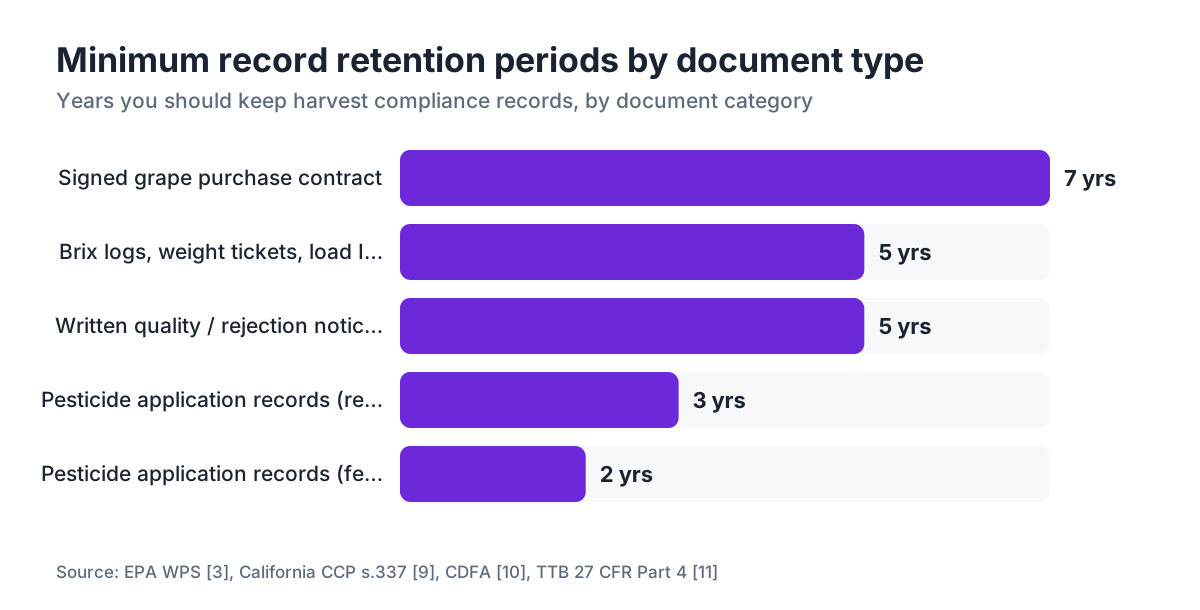
| Document | Who Creates It | When | How Long to Keep |
|---|---|---|---|
| Pesticide application records | Grower / applicator | Day of application | 2 yrs (federal WPS) [3]; 3 yrs recommended |
| Field Brix logs | Grower | Pre-harvest and day of pick | 5 yrs |
| Scale weight tickets | Public weighmaster | Day of delivery | 5 yrs |
| Load identification sheets | Grower | Per load | 5 yrs |
| Delivery receipts / confirmations | Winery | Day of delivery | 5 yrs |
| Written quality notices | Either party | Day of event | 5 yrs |
| Signed contract and amendments | Both parties | Pre-season | 7 yrs |
Five years is the standard recommendation for most of these because agricultural contract disputes often run under a four-year statute of limitations in states like California (Code of Civil Procedure section 337 for written contracts), and you want a year of buffer [9].
File everything together. A spray record sitting in a different binder from the weight tickets for the same block is a file that takes an hour to rebuild under pressure. One block, one folder (physical or digital) is a clean system.
Are there state-specific compliance requirements that affect harvest documentation?
Yes, and they vary more than most growers realize.
California's grape crush report, required by the California Department of Food and Agriculture (CDFA), is the most detailed in the country [10]. Wineries and custom crush facilities report variety, appellation, county, tons crushed, and price paid, filed annually by January 10 following the harvest year. That requirement means your block-level weight and variety records need to be organized precisely, more than generally.
Washington State requires pesticide application records submitted to the Washington State Department of Agriculture, and WSU Extension has specific guidance on what those records need to include for both state rules and common contract terms [5].
Oregon's Department of Agriculture handles pesticide record requirements much like Washington, with records kept for at least two years and available to inspectors on request.
If you're in an AVA with sourcing or production rules, check whether your documentation needs to verify fruit came from within the appellation boundary. Some contracts require a signed affidavit to that effect [1].
For growers supplying wineries that sell estate-labeled wine, the Alcohol and Tobacco Tax and Trade Bureau (TTB) requires that 100% of the grapes in an estate label come from vineyards owned or controlled by the winery and located within the labeled appellation [11]. If you supply that fruit, your block location records become part of the winery's TTB compliance file.
How should growers and wineries communicate about compliance issues during harvest?
This is the soft skill the legal literature almost never covers, and every experienced grower and winery manager knows it matters enormously. The quality and speed of communication during harvest week decides whether a compliance question stays a question or becomes a dispute.
Set communication protocols before harvest starts. Who calls whom if a load is running late? Who confirms intake Brix, and how fast? What's the escalation path if field Brix is below contract minimum and the winery might reject?
Put all material communications in writing. Texts are fine, emails are better, and email threads with clear subject lines referencing the contract number or block identifier are best. "Re: Block 12 delivery Sept 4, Brix concern" is a subject line that documents itself.
If you run a vineyard operation with multiple buyers, keep each buyer's communication channel completely separate. Records from one buyer's contract should never bleed into another's file.
For larger operations, name one person as the compliance contact, the only person authorized to issue or receive quality notices during harvest. That kills the situation where a winery employee tells a truck driver something that later gets called an official rejection or approval.
What record-keeping tools actually work for harvest compliance?
Paper works. It has worked for a hundred years and it still works if you're disciplined. A three-ring binder per block, with printed logs for spray records, Brix readings, and delivery receipts, plus a scanner or camera app to photograph every weight ticket, gives you everything you need.
The problem with paper is speed and fragility. Harvest runs fast, handwriting gets illegible at 10 PM, and a spilled water bottle can destroy a week of records. Digital systems fix all of that.
At minimum, you want a system that:
- Timestamps every entry automatically
- Lets you tag records by block identifier (matching contract language exactly)
- Stores photos of weight tickets linked to the right delivery date
- Exports a complete block-level report on demand
Spreadsheets (Excel, Google Sheets) get most small operations through harvest, but they need strict naming conventions and someone who actually maintains them. When your harvest manager changes, the filing logic often changes with them.
Platforms built specifically for vineyard record-keeping, like VitiScribe, are worth a look if you manage more than a few blocks or multiple buyers, because the structure is already built around the compliance questions you'll get asked.
Whatever you use, the test is simple. If someone asked you to pull all spray records and weight tickets for Block 7 deliveries from last harvest right now, how long would it take? More than ten minutes means your system needs work.
What do auditors and compliance inspectors actually look for at harvest?
County agricultural commissioners, CDFA auditors, and TTB inspectors each approach vineyard records differently, but they share a few consistent priorities.
First, they look for contemporaneous records. A spray log backdated from memory three weeks after harvest fails inspection. The entry needs to look like it was made the day the spray happened, with the level of detail that only comes from real-time recording.
Second, they cross-reference. A CDFA inspector compares your crush report submission to your weight tickets. A TTB auditor compares your estate label claim to your vineyard block records. If the numbers don't tie out exactly, you need a documented explanation for the gap.
Third, they follow the chain. A pesticide record points to an applicator license number, and they may verify that license was valid on that date. The product's EPA registration number on the record should match the label. The rate on the record should sit within the label's maximum. All of it is checkable from public databases.
The most common finding in agricultural contract compliance audits, according to UC Cooperative Extension guidance, is not fraud but missing records: entries that were never made, documents that were never retained, and logs that stop mid-season [12]. Build the habit of closing out each block's file before you move to the next delivery. Don't let documentation lag the operation by more than 24 hours.
Frequently asked questions
How long do I need to keep grape contract compliance records after harvest?
Keep pesticide application records at least two years under the federal EPA Worker Protection Standard [3], but most attorneys recommend five years for all harvest compliance records because written contract disputes in California fall under a four-year statute of limitations (California Code of Civil Procedure section 337). Keep the signed contract itself for seven years. When in doubt, keep more, longer.
What happens if I don't have spray records showing pre-harvest interval compliance?
Without records, you can't prove the PHI was honored, which leaves you exposed on two fronts. Regulatory first: California requires commercial pesticide application records filed with the county within seven days [4], and missing records can bring penalties. Contractual second: a winery can invoke residue concerns as grounds for price adjustment or rejection, and you have no documentary defense. Records reconstructed after the fact won't hold up under scrutiny.
Do I need a certified scale for every grape delivery?
Yes, if the contract specifies certified weight, which most do. In California, wine grape sales over certain amounts require weight certification by a licensed public weighmaster under Business and Professions Code sections 12700 to 12715 [7]. If the winery has an on-site certified scale that's been inspected and licensed, deliveries there satisfy the requirement. Keep a copy of every individual weight ticket, more than the invoice summary.
Can a winery legally reject grapes without a written notice?
Verbal rejection creates an ambiguous legal situation. Most grape purchase contracts specify rejection procedures, and those usually require written notice within a defined window (often 24 to 48 hours). If the contract requires written rejection and the winery only rejects verbally, that may not count as a valid rejection under the contract. As a grower, always request written rejection notices and document your own delivery records regardless.
What's in a load identification sheet and do I really need one per truck?
A load ID sheet ties a specific physical load to a specific vineyard block, variety, harvest date, and grower. You need it because the winery's intake scale ticket records weight but not origin. Without a load ID sheet, a dispute about which grapes came from which block is nearly impossible to settle from records alone. One sheet per truck per block is not overkill. It's basic traceability, and some AVA compliance requirements depend on it.
What Brix sampling method is considered standard for contract documentation?
UC Davis Viticulture and Enology recommends sampling at least 100 berries per block, drawn randomly from interior and exterior clusters across multiple rows [6]. For documentation, record your sample size, method, the instrument used, calibration status, and who took the reading. A single grab-sample from the edge row doesn't document compliance. It documents a number with no context, which is far easier to dispute.
If I use a custom spray applicator, whose records count?
Both yours and theirs matter. In California, custom pesticide applicators must give the property owner or operator a copy of the application record within 24 hours [4]. Ask for that copy immediately and file it with your block records. Your county agricultural commissioner may also receive a copy from the applicator, but that copy is regulatory, not contractual. Your compliance file needs its own copy.
What does the TTB require if a winery uses my grapes in an estate-labeled wine?
TTB regulations require that 100% of the grapes in an estate-labeled wine come from vineyards owned or controlled by the winery within the labeled appellation [11]. If you supply that fruit under a long-term lease that gives the winery control of the vineyard, your block records need to document both the physical location within the AVA and the control relationship. The winery carries the TTB filing burden, but your records are what they'll cite.
Does the EPA Worker Protection Standard apply to harvest crews, and what records do I need?
Yes. Under the WPS, workers entering a treated area must receive safety information about any pesticide with a restricted-entry interval (REI) that hasn't yet expired [3]. You need records showing the application date, product, REI, and that workers were informed before entering. At harvest, if any REI from a recent spray hasn't expired, workers cannot legally enter. That's a compliance record issue and a contract issue if the winery requires PHI compliance before accepting fruit.
How do I document a Brix exception or contract deviation agreed to verbally?
Get it in writing before the truck leaves the vineyard. A text from the winery's designated representative confirming they'll accept the load at the off-spec reading is legally better than nothing. An email is better still. Note the contact's name, title, date, time, and the specific deviation approved. File that communication with the delivery records for that block. A verbal exception that turns into a disputed deduction later is one of the most common grower complaints in harvest arbitrations.
What's the California wine grape crush report and how does it affect my record-keeping?
The California Department of Food and Agriculture requires all wineries and custom crush facilities to file an annual grape crush report by January 10 following the harvest year [10]. It covers tons received, variety, county of origin, and price paid per ton. Growers don't file it, but wineries pull data from your delivery records to complete it. If your block and variety records are sloppy, the winery may report incorrectly, creating downstream problems for AVA claims or market data accuracy.
What format should field notes and Brix logs be in to be legally usable?
There's no mandated format for field Brix logs in contract law, but contemporaneous, legible, and specific beats everything else. A handwritten log with date, time, block ID, sample count, instrument, reading, and the recorder's name is legally usable. A photo of grapes with a refractometer from an undated phone camera is much less so. Digital logs with automatic timestamps and block tagging are cleanest because they're harder to accuse of being backdated.
What should I do if my Brix logs and the winery's intake reading disagree?
Document both, in writing, immediately. Then review the likely causes: temperature change during transport, different sampling methods, instrument calibration differences. Most contracts allow some variance between field and intake Brix. If the gap sits within that allowed range, the contract governs price. If it's outside the range and the winery wants to apply a penalty, you need your field log as evidence of the fruit's condition when it left your vineyard. Don't discard your records because the numbers differ.
Sources
- University of California Cooperative Extension, Sample Grape Purchase Contract Provisions: Most grape purchase contracts specify minimum requirements for spray records, Brix at delivery, certified weight, variety and block identification, and delivery timing.
- California Department of Food and Agriculture, California Code of Regulations Title 17, Wine Grape Standards: California's wine grape standards set minimum sugar levels and prohibit delivery of diseased or adulterated fruit.
- U.S. EPA, Worker Protection Standard for Agricultural Pesticides: Under the EPA Worker Protection Standard, pesticide application records must be kept for two years and include product, EPA registration number, rate, date, location, and applicator certification number.
- California Department of Pesticide Regulation, Pesticide Use Reporting: California Food and Agriculture Code section 12981 requires commercial pesticide application records to be filed with the county within seven days of application; custom applicators must provide a copy to the operator within 24 hours.
- Washington State University Extension, Vineyard Spray Record-Keeping Recommendations: WSU Extension recommends maintaining a running vineyard spray log organized by block, with each entry dated and signed by the applicator or supervisor.
- UC Davis Department of Viticulture and Enology, Grape Sampling Methods: UC Davis Viticulture and Enology recommends sampling a minimum of 100 berries per block, drawn randomly from interior and exterior clusters across multiple rows, as the standard for Brix assessment.
- California Department of Food and Agriculture, Division of Measurement Standards, Public Weighmaster Law: California Business and Professions Code sections 12700-12715 govern public weighmasters; their certificates carry specific legal weight in contract disputes and must include weighmaster license number, date, times, gross, tare, and net weights, and commodity description.
- Cornell Cooperative Extension, Agricultural Contract Management Guidance: Cornell Cooperative Extension notes that disputes are most often resolved in favor of the party with contemporaneous records made at the time of the event, not reconstructed later.
- California Legislative Information, Code of Civil Procedure Section 337: California Code of Civil Procedure section 337 sets a four-year statute of limitations for written contract disputes, supporting a five-year minimum record retention recommendation.
- California Department of Food and Agriculture, Grape Crush Report Program: CDFA requires all wineries and custom crush facilities to file an annual grape crush report covering tons received, variety, county of origin, and price paid per ton, due by January 10 following the harvest year.
- Alcohol and Tobacco Tax and Trade Bureau, Wine Labeling (27 CFR Part 4): TTB regulations require that 100% of the grapes in an estate-bottled wine come from vineyards owned or controlled by the winery within the labeled appellation.
- UC Cooperative Extension, Agricultural Record-Keeping Compliance Guidance: The most common finding in agricultural compliance audits is missing records: entries never made, documents not retained, and logs that stop mid-season.
Last updated 2026-07-11