How to document a vine training system change in block history records
TL;DR
- When you change a block's training system, record the old system, new system, date work began, date it was complete, crew method, any trellis materials installed, the agronomic reason for the change, and who approved it.
- Keep that entry in a permanent block history file, not a season log.
- Regulators and buyers both ask for it, and vineyard managers who document poorly lose options at resale.
Why does documenting a training system change matter at all?
Block history records are the paper trail that makes every future decision defensible. A training system change is one of the most physically and financially significant things you can do to a block. You're altering canopy architecture, yield potential, labor inputs, and sometimes the entire row orientation. If that change isn't in the record, it effectively didn't happen in the eyes of an auditor, a lender, or a buyer doing due diligence.
Some grape growers assume training system changes only need to show up in a spray or harvest log because "that's where regulators look." That's not quite right. The EPA Worker Protection Standard requires that worker safety training and field reentry records are kept, but it doesn't speak to trellising as such [1]. The records that matter for a training change come from buyer requirements, organic or sustainability certification programs, and your own farm management system.
The documentation also pays you back directly. Convert a block from bilateral cordon to Scott Henry, watch yields drop for two seasons, and you'll need dated records to separate that effect from a weather anomaly. Without them, you're guessing. University of California Cooperative Extension has noted that block-level record-keeping is "essential for correlating management practices with vine performance over time" [2].
And then there's resale. A well-documented 30-acre block with complete training history can command a higher price per acre than one with gaps. Buyers and their consultants want to see that the vines have been managed with intention.
What information belongs in a training system change record?
Think of the record as answering five questions a stranger would need answered to pick up where you left off.
1. What was the old system? Name it specifically: VSP (vertical shoot positioning), bilateral cordon, head-trained, Geneva Double Curtain, Smart-Dyson, Scott Henry, Lyre. Note the approximate vine spacing and row spacing that went with it, because those numbers are part of the system context.
2. What is the new system? Same level of specificity. If you're mid-conversion and running a hybrid year, say that explicitly.
3. When did the work happen? You need two dates minimum: when physical conversion work began (first pruning cut, first wire installation, first shoot selection for retraining) and when the block was substantially complete in the new system. If the conversion spans two or three seasons, which is common for older head-trained vines being lifted to a trellis, record each season's milestone separately.
4. Why? A single sentence is enough. "Converted to VSP to improve spray penetration and reduce labor hours per ton." Or "Changed from Scott Henry to bilateral cordon after discovering excessive shoot density on this clone/rootstock combination." The reason matters later because it explains decisions that might otherwise look arbitrary.
5. Who did the work and how? Name the contractor or crew lead. Note whether canes were retrained in place, grafted over, or whether the block was replanted entirely. If new wire gauges or trellis posts were installed, record the material specs and source. That detail matters for equipment calibration and for warranty or certification purposes.
Washington State University Extension's viticulture resources list trellis system modifications as a category of block-level data that should follow the block through ownership changes [3].
| Data field | Example entry |
|---|---|
| Block ID | Block 7, North Facing, 3.4 ac |
| Previous system | Head-trained, own-rooted, 8x10 ft spacing |
| New system | VSP bilateral cordon, 8x10 ft, 2-wire fruiting zone + 4 foliage wires |
| Conversion start | March 14, 2023 (first dormant pruning) |
| Conversion complete | August 2024 (full canopy management in new form) |
| Reason | Improve air circulation, reduce Botrytis pressure, enable mechanical leaf removal |
| Crew/contractor | In-house crew, lead: J. Morales |
| Materials added | 10-gauge galvanized foliage wire, 7-ft steel line posts at 20-ft spacing |
| Approvals | Vineyard manager sign-off: [name], [date] |
| Attachments | Cost invoice, before/after photos, consultation notes |
What format should the block history record be in?
Format matters less than permanence and accessibility. You have four realistic options.
Paper in a block binder. The oldest approach and still the most auditable in some contexts, because there's no software failure mode. A three-ring binder per block, with a standard form for each significant management change, works fine for operations with five blocks or fewer. The problem is search. If a buyer's consultant wants records for all blocks converted after 2018, you're flipping pages.
Spreadsheet or farm management software. A structured spreadsheet with one row per block event is a step up. It's searchable, backs up to cloud storage, and shares easily. The discipline issue is consistency: whoever enters the data has to follow the same field naming conventions every time. Inconsistent terminology ("Scott-Henry," "SH," "Scott Henry," "double curtain") breaks your ability to filter and compare.
Integrated vineyard record-keeping platforms. Purpose-built tools like VitiScribe let you attach photos, invoices, and spray records to a single block event entry, so your training change record and your material costs and your post-conversion spray history all live in one linked record. That integration earns its keep when you're preparing for a certification audit or a sale.
PDF or scanned documents filed by block. Fine as a backup archive. Not as a primary system.
Cornell Cooperative Extension recommends block records be kept in a format that can be retrieved and shared without modification [4], which is a reasonable standard. Whatever you choose, the file should survive a staff turnover without losing context.
One thing to avoid: storing training system changes only in annual pruning notes or spray logs. Those documents get archived or discarded on a seasonal cycle. Block history is permanent.
How do training system records connect to certification and compliance requirements?
Organic certification under the USDA National Organic Program requires producers to keep records sufficient to demonstrate compliance, retained for five years [5]. If you're converting a block to organic and also converting its training system in the same window, both changes need to be in the record, and an auditor will want to see that the materials used in trellis installation (wire coatings, post treatments) are compliant. Some chromated copper arsenate-treated posts are not allowed under NOP rules.
The EPA Worker Protection Standard (40 CFR Part 170) requires records of pesticide applications, worker training, and reentry intervals, but it doesn't specifically address trellis changes [1]. A training system change often changes the spray program, though. Canopy opening, new row orientation, or a shift to mechanical operations can all change which pesticides you're applying and at what volumes. If an inspector pulls spray records and sees a sudden shift in application rates or products on a block, a documented training change is what explains it.
California's Department of Pesticide Regulation requires pesticide use reports (PURs) at the county level, tied to specific crops and locations [6]. A training change doesn't trigger a new PUR requirement, but flag in your internal records that spray parameters changed in that block as of a specific date, so PUR data before and after don't get compared incorrectly.
Sustainability programs like LODI RULES, SIP Certified, and Fish Friendly Farming all ask about vineyard floor management and canopy practices as part of their scorecards [7]. A documented, reasoned training system change supports your case that canopy decisions are intentional responses to measurable problems, which is exactly what those programs want to see.
How should you handle a multi-season conversion that spans several years?
Multi-season conversions are the norm, not the exception, for mature vines. Head-trained Zinfandel or old-vine Grenache doesn't become a VSP block in one growing season. You're retraining cordons, managing transitional yield loss, and often dealing with vines that have established growth patterns over decades.
The documentation has to reflect that reality. Start a conversion record at the beginning of the first season, and update it at the end of each season with a status note: what percentage of vines are in the new system, what work remains, any problems encountered. Don't wait until the conversion is "done" to document it. Leave it to memory and you'll lose the sequence.
A useful structure for phased entries:
- Season 1 entry: intent declared, first cane selections made, trellis posts installed in rows 1-15
- Season 2 entry: wire installation complete, 60% of vines showing trained cordon
- Season 3 entry: conversion complete, all vines in bilateral cordon, head-trained form fully abandoned
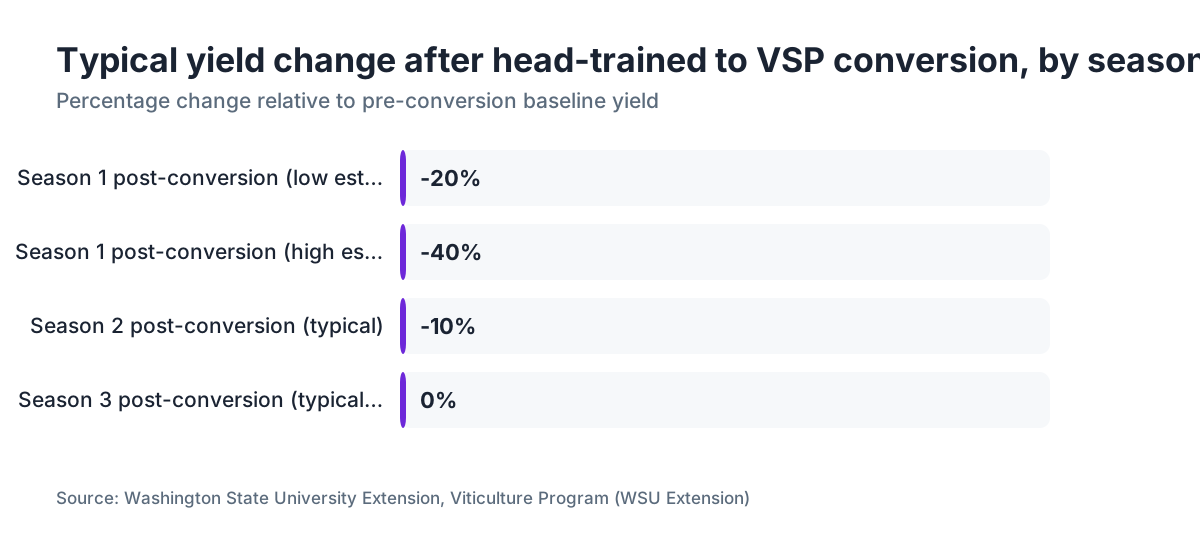
Keep a running note on yield impact per season during the conversion. WSU Extension research on conversion from head-trained to VSP in Washington reports typical yield depression of 20-40% in the first full season after conversion, with recovery by year three depending on vine age and rootstock [3]. Having your own numbers documented alongside that context makes your records more useful to any agronomist who looks at them later.
If any vines died during conversion, or you left a few problem vines in the old system for a season, note that too. Partial-block notes are harder to reconstruct than single-block notes.
What photos and attachments add real value to the record?
Photos are the one piece of documentation most vineyard managers skip and most auditors wish they had. A photo beats a paragraph when you're explaining a transitional state.
For a training system change, the photos that actually matter:
Before: Shoot the block at full canopy before any conversion work begins. One photo from the end of a row looking down the row, one from above if you have drone access. This is your baseline for the old system.
During installation: Trellis work in progress. Post holes, wire tensioning, crew positioning vines. These establish that the work was physical and real, not administrative.
First season in new form: Full canopy in the new system, same vantage points as the before shot. This lets you compare canopy density, shoot direction, and fruit zone exposure directly.
Invoices and quotes. Attach the contractor invoice or materials receipt as a PDF. It establishes date, scope, and cost, and the cost data feeds your block-level capital expenditure tracking, which matters for depreciation and for resale valuation.
Consultation notes. If you brought in a viticulture consultant to recommend the system change, attach their written recommendation. It shows the decision had professional backing and gives you cover if the change is questioned later.
File all of this together with the block history entry, either as physical attachments in a binder or as linked files in your digital record system. Don't store photos separately in a generic photo folder where the connection to the block gets lost.
How do you record a training system change when you're also replanting?
Replanting is a harder documentation situation because you're creating a new block, not modifying an existing one. The question is whether to close out the old block record and open a new one, or treat it as a continuous record.
The answer depends on whether the block ID stays the same. If your rows, acreage, and block designation don't change, keep the continuous record and flag the replant year as a major event. If the row layout changes, the block ID should probably change too, and you'd close the old record with a final entry and start a fresh record that references the predecessor block by ID.
For the replant record itself, document: rootstock, scion variety, clone selection, vine spacing, training system chosen from day one, planting date, nursery source, and whether the planting was done dry-farmed or with irrigation from the start. UC Davis Viticulture and Enology research has consistently shown that rootstock-scion-training system interactions materially affect yield and quality outcomes, so these choices belong in the permanent record, more than on a planting invoice [2].
Nursery sources matter more than people realize. Certified clean plant material from programs like Foundation Plant Services at UC Davis is traceable to disease testing records [8]. If a block develops fanleaf or leafroll symptoms five years after planting, a documented nursery source lets you investigate whether the disease came in with the plant material.
A replant also often triggers a county agricultural commissioner notice or a planting permit in some AVAs. Keep a copy of any permit or notification in the block record.
What's the minimum viable record if you're short on time?
Not every small vineyard operation produces a perfectly complete block history entry every time. If you're understaffed during a conversion season and you're choosing between doing the work and documenting it perfectly, do the work. But do the minimum documentation the same day, not later.
The minimum viable record for a training system change:
- Block ID and date
- Old system (one phrase)
- New system (one phrase)
- Why (one sentence)
- Who did it (name or crew)
That's five lines. Write it in the block binder that night. Everything else, photos, invoices, consultant notes, can be added within 30 days as you collect it. The date and the what are the hardest things to reconstruct after the fact, so capture those first.
The risk with minimum records is that you get comfortable with them and they stay minimal forever. Set a reminder to come back within one season and flesh out the entry with yield data from the first post-conversion harvest. That before-and-after comparison is the most agronomically useful thing in the whole record.
How should block history records be stored and backed up?
The USDA National Organic Program, as one benchmark, requires that records be available for inspection for five years [5]. Many state farm program lenders and crop insurance providers expect records going back at least three to five years. Some vineyard transactions involve buyers who want 10 or more years of block history.
For storage, the practical standard is two copies in different locations. If you're using paper, the original lives in an on-site binder and a scanned copy lives in a cloud folder (Google Drive, Dropbox, or equivalent). If you're digital-primary, local backup plus cloud backup. A laptop hard drive or a USB stick is not a backup strategy. Fires, floods, and theft are real.
Organize digital records by block ID, then by year within the block. A folder structure like /Block7/2023/training-change-2023.pdf is retrievable without institutional knowledge. The goal: a new vineyard manager who's never worked with you can find any record in under two minutes.
For operations managing more than 10 blocks, maintaining separate paper binders becomes a real bottleneck. That's the point at which a purpose-built platform like VitiScribe pays for itself in time saved during audit preparation, not in day-to-day data entry.
Retention is simple: keep block history records permanently, or at least for as long as you own the property. Unlike spray records, which have a legal minimum retention period, block history has no mandated maximum. There's no good reason to discard them. Vineyard history is a property asset.
What questions do buyers and auditors actually ask about training system records?
When a vineyard changes hands, the buyer's viticulture consultant asks a standard set of questions about each block. Knowing those questions in advance shapes what records are worth keeping.
Common questions from buyers:
- What training system is currently in place, and how long has it been that way?
- Were there previous systems, and why were they changed?
- What was the yield trend before, during, and after any major training change?
- Were any vines replanted during or after the conversion?
- Are there any blocks that are mid-conversion?
Certification auditors (organic, sustainable, salmon-safe) tend to ask:
- Can you show me the block history for this parcel?
- What materials were used in trellis installation, and are they compliant with program standards?
- Was any soil disturbance required for post installation, and if so, how was it managed?
- Have any of these changes affected your pesticide program?
The USDA Agricultural Marketing Service has published guidance on record-keeping for organic operations that outlines what auditors look for in production records, and the general principle is that records must clearly show the connection between a practice and the organic system plan [9]. That same standard is a useful mental model for any block history record: does this record clearly show what happened and why?
Answer every buyer and auditor question above from your records, without reconstructing anything from memory, and your records are good.
Are there templates or resources that help with block history record formats?
Yes, and they're worth using as a starting point rather than building your own format from scratch.
UC Davis Viticulture and Enology publishes vineyard record-keeping resources through its extension programs [2]. UC Cooperative Extension county offices in Napa, Sonoma, and San Luis Obispo have produced farm plan templates that include block history sections, generally available on request or through UCCE farm advisors.
WSU Extension's viticulture program in Prosser, Washington has similar resources oriented toward Pacific Northwest conditions [3]. Their block record templates run more detailed on water and soil management but include training system fields.
Cornell Cooperative Extension, through its New York State viticulture programs, has published record-keeping guidance for small-farm grape growers [4]. These are useful for operations under 10 acres that don't need enterprise-level complexity.
The USDA Risk Management Agency, which oversees crop insurance programs including Whole Farm Revenue Protection, requires production history by crop unit [10]. If you carry crop insurance on your vineyard, your block history records double as your production history records, and the RMA provides worksheets that can serve as a record-keeping framework.
None of these templates will fit perfectly out of the box. Adapt them. The fields listed in the second section of this article are the minimum any template should cover for a training system change specifically.
Frequently asked questions
How long do I need to keep block history records for a training system change?
No single federal law mandates a specific retention period for training system records. Organic certification under the USDA NOP requires five years of records. Crop insurance programs typically require three to five years of production history. As a practical matter, keep block history permanently. It's a property asset, and a 15-year-old training record can still affect a vineyard sale or a certification audit.
Do I need to notify any government agency when I change a vine training system?
Generally, no. A training system change on its own doesn't trigger a required notification to CDFA, USDA, or EPA. If the change involves significant soil disturbance (like pulling and resetting line posts along a stream or in a sensitive habitat area), local grading permits or a 401 water quality certification might apply depending on your county and state. If you're in an organic program, notify your certifier as the change may affect your organic system plan.
What's the difference between a block history record and a spray record?
Spray records document each individual pesticide application: product, rate, target pest, date, applicator, and reentry interval. They're legally required under the EPA Worker Protection Standard and state pesticide laws, with specific retention periods. Block history records are broader and permanent: they capture all significant management events in a block's life, including training changes, replants, rootstock choices, and yield trends. Spray records feed into block history but are a separate category.
Can I use a simple spreadsheet to track training system changes, or do I need special software?
A well-structured spreadsheet works fine, especially for operations under 10 blocks. The key is consistent field naming and a backup policy. Purpose-built vineyard software adds value mainly in linking records (photos, invoices, spray logs) to block events and in producing audit-ready reports without manual assembly. If you're spending more than a few hours per audit preparing records from a spreadsheet, that's when software pays for itself.
What if I bought a vineyard with no training system history in the records?
Start the record now and document what you can observe: the current system, approximate vine age, any physical evidence of a previous trellis (old wire holes in posts, buried staples, cordon height inconsistencies). Interview the previous owner or manager if possible and write down what they tell you, noted as verbal recollection. A reconstructed record that's honest about its sources beats a gap. Date your reconstruction entry so future readers know it's retrospective.
How do training system changes affect crop insurance records?
USDA Risk Management Agency crop insurance policies use production history by crop and location unit to set coverage levels. A training system change that significantly alters yield (common in the first two seasons after conversion) can distort your production history baseline. Document the change and the yield impact separately in your block records, and notify your crop insurance agent. Some policies allow for transitional yield adjustments during documented conversion periods.
Do training system records matter for a Napa or Sonoma County permit or use permit compliance?
They can. Some county use permits for agricultural operations in California include conditions about maintaining specific vineyard practices or managing erosion from trellis installation. If your use permit specifies anything about vineyard operations, read it before you install new posts or change row orientation. Block history records showing the scope and date of trellis work can demonstrate compliance if the county ever follows up.
What's the best way to record a training system change for a block that straddles two AVAs?
Keep the block record unified but note the AVA boundary in the block description. If you're tracking yield and quality data for AVA-specific reporting (as required by some TTB label applications), split those data fields by the portion in each AVA. The training system record itself doesn't need to be split: the physical change happened to the whole block on the same dates, and one record is cleaner than two.
Should I include vine-by-vine records or is block-level documentation enough?
Block-level documentation is sufficient for the vast majority of compliance and management purposes. Vine-by-vine records are useful only in very specific contexts: ultra-premium single-vineyard programs where individual vine data supports a provenance story, or research trials where you need statistical confidence at the vine level. For most vineyard operations, the overhead of vine-level tracking isn't worth it. Block-level records with row-level notes where relevant is the practical sweet spot.
How do I document a training system change in a block that's part of a custom farming agreement?
Both the vineyard owner and the custom farming operator need copies of the training change record. The custom farming agreement should specify who is responsible for creating and storing block records. If it doesn't, that's a gap worth fixing in the next contract renewal. The record should also specify who authorized the system change, owner or operator, because that affects liability if the change causes vine damage or yield loss.
What yield impacts should I expect and document after a training system conversion?
Yield depression of 20-40% in the first season after conversion is common, based on WSU Extension research on head-trained to VSP conversions in Washington State. Recovery typically occurs by year three, depending on vine age and rootstock. Document actual yield by block for at least three seasons post-conversion. That data is what separates an intentional agronomic decision from a management problem in any future review.
Do I need a viticulture consultant's sign-off to document a training system change?
No legal requirement exists for consultant sign-off on a training system change unless your farm plan or certification program specifically requires it. That said, if you did work with a consultant, attach their written recommendation to the block record. It adds credibility and provides context for the decision. If you made the decision internally, document the agronomic reasoning in your own words. A clear internal rationale beats an absent one.
How do training system records factor into a vineyard valuation or sale?
Buyers and appraisers treat documented block history as evidence of professional management, which supports higher per-acre valuations. A block with a well-documented conversion from head-trained to VSP, including yield recovery data, tells a story of intentional improvement. A block with the same physical trellis but no records forces the buyer to discount for uncertainty. The records themselves don't change the vines, but they change what a buyer is willing to pay.
Sources
- EPA, Worker Protection Standard (40 CFR Part 170): EPA Worker Protection Standard requirements for pesticide application records, worker training, and reentry intervals in agricultural settings
- UC Davis Viticulture and Enology, Extension Resources: Block-level record-keeping described as essential for correlating management practices with vine performance over time; rootstock-scion-training system interactions affect yield and quality
- Washington State University Extension: Trellis system modifications listed as a category of block-level data that should follow a block through ownership changes; yield depression of 20-40% typical in first season after head-trained to VSP conversion
- Cornell Cooperative Extension: Block records should be kept in a format that can be retrieved and shared without modification; simplified record-keeping guidance for small-farm grape growers
- USDA Agricultural Marketing Service, National Organic Program (7 CFR Part 205): NOP requires certified organic producers to maintain records for five years demonstrating compliance with program requirements
- California Department of Pesticide Regulation, Pesticide Use Reporting: California requires pesticide use reports tied to specific crops and locations at the county level
- LODI RULES for Sustainable Winegrowing: Sustainability programs ask about vineyard floor management and canopy practices as part of certification scorecards
- UC Davis Foundation Plant Services: Certified clean plant material from Foundation Plant Services is traceable to disease testing records, relevant for block history documentation of replanting
- USDA Agricultural Marketing Service, National Organic Program recordkeeping guidance: AMS guidance states that organic records must clearly show the connection between a practice and the organic system plan
- USDA Risk Management Agency, Whole Farm Revenue Protection: RMA crop insurance programs require production history by crop unit; RMA provides worksheets that can serve as a record-keeping framework
Last updated 2026-07-10