How to document multiple buyers receiving fruit from a single vineyard block
TL;DR
- When one vineyard block sells fruit to two or more buyers in the same harvest, you need separate lot records for each buyer covering tonnage, pick date, block ID, and pesticide history.
- California requires a Pesticide Use Report filed per treated site, and both buyers get the block's full spray record.
- Document the split at the vineyard before fruit leaves the block, not after, to stay compliant and win any dispute about weights.
Why does selling fruit to multiple buyers from one block create a documentation problem?
Most vineyard record-keeping is built for one buyer per block per harvest. The spray log, the pesticide use report, the weight ticket, the grape purchase agreement, all of them assume a clean one-to-one relationship. Split that Cabernet Franc block between two wineries and every one of those documents has to account for the division.
The headaches show up in four places. First, pesticide history: both buyers have a right to the full spray record for the block, because residues don't know which rows their fruit came from. Second, weight verification: if Winery A gets the north half and Winery B the south, the tonnage split has to be documented at the vineyard, not reconstructed from winery receiving tickets two weeks later. Third, regulatory reporting: California's Department of Pesticide Regulation requires a Pesticide Use Report for the treated site, and a split-block harvest raises questions about how to log the commodity [1]. Fourth, money: if a buyer disputes tons delivered, your vineyard-side paperwork is the only thing standing between you and a haircut on the check.
None of this is hard. It just has to happen before the first bin leaves the field, not the night before crush.
What are the core documents you need for each buyer receiving split-block fruit?
Think of it as a five-document package, built once per buyer per harvest lot. Here's what goes in it.
- Grape Purchase Agreement (or amendment). Your contract with each buyer names the block, the variety, the estimated tons, the price per ton, and the delivery method. If you're splitting a block that started under a single contract, get a written amendment signed before harvest. Verbal splits are how disputes start.
- Block-level pesticide use record. This is the full chronological spray log for the block: product name, EPA registration number, rate applied, date, applicator name or license number, and pre-harvest interval (PHI) verification. Every buyer gets the same document because they share the same spray history. The EPA Worker Protection Standard requires that employers keep pesticide application records for two years and make them available to workers and their representatives within 15 days [2]. Buyers ask for this as part of their food safety audits.
- Weight tickets. Each buyer's load gets its own scale ticket. If you're picking into shared bins and splitting at a central weigh station, document the bin count, gross weight, tare weight, and net tons for each buyer's portion separately. The ticket needs date, block ID, variety, and buyer name. Never combine weights across buyers on one ticket and split them later.
- Pesticide Use Report (PUR) entries. In California, licensed pest control operators and grower-applicators file PURs monthly with their county agricultural commissioner. When one block's fruit goes to two buyers, the reporting question comes up. The honest answer: you report the full treated acreage once for the block, but some counties want specific handling of the commodity entry. Call your county ag commissioner directly [3]. Rules vary by county and they change.
- Chain-of-custody note. One internal page recording which rows, bins, or tons went to which buyer, signed by the harvest supervisor. It isn't a legal requirement. It's the document that resolves every dispute. Date it, keep it with the weight tickets.
How do you physically divide a block between buyers at harvest?
Three methods, each with different paperwork. Pick the one that matches how you actually harvest, then document accordingly.
Row-based split. You assign specific rows to each buyer before picking starts, mark them on your block map, and note the row numbers on each buyer's chain-of-custody sheet. Pickers fill separate bins by row. This is the cleanest method to document, but it makes your crew keep bins strictly separated, which gets fiddly with a machine harvester.
Tonnage-based split. You pick the whole block into a common pool and split by weight at a central weigh station or at the winery. Here the vineyard's job is to document total tons harvested and hand a single pesticide record to both buyers. The wineries handle the split themselves, often with a broker or certified weigh station present. Your job is a signed receiving copy from each winery showing what they took.
Time-based split. You pick Buyer A's portion on Day 1 and Buyer B's on Day 2, from the same block. Each pick gets its own weight ticket and pick date. This is common when buyers want different maturity levels. Note the specific rows or section picked each day on your block map.
Whichever method you use, one rule holds. The split gets documented at the vineyard, before or during delivery. Reconstructing it from winery receiving tickets after the fact is how you buy yourself a billing dispute and a compliance gap in the same afternoon.
What does the pesticide use report process look like for a split-block harvest?
California's PUR system, run by the Department of Pesticide Regulation, requires anyone applying a restricted-materials pesticide or a permit-required pesticide to file a monthly report with their county agricultural commissioner [1]. The report covers the treated site, not the destination of the crop.
So for a split-block harvest, you file the PUR for the block as one treated site. You sprayed the whole block, so you report the whole block's acreage. The fruit going to two buyers doesn't change the treatment record.
Where the split matters is the Pesticide Use Record you hand to buyers. Both get a copy of the full block's spray history. Neither gets a filtered version. If Buyer A worries about a particular fungicide, they need the whole picture, more than the rows they received.
Organic certifiers add a layer. If any part of a certified organic block's fruit goes to a non-certified buyer, your certifying agent needs to know. The USDA National Organic Program requires your Organic System Plan to document how split-block harvests are handled and how contamination from non-organic practices is prevented [4]. Contact your certifier before you agree to a split, not after.
Outside California, PUR requirements swing widely. Washington tracks pesticide use through its own state system [5], and New York growers work from Cornell Cooperative Extension guidance and state DEC rules [6]. Check your state ag department directly, because none of these mirror the California framework.
How do you handle grape purchase agreements when adding a second buyer mid-season?
The cleaner your paper trail entering harvest, the less you're exposed. Say you signed a contract with Buyer A for 100 percent of a block's fruit, then agree to sell 40 percent to Buyer B. You need a written amendment to Buyer A's contract before you commit to Buyer B. Selling contracted fruit to a new buyer without the first buyer's written consent is a breach, no matter how friendly the handshake with Buyer A has always been.
The amendment should state the revised estimated tonnage for Buyer A, the new split percentage or row assignment, the reason for the split if you want to be transparent, and both signatures. Keep the original contract and every amendment in one file per block per vintage.
For Buyer B, use a standalone agreement referencing the block ID, the variety, the split arrangement, the price, and the delivery terms. Some buyers will bring their own form. Fine, as long as it references the same block identifier you use in your own records.
WSU's wine grape production resources recommend that every grape purchase agreement name the ranch, block designation, APN or legal description, and the specific acreage covered, so the agreement stays unambiguous if the property changes hands [7].
What records does the EPA Worker Protection Standard require when multiple buyers are involved?
The WPS doesn't change based on how many buyers your fruit goes to. It's a farmworker protection rule, not a buyer notification system. It matters here because buyers routinely request WPS-compliant records during supplier due diligence.
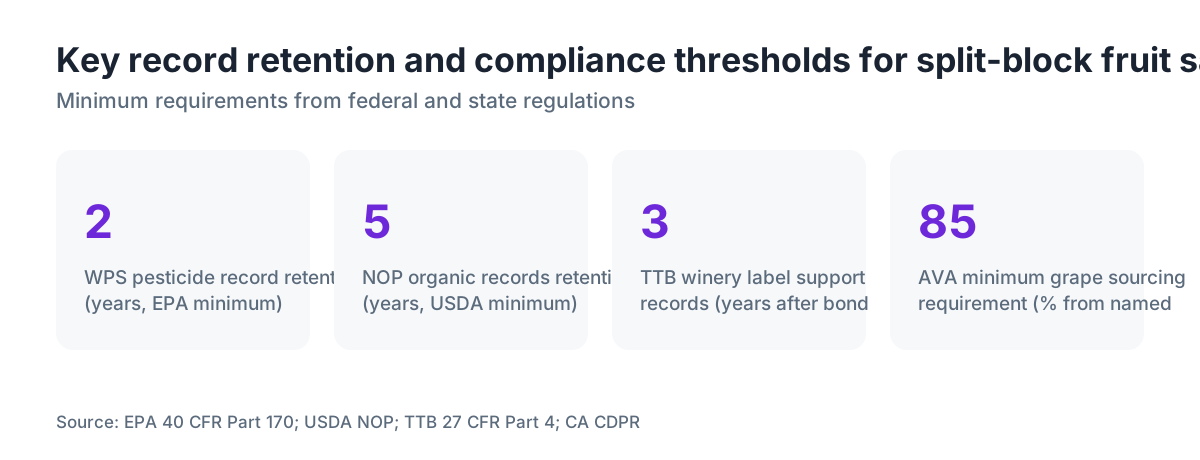
Under 40 CFR Part 170, employers of agricultural workers and pesticide handlers must keep records of all pesticide applications for at least two years and make them available to workers and their designated representatives within 15 days of a request [2]. The record has to carry the product name, EPA registration number, active ingredient, location and description of the treated area, date and time of application, and restricted-entry interval (REI).
When two buyers take fruit from the same block, both will likely request these records for their food safety audits, FSMA files, or winery production records. The document you give them is identical, because the spray program was identical. The current WPS rule, published November 2, 2015 and effective January 2, 2017, is the governing text [10].
Here's the practical takeaway. Keep your spray records organized by block, not by buyer, because the block is the unit of treatment. Any buyer who took fruit from Block 7 gets Block 7's full spray history, and that's the end of the conversation.
What does a split-block lot tracking system look like in practice?
Build it in two tiers. Each block with multiple buyers gets a master block record as the source of truth, and then buyer-specific lot records that point back to it.
The Master Block Record holds: block ID, variety, acreage, GPS boundary or row map, the full season spray log, soil amendment records, irrigation log, and any scouting or disease notes.
The Buyer Lot Record (one per buyer) holds: block ID (links to master), buyer name and bonded winery number, pick date, rows or acreage assigned, gross and net tons delivered, weight ticket numbers, signed PHI compliance confirmation, and the signed pesticide record handoff receipt from the buyer's rep at delivery.
Keeping these two tiers separate is the whole design. Your spray log and crop records don't belong to any one buyer. They belong to the block. The buyer's lot record just points to them.
A tool like VitiScribe lets you assign one block to multiple buyers and generate separate lot records that each pull from the same spray history automatically, which kills the copy-paste error risk in a two-tier system. A well-organized spreadsheet or a paper binder with clean tabs does the same job if you're disciplined.
The system falls apart when people run it through email threads. By vintage three or four, nobody can find the amendment to the Buyer A contract, the weight tickets live in three folders, and the spray log is a PDF stuck to a text message. Set the structure once, at the start of the season, and the harvest paperwork nearly runs itself.
| Document | Per Block | Per Buyer Lot | Who Keeps It |
|---|---|---|---|
| Spray log / PUR | Yes | Copy provided | Vineyard (original), Buyer (copy) |
| Grape purchase agreement | No | Yes | Both parties |
| Weight ticket | No | Yes (each load) | Vineyard and winery |
| Chain-of-custody note | No | Yes | Vineyard |
| WPS pesticide record | Yes | Copy provided | Vineyard (2 yr minimum) |
| Organic system plan notation | If applicable | If applicable | Certifying agent |
| Block map with row assignments | Yes | Reference | Vineyard |
How do AVA and appellation rules affect documentation when fruit goes to different wineries?
If your block sits inside a recognized American Viticultural Area, each winery taking your fruit needs documentation of that origin to use the AVA name on its label. TTB regulations require that 85 percent of the grapes in an AVA-labeled wine come from that AVA [8]. Your weight tickets and purchase agreement are that documentation. The TTB doesn't prescribe a specific form, but auditors expect a paper chain from the certified AVA block map to the winery's receiving records.
Premium appellations pile on extra rules. In Napa, the county and the Napa Valley Vintners have their own requirements. Napa County's Winery Definition Ordinance and Agricultural Preserve rules affect what gets processed where, though they don't directly govern vineyard documentation. The point holds: any winery claiming a specific AVA on its label needs your block's documentation to back the claim, and if you split the block between two wineries, both need it independently.
Buyers in high-profile regions often ask for a signed letter of origin alongside the weight ticket. That's a two-paragraph letter on your letterhead confirming the block name, county, AVA, variety, vintage, and tons delivered. Keep a copy.
What's the best way to handle tonnage disputes after a split-block harvest?
Disputes almost always trace to one of two failures: the split wasn't documented at the vineyard before delivery, or vineyard weight tickets don't match winery receiving tickets.
Winery receiving scales and vineyard field scales routinely disagree by 1 to 3 percent. That's normal and usually inside the tolerance written into most grape purchase agreements. It turns into a real fight when the gap runs bigger, when there's no vineyard-side weight documentation at all, or when two buyers' tonnages add up to more than the block's total yield in your records.
The best prevention is a certified public scale or a third-party weigh station when the money is real. If both buyers agree in writing to use the same certified scale and the same tare weights, arguments about gross tonnage mostly vanish. For smaller operations, a calibrated field scale with printed tickets and a designated harvest supervisor who witnesses each weigh-in is usually plenty.
When a dispute does land after delivery, three documents decide it: your chain-of-custody note (signed by the harvest supervisor), your weight tickets, and your block map with row assignments. Spray logs and contracts matter for other reasons. A tonnage fight comes down to who watched the scale, and whether it's written down and signed.
How long do you need to keep split-block harvest records?
The retention clocks come from several directions. You keep records for the longest one that applies.
California PUR records: county agricultural commissioners can inspect records, and pesticide use records at the operation level are generally kept three years under the applicable regulations [1].
EPA WPS records: two years minimum from the date of the application [2].
FSMA Produce Safety Rule: wine grapes are excluded because they aren't a raw agricultural commodity once fermented, so the rule doesn't directly cover them. Wineries still impose their own supplier record retention as part of their food safety plans. Expect buyers to ask for three to five years.
TTB labeling audits: wineries must keep records supporting label claims for three years after the wine is removed from bond [8]. Your block-of-origin documentation backs their record, so a three-year schedule lines up.
Organic certification: the National Organic Program requires certified operations to keep records for five years [4].
So the practical answer is simple. Keep everything for five years and you cover every regulatory overlay. Past five years, the only records you'd realistically reach for are the block maps and the long-term pesticide history you'd want for replanting decisions.
Are there templates or extension resources for split-block harvest documentation?
UC Cooperative Extension, through its Agriculture and Natural Resources division, publishes vineyard record-keeping templates and guides covering pest management records, harvest data, and labor records [9]. None are built for split-block scenarios, but the spray log and harvest record templates adapt without much effort.
WSU Extension's viticulture program has resources for Washington growers on crop records and contract farming, including guidance that documentation should match the terms of grape purchase agreements [7].
Cornell's viticulture and enology extension resources, aimed at New York growers, include record-keeping guidance for pesticide use and worker safety that applies regardless of state [6].
For organic producers, USDA's Agricultural Marketing Service publishes the NOP Handbook, with guidance on record-keeping for organic system plans and how to document split operations [4].
None of these has a purpose-built split-block template as of this writing. The gap is real. The closest workaround is combining a UC spray record template with a harvest weight log and adding a chain-of-custody column. VitiScribe is one software option built around this exact problem, linking spray records to multiple buyer lots from a single block, worth a look if you're running more than a few blocks with split buyers.
Want to build your own paper system? The table in the section above is your document inventory. Start there.
Frequently asked questions
Do both buyers need to receive the full pesticide spray log even if they only got part of the block?
Yes. Both buyers receive the complete spray log for the block, because the applications covered the entire block, more than their rows. There's no legal mechanism to hand out a partial spray record. Under the EPA Worker Protection Standard, records reflect the full treated area. Both buyers need the complete history for their own food safety and FSMA compliance.
What block identifier should I use across all my split-block documents?
Use one consistent block ID on your block map, spray records, purchase agreements, and weight tickets. A common format is ranch name plus a number or letter, like HomeRanch-4A. The APN or legal parcel description works as a secondary identifier. Consistency beats format. If your buyers call the same block by different names, note both names on the documents.
Can I split a block between a certified organic buyer and a conventional buyer?
Potentially, but it takes advance coordination with your organic certifier. Under the USDA National Organic Program, you document how the split is managed and show that organic integrity holds for the certified portion. Your Organic System Plan must address the split-block scenario. Contact your certifier before harvest, not after. Some certifiers will decertify the entire block if the split isn't pre-approved.
What happens if the winery receiving weights don't match my vineyard weight tickets?
A gap of 1 to 3 percent is common and usually within the tolerance written into grape purchase agreements. Larger discrepancies get resolved from your original vineyard-side documentation: weight tickets, chain-of-custody note, and bin count. Without vineyard-side weight documentation, you're negotiating from weakness. Weigh at the vineyard before delivery, and keep the tickets.
Does California's Pesticide Use Report need to be filed separately for each buyer?
No. The PUR is filed for the treated site, which is the block, not the buyer. You report the application once for the full treated acreage. Fruit going to two buyers doesn't change the treatment record. Some county agricultural commissioners have specific instructions for recording the commodity when tonnage is split, so confirm directly with your county office.
How do I document the split if one buyer takes the fruit at the vineyard and the other picks it up at a custom crush facility?
The documentation split still happens at the vineyard. Document the row or tonnage assignment for each buyer, produce weight tickets for each share before the fruit leaves the block, and make your chain-of-custody note reflect the two delivery destinations. One lot heading to a custom crush facility doesn't change your documentation obligations at the source.
What's the minimum paper trail I need if my operation is small and informal?
At minimum: a written agreement with each buyer (even a short email confirmation beats verbal), a weight ticket for each buyer's delivery, and a copy of the block's spray log given to each buyer at or before delivery. Those three documents protect you legally and satisfy the WPS record access requirement. Add a chain-of-custody note and you're covered for most disputes.
Do split-block records need to be kept differently for FSMA compliance?
Wine grapes destined for wine are excluded from the FSMA Produce Safety Rule because fermentation is considered adequate to address biological hazards. If any portion of your vineyard produces table grapes or juice grapes sold fresh, those fall under FSMA. Check with your buyer: many wineries impose their own supplier record requirements modeled on FSMA regardless of the legal exclusion.
Can a broker handle the split-block documentation on my behalf?
A broker can make introductions and help negotiate terms, but the legal responsibility for vineyard-side documentation stays with you as the grower. The spray log, PUR, and WPS records are your records. The grape purchase agreements are between you and each buyer, or you as seller through the broker. Don't assume the broker maintains the compliance paper trail. Confirm in writing who holds which documents.
How do I handle the block map when row assignments change from one vintage to the next?
Keep a dated block map for each vintage, even in digital records. If Buyer A took rows 1 through 20 in 2023 and rows 21 through 40 in 2024 under a revised agreement, those are two different vintage records. Never overwrite a prior year's map. Archive by vintage year. This matters if a pesticide residue question surfaces two or three years after harvest.
What does AVA documentation look like when two wineries each want to use the appellation on their label?
Each winery needs independent documentation linking your block to the AVA. Your block map showing location within the AVA boundary, plus the weight ticket showing tons delivered to that winery, is the standard chain. The TTB requires 85 percent of grapes in an AVA-labeled wine to originate in that AVA. Give each winery a separate letter of origin referencing their specific delivery, not a shared document.
How should I store split-block records so I can find them years later?
File by block ID and vintage year, not by buyer. Since the block is the source of truth and multiple buyers share the same spray history, organizing by block means one spray record per block per year, with buyer lot records as sub-files. Physical binders or a digital system, either works. A clear naming convention like BlockID-Vintage-BuyerInitials keeps things findable five years out.
Is there a standard industry form for chain-of-custody documentation in vineyard fruit sales?
There's no universal standard form. The California Association of Winegrape Growers and regional associations sometimes publish sample contract language and harvest record templates, but the chain-of-custody note is typically an internal vineyard document. A simple one-page form with block ID, vintage, pick date, buyer name, row or acreage assignment, bin count, weight, and harvest supervisor signature covers what you need.
Sources
- California Department of Pesticide Regulation, Pesticide Use Reporting program: California requires licensed pest control operators and grower-applicators to file monthly Pesticide Use Reports with their county agricultural commissioner for pesticide applications to agricultural commodities.
- EPA, Agricultural Worker Protection Standard, 40 CFR Part 170: Under the revised WPS rule, employers must retain pesticide application records for at least two years and make them available to workers and their designated representatives within 15 days of request.
- California Department of Food and Agriculture, County Agricultural Commissioners: County agricultural commissioners administer PUR compliance at the local level and can provide county-specific guidance on how to report split-block or split-commodity pesticide use.
- USDA Agricultural Marketing Service, National Organic Program: The NOP requires certified organic operations to maintain records for five years and to document in their Organic System Plan how split-block or split-operation harvests are managed to maintain organic integrity.
- Washington State Department of Agriculture: Washington State tracks agricultural pesticide use through its own reporting system administered by the WSDA, separate from California's PUR framework.
- Cornell Cooperative Extension, Cornell AgriTech viticulture and enology program: Cornell's extension viticulture program publishes record-keeping guidance for New York growers covering pesticide use documentation and worker safety compliance.
- Washington State University Extension: WSU Extension recommends that all grape purchase agreements reference the ranch name, block designation, APN or legal description, and specific acreage covered to ensure the agreement is unambiguous if the property changes hands.
- Alcohol and Tobacco Tax and Trade Bureau (TTB), Wine Labeling Regulations, 27 CFR Part 4: TTB regulations require that 85 percent of the grapes in a wine labeled with an American Viticultural Area appellation originate in that AVA, and that wineries maintain records supporting label claims for three years after removal from bond.
- University of California Agriculture and Natural Resources (UC ANR): UC Cooperative Extension publishes vineyard record-keeping templates covering pest management records, harvest data, and labor records applicable to California wine grape operations.
- EPA, Revised Worker Protection Standard Final Rule, 80 Fed. Reg. 67496 (Nov. 2, 2015): The revised WPS rule published November 2, 2015, became effective January 2, 2017, and established current requirements for pesticide application recordkeeping, record retention, and worker access to records.
- California Association of Winegrape Growers: CAWG publishes industry guidance on grape purchase agreement standards and harvest documentation practices for California winegrape growers.
Last updated 2026-07-11