How to document pesticide container recycling and disposal in California
TL;DR
- California law requires applicators to triple-rinse or pressure-rinse pesticide containers, document each rinsing and disposal event in their records, and use county agricultural commissioner recycling programs or licensed hazardous waste facilities.
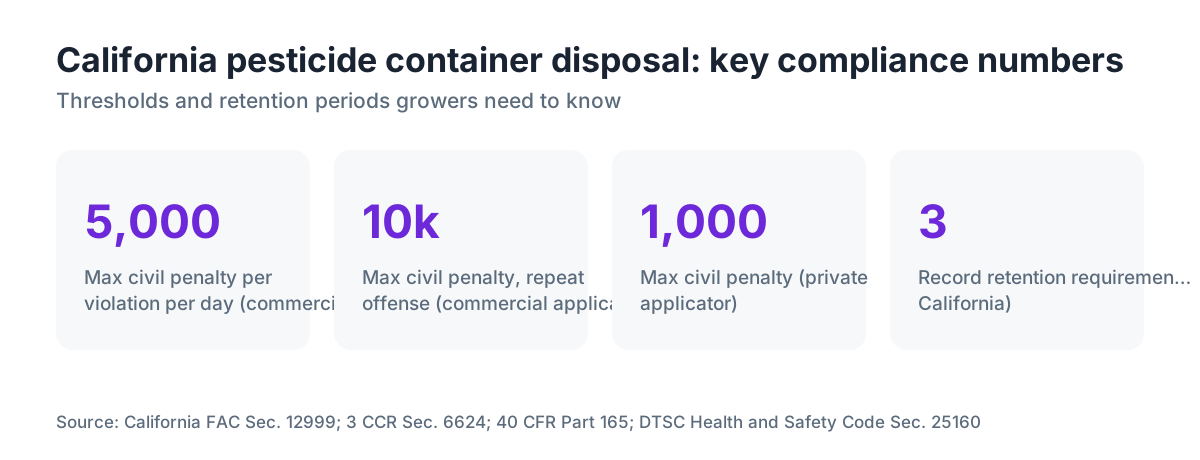
- Records stay on file three years under 3 CCR Section 6624.
- Improper disposal fines reach $5,000 per violation per day under Food and Agricultural Code Section 12999.
What California law actually requires for pesticide container disposal
The authority sits in the California Food and Agricultural Code (FAC), Sections 12973 and 12999, plus Title 3 of the California Code of Regulations (3 CCR), Sections 6680 through 6690. The rule is simple to state and easy to get wrong. Any pesticide container must be rendered nonhazardous before disposal, which in plain terms means it has to be rinsed clean before it goes anywhere except a licensed hazardous waste facility. [1]
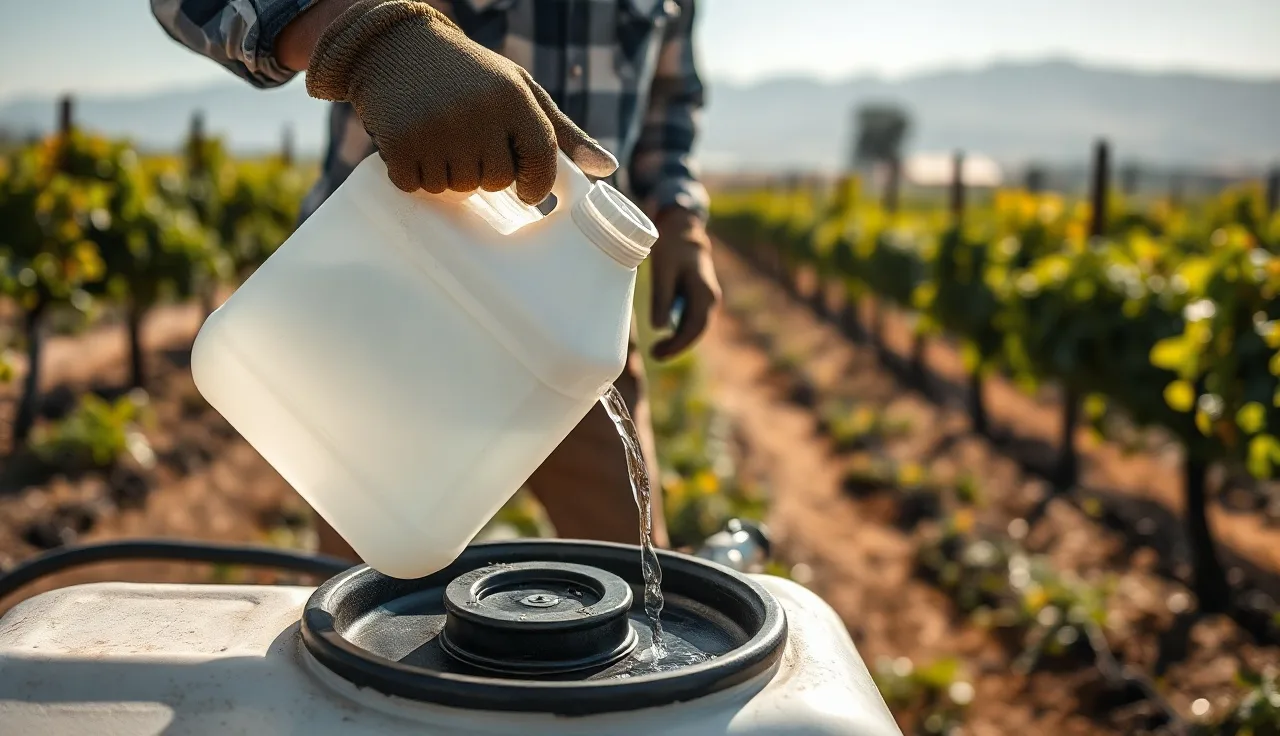
Triple-rinsing is the standard method. You fill the container one-quarter full with water (or the right solvent if water isn't the correct diluent for that product), shake it for 30 seconds, drain it into your spray tank, and repeat three times total. Pressure-rinsing at 40 psi or more for 30 seconds while the container drains is an accepted alternative, and for most residue types it does a better job. [2]
Once rinsed, plastic containers that held non-restricted-use pesticides go to county-run recycling programs through the California Department of Food and Agriculture (CDFA) or affiliated local programs. Containers that held restricted materials, or ones you can't rinse clean (aerosols, pressurized cans, contaminated bags), go to a licensed hazardous waste facility.
Accepted container types and collection dates change by county. Check your county ag commissioner's office for the current list. [3]
The penalty exposure is real. Under FAC Section 12999, container disposal violations can draw civil penalties up to $5,000 per violation per day for commercial applicators, and the county ag commissioner has broad inspection authority to find them. [1]
What records do you need to keep for pesticide container disposal?
California's pesticide use reporting rules under 3 CCR Section 6624 cover applications, not container disposal by itself. But the two records are tied together. A properly kept use record is your primary evidence that the containers you disposed of were accounted for from purchase to drop-off. [4]
Here's what your documentation package should hold for each rinsing or recycling event:
- Date of rinsing and disposal
- Product name and EPA registration number (from the label)
- Container size and quantity of containers
- Rinsing method used (triple-rinse or pressure-rinse)
- Where the containers went: the specific recycling facility name, county drop-off program name, or licensed hazardous waste facility name and manifest number
- Name of the person who did the rinsing
The California Department of Pesticide Regulation (CDPR) doesn't publish one mandated form for container disposal records. That trips up a lot of growers. You have to have it documented, but the format is yours to design. Many operators add a container disposal column right in their spray logbooks so the disposal record sits next to the matching use record. That approach holds up during county ag commissioner inspections. [4]
Hazardous waste manifests come into play when containers go to a licensed facility. California uses the Uniform Hazardous Waste Manifest under Health and Safety Code Section 25160, and those manifests are legal records you keep for at least three years. [5]
Pesticide use records have their own three-year floor under 3 CCR Section 6624. Keep your container disposal log inside that same file for three years and you've covered the practical minimum.
How does triple-rinsing work, and does it satisfy the rinsing requirement?
Triple-rinsing meets the rinsing standard under 3 CCR Section 6680 for most liquid containers. EPA's own container management rules at 40 CFR Part 165 describe triple-rinsing as adding rinse liquid equal to roughly 10% of the container's capacity, agitating for 30 seconds, draining fully into the application equipment, and repeating twice more for three rinses total. [2]
Pressure-rinsing at 40 psi for 30 seconds while the container hangs inverted over the tank opening is the better method. A single good pressure rinse removes essentially all recoverable residue, and neither method leaves you in compliance trouble when you do it right. Pressure-rinsing also saves water and time once you have the nozzle set up on your fill station.
Dry formulation bags follow different rules. Soluble packaging dissolves in the tank and creates no disposal problem. Paper or plastic bags that don't dissolve get triple-rinsed: add water, seal, shake, drain into the tank, repeat. If the product label gives specific container disposal instructions, those instructions are legally binding and override the general rule. Label language is federal law under FIFRA, and California enforces it the same way. [6]
Write the method by name in your log. "Triple-rinsed per 3 CCR Section 6680" or "pressure-rinsed, 40 psi, 30 seconds" is the language that closes the loop if a compliance officer asks how you handled it.
Where can California growers recycle pesticide containers?
California runs one of the more developed ag container recycling networks in the country, mostly through the CDFA program and county agricultural commissioner offices. The program takes clean, triple-rinsed or pressure-rinsed plastic containers (usually HDPE) in sizes from 1 quart up to 265 gallons, depending on the county. [3]
The practical access points:
County-sponsored collection events. Most counties with real agricultural activity (Fresno, Tulare, Kern, Napa, Sonoma, San Luis Obispo, and others) hold periodic container collection days, often quarterly or twice a year. Dates and drop-off spots come from each county ag commissioner's office. Get on their mailing list, because they don't always advertise these widely.
Contracted recycling processors. Much of California's ag container recycling runs through a private contractor, and some counties offer direct drop-off at processor sites. Check with your county ag commissioner or CDPR for current facility addresses. [3]
Licensed hazardous waste facilities. For containers you can't rinse clean or that held restricted materials, you need a California-licensed hazardous waste facility. The Department of Toxic Substances Control (DTSC) keeps the licensed facility database. [5]
For vineyard work specifically, the most common recycled containers are gallon and 2.5-gallon HDPE jugs from fungicides, herbicides, and spreader-stickers. Keep rinsed plastic separate from non-rinsable containers, and don't let them stack up for a full year. Most growers handle them quarterly, right after the busy spray stretch.
One note worth saving you a phone call: California has no deposit-refund system for pesticide containers. You recycle because the rule requires it, not because you get money back.
What counts as improper disposal, and what are the penalties?
Improper disposal means anything other than recycling at an approved facility, disposal at a licensed hazardous waste facility, or disposal through a county-approved program. Tossing unrinsed containers in a dumpster, burning them, burying them, or leaving them in the field all violate the California FAC and, if the containers count as hazardous waste, federal RCRA (Resource Conservation and Recovery Act) rules too. [1]
The penalty structure under FAC Section 12999 is tiered:
| Violation type | Maximum civil penalty |
|---|---|
| Commercial applicator, first offense | $5,000 per violation per day |
| Commercial applicator, repeat offense | $10,000 per violation per day |
| Private applicator (most growers) | $1,000 per violation |
| Willful or knowing violation | Criminal referral possible |
Those are ceilings. County ag commissioners have discretion, and a first-time violation backed by good records often gets a warning instead of a fine. But "good records" is carrying a lot of weight in that sentence. Show a logbook entry proving you rinsed the containers, documented where they went, and kept a receipt from the recycling facility, and you're in a different world than the grower with nothing to show.
Federal exposure can stack on top. EPA's container management rules at 40 CFR Part 165 track California's requirements closely, and EPA can bring separate FIFRA enforcement. In practice, federal enforcement on farm-level container disposal is rare. County ag commissioner inspections are not. [6]
Do restricted-use pesticide containers need different documentation?
Yes. Restricted-use pesticides (RUPs) already carry heavier record-keeping under 3 CCR Section 6622, including application records filed with the county ag commissioner monthly. [4] Container disposal records for RUPs follow that same higher standard.
For RUP containers, your documentation should include everything in the standard container record plus the applicator's RUP license number (the certified private applicator or qualified applicator license number), the permit number if the application needed a county permit, and the hazardous waste manifest number if the container leaves your site as hazardous waste.
Some RUPs, especially organophosphates and certain fumigants, generate containers that may count as hazardous waste under DTSC criteria even after rinsing. Methyl bromide cylinders, for one, go back to the supplier under the container's own label requirements and never enter a standard recycling stream. Cross-reference the product label disposal section and Safety Data Sheet (SDS) Section 13 before you assume a container is recyclable through normal channels. [7]
The SDS is an underused tool here. Section 13 of every SDS covers disposal and usually tells you whether the empty container is classified as hazardous waste. That's worth five minutes when you're dealing with a product you don't run often.
How should vineyards organize their pesticide container disposal records?
The best system is the one simple enough that you actually use it during a busy spray week. A paper logbook in the tractor shed works. A spreadsheet works. Software works. What fails is trying to rebuild records from memory six months later when a compliance officer calls.
A practical vineyard record structure looks like this:
| Field/column | What to capture |
|---|---|
| Date of application | From spray record |
| Product name + EPA Reg # | From label |
| Containers generated | Count and size |
| Rinsing date | Same day is best practice |
| Rinsing method | Triple-rinse or pressure-rinse |
| Disposal destination | Facility name or program name |
| Receipt/manifest # | From facility if available |
| Operator name | Who did the rinsing |
If you already keep detailed spray records (required under 3 CCR Section 6624), adding a container disposal column to the same log is less work than running a second system. The point is that the disposal record and the use record link by date and product, so an auditor follows the chain from application to disposal with no gaps.
For operations juggling multiple blocks and products, tools like VitiScribe let you attach container disposal notes directly to spray events, so the application record and disposal record live in one file. A linked record like that is harder to challenge in an inspection than two loose documents.
UC Cooperative Extension publishes spray record templates for California growers that include container disposal fields. Their Integrated Pest Management (IPM) program materials are a fine starting point if you're building from scratch. [8]
What do county agricultural commissioners check during a pesticide records inspection?
County ag commissioners have authority under FAC Section 11501 to inspect pesticide records at any reasonable time. In practice, inspections at vineyards tend to follow a complaint, a reported drift incident, or a routine compliance sweep in high-volume counties. [9]
During an inspection, commissioners usually pull:
- Pesticide use reports (monthly filings for commercial and RUP applications)
- Application records showing product, rate, location, date, and operator
- Applicator licenses and permits
- Safety Data Sheets on file
- Worker Protection Standard training records under 40 CFR Part 170 [10]
- Evidence of proper container disposal
On the container side, they check two things. First, that you have a record showing containers were rinsed and disposed of properly. Second, that the container count you claim to have disposed of matches your purchase and use records. Buy 50 gallons of a product and account for only 30 gallons' worth of containers, and that gap raises questions you'll have to answer.
Receipts from recycling events aren't required in every case, but commissioners love them. If your county holds a drop-off event and hands you a receipt, file it. That single piece of paper closes a lot of potential gaps.
WSU Extension has published practical guidance on what records inspectors look for. It's useful even for California growers because the federal baseline (FIFRA and WPS) applies in every state. [11]
How do the EPA Worker Protection Standard records relate to container disposal?
The EPA Worker Protection Standard (WPS), at 40 CFR Part 170 and last revised in 2015, governs agricultural workers and handlers who work with pesticides. WPS requires employers to keep application records accessible to workers and their representatives. WPS records and container disposal records are separate things that live in the same compliance file. [10]
The connection is practical, not legal. Your WPS records document who handled which pesticides on which dates. If an enforcement question comes up about container disposal, those WPS records back up the dates and products on your disposal log. The two record sets confirm each other.
WPS requires application information (product name, EPA registration number, active ingredient, location treated, date and time, restricted entry interval) be recorded and kept for two years. [12] That two-year WPS retention is shorter than California's three-year rule under 3 CCR Section 6624, so California governs and you keep records three years minimum. [4][10]
California also runs its own Agricultural Worker Protection regulations under Title 3, which in places exceed federal WPS. CDPR maintains a side-by-side comparison of federal and state worker protection requirements on its website. [7]
What should small vineyard and winery operations do differently from large commercial applicators?
Small operations sometimes assume compliance gets simpler as you get smaller. It doesn't, not for container disposal. A private applicator on 20 acres faces the same rinsing requirements, the same documentation expectations, and the same inspection authority as a 500-acre operation. The penalty ceiling runs lower for private applicators (see the table above), but the rules are identical. [1]
Where small operations do win is simplicity. Fewer products, fewer containers, fewer applications per year means you can keep a fully compliant record in a one-page spreadsheet updated a few times a season. There's no excuse for empty records when the volume is small.
A few specifics for small vineyards and estate wineries:
If you farm in Napa, Sonoma, San Luis Obispo, or Paso Robles wine country (see our coverage of paso-robles-wineries for the regional regulatory picture), your county ag commissioner is well-funded and does inspect. Being a boutique operation doesn't put you under the radar.
Many small growers buy from local ag retailers who track upcoming county container collection events. Ask your retailer. They deal with this constantly and often know the schedule better than the county website.
CDPR runs outreach for small farms and has published simplified compliance checklists for private applicators. [7] Working from the state's own materials cuts the chance you miss something the state itself treats as non-negotiable.
If you also run a winery on the same property, keep vineyard pesticide records completely separate from winery food safety documentation. Inspectors from different agencies may visit, and clean separation between the two record systems prevents confusion.
How do you handle bulk containers and totes differently from smaller containers?
Containers over 5 gallons, and especially intermediate bulk containers (IBCs, or totes) in the 250-to-300-gallon range, have their own handling rules under California regulations and EPA's 40 CFR Part 165. [2]
For containers between 5 and 119 gallons, triple-rinsing is still required, but you may need specialized equipment to do it well. Pressure-rinsing is strongly preferred at this size because manual agitation gets impractical fast.
For containers 119 gallons and larger, EPA's 40 CFR Part 165 shifts to a different framework. The manufacturer or end-user must have a formal container management plan, containers usually have to go back to the registrant or distributor, and they generally can't run through standard county recycling. [2] In California, this also crosses into DTSC hazardous waste rules for large containers that held materials with hazardous characteristics.
If you buy pesticides in 275-gallon totes (common for sulfur and copper products at larger vineyards), your supplier's purchase agreement usually spells out container return requirements. Read that agreement. Some suppliers take the totes back. Others leave it on you.
Document a tote return with the date of return, supplier name and address, product name and quantity remaining (if any), and a copy of any return receipt or bill of lading. That paperwork goes in your pesticide records file.
For the more common gallon and 2.5-gallon containers most vineyards use, county recycling programs take them with no extra paperwork beyond your own disposal log.
How do you find your county's pesticide container recycling program and schedule?
The fastest path is a direct call to your county agricultural commissioner's office. Every California county with agricultural activity has one, and pesticide compliance is their main job. Their phone numbers and websites sit in the CDPR county office directory. [7]
Beyond calling, CDFA keeps program information for container recycling under its Inspection and Compliance branch, and its contracted recycling processor lists collection sites and events. Those third-party lists aren't always current, so verify with your county before you load the truck. [3]
For operations in the major wine regions, county resources vary a lot:
- Napa County: regularly scheduled events, check the Napa County Agriculture Commissioner
- Sonoma County: active program, the Farm Bureau also coordinates some events
- San Luis Obispo County: quarterly events common, coordinates with the SLO Farm Bureau
- Fresno, Tulare, Kern: high-volume programs with more frequent collection
UC Cooperative Extension farm advisors in your county often know the current schedule and can point you to the right person at the county ag commissioner's office if you're not sure who to call. The UC IPM program also keeps general guidance on container management within its pesticide safety materials. [8]
Mark container collection dates on your spray calendar at the start of the season. Hoarding containers all year and dumping them in one batch at year-end creates record-keeping headaches and storage compliance problems. Quarterly or post-season disposal is cleaner to run and far easier to document.
Frequently asked questions
How long do I have to keep pesticide container disposal records in California?
Three years. California's pesticide use record retention requirement under 3 CCR Section 6624 sets that floor, and container disposal records are part of your pesticide compliance file. Keep them for the same three years. If a hazardous waste manifest is involved, California Health and Safety Code Section 25160 also requires a three-year retention period for those manifests.
Do I need to report pesticide container disposal to the county ag commissioner?
There is no separate mandatory container disposal report you file with the county. But your pesticide use reports (required monthly under 3 CCR Section 6622 for restricted-use pesticide applications) and your internal records need to reflect proper container handling. Commissioners may review those records during inspections, so keep your own documentation thorough enough to answer any inquiry.
Can I throw rinsed pesticide containers in regular trash in California?
Only if the container is thoroughly triple-rinsed or pressure-rinsed, held a non-hazardous formulation, sits under a size threshold, and local solid waste rules allow it. In practice, California prefers recycling through county programs, and many counties prohibit even rinsed pesticide containers in municipal solid waste. Check with your county ag commissioner before putting any container in regular trash.
What happens if I find old, unlabeled pesticide containers on my property?
Unlabeled or orphan pesticide containers are a separate problem. Do not open or rinse them without knowing the contents. DTSC has a program for unwanted and orphan pesticides. Contact your county ag commissioner's office first. They can tell you whether the containers qualify for a household hazardous waste or agricultural hazardous waste collection event, which is usually the cleanest path.
Are empty pesticide containers considered hazardous waste in California?
A properly triple-rinsed or pressure-rinsed container that held a pesticide not classified as hazardous waste is generally not regulated as hazardous waste in California. But containers that held acutely hazardous materials (listed under RCRA), or that can't be fully rinsed, may still count as hazardous waste. Check the product SDS Section 13 for the specific container's waste classification.
Does my farm labor contractor handle pesticide container records, or do I?
If a farm labor contractor applies pesticides on your property, the licensed applicator is responsible for use records and container disposal records for the applications they make. But as the property operator, you share responsibility for proper disposal. Put it in writing: a contract with your farm labor contractor should specify who generates and retains disposal documentation. Don't assume the contractor handles it without confirming.
Do winery operations that also farm their own vineyards face different pesticide container rules?
No different rules, but potentially more scrutiny. An estate winery farming its own vineyard is subject to CDPR agricultural pesticide rules and any applicable food safety regulations at the winery. Keep vineyard pesticide records clearly separate from winery production records. Pesticide container disposal documentation belongs in the vineyard compliance file, not mixed with production paperwork.
What is the difference between a licensed hazardous waste facility and a county container recycling program?
County recycling programs take clean, rinsed containers no longer regulated as hazardous waste. Licensed hazardous waste facilities under DTSC take containers that still hold residues or held materials with hazardous characteristics, and they generate a uniform hazardous waste manifest. Using the wrong pathway for a container type is itself a violation. When you're not sure, send it to the licensed hazardous waste facility.
How does California's pesticide container recycling documentation compare to federal requirements?
EPA's 40 CFR Part 165 sets the federal baseline for container management, including triple-rinse or pressure-rinse requirements and restrictions on disposal methods. California's rules under 3 CCR Sections 6680-6690 and the FAC meet or exceed the federal standard, and California use reporting is stricter. Follow California rules and you're in compliance with the federal baseline as well.
Can I recycle pesticide containers at my local recycling center or transfer station?
Generally no. Standard municipal recycling facilities and transfer stations in California aren't equipped to accept pesticide containers, even rinsed ones, because of contamination and staff safety concerns. Pesticide containers must go to a county ag commissioner-sponsored collection event, an approved agricultural recycling program, or a licensed hazardous waste facility. A few counties have permanent drop-off sites. Call your county ag commissioner to confirm.
What records does a certified pesticide applicator need to keep for container disposal versus what a private applicator needs?
Both types must document rinsing and disposal. Certified commercial applicators (licensed under FAC Section 11701 et seq.) face higher penalty exposure and more frequent inspection than private applicators, and should cross-reference container disposal records with business use reports. Private applicators, who apply only to their own land, have a somewhat simpler obligation but are still subject to county ag commissioner inspection under FAC Section 11501.
Are there any free resources or templates for California pesticide container disposal records?
Yes. CDPR publishes compliance guidance and some record templates at cdpr.ca.gov. UC Cooperative Extension's IPM program at ipm.ucanr.edu has spray record templates with container disposal fields. Your county ag commissioner's office often has region-specific forms. WSU Extension produces general pesticide record-keeping guidance for the federal baseline that California growers can use as a reference.
Sources
- California Legislative Information, Food and Agricultural Code Sections 12973 and 12999: California FAC Section 12999 provides civil penalties up to $5,000 per violation per day for commercial applicator container disposal violations; FAC Section 12973 establishes the rinsing requirement.
- U.S. EPA, 40 CFR Part 165 - Pesticide Management and Disposal: EPA 40 CFR Part 165 sets federal requirements for triple-rinsing and pressure-rinsing at 40 psi for 30 seconds, and for management of bulk containers 119 gallons and larger.
- California Department of Food and Agriculture, Container Recycling Program: CDFA administers California's agricultural pesticide container recycling program, accepting clean rinsed plastic containers through county-sponsored collection events.
- California Code of Regulations Title 3, Sections 6622 and 6624: 3 CCR Section 6624 requires pesticide use records be retained for three years; Section 6622 requires monthly reporting for restricted-use pesticide applications.
- California Department of Toxic Substances Control, Hazardous Waste Management: California Health and Safety Code Section 25160 requires hazardous waste manifests be retained for three years; DTSC maintains the licensed hazardous waste facility database.
- U.S. EPA, Pesticide Registration and FIFRA Label Requirements: Under FIFRA, pesticide label language is legally binding, including container disposal instructions, and failure to follow label directions is a federal violation.
- California Department of Pesticide Regulation, Pesticide Use Enforcement: CDPR administers 3 CCR Sections 6680-6690 on container disposal, publishes compliance checklists for private applicators, and maintains county agricultural commissioner office contacts.
- UC ANR Statewide IPM Program, Pesticide Safety and Record Keeping: UC Cooperative Extension IPM program provides spray record templates for California growers that include container disposal documentation fields.
- California Legislative Information, Food and Agricultural Code Section 11501: FAC Section 11501 grants county agricultural commissioners authority to inspect pesticide records at any reasonable time.
- U.S. EPA, Worker Protection Standard, 40 CFR Part 170: EPA WPS at 40 CFR Part 170 requires application records be kept for two years and accessible to workers; California's three-year requirement under 3 CCR Section 6624 is more stringent.
- Washington State University Extension, Pesticide Record Keeping for Agricultural Producers: WSU Extension publishes practical guidance on what records pesticide compliance inspectors review, applicable to the federal baseline that California growers must also meet.
- U.S. EPA, Agricultural Worker Protection Standard (2015 Revision): The 2015 revised WPS requires employers to keep application records including product name, EPA registration number, active ingredient, location, date, time, and restricted entry interval.
Last updated 2026-07-09