How to track tonnage estimates versus actual harvest weights by block
TL;DR
- Tracking tonnage estimates against actual harvest weights by block means recording a pre-harvest estimate (from cluster counts or visual scoring) for each block, logging the actual weight from winery weigh tickets, then calculating the variance in tons per acre.
- Do this every year and you build a calibration history that cuts your forecasting error, which for most vineyards runs 10 to 25 percent before any systematic tracking begins.
Why does tonnage tracking by block matter so much?
A rough feel for what a block will yield is fine until it costs you money. And it costs money in three directions: you over-deliver to a winery that bought a fixed tonnage, you under-deliver and eat contract penalties, or you thin crop on a block that was going to hit target on its own.
Every block is its own yield equation. Variety, clone, rootstock, training system, and vintage weather all pull on each other. A Zinfandel block on a hillside terraces differently from a Cabernet planting on the flat fifty feet away. Tracking them separately is the only way to know what you actually have in the ground.
For growers selling to several wineries under several contracts, block-level records are your paper trail when a tonnage dispute lands on the table. Weigh tickets by block, with dated estimates attached, give you something solid to stand on. Without them, you're arguing from memory.
UC Davis Cooperative Extension has shown that cluster-count methods get pre-harvest estimates to within 10 to 15 percent of actual yield when done right and done repeatedly [1]. That gap is real, and it shrinks, but only if you keep the data that lets you calibrate year over year.
What information do you need to record for each block before harvest?
Before you count a single cluster, you need a handful of fixed data points per block. Get them in writing, in one place, every year.
The core pre-harvest record for each block should carry the block identifier (your internal name or number), the variety and clone, the total planted acres, the vine or row count, the training system and trellis type, and the date the estimate was made. That last one matters more than people think. An estimate made six weeks before harvest is a different animal than one made at veraison.
On top of those fixed identifiers, you record the estimate itself. The two field methods most people use are the cluster-count method and the berry-weight method [2]. For cluster count, you count clusters on a representative sample of vines (WSU Extension recommends sampling at least 5 percent of vines per block, with a minimum of ten vines per sample set [3]), multiply average cluster count by average cluster weight, then multiply by vines per acre and total acres. The berry-weight method swaps in berry count and average berry weight. More labor, but often more accurate late in the season once cluster architecture is set.
Record your estimate in total tons for the block, tons per acre, and the method you used. If you're in a spreadsheet, one column for 'estimate method' saves you a headache later when you're trying to figure out why 2022 landed closer than 2021.
Here's the thing most managers skip: log any adjustment made after the first estimate. A second pass at veraison, a thinning event, storm damage. Each gets a date. Your final pre-harvest figure should be the most recent adjusted number, not the first thing you scribbled down in July.
How do you collect actual harvest weights accurately from the winery?
The weigh ticket is your ground truth. Wineries issue these at intake and they show gross weight, tare weight (the bin or gondola), and net fruit weight. That net weight is the number that goes back into your block record.
Here's the complication. Most wineries receive fruit in mixed loads, or loads that span multiple blocks or growers. Pick a large block over two days with two trucks and you can end up with four or five weigh tickets that all need to trace back to one block record. Set a labeling protocol with your crew before the season starts: every load gets tagged with the block ID, the pick date, and the lot number if your winery uses them. A field tag on the outside of the gondola costs almost nothing and kills most of your post-harvest reconciliation.
Ask your winery contact for tickets in a format you can actually use. Plenty of wineries now hand you a CSV export or a grower portal login. If they still give you paper, scan or photograph every ticket before it goes into a folder and disappears.
Once you have all the tickets for a block, sum the net weights. That total is your actual harvest tonnage. Divide by acres for tons per acre. Now you hold the two numbers that matter: the estimate and the actual.
For estate operations, where the vineyard and winery are one business, the weigh ticket still works as an internal document. Keep scale calibration records with your pesticide and harvest logs. The EPA Worker Protection Standard requires certain pesticide application records be kept for two years [4], and many state agriculture departments push that to three years for pesticide records. Check your state. Keeping harvest weight records on the same schedule is easy to defend at an audit and costs you nothing extra.
How do you calculate the variance between estimate and actual?
Simple arithmetic, but the framing is what earns you anything.
Variance in tons is actual tons minus estimated tons. Positive means you came in over estimate. Negative means you under-estimated.
Variance as a percentage is (actual minus estimated) divided by estimated, times 100. This is the number you track year over year. A block that runs 12 percent over estimate every single year is telling you your sampled cluster weights are consistently low.
Variance in tons per acre is the same math on a per-acre basis, and it's how you compare blocks of different sizes honestly. A one-ton miss on a two-acre block is a 50 percent error. That same one-ton miss on a twenty-acre block is 5 percent. Tons per acre keeps the comparison fair.
Here's a table format that works in a spreadsheet or a field notebook:
| Block ID | Variety | Acres | Estimated Tons | Estimated T/A | Actual Tons | Actual T/A | Variance (T) | Variance (%) |
|---|---|---|---|---|---|---|---|---|
| RV-1 | Cab Sauv | 4.2 | 8.8 | 2.10 | 9.6 | 2.29 | +0.8 | +9.1% |
| RV-2 | Chardonnay | 6.0 | 19.2 | 3.20 | 17.4 | 2.90 | -1.8 | -9.4% |
| RV-3 | Zinfandel | 3.1 | 7.4 | 2.39 | 7.3 | 2.35 | -0.1 | -1.4% |
Keep this as a running log and add a new column set each vintage. After three or four years, the patterns jump off the page.
What sampling methods give you the most accurate pre-harvest estimates?
The cluster-count method is the workhorse because it's fast enough to run across many blocks without a full crew. As described in UC Davis Cooperative Extension yield estimation guidance, the formula is: Estimated Yield = (Vines per Acre) x (Clusters per Vine) x (Cluster Weight in pounds) / 2000 [1]. Cluster weight is the variable that bites people. Early-season estimates often lean on historical average cluster weights, and if berry set or sizing runs off that year, your estimate drifts.
Want more accuracy? Weigh a sample of clusters at the time of counting, not from last year's numbers. Take twenty to thirty clusters from random spots across the block, weigh the batch, divide by count. Do it at two points in the season: once shortly after fruit set to catch cluster number, and once at veraison when berry sizing is mostly locked in [2].
The berry-weight method eats more time but performs better in blocks with high cluster-weight variability. Think old-vine Zinfandel, or anything with a lot of shot berries. Cornell Cooperative Extension work on eastern varieties notes that berry-count methods cut yield estimate error in hybrid and Vinifera plantings with irregular cluster architecture [5]. On those blocks, the extra hour can pay for itself in contract accuracy.
GPS-assisted vine-by-vine scouting paired with software is showing up more on larger estate properties. Some managers grab cluster counts during the same pass they scout for tissue sampling, which cuts labor duplication. There aren't published yield-accuracy benchmarks for this yet, so treat the enthusiasm carefully. The reports from larger California operations suggest it helps consistency across big, varied blocks, but that's anecdote, not data.
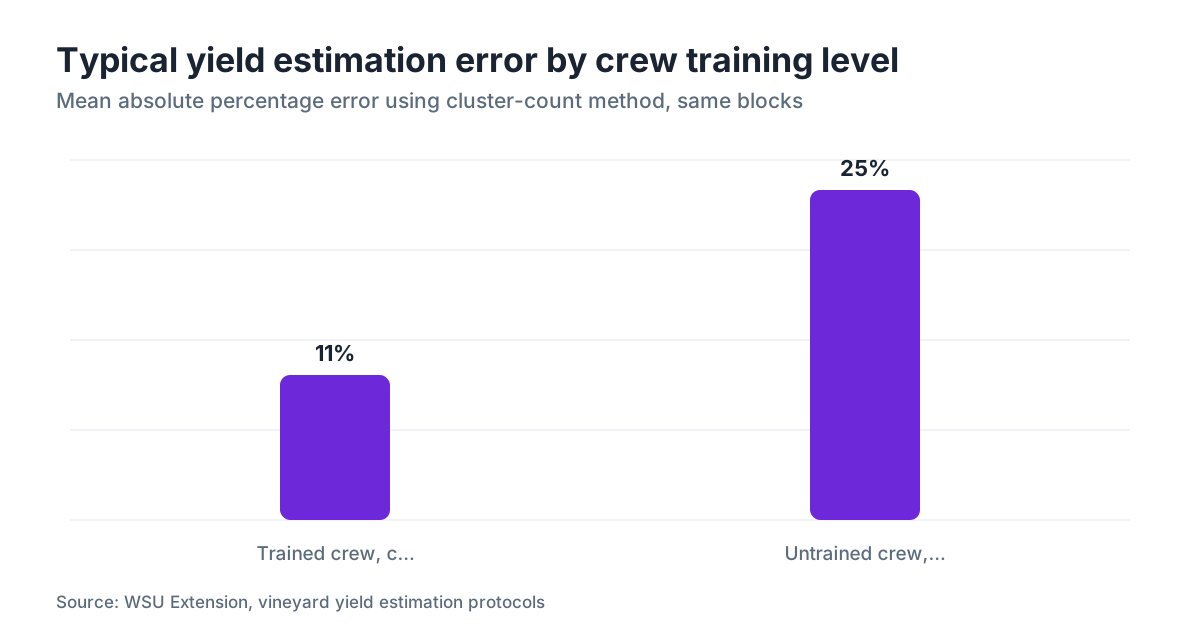
One honest caveat: nobody has clean multi-site data comparing all these methods under identical conditions. The closest published work comes from WSU Extension trials in Washington, where trained crews using cluster count hit 8 to 15 percent mean absolute error while untrained or inconsistently trained crews ran 20 to 30 percent on the same blocks [3]. Training and consistency matter more than which method you pick.
How should you organize your block-level records across multiple vintages?
The biggest mistake in tonnage tracking is keeping estimates in one place and actual weights in another with nothing linking them. You end up with a folder of weigh tickets, a separate notebook of estimates, and no easy way to line them up.
The practical fix is one master spreadsheet or field record per property. Rows are blocks. Columns are grouped by vintage year. Each vintage gets a column set: Estimated Tons, Estimated T/A, Actual Tons, Actual T/A, Variance (T), Variance (%). That gives you a horizontal view of how each block has behaved over time.
A second sheet, or a notes column, should catch the factors behind big variance years. A late frost that hit Block 4 harder than Block 5. A mildew event that dropped cluster count after your estimate was done. A harvest rain that added water weight. That context turns a data table into institutional knowledge you can hand to the next manager.
Managing multiple sites for one winery or as a custom farmer? Set a consistent block naming convention across every site early. A site prefix ('LK-' for a lakeside ranch, 'HL-' for a hilltop block) keeps things from collapsing when you compare records across properties.
For operations past the spreadsheet stage, platforms built for vineyard record-keeping like VitiScribe let you attach weigh tickets and estimate records straight to a block record that carries forward year to year, which trims the reconciliation work at the end of harvest. The one feature to demand from any tool: a multi-year variance report by block, exportable. That's the report that actually improves your estimates.
See how other vineyards structure their operations records at vineyard.
How do you use variance history to improve future estimates?
Two or three years of variance data per block buys you something genuinely useful: a block-specific correction factor.
If Block 7 has come in 14 percent over your cluster-count estimate three years running, this year's raw estimate should be multiplied by 1.14 before you report it to your buyer. That isn't cheating the method. It's calibrating it to the reality of that block's vine spacing, canopy density, and cluster architecture, none of which your general formula fully captures.
Write the correction factor into your record sheet for each block and revisit it after every harvest. Make a real viticulture change (switch training systems, drop a cover crop program, replant a section) and you reset the factor. Treat the block as a fresh data point until you rebuild history.
WSU Extension work is clear that any estimation protocol needs a feedback loop: record, compare, adjust, repeat [3]. That loop is exactly what most small operations skip, which is why their estimates never tighten even when the underlying method is sound.
A block that keeps coming in under estimate despite a correction factor pushed upward is telling you something about how clusters finish. Usually it's water stress shrinking berries after veraison, or botrytis and raisin loss in the final two weeks. Those observations belong in your notes column, because they push you toward a later estimate date or a second scouting pass closer to pick.
What records do you need to keep for compliance and contract purposes?
Harvest weight records sit under a different set of rules than your spray records. Pesticide application records answer to worker protection and state pesticide law. Harvest weights answer mainly to commodity reporting and wine production reporting.
In California, all grape growers and handlers feed into the annual Grape Crush Report filed with the California Department of Food and Agriculture. That report covers tons by variety, county, and district, and the data traces straight back to your weigh tickets and block records [6]. Organized block-level records aren't just tidy. They're the source data for a mandatory state filing.
In Washington, the Washington State Wine Commission uses grower-reported tonnage data for its annual production statistics by variety and region [7].
Under the EPA Worker Protection Standard, pesticide application records must be kept for two years and must include field identification, product applied, rate, and date [4]. Store harvest records next to those application records and audits get easier, plus you can document the gap between last application and harvest date, which matters for pre-harvest interval (PHI) compliance.
Selling fruit under a multi-year purchase contract? Re-read the tonnage clause. Many contracts set a tolerance band, often plus or minus ten percent of contracted tonnage, before price adjustments or penalties kick in. Your block-level historical variance tells you exactly how reliably you can commit to that band. A block with a steady eight percent variance probably fits inside a ten percent clause. A block that swings twenty percent might not, and you want to know that before you sign, not after.
How does crop load management affect tonnage accuracy?
Thinning is the single largest wrecker of tonnage estimates made before veraison. Make your first estimate in June, drop crop in July, and that estimate is obsolete unless you update it after the pass.
The discipline is simple: always date your estimate and log any thinning event separately. After a thinning pass, either re-count a sample or apply a rough adjustment based on the percentage of clusters removed. The adjustment is faster but less accurate. On a precise block, a post-thin cluster count sample is worth the hour.
Crop thinning targets swing by winery spec, training system, and variety. Napa Valley custom-farming standards often aim for two to four tons per acre on premium reds. Central Valley floor contracts may run six to twelve tons per acre on whites. That's a wide range with no single right answer, but the principle holds: your estimate has to reflect the vineyard as it sits when you report it, not as it sat three months back.
Brix, pH, and titratable acidity don't predict tonnage directly, but they drive the harvest timing decisions that do. A block picked early at 23 Brix weighs differently than the same block picked at 26 Brix, partly from continued berry growth and partly from late-season dehydration. If your buyer tends to push for later picks, your tonnage estimates should account for that timing habit.
For more on how regional growing conditions shape crop load targets, see operations at paso robles wineries and practices at south coast winery.
What tools work best for recording and comparing tonnage data?
You have four practical options, roughly in order of complexity.
A physical field notebook still earns its keep with experienced managers who want something that doesn't need a battery. The limit is that it won't aggregate across blocks, and comparing this year to three years ago means flipping pages. Fine for a single small property. Painful for multi-site work.
A spreadsheet (Excel or Google Sheets) is the most common tool and the right starting point for most operations. Build one template, lock the column structure, copy it each year. Google Sheets has the edge of opening on a phone in the field. The catch is version control: two people editing at once and you get conflicting data.
Vineyard management software runs from simple record apps to full farm systems. The features that matter for this job: block-level records with custom fields, document attachment for weigh tickets, multi-year comparison views, and export to CSV or PDF for buyers and accountants. VitiScribe is built around block-level compliance and operations tracking, and a trial is worth running if you're managing more than ten blocks across multiple vintages.
Winery portals increasingly let growers log in and pull their own weigh ticket history, which solves data capture on the winery side. The gap is that those portals usually won't let you enter pre-harvest estimates or run variances. You still need your own system for the estimate half of the comparison.
Whatever tool you land on, the one design choice that decides everything: estimate and actual must live in the same record, linked by block and vintage. Split them across two places and the comparison never gets made.
How often should you update tonnage estimates during the growing season?
Three estimate points cover most situations: one at fruit set (late June to early July in most California regions, later in cooler climates), one at veraison (roughly six to eight weeks before harvest), and one final pass two to three weeks before pick.
The fruit-set estimate gives you a rough range for planning. This is the number you share internally for harvest logistics, bin orders, and labor scheduling. Hold it loosely.
The veraison estimate is your working number. Cluster count is set by now. Berry sizing is still moving, but you can use current berry weight from a sample weigh. This is the estimate most growers pass to winery buyers for their own planning.
The final pre-harvest estimate, two to three weeks out, is your commitment number. Late-season disease pressure, heat events, or rain can still shift it, but you're close enough that a good sample gives you real confidence. This is the number you track against actual.
On high-value small blocks, some managers add a fourth estimate right at the start of harvest, essentially a pre-pick visual score of every row. Labor-intensive, but it can get you within five percent of actual, which matters when you're sitting right on a contract tonnage threshold.
UC Davis Extension guidance suggests growers who take at least two formal estimate readings (veraison and pre-harvest) and document them reduce end-of-season tonnage surprises compared to single-estimate approaches [9]. The word doing the work there is 'formal.' A written, dated count. Not a windshield guess while driving past the block.
What are the most common reasons tonnage estimates miss?
Missing the cluster weight is the most common error. Cluster count is stable and countable. Cluster weight swings with weather, irrigation, and rootstock in ways you can't predict from last year's data alone. Managers who use historical average cluster weights without sampling current-year clusters drift, and they drift every year.
Insufficient sampling is second. Ten vines in a thirty-acre block is not representative. WSU Extension work found that sampling error alone accounted for more than half of total estimation error in undersized sample sets [8]. The fix is more samples, not fancier math.
Missed thinning updates are third. An estimate made before a thinning event and never revised will be high by whatever percentage got dropped.
Harvest losses that never show on a weigh ticket are underrated. Fruit left on the vine during machine harvest, shatter on the ground, over-ripe clusters culled at the bin. Depending on variety and harvest method, that loss can run two to five percent of estimated tonnage. It's real, it's consistent, and it should sit in your variance analysis as a known factor, not an unexplained mystery.
Block boundary errors happen more than managers admit. If your block acreage is wrong, every tons-per-acre number is wrong. Measure or GPS your block acreages once and cross-check them against your permit or assessor parcel data. A block listed as 4.2 acres that's really 3.9 will look like it's yielding high on a per-acre basis every single year, and you'll chase a problem that doesn't exist.
Frequently asked questions
How early in the season should I make my first tonnage estimate?
Most growers make a first estimate shortly after fruit set, typically late June to early July in California, earlier or later by climate region. This estimate is rough and mainly useful for internal planning. The veraison estimate, six to eight weeks before harvest, is more reliable and is the number worth sharing with winery buyers for their logistics planning.
What is the typical accuracy range for vineyard tonnage estimates?
Trained crews using the cluster-count method can hit 8 to 15 percent mean absolute error, according to WSU Extension trials. Untrained or inconsistently trained samplers on the same blocks ran 20 to 30 percent error. Applying a block-specific correction factor built from multi-year variance history generally tightens estimates over time.
How many vines should I sample per block for a cluster count estimate?
WSU Extension recommends sampling at least 5 percent of vines per block, with a minimum of ten vines per sample set. For a twenty-acre block with 1,200 vines, that means sampling at least sixty vines, drawn from random locations across the block rather than end posts or the easy-to-reach rows.
Can I use weigh tickets from the winery as my official harvest record?
Yes. Weigh tickets from a licensed winery scale are the most defensible record of actual harvest weight. Keep originals or clear photocopies, note the block ID on each ticket at pickup, and sum all tickets per block after harvest. In California, these underlie your mandatory Grape Crush Report filing with CDFA.
Do I need to keep tonnage records for pesticide compliance purposes?
Directly, no. Pesticide application records are required under the EPA Worker Protection Standard for two years and must include field ID, product, rate, and date. But harvest weight records confirm your pre-harvest interval compliance by documenting the gap between last application and pick date. Keeping both sets on the same schedule makes audits straightforward.
What is a block-specific correction factor and how do I calculate it?
A correction factor is the ratio of average actual tons per acre to average estimated tons per acre over several years for one block. If Block 6 came in at 110, 112, and 108 percent of estimate over three vintages, your correction factor is roughly 1.10. Multiply your raw estimate by that factor each year until a significant viticulture change resets the baseline.
How do I handle tonnage records when I pick a block in multiple passes?
Assign every load from every pass the same block ID on the gondola or bin tag. Collect all weigh tickets from all passes and sum the net weights after harvest. Record the pick dates of the first and last pass. That total is your actual block tonnage. Multi-pass blocks are common with Zinfandel, Pinot Noir, and any block with uneven ripeness.
What should I do if my actual tonnage consistently misses my estimate by more than 20 percent?
First, check your block acreage against GPS or parcel records, since acreage errors compound every year. Second, verify you're sampling cluster weight from the current season rather than historical averages. Third, check whether thinning events are being logged and factored in. If all three are clean and the miss holds, the block likely has high late-season variability from water stress or disease, which belongs in your notes.
Is there a required format for vineyard tonnage records in California?
There's no mandated form, but CDFA's Grape Crush Report requires growers to report tons by variety, district, and price. Your block-level records need to roll up into those categories. Many growers use their block records as the source data for that filing. CDFA publishes the annual Grape Crush Report on its website, and the filing deadlines fall in the winter after each harvest.
How do tonnage estimate methods differ for eastern US varieties versus California Vinifera?
Cornell Cooperative Extension research notes that hybrid varieties and some Vinifera plantings in eastern climates have more irregular cluster architecture, with higher shot-berry rates, making the berry-weight method more accurate than the basic cluster-count formula. Cluster count alone tends to overestimate yield on these varieties because average cluster weight is harder to predict from a small sample.
Should I track brix and tonnage estimates together in the same record?
Yes, and it's more useful than most managers expect. Harvest timing affects final berry weight, so a block pushed to higher Brix by a later pick often weighs less than the same block picked earlier, thanks to dehydration. Logging the Brix at harvest alongside actual tonnage builds a vintage-by-vintage picture of how your buyer's ripeness targets interact with your yield.
How does machine harvesting affect actual versus estimated tonnage?
Machine harvesting can reduce actual tonnage relative to hand-harvest estimates by two to five percent, from shatter and fruit left on vines. That loss is consistent and predictable for a given machine and block type. If you switch from hand to machine harvest on a block, expect actual tonnage to run slightly below your hand-harvest-calibrated estimate until you build new correction-factor history.
What is the California Grape Crush Report and how does my tonnage data feed into it?
The California Grape Crush Report is an annual mandatory filing with CDFA covering all grapes crushed in California, including tons by variety, county, and district, along with prices paid. Handlers file the report, but growers supply the underlying tonnage data through weigh tickets and delivery records. The report is published publicly each spring and is a primary source for California wine industry statistics.
Can I estimate tonnage from aerial or drone imagery?
Drone and satellite imagery can estimate canopy vigor and flag stressed or thin zones within blocks, which correlates roughly with yield potential. But no published method yet converts imagery into tonnage estimates with accuracy matching cluster-count methods. The technology is improving. For now, cluster and berry sampling remains the validated field standard for grower-level accuracy.
Sources
- UC Davis Cooperative Extension (UC Agriculture and Natural Resources), vineyard yield estimation guidance: Cluster-count methods can achieve 10 to 15 percent accuracy when performed correctly, using the formula: Estimated Yield = Vines per Acre x Clusters per Vine x Cluster Weight (lbs) / 2000.
- UC Davis Cooperative Extension (UC Agriculture and Natural Resources), grape yield estimation methods: The two primary field methods for pre-harvest yield estimation are the cluster-count method and the berry-weight method; berry-weight is more labor-intensive but often more accurate late in the season.
- Washington State University Extension, vineyard yield estimation: WSU Extension recommends sampling at least 5 percent of vines per block (minimum 10 vines); trained crews achieved 8 to 15 percent mean absolute error, while untrained crews ran 20 to 30 percent on the same blocks.
- US EPA, Agricultural Worker Protection Standard: The EPA Worker Protection Standard requires pesticide application records to be retained for two years and to include field identification, product applied, rate, and date.
- Cornell Cooperative Extension, Grapes and Wine program (Cornell CALS): Cornell extension notes that berry-count yield estimation methods reduce error in hybrid and Vinifera plantings with irregular cluster architecture in eastern wine regions.
- California Department of Food and Agriculture, Grape Crush Report: All California grape growers and handlers feed the annual Grape Crush Report filed with CDFA, covering tons by variety, county, and district, tracing back to grower weigh tickets and block records.
- Washington State Wine Commission, annual grape and wine report: The Washington State Wine Commission uses grower-reported tonnage data for its annual statistics on production by variety and region.
- Washington State University Extension, vineyard sampling and estimation protocols: WSU Extension found that sampling error alone accounted for more than half of total estimation error in undersized sample sets, emphasizing that more samples matter more than more sophisticated formulas.
- UC Davis Cooperative Extension (UC Agriculture and Natural Resources), pre-harvest grape sampling: UC Davis extension guidance suggests growers who take at least two formal estimate readings (veraison and pre-harvest) reduce end-of-season tonnage surprises compared to single-estimate approaches.
- California Department of Food and Agriculture, Grape Crush Report filing requirements: CDFA publishes the annual Grape Crush Report each spring following the harvest year; filing deadlines fall in the winter after each harvest.
Last updated 2026-07-11