Vineyard Management Software for Long Island
Long Island has over 60 wineries with a maritime influence that extends the growing season well beyond what New York's other wine regions experience. But that same maritime climate creates a unique disease pressure profile that's distinct from all other eastern wine regions -- including Hudson Valley and Finger Lakes.
TL;DR
- Botrytis bunch rot is the defining disease challenge for Long Island -- the combination of maritime humidity, dense canopy growth, and tight-clustered Bordeaux varieties creates chronic pressure requiring FRAC rotation records that certifiers and resistance management both demand
- Long Island's extended growing season pushes spray program obligations into late October, significantly longer than Hudson Valley or Finger Lakes -- your record-keeping season is correspondingly longer
- New York's Pesticide Reporting Law requires annual electronic submission of commercial pesticide use data to DEC; VitiScribe generates the DEC submission file from your spray log without manual compilation
- Most Long Island vineyard blocks are close to tidal creeks, bays, or Long Island Sound -- buffer zone documentation requirements apply to most operations and need to appear in block mapping records
- North Fork and Hamptons AVAs share core disease pressures but have slightly different maritime exposures that affect infection timing by block -- block-level tracking matters more than regional averages for Long Island operations
- FRAC rotation documentation for botrytis is a direct resistance management concern in Long Island conditions -- fenhexamid (Group 17) resistance has been documented in some eastern wine regions, making rotation records not just compliance documentation but active program management
VitiScribe gives Long Island vineyard managers New York DEC-compliant spray records and block-level IPM tracking built for the North Fork and Hamptons AVAs.
What Makes Long Island's Disease Environment Unique
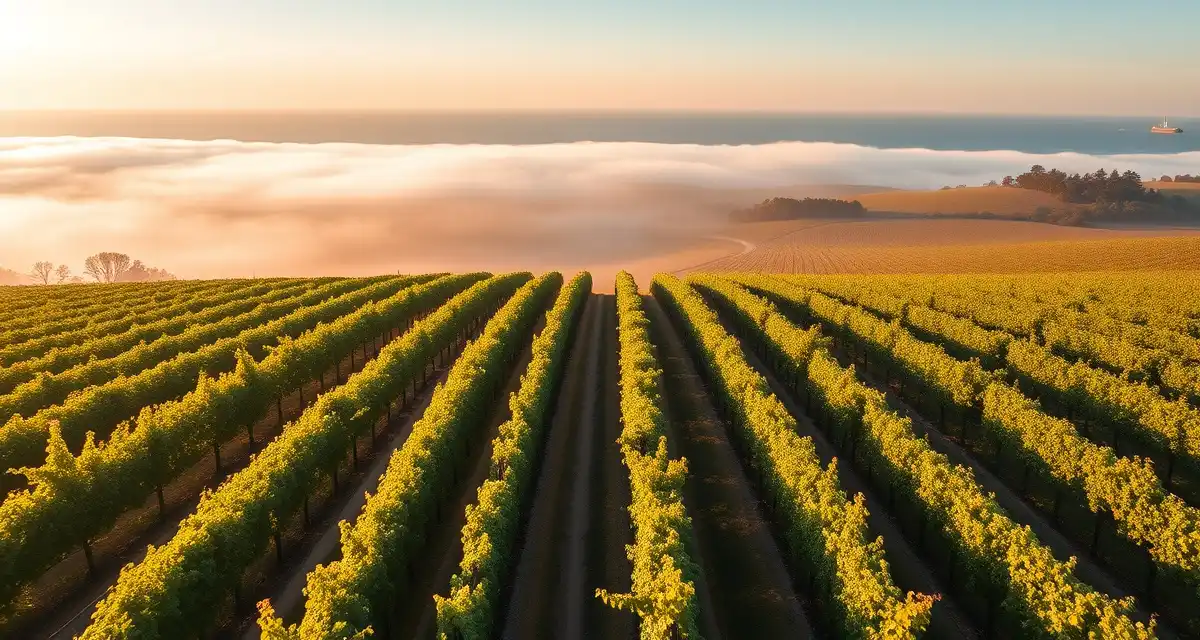
Long Island's position surrounded by ocean and sound water creates a maritime microclimate with mild winters, extended warm autumns, and persistent humidity through the growing season. This is Bordeaux-like in character -- which is exactly why Merlot and Cabernet Franc thrive there -- but it also means the disease calendar behaves differently than any mainland New York wine region.
Botrytis bunch rot is the defining disease challenge for Long Island growers. The combination of dense canopy growth encouraged by the maritime climate, late-season humidity, and the tight-clustered Bordeaux varieties that dominate the region creates chronic botrytis pressure in most years. The botrytis vineyard IPM hub covers the disease management approach in detail, but the record-keeping dimension is critical for any Long Island operation.
Downy mildew finds consistently favorable conditions in the maritime humidity. Spring and early summer conditions on Long Island often align well with downy mildew infection periods.
Powdery mildew remains a baseline concern through the warm summer period.
The extended growing season is a competitive advantage for Long Island wine quality, but it also extends the disease management season and the compliance record-keeping obligation.
New York DEC Compliance for Long Island Vineyards
New York Department of Environmental Conservation requirements apply to all Long Island commercial pesticide applicators. VitiScribe's New York vineyard management software profile applies DEC-compliant record formatting automatically to every spray entry.
New York's Pesticide Reporting Law requires electronic submission of commercial pesticide use data annually. VitiScribe generates the DEC submission file from your spray log data -- you don't have to manually compile annual pesticide totals from paper records or spreadsheets.
Suffolk County is home to most Long Island wine grape acreage. County-level compliance is built into VitiScribe's New York profile, and records export in the format required by DEC.
North Fork vs Hamptons AVA Conditions
The North Fork AVA and The Hamptons AVA have slightly different maritime exposures that influence disease timing. The North Fork, surrounded by Long Island Sound and the Peconic Bay, experiences a more maritime-moderated temperature environment. The Hamptons, on the South Fork, sees slightly more direct Atlantic Ocean influence.
Both AVAs share the core disease pressures, but block-level differences in canopy exposure, proximity to water bodies, and drainage characteristics create meaningful variation within each AVA. VitiScribe's block-level tracking lets you record and compare disease pressure across your specific blocks rather than relying on regional averages.
Botrytis Record Keeping for Long Island Operations
Botrytis management on Long Island requires careful spray timing documentation. The fungicide rotation for botrytis involves alternating between FRAC groups to manage resistance, and the record of which chemistry was applied when matters for both resistance management planning and certification compliance.
VitiScribe tracks FRAC group usage by block so you can see at a glance whether your rotation is maintaining the diversity needed for resistance management. At the end of each season, block-level spray summaries show how many times each FRAC group was applied -- the foundation for your next season's rotation planning. For the full explanation of FRAC group assignments and resistance concerns specific to botrytis, see the FRAC groups vineyard fungicides guide.
For Long Island operations pursuing any certification or sustainability program, the spray record documentation in VitiScribe provides the audit trail certifiers require.
Water Body Proximity on Long Island
Long Island's geography means most vineyard blocks are relatively close to tidal creeks, bays, or the sound. Pesticide applications near water bodies require specific buffer zone documentation, and these requirements apply to most Long Island operations.
VitiScribe's block mapping records water body proximity and flags buffer zone requirements when you're entering spray records for blocks near tidal or freshwater features. This documentation protects you if DEC ever questions application conditions near sensitive areas.
Frequently Asked Questions
What vineyard management software works for Long Island New York vineyards?
VitiScribe works for Long Island operations because it combines New York DEC compliance reporting with block-level IPM tracking calibrated to maritime disease conditions. The platform handles botrytis spray rotation tracking by FRAC group, documents water body buffer zones for Long Island's many coastal blocks, and generates the annual pesticide reporting data for DEC electronic submission. It supports the Bordeaux-variety-dominated variety mix common on the North Fork and handles the extended growing season that pushes Long Island's spray program obligations later into fall than most New York operations.
How does Long Island's maritime climate affect disease pressure?
Long Island's position surrounded by ocean and sound creates a maritime microclimate with persistent humidity and mild temperatures that fundamentally shapes disease pressure. Botrytis is the dominant challenge because the maritime climate encourages the canopy density, late-season humidity, and warm autumns that favor it. Downy mildew finds consistent infection opportunities through the season. The extended growing season that makes Long Island suitable for Merlot and Cabernet Franc also extends the window for disease development into late October, requiring spray program management well beyond what Hudson Valley or Finger Lakes operations typically sustain.
How does VitiScribe handle Long Island weather-triggered spray alerts?
VitiScribe integrates local weather station data to calculate infection period risk for botrytis, downy mildew, and powdery mildew using conditions relevant to Long Island's maritime environment. When leaf wetness, humidity, and temperature thresholds align with disease development requirements, the system sends spray window alerts for affected blocks. You can configure alert parameters for North Fork or Hamptons conditions separately, accounting for the slight microclimate differences between the two AVAs. This approach is more appropriate for Long Island's variable maritime weather than a fixed calendar spray program.
How do I document botrytis spray decisions for a Long Island DEC compliance audit?
Botrytis spray records for DEC compliance need the standard required fields -- product, rate, EPA registration number, block, date, applicator, weather conditions -- plus the rationale for application timing. For botrytis, the timing rationale is typically a combination of growth stage (pre-bloom, berry set, veraison), weather conditions creating infection risk, and any observed bunch rot incidence from the prior scouting visit. If your spray record shows only the product and date without a stated reason for the timing, an auditor reviewing your records can't verify that the application was IPM-based rather than calendar-based. VitiScribe's spray record template includes a decision basis field where you log the specific trigger, linking the application to the conditions that justified it.
Does the DEC Pesticide Reporting Law apply differently to Long Island's Suffolk County than to other New York counties?
The Pesticide Reporting Law applies uniformly across New York State -- the required data fields, annual submission timeline, and electronic filing requirements are the same for Suffolk County as for any other county. What differs on Long Island is the regulatory attention to water body proximity given the density of tidal and freshwater features relative to vineyard acreage. DEC enforcement activity related to buffer zone compliance tends to be higher in coastal counties because the environmental sensitivity of tidal waterbodies makes application records near those features more closely reviewed. Maintaining GPS-mapped block boundaries in VitiScribe with water body buffer zone flags creates documentation that demonstrates compliance with restricted-entry requirements before any inquiry occurs.
What is Vineyard Management Software for Long Island?
[FAQ_ANSWER_PLACEHOLDER: This answer needs to be generated by AI with specific data, examples, and actionable advice relevant to Vineyard Management Software for Long Island. Target 50-150 words.]
How much does Vineyard Management Software for Long Island cost?
[FAQ_ANSWER_PLACEHOLDER: This answer needs to be generated by AI with specific data, examples, and actionable advice relevant to Vineyard Management Software for Long Island. Target 50-150 words.]
How does Vineyard Management Software for Long Island work?
[FAQ_ANSWER_PLACEHOLDER: This answer needs to be generated by AI with specific data, examples, and actionable advice relevant to Vineyard Management Software for Long Island. Target 50-150 words.]
What are the benefits of Vineyard Management Software for Long Island?
[FAQ_ANSWER_PLACEHOLDER: This answer needs to be generated by AI with specific data, examples, and actionable advice relevant to Vineyard Management Software for Long Island. Target 50-150 words.]
Who needs Vineyard Management Software for Long Island?
[FAQ_ANSWER_PLACEHOLDER: This answer needs to be generated by AI with specific data, examples, and actionable advice relevant to Vineyard Management Software for Long Island. Target 50-150 words.]
How long does Vineyard Management Software for Long Island take?
[FAQ_ANSWER_PLACEHOLDER: This answer needs to be generated by AI with specific data, examples, and actionable advice relevant to Vineyard Management Software for Long Island. Target 50-150 words.]
Related Articles
Sources
- New York Department of Environmental Conservation (NY DEC)
- UC Cooperative Extension Viticulture
- American Vineyard Foundation
- American Society for Enology and Viticulture (ASEV)
- Wine Institute
Get Started with VitiScribe
Long Island's maritime disease environment demands FRAC rotation records for botrytis management, water body buffer zone documentation for coastal blocks, and DEC-compliant spray records that extend well into fall harvest -- a record-keeping workload that generic farm software handles poorly. VitiScribe's New York DEC-formatted spray log, block-level FRAC rotation report, and buffer zone flagging give Long Island operations the documentation tools their specific regulatory and disease environment requires. Try VitiScribe free and log your first DEC-compliant spray record for your Long Island blocks today.